

We tested and scored 145 racks to find the 6 best budget power racks and squat stands, judged on the four things that decide whether a rack is worth buying: price, quality and safety, versatility, and space.
The first rack I ever bought was a flimsy stand I replaced inside a year. The team ran my picks through our weighted scoring, so this is data and owner reports, not one person’s gut call.
The goal was simple: skip the marketing and hand you racks that hold real weight, fit a tight room, and won’t have you upgrading in two years.
Let’s see if we did a good job…
Editor’s note:
This guide was updated on June 16, 2026. REP has discontinued the PR-1050, so we replaced it with the Titan T-2 as our dedicated low-ceiling pick. At 71” tall it’s the shortest rack here, so it slips under an 8-foot basement ceiling the others can’t clear.
Related
We’ve been testing racks and cages for years. Not specifically shopping on a budget? See our overall best squat racks guide for the top picks at every price. For tight rooms, check our best short power racks, and for the cheapest bars to load it with, our best budget barbells.
Compare the best budget power racks
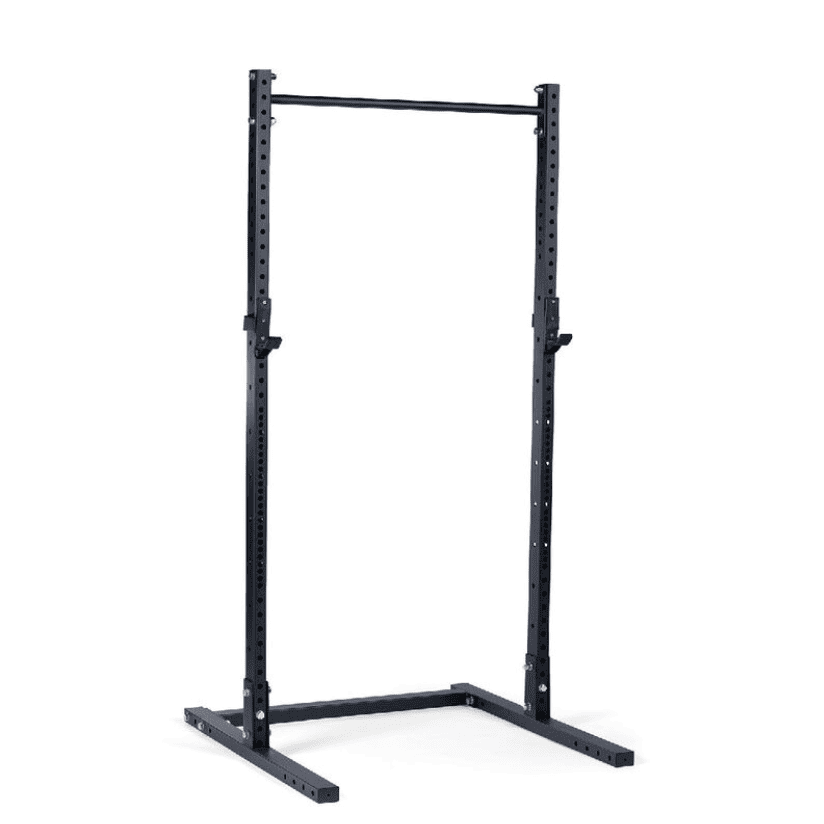 Titan T-3 Stand
Check price
Titan T-3 Stand
Check price
|
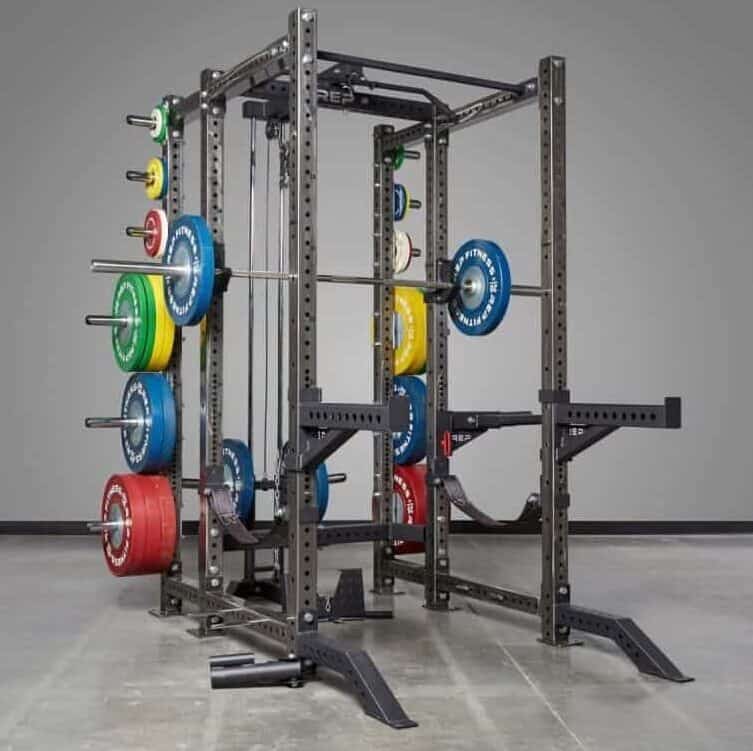 REP PR-4000
Check price
REP PR-4000
Check price
|
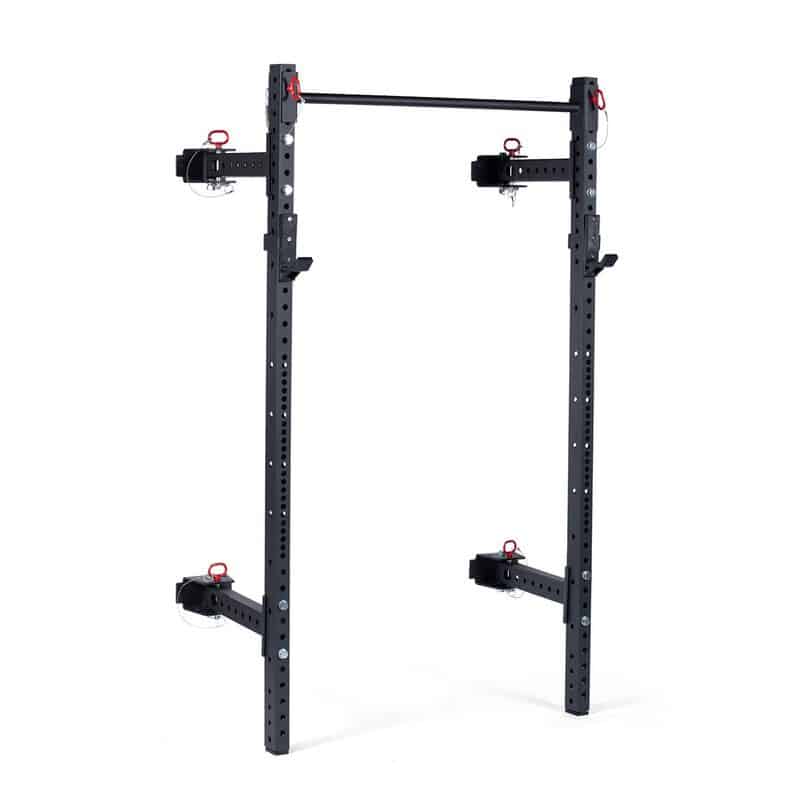 Titan T-3 Folding
Check price
Titan T-3 Folding
Check price
|
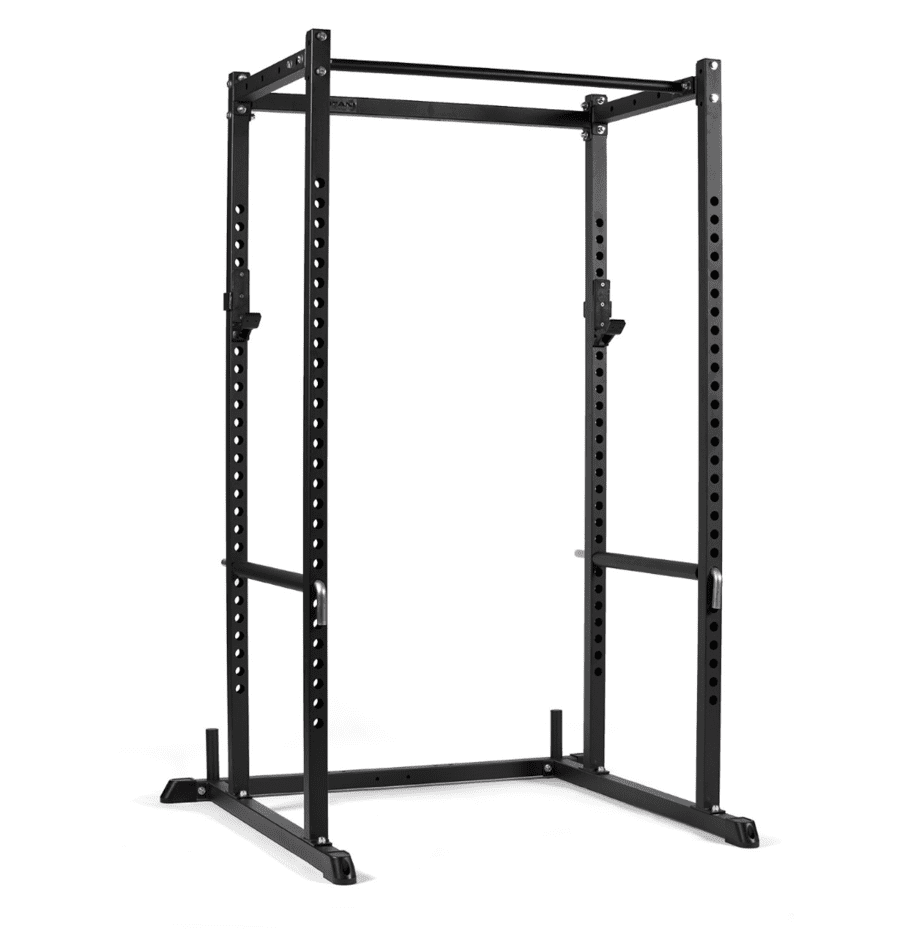 Titan T-2
Check price
Titan T-2
Check price
|
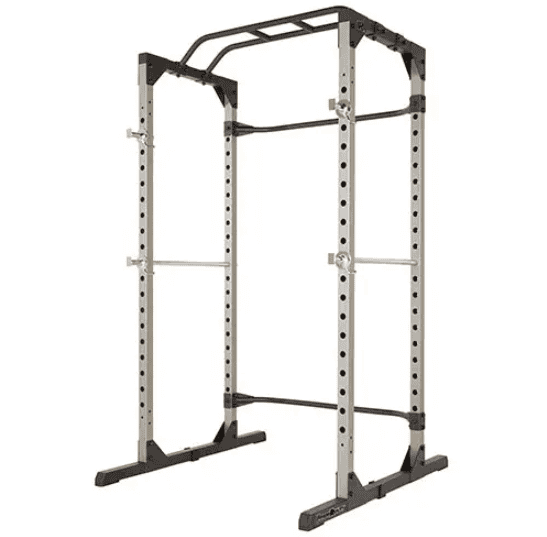 Fitness Reality 810XLT
Check price
Fitness Reality 810XLT
Check price
|
||
|---|---|---|---|---|---|---|
| Best for | Overall | Squat stand | Grow into | Folding / small space | Low ceiling | Cheapest |
| Rating (*) | ||||||
| Quality & safety | 76% | 78% | 95% | 78% | 76% | 70% |
| Versatility | 86% | 70% | 97% | 74% | 74% | 74% |
| Compactness | 82% | 88% | 78% | 95% | 96% | 78% |
| Pricing | 95% | 95% | 65% | 92% | 92% | 96% |
| Price | $ | $ | $$$ | $ | $ | $ |
| Steel material | 2x2" 14 gauge | 2x3" 11 gauge | 3x3" 11 gauge | 2x3" 11 gauge | 2x2" 14 gauge | 2x2" 14 gauge |
| Hole spacing (") | 2 | 2 (1 bench area) | 2 (1 bench area) | 2 (1 bench area) | 2 | 3 |
| Pull-up bar | 1.25" & 2" bar | 1.25" bar | 5 options | 1.25" bar | Multi grip | Multi grip |
| Weight capacity (lbs) | 700 | 1100 | 1000 | 1100 | 850 | 800 |
| Height (") | 83.6 | 82 / 91 | 80 / 93 | 82 / 91 | 71 / 83 | 83.5 |
| Footprint (sq ft) | 19.3 | 15.7 | 14.4 | 6.7-13.1 | 19.4 | 16.3 |
| Warranty | Lifetime | 1 year | Lifetime | 1 year | 1 year | 1 year |
| Rack weight (lbs) | 133 | 140 | 330 | 140-175 | 125 | 134 |
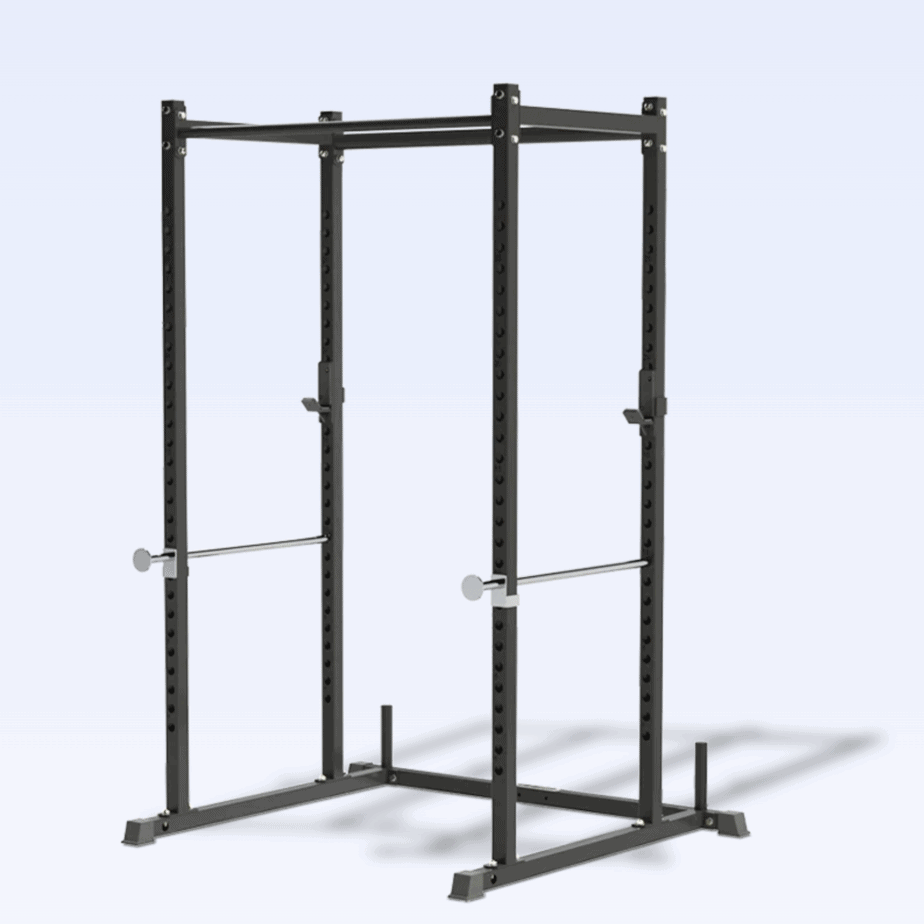 REP PR-1000
Our testing and selection process
How we assess budget power racks
We always use a 5 step process in our reviews:
- We start as the buyer - most of our team have bought racks before. I’ve owned more than one and learned the hard way what cheap steel feels like under a loaded bar.
- We do a ton of research - we collect information on as many racks as possible and insert it into a spreadsheet.
- We rate each rack using our exclusive ‘weighted’ rating system. You can learn more about this in the section below.
- We use data to decide our top picks rather than personal biases toward brands.
- We get our hands on as many of the top picks as possible. Our community is great at helping with this.
You can read more about this process in our review guidelines.
How we test and score budget power racks
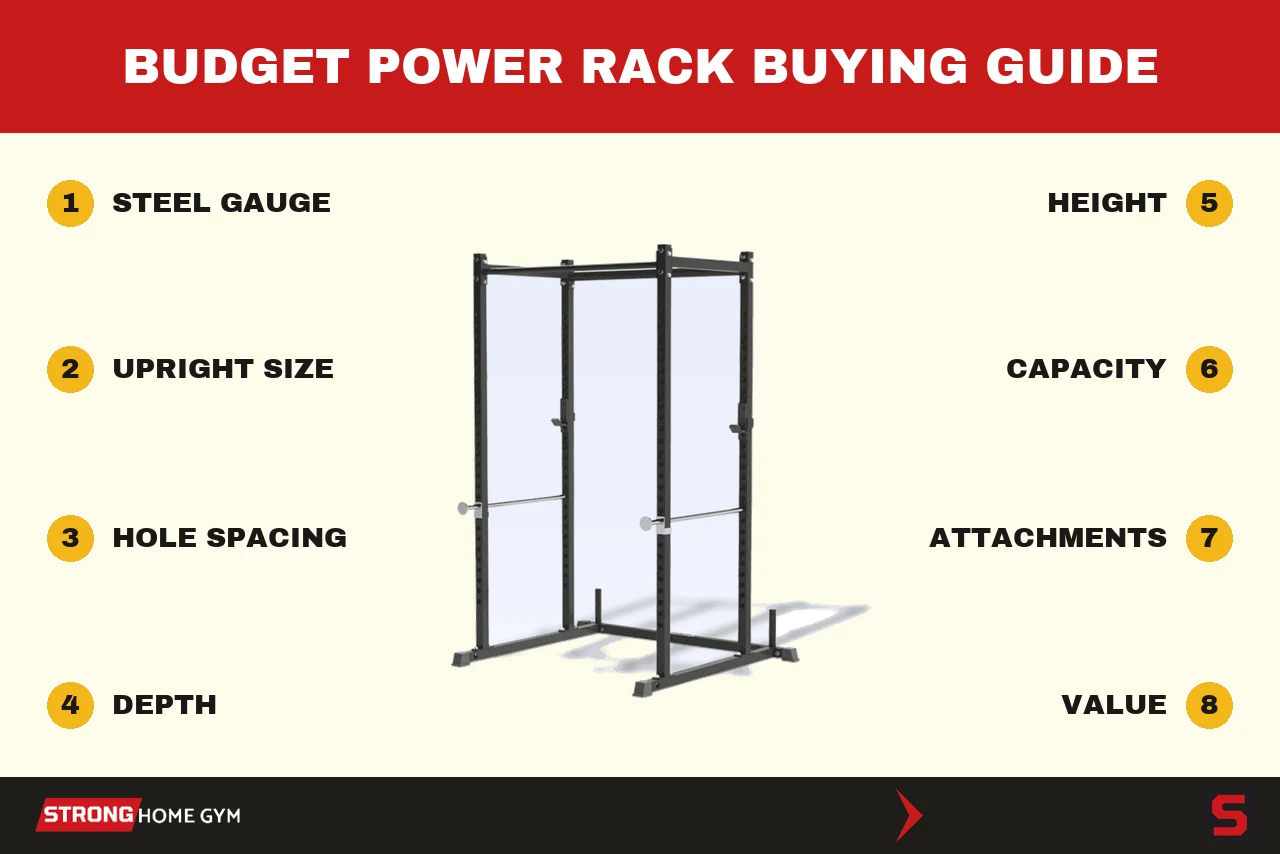
Here’s how we reached the score and ranked these racks.
On a budget, price carries the most weight. But we won’t reward a rack that only looks cheap because it skimps on safety.
I grouped the factors into four:
- Pricing (35%) - what you actually get for your money, quality-adjusted, with the warranty factored in.
- Quality and safety (25%) - steel gauge, weight capacity, and whether you can fit spotter arms.
- Versatility (25%) - pull-up bars, attachments, hole spacing, and room to upgrade later.
- Compactness (15%) - height, footprint, and whether it folds or fits a low ceiling.
Pricing (35%)
We build price towers and reward the racks that cost less for the same features. On a budget guide that matters more than anywhere else.
So we hunt for racks that nail the basics without charging you for a logo. A cage that does the job for budget money beats a fancier one you can’t afford.
My tip: set your hard ceiling first, then buy the best-built rack under it. Don’t stretch for features you’ll never use.
Quality and safety (25%)
This is where a cheap rack either earns trust or loses it. Three things decide the score.
The quality and safety of a rack comes down to:
- Steel gauge and upright size
- Honest weight capacity
- Whether spotter arms or safety bars are available
Steel gauge and weight capacity
The lower the gauge number, the thicker and stronger the steel. 11 gauge is about 1/8” thick and very strong. 14 gauge is thinner but fine if you stay under about 400 lb.
Many brands overstate capacity, so a stated 1,000 lb is a good sign, not a promise. A rack under 110 lb often hides weaker steel.
My tip: match the steel to your lifts, not your ego. Most home lifters never need more than 14 gauge can handle.
Spotter arms and safety bars
If you train alone, spotter arms are not optional. They catch the bar when a lift fails.
Some racks ship without them, and some folding racks advise against them. Check this before you buy.
My tip: budget for spotter arms on day one if they aren’t included. Getting pinned under a bar is the one mistake you can’t undo.
Versatility (25%)
A rack you can grow into saves you buying twice. We score pull-up bars, attachment range, hole spacing, and upgrade paths.
Westside hole spacing is the quiet hero here.
Westside spacing uses 2” gaps up the rack and 1” gaps in the bench area, where it matters. That lets you set spotter pins to the perfect height. Too high and you hit them every rep. Too low and they’re useless when you fail a lift.
A built-in pull-up bar saves you buying a power tower, and plate storage doubles as ballast to stop a rack wobbling.
Compactness (15%)
Most racks stand 90” or taller. That rules them out of an 8-foot basement or a low garage.
Footprint and folding ability matter just as much when floor space is tight. A folding rack like the Titan T-3 Folding gives you the car back when you’re done.
Find the perfect budget power rack for you
Overall | Squat stand | Grow into | Folding | Low ceiling | Cheapest
Here’s how the six racks stack up on our overall score:
REP PR-1000
Best Budget Power Rack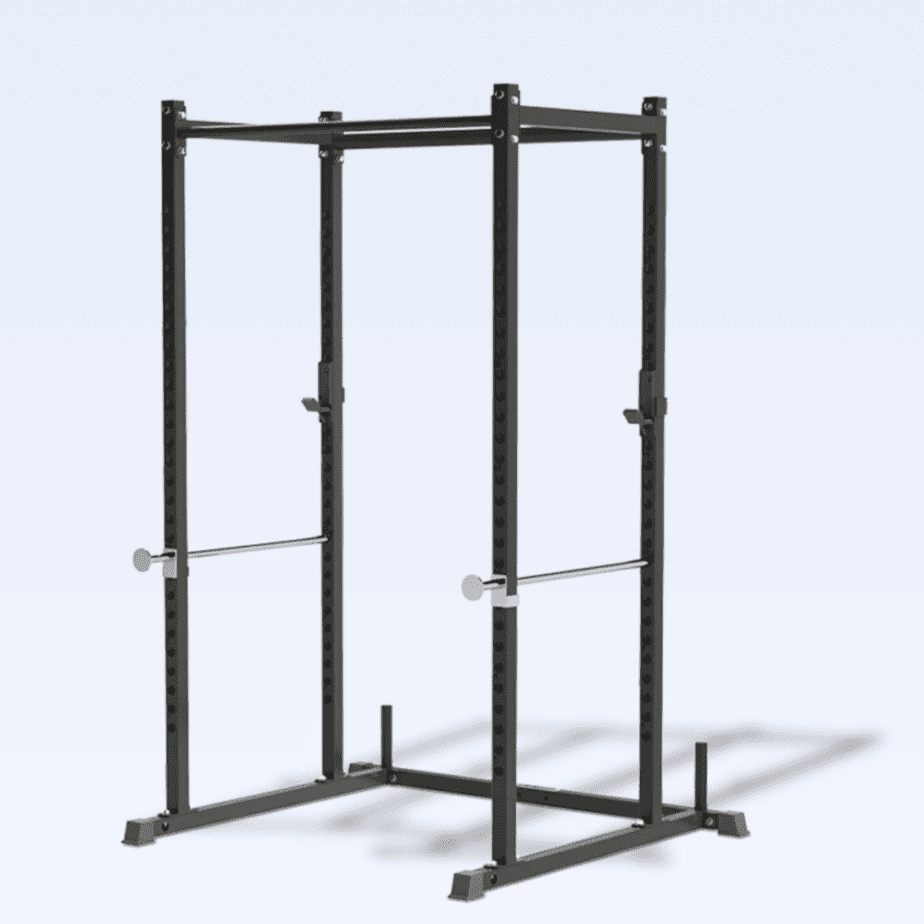
Quick specs
- 83.6” tall, 19.3 sq ft footprint
- 2x2” 14 gauge steel
- 2” hole spacing | 1” holes
- Dual pull-up bars (1.25” + 2”)
The only true four-post cage on this list at an entry-level price, with dual pull-up bars and a lifetime frame warranty.
Summary of experience, tests & opinions
What I like
- Lifting inside four posts changes how hard I push solo. I’ll grind a rep I’d bail on in a stand, because the safety bars catch it on every side.
- The dual pull-up bars earn their keep. I hang bands off one and pull from the other, and the 2” fat bar doubles as free grip work. The PR-1100 swaps these for a single multi-grip bar, so you lose that.
What I don’t
- The frame feels lighter than the cages above it. On hard pull-ups it sways a little until you load the rear horns, so don’t skip the plate storage.
- Dialing bench spotter pins is a faff. With no 1” zone the nearest hole always lands a hair off where I want it.
Pros & cons
Pros
- Lifetime frame warranty – rare at this price, and proof REP backs the steel for the long haul.
- Flat feet mean no bolting. Load the rear weight horns and it sits planted, so renters can use it without drilling a single hole.
- Attachment compatible – add dip bars or a landmine later, so the rack grows with your training instead of capping it.
Cons
- 2x2” 14 gauge steel – thinner than the 11 gauge on the PR-4000, so it flexes more under a heavy drop and tops out near 500 lb in real use.
- 2” hole spacing the whole way up. Fine for squats, but bench spotter pins won’t land as precisely as on a Westside-spaced rack.
Read more about the REP PR-1000
The PR-1000 wins this guide because it’s the cheapest way into a real cage.
At this price most racks are two-post stands. They save money by cutting two uprights, the exact bit that keeps you safe when a lift fails. The PR-1000 keeps all four posts, full-length safety bars, and dual pull-up bars, then trims cost on steel gauge instead. For a home lifter under 500 lb that’s the right trade.
Its closest rival is the REP PR-1100, a touch cheaper. The PR-1100 runs 3” hole spacing and one multi-grip pull-up bar. The PR-1000’s tighter 2” spacing makes bench pinning easier, and its two straight bars give you more to hang bands or a TRX from. That edge puts the PR-1000 ahead.
Assembly is a one-evening job for two people, longer solo. The instructions are clear and the holes line up, which is not a given at this price.
The PR-1000 takes the top slot on our weighted overall score:
Bottom line
The REP PR-1000 is the top-rated budget power rack for 3 main reasons:
-
It’s a full cage for stand money. You get four posts and all-round safety bars at a price most brands only offer a two-post stand for.
-
The warranty outlasts the price tag. A lifetime frame warranty at the budget end is unusual and tells you the steel is built to stay.
-
It grows with you. Dual pull-up bars plus attachment compatibility mean you add to it over years instead of replacing it.
REP PR-1000 might be for you if… you want a proper cage, you train mostly solo, and you’ll stay under 500 lb on the big lifts.
It’s not for you if… you already load past 500 lb or want 3x3” steel from day one. Step up to the REP PR-4000 instead.
Titan T-3 Squat Stand
Best Budget Squat StandQuick specs
- 82” or 91” tall, 15.7 sq ft footprint
- 2x3” 11 gauge steel
- Westside spacing (1” / 2”)
- 1,100 lb rackable capacity
The cheapest way to get 11 gauge steel and Westside hole spacing, in a smaller footprint than the PR-1000.
Summary of experience, tests & opinions
What worked
- The uprights feel like a much pricier rack under the bar. Re-rack a heavy set hard and there’s no rattle or give, which I didn’t expect at this money.
- Steve, our certified PT, rates the Westside zone most. He sets bench spotter arms a finger’s width off his chest and they land there every time.
What didn’t
- I caught the frame lifting once, dumping a squat onto the very end of a spotter arm. It settled, but it’s a reminder you’re lifting in front of two posts, not inside four.
- Without storage horns to weigh the base down, it walks a touch on a smooth floor. I screwed mine to the wall and the problem vanished.
Pros & cons
Pros
- 2x3” 11 gauge uprights – stronger steel than most budget cages, so it shrugs off heavy rack-and-re-rack cycles.
- The 48x47” base is long and flat. That footprint keeps it steadier than a typical stand and lets you skip bolting in many setups.
- Westside hole spacing – set bench spotter pins to the exact height, so you stop clipping them mid-press.
Cons
- It’s a stand, not a cage. You lift in front of two posts, so the safety net is smaller and a missed lift has further to fall.
- 1-year warranty – Titan covers it for a year, where REP backs its frames for life.
Read more about the Titan T-3 Squat Stand
The Titan T-3 stand is the value play for lifters who want quality steel over a full cage.
It used to be a close call against the REP SR-4000, but REP’s move to 3x3” steel pushed that stand’s price up. The Titan now comes in well under it while keeping 11 gauge uprights and Westside spacing.
Here’s the honest trade. A stand saves money and floor space, but it sacrifices stability. Catch a failed squat on the very end of a spotter arm and a two-post frame can rock. A cage like the PR-1000 can’t do that. For most lifters under 350 lb working with sensible form it’s a non-issue, and the long flat feet help. Chasing big solo numbers is where I’d want four posts around me instead.
Buy the version with spotter arms if you train alone. It’s not optional on any stand.
It can’t match the cages on safety, but its build quality lands it second on our quality score:
Bottom line
Buy the Titan T-3 stand if you want thick 11 gauge steel and Westside spacing for the lowest outlay, and you’re happy lifting in front of two posts rather than inside four. Skip it if training alone at heavy loads is your plan, in which case the PR-1000 cage is the safer call.
REP PR-4000
Upgrade PickQuick specs
- 80” or 93” tall, 14.4 sq ft footprint
- 3x3” 11 gauge steel
- Westside spacing (1” / 2”)
- 1,000 lb rackable | lifetime warranty
The rack you buy once. 3x3” 11 gauge steel and deep customization, for not much more than a basic budget cage.
Summary of experience, tests & opinions
Where it shines
- Drop a loaded bar onto the safeties and nothing flinches. After years on thinner racks, the dead-solid catch of the 3x3” frame is the thing I notice every session.
- It becomes a full gym. Bolt on the Ares and Athena cable attachments and you’ve got a functional trainer in the same footprint, no second machine.
Where it falls short
- I had to redrill once when my first floor anchor sat over a slab joint. Worth marking and checking your spot before you commit the bolts.
- It’s the splurge end of budget. I had to talk myself into the spend, then never regretted it once it was built.
Pros & cons
Pros
- 3x3” 11 gauge uprights – the strongest steel on the list, so you’ll never out-lift it however heavy you go.
- Westside hole spacing puts bench spotter pins exactly where you want them, every session, no compromise.
- Lifetime warranty plus deep customization – pick depth, color, and attachments now, and add cables or extra uprights for years.
Cons
- Highest price here – it’s the upgrade pick, so it costs more than the entry cages.
- You have to bolt it to the floor. Fine on most concrete, but a dealbreaker for renters who can’t drill.
Read more about the REP PR-4000
The PR-4000 is the rack I’d point you at if you can stretch the budget once and never think about racks again.
Everything that limits the PR-1000 is solved here. The 2x2” 14 gauge becomes 3x3” 11 gauge. The 2” spacing becomes Westside. The 700 lb ceiling becomes a planted 1,000 lb. And REP backs the frame for life.
The real party trick is how far it expands. Cable add-ons turn it into a functional trainer, and you can keep bolting on uprights, storage, and attachments over the years. Owner reports we’ve tracked consistently flag it as the rack people stop upgrading from, because there’s nothing left to chase.
The catch is height and price. The lowest option is 80”, so low-ceiling buyers should measure and clear 95” before committing. And it sits at the top of our budget tier, so it’s the splurge pick, not the cheap one.
It handles the widest range of movements in this group, which puts it top of our versatility chart:
Bottom line
The PR-4000 is the right buy if you’d rather spend once and own a rack for life. It’s the strongest, most expandable pick here, and the cable add-ons mean it can replace a separate functional trainer down the line. It’s the splurge end of budget, so the PR-1000 still wins on pure value, but this is the one you’ll never outgrow.
Titan T-3 Folding Power Rack
Best Folding RackQuick specs
- 82” or 91” tall, folds < 6” from wall
- 2x3” 11 gauge steel
- Westside spacing (1” / 2”)
- 1,100 lb rackable capacity
A full power rack that folds flat to the wall, so you get the garage floor back the moment you finish lifting.
Summary of experience, tests & opinions
The wins
- Folding it the first time felt like a magic trick. The cage swings back to under 6” off the wall and the floor is yours again, car and all.
- On a shared garage it earns its keep daily. We fold it after a session and the family gets the room back without arguing over the gym taking over.
The downsides
- The pin fold is a chore once the novelty wears off. I’ve watched owners quietly stop folding it after a few weeks, which defeats the point.
- With nowhere to hang plates, a wall-mounted frame loses the bottom-end weight that steadies it on a hard pull-up.
Pros & cons
Pros
- 2x3” 11 gauge steel – thick, strong uprights, so the fold-away trick doesn’t cost you build quality.
- Folds to under 6” off the wall, so a tight garage doubles as a parking spot the rest of the day.
- Westside spacing and a pull-up bar – precise bench pins and pull-ups built in, so it’s a real rack, not a stripped-back one.
Cons
- Pin-and-hinge fold – fiddlier than a gas-shock folder, so the folding habit tends to slip.
- No plate storage in the box. You’ll buy a separate rack for plates and lose the anchoring weight they’d add.
Read more about the Titan T-3 Folding Power Rack
This is the pick for the tightest floor plan on the list.
It does one job the others can’t. It folds to under 6” off the wall, so you can park a car or reclaim the floor the moment you finish. If a low ceiling is your real constraint rather than floor space, the Titan T-2 is the shorter answer at 71”.
Side by side with the PRx folding racks, the difference is the mechanism. PRx uses gas shocks that swing like a car trunk. Titan uses pins and a hinge, which costs less but takes more hands-on effort. Be honest with yourself here. Fold it daily and the Titan saves you real money. Won’t bother? Pay up for the gas-strut version.
Build quality holds up though. The 2x3” 11 gauge steel is the same as the Titan stand, so you’re not trading strength for the small footprint.
Nothing here folds away tighter, which is why it sits near the top of our compactness chart:
Bottom line
Buy the Titan T-3 Folding if floor space is your main constraint. It’s the only pick here that folds flat to the wall, so you can park the car or reclaim the room the moment you finish. Skip it if you won’t actually fold it daily, because then a fixed cage like the PR-1000 gives you more for less hassle. Need the lowest possible rack instead, the Titan T-2 wins on height.
Titan T-2
Best Low-Ceiling RackQuick specs
- 71” tall (shortest here)
- 2x2” 14 gauge steel
- 850 lb capacity
- 2” hole spacing
- Multi-grip pull-up bar
The shortest cage on this list at 71”, so it clears an 8-foot basement that rules out every other rack here.
Summary of experience, tests & opinions
What I like
- This is the rack I reach for when a buyer tells me their basement ceiling is the problem. At 71” it tucks under a beam that swallows everything else on this page.
- Bolting it down and loading the weight horns kills the wobble completely. I’ve never had it shift on me mid-set, even on hard rack-and-re-rack work.
What I don’t
- It’s a full-depth cage in a low body, so the footprint eats more floor than you’d guess from the height. I had to clear a real chunk of garage for it.
- I keep reaching for a bench pin height it won’t quite give me. The holes always land a touch off where I want under the bar.
Pros & cons
Pros
- 71” height – the shortest rack here, so it fits an 8-foot basement or low garage a 90” cage can’t, the exact gap the discontinued PR-1050 used to fill.
- Built-in weight horns plus bolt holes, so you can anchor it and weight it down. A rack that’s both pinned and loaded barely moves.
- Optional 10” extension kit – turn it into a 6-upright rack later for extra stiffness, so you add sturdiness without buying again.
Cons
- 2” hole spacing the whole way up – no 1” Westside zone, so dialing bench spotter pins to the exact height takes more fiddling.
- 1-year warranty on 2x2” 14 gauge steel – thinner steel and shorter cover than the lifetime-backed PR-1000, so it flexes more under a heavy drop.
Read more about the Titan T-2
The Titan T-2 owns the low-ceiling slot on this list, and it’s there because so few brands make a sub-80” cage.
Most racks stand 90” or taller, which rules them straight out of an 8-foot basement. At 71” the T-2 clears that ceiling with room for pull-ups, and it does it as a true four-post cage, not a stripped-back stand. With REP’s PR-1050 discontinued, there isn’t another short cage at this price that compares.
The trade is the steel and the warranty. You get 2x2” 14 gauge, the same gauge as the PR-1000, backed for a year rather than for life. Manufacturers rate 14 gauge past 700 lb, but I’d keep solo lifts well under the 850 lb capacity rather than chase it. For most home lifters that headroom is plenty.
If you want more rigidity, the optional 10” extension kit adds two more uprights and plate storage. It’s a cheap way to stiffen the frame without starting over. The built-in weight horns and bolt holes mean you can both anchor and weight the rack, which is why it sits so planted once it’s set up.
At 71” it’s the shortest pick on the page, so it leads our compactness chart:
Bottom line
Buy the Titan T-2 if a low ceiling is your hard limit. It’s the shortest cage here at 71”, a full four-post rack rather than a stand, and the price is hard to beat. Skip it if your ceiling clears 90”, where the PR-1000 gives you a lifetime warranty for similar money, or grab the Titan T-3 Folding instead if floor space, not height, is the real squeeze.
Fitness Reality 810XLT
Cheapest Power RackQuick specs
- 83.5” tall, 16.3 sq ft footprint
- 2x2” 14 gauge steel
- 800 lb capacity (ASTM tested 2,000)
- Multi-grip pull-up bar + 4 safety bars
The lowest-cost full cage here, on Amazon, with a multi-grip pull-up bar and four safety bars included.
Summary of experience, tests & opinions
What’s good
- For a beginner who isn’t loading heavy, getting a real four-post cage for this little does more for confidence than any spec sheet ever will.
- Pulling everything out of one box and not facing a shopping list of extras is a genuine relief for a first rack.
What’s not
- Setting the bench spotter pins took me three tries to get close, and “close” was the best I managed. The wide holes never quite land where I want.
- It flexes more than I’d like near its rating. I treat the listed number as a ceiling I stay well under, not a target.
Pros & cons
Pros
- Lowest price on the list – the cheapest route into a four-post cage, the easy yes on a rock-bottom budget.
- Four safety bars and a multi-grip pull-up bar ship in the box, so a solo beginner has everything they need on day one.
- Flat feet, no anchoring – stable enough to use unbolted, which suits renters and quick setups.
Cons
- 3” hole spacing – the widest here, so getting bench spotter pins to a useful height is a real chore.
- 1-year warranty on 2x2” 14 gauge steel – the shortest cover and thinnest steel, built to a price, not to last decades.
Read more about the Fitness Reality 810XLT
The 810XLT is the pick for the tightest possible budget.
If your only question is “what’s the cheapest full cage that’s still safe,” this is the answer. It’s a four-post rack, it includes four safety bars and a multi-grip pull-up bar, and the flat feet mean you can use it without drilling. The capacity is listed at 800 lb, with the maker pointing to a 2,000 lb ASTM test, but I’d treat the lower figure as your working ceiling and stay well under it.
Think of it as a stripped-back PR-1000: you keep the cage, you lose the refinement. The 3” hole spacing is the biggest miss, with no 1” Westside zone to dial in bench pins. Owner reports also flag the J-hooks as the weak point, so a cheap padded set is a smart early swap to protect your bar.
For a beginner who’ll never chase big numbers, none of that breaks the deal. For anyone planning to progress, the small step up to the PR-1000 buys a far better rack.
It’s the cheapest cage here, so it tops our pricing chart:
Bottom line
Buy the 810XLT if the lowest possible price is the deciding factor and you want a real cage rather than a stand. It’s a fine starter for a beginner staying light. Spend a little more on the PR-1000 the moment you think you’ll progress, because the wider hole spacing and shorter warranty here will start to bite.
How we created this list of best budget power racks
Here are our criteria on how we picked these racks, and how we valued each criterion when making decisions:
- Pricing (35%)
- Quality and safety (25%)
- Versatility (25%)
- Compactness (15%)
You can find out all about our selection process here.
Other racks we tested - close-but-no-cigar
- REP PR-1100 - the closest call to our winner. It’s a touch cheaper, but its 3” spacing and single multi-grip bar lost out to the PR-1000.
- Fringe Sport Squat Rack - genuinely affordable and includes spotter arms, but the lower weight rating kept it behind our cage picks.
- CAP Barbell 6’ - cheap and short, but the 4” hole spacing and narrow width make solo benching a chore. See it in our best short power racks guide.
Budget power rack FAQs
What is the best budget power rack?
The best budget power rack for most people is the REP PR-1000.
It’s a true four-post cage with dual pull-up bars, a 700 lb capacity, and a lifetime frame warranty for entry-level money.
If you lift over 500 lb solo, step up to the REP PR-4000 with its 3x3” 11 gauge steel.
Is a budget power rack safe for squats?
A budget power rack is safe for squats as long as you fit spotter arms and stay within the rack’s weight capacity.
Most budget racks hold 700 to 1,100 lb, which is well past what the average lifter loads.
Add spotter arms to any rack you’ll use alone, and bolt down or weight any stand that isn’t a full cage.
How much does a good budget power rack cost?
A good budget power rack costs a fraction of what a premium cage runs, and the best value sits at the lower end of the entry-level tier.
The REP PR-1000 lands here as a full cage, while the Titan T-3 Squat Stand and Fitness Reality 810XLT come in cheaper.
Spend more only if you need 3x3” 11 gauge steel or a rack you’ll never outgrow.
Do you have to bolt down a budget power rack?
You do not have to bolt down most budget power racks, but you should secure any squat stand.
Full four-post cages like the REP PR-1000 have flat feet and stay put once you load the weight horns.
Squat stands and folding racks are lighter and safer when anchored to the wall or floor.
What’s the difference between a power rack and a squat stand?
A power rack is a four-post cage you lift inside, while a squat stand is a two-post frame you lift in front of.
The cage gives you full safety bars on all sides, which matters most when you train alone.
A stand like the Titan T-3 saves money and floor space but tips more easily under a missed lift.
The bottom line
After scoring 145 racks against our four weighted criteria, the budget winner is clear.
I’d point most people at the REP PR-1000. It’s the cheapest way into a real four-post cage, with dual pull-up bars and a lifetime frame warranty.
It gives you the safety of a true cage at the price others charge for a two-post stand.
Want to save a little more? The REP PR-1100 is the close alternative. To buy once and never upgrade, step up to the REP PR-4000. For the lowest outlay, grab the Fitness Reality 810XLT.
Two things to do now:
- Give the racks another look. Click here to skip back to the table.
- Bookmark this page and come back. We keep it updated.
Stay strong.
