
We tested over 100 cable machines across 4 quality categories and picked the 8 most worthy of your money.
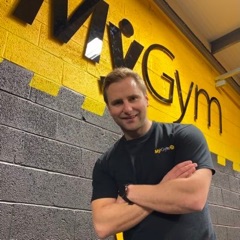
I’ve spent the last 2 decades coaching, owning gyms, and running my 8,000 sq ft commercial gym packed with Life Fitness and Hammer Strength cable kit. The maintenance bills across that period are what tell you which brands cut corners.
The goal: cable machines are the most varied category in home gym kit, and most buyer guides treat them like one homogeneous shopping basket. We split them by format instead.
Editor's note · updated May 20, 2026
We rebuilt the guide around eight formats instead of one ranked list. Cable machines aren’t interchangeable. A rack-mounted Ares does a different job from a wall-mounted Tonal, and ranking them on a single scale is what causes most buyer regret.
What changed:
- REP Ares 2.0 takes the overall slot, replacing the older Ares Builder. The 2.0 version has redesigned pulleys and the weight stacks moved to the rear for cleaner interior rack space.
- Force USA G12 added as the cable + rack combo pick. It’s the all-in-one for buyers who want the cable machine AND the squat rack in one footprint.
- REP Athena added as the standalone single-stack pick for REP rack owners who don’t want to lose interior rack space to the Ares.
- Body-Solid GDCC250 kept as the dedicated crossover machine. Still the best in that category two years running.
- Inspire Fitness FT2 added back as the premium versatile pick (Smith machine + cable + lat pulldown).
- The old Valor BD-61 and SERTT picks dropped. The budget tier is now better served by the Bells of Steel Cable Tower 2.0.
Format split: the guide now opens with a “which format is right for you?” decision in the methodology section. Most buyers should pick the format first, then the brand. Most don’t, which is why most buyers end up with the wrong cable machine.
Related
If you’re after a dual-stack functional trainer specifically, we have a separate roundup at best functional trainer covering the REP Arcadia, Arcadia Max, and dedicated dual-stack picks. For the rack that pairs with the REP Ares 2.0 or REP Athena, see our best squat rack guide.
Compare the best cable machines
This table shows the top 6 by value. The smart pick (Tonal 2) and the premium versatile pick (Inspire FT2) are covered in detail in the product cards below.
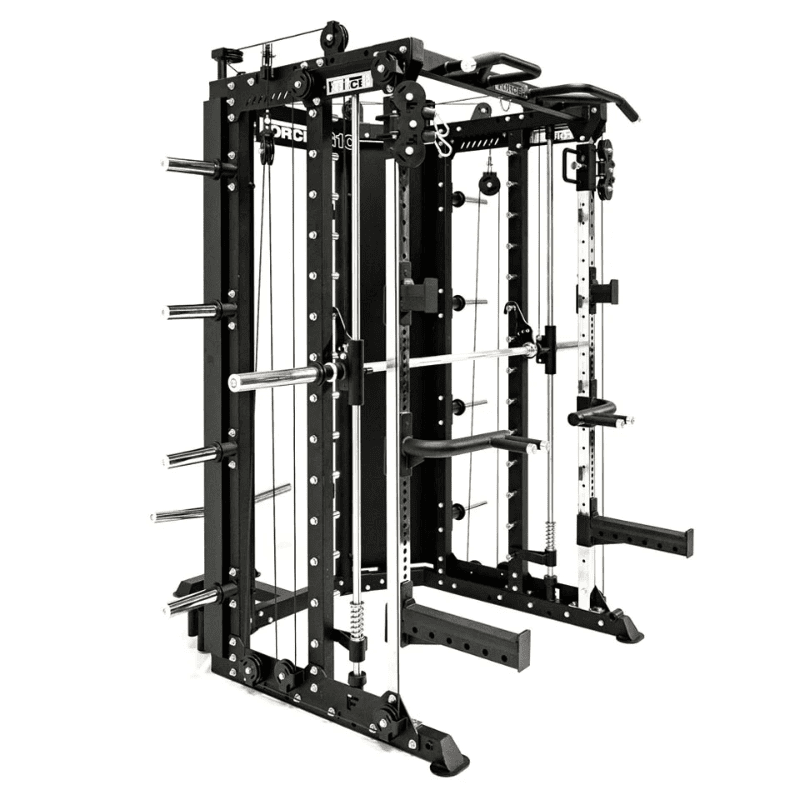 Force USA G12
Check price
Force USA G12
Check price
|
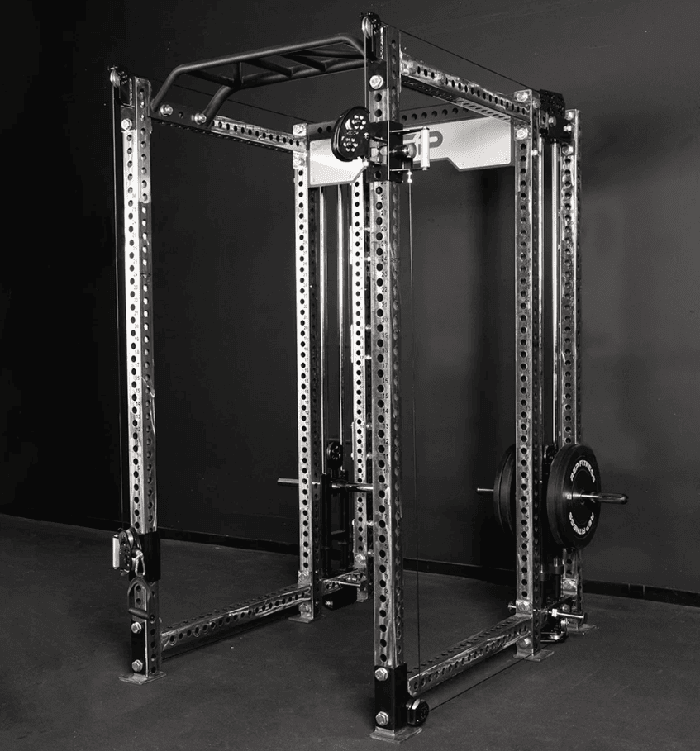 REP Athena
Check price
REP Athena
Check price
|
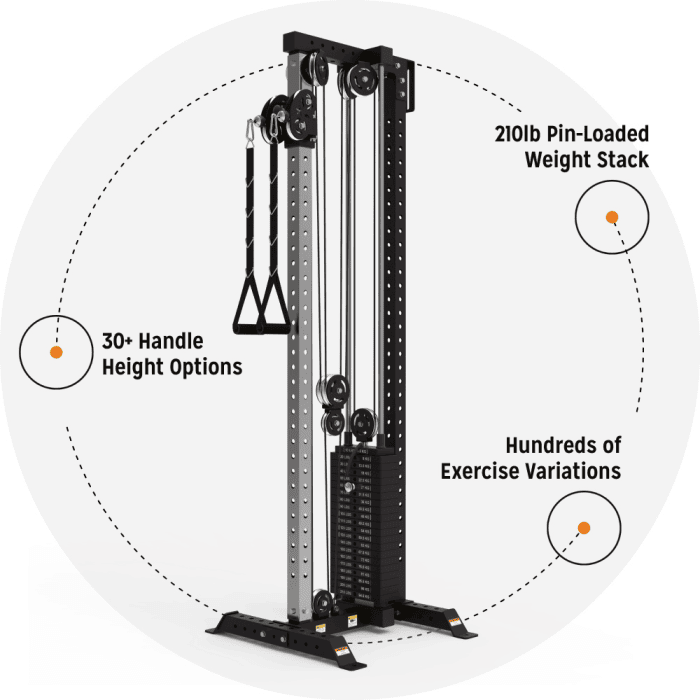 BoS Cable Tower 2.0
Check price
BoS Cable Tower 2.0
Check price
|
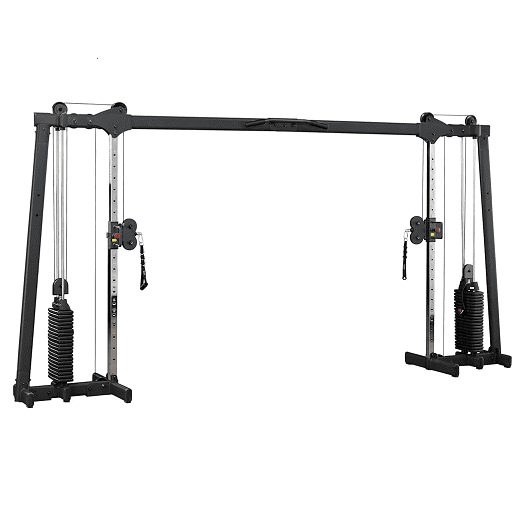 Body-Solid GDCC250
Check price
Body-Solid GDCC250
Check price
|
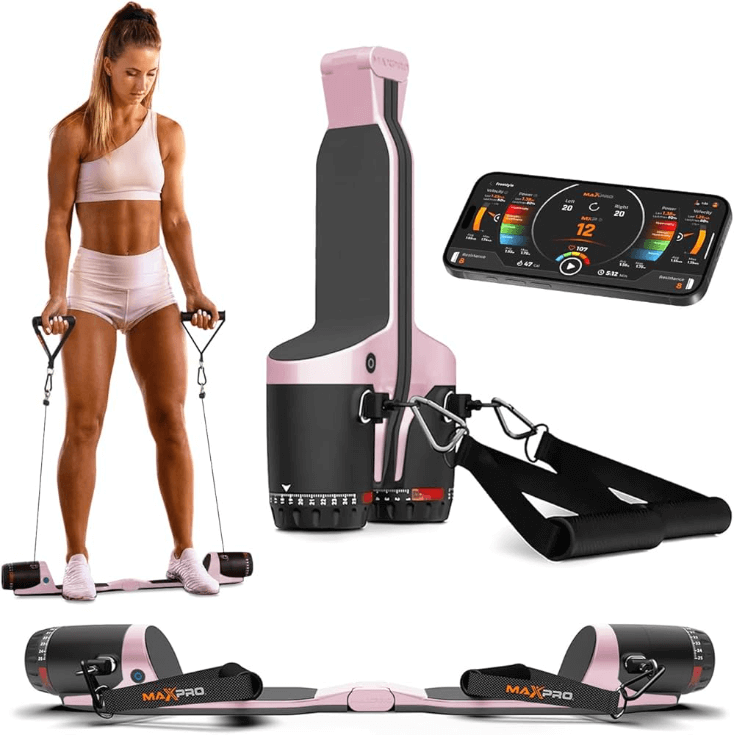 MAXPRO SC
Check price
MAXPRO SC
Check price
|
||
|---|---|---|---|---|---|---|
| Best for | Overall | Cable + rack | Single-stack | Budget | Crossover | Portable |
| Rating | ||||||
| Quality | 94% | 95% | 92% | 78% | 88% | 74% |
| Pulley smoothness | 95% | 90% | 92% | 78% | 86% | 80% |
| Brand & reputation | 92% | 88% | 90% | 84% | 90% | 74% |
| Value for money | 90% | 84% | 88% | 96% | 88% | 90% |
| Resistance | Dual 260 lb | Dual 200 lb | User-loaded | 250 lb plate cap | Dual 210 lb | 300 lb digital |
| Pulley ratio | 2:1 | 1:1 | 1:1 + 2:1 | 2:1 (1:1 adapter) | 1:1 | 1:1 magnetic |
| Format | Rack-mounted | All-in-one | Rack-front column | Standalone tower | Standalone crossover | Portable folding |
| Footprint added | 0 sq ft (on rack) | 33 sq ft | 0 sq ft (on rack) | 6 sq ft | 40 sq ft | folds away |
| Warranty | Lifetime frame | Lifetime + 10 yr | Lifetime frame | Limited lifetime | Lifetime frame | 2 years |
| Price tier | $$$ | $$$$ | $$$ | $ | $$ | $$ |
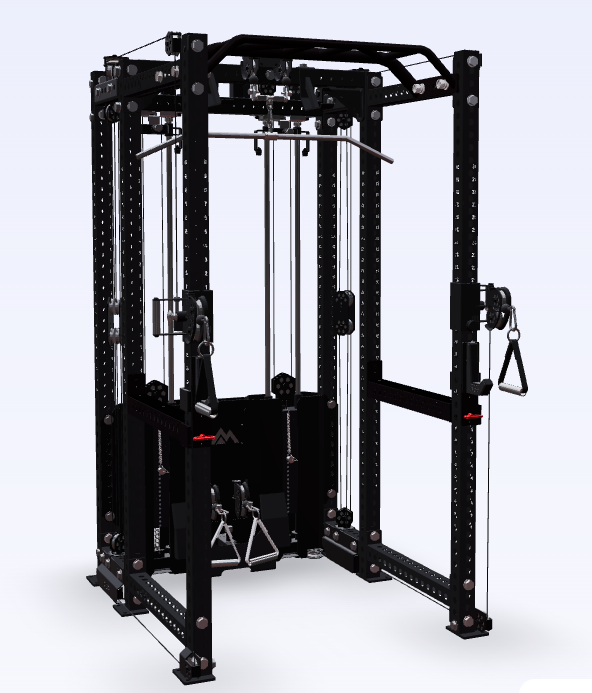 REP Ares 2.0
Our testing and selection process
How we assess the cable machines
We always use a 5 step process in our reviews:
- We start as the buyer. I’ve cycled commercial cable kit through 8,000 sq ft of gym floor for two decades. Life Fitness G7, Hammer Strength dual adjustable pulleys, Cybex Bravo, Precor Vitality. They’ve all done time on my floor. The maintenance bills tell you which brands cut corners.
- We do a ton of research. We collect spec sheets, owner reports, and warranty data for as many cable machines as possible and load them into a spreadsheet. This time we tracked over 100 selectorized, plate-loaded, smart, and portable cable machines across 20+ brands.
- We rate each machine using our exclusive weighted rating system. More on this below.
- We use data to drive our top picks. Brand bias gets weeded out.
- We get owner feedback on every pick. The 1,300-person SHG community survey is our cross-check against the spec-sheet claims.
You can read more about this process in our review guidelines.
How we test and score the cable machines
Below is an overview of how we reached the score and ranked the cable machines.
Specifically, it lists factors in the rating formula and their gravity (how important they are).
We grouped them into 4 chunks for simplicity:
- Quality (40%). The materials, the build, the engineering.
- Pulley smoothness (15%). How the cables feel under load and how quietly they run at year 5.
- Reputation & reviews (15%). The brand’s warranty performance, customer service, and long-term durability in our owner database.
- Value for money (30%). What you get for the money.
Quality of a cable machine (40%)
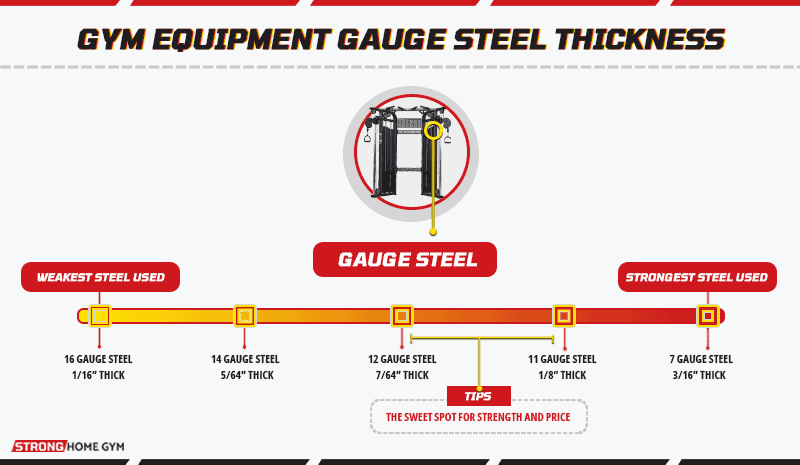
- Steel gauge (12%). 11-gauge steel is the home-gym standard. 12-gauge works for light use. Below that and the uprights flex under heavy pulldowns.
- Pulley material (12%). Aluminium pulleys with brass bushings outlast nylon every time. Nylon glazes by year 3. Aluminium stays smooth at year 10. Spec sheet says aluminium or you walk away.
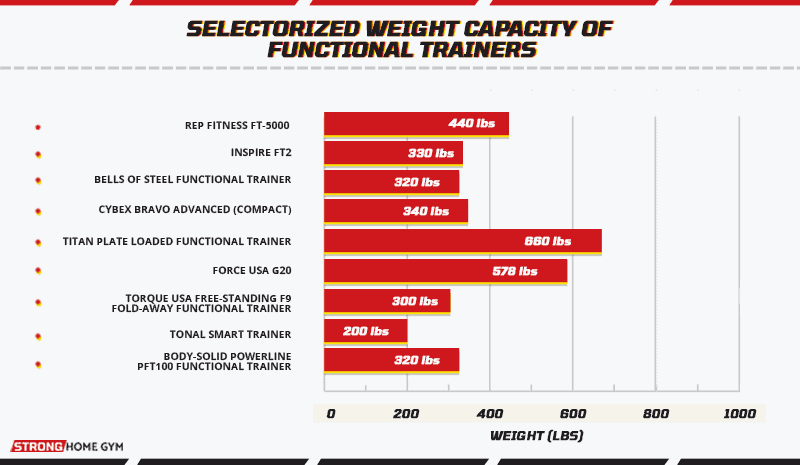
- Cable rating (8%). Aircraft-grade cable rated to 2,000+ lbs is what you want. Cheaper machines ship 1,200 lb cables that fray inside three years.
- Weight stack capacity (8%). Dual 160 lb stacks are the home-gym floor. 200+ per side is comfortable for serious lifters. 1:1 ratio doubles the felt resistance per stack pound.
Pulley smoothness (15%)
The category we added in this rewrite. Pulleys are the single quality marker that separates a cable machine you’ll use every day from one that gathers dust by year 3. Five factors drive long-term smoothness:
- Pulley material (aluminium > nylon)
- Bearing type (sealed > sleeve)
- Cable diameter (5mm rated for 2,000+ lbs)
- Track tolerance (machined channels stay aligned)
- Cable angle (correct geometry prevents fraying)
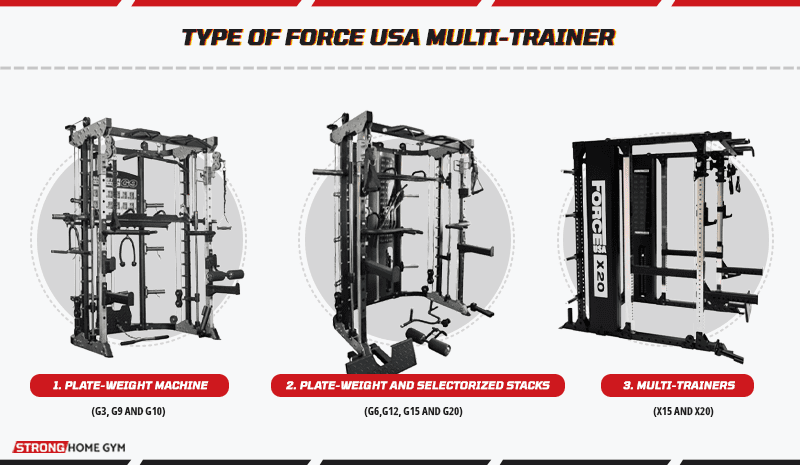
Quick translation of the formats:
- Rack-mounted. Bolts onto a power rack you already own. Smallest added footprint.
- Standalone functional trainer. Free-standing dual-stack. Covered in detail in our best functional trainer guide.
- Single-stack tower. One column, selectorized stack. Best for lifters who already have a rack and just want cable variety.
- Plate-loaded tower. Single column, you load your own plates. Cheapest format.
- Standalone crossover. Two columns spaced ~10 ft apart for cable crossover work. Specialist kit.
- Portable / smart. Wall-mount, fold-away, or magnetic resistance. For apartment lifters or travellers.
Pick the format first, then the brand. Two decades running gym floors tells me the biggest source of buyer regret in cable machines is buying a functional trainer when a single-stack tower would have done the job in a third of the footprint.
Reputation & reviews (15%)
This group is comprised of 4 sub-factors:
- Current owner satisfaction (5%). Pulled from Reddit threads, Facebook home-gym groups, and our SHG community survey. We weight recent posts more heavily. A brand can rebuild reputation in 18 months.
- Historical track record at 4%. Has the brand been consistently liked for 5+ years? Or did REP fix a 2023 hub issue and we now judge a different product?
- Customer service (3%). How fast does the brand reply when a cable frays at month 14? Rogue and REP are quickest in our community feedback. Body-Solid is consistent. Force USA solid on the big kit.
- The warranties bucket weighs 3% too. We read the small print. “Lifetime” usually covers the frame only; wear parts (pulleys, cables, bearings) get 1-3 years.
Value for money (30%)
We create price-per-feature tables and award the machines that price honestly against their spec sheet.
In other words…
We look for the kit that delivers what the spec sheet promises, not the kit that’s charging premium for the brand stamp.
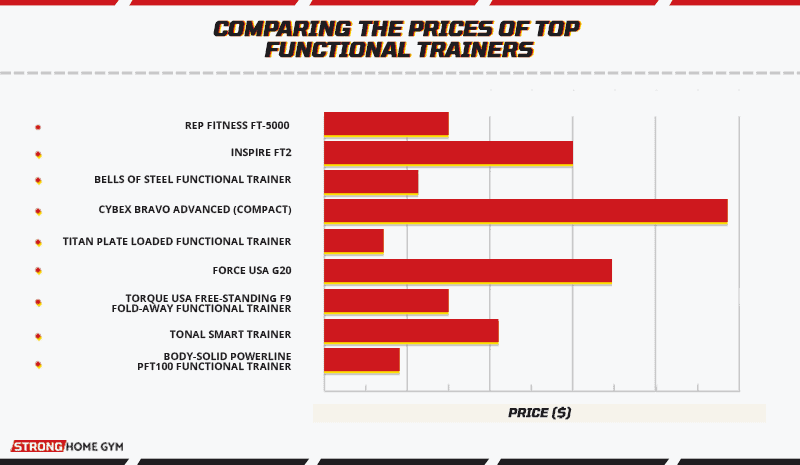
The sweet spot for most home gyms is the mid-tier band, where the REP Athena, Body-Solid GDCC250, and Bells of Steel Cable Tower 2.0 all live. Below that you’re trading smoothness for price. Above the premium tier you’re paying for all-in-one functions or smart tech that not every home gym needs.
Find the perfect cable machine for you
Best overall | Best all-in-one | Best single-stack | Best budget | Best crossover | Best portable | Best smart | Best premium
Here’s how all eight cable machines rank on our overall score:
REP Ares 2.0 Cable Attachment
Overall Best Cable MachineQuick specs
- Format - Rack-mounted (REP PR-4000 or PR-5000 only)
- Stacks - Dual 260 lb (upgradeable to 310 each)
- Ratio - 2:1 (also 1:1 on the lat pulldown / low row stations)
- Footprint - 0 sq ft added (sits on your existing rack)
- Warranty - Lifetime frame, 1 year moving parts
The Ares 2.0 is the cable attachment that finally makes a power rack act like a full cable gym.
Summary of experience, tests & opinions
What I like
- Zero added floor space. The Ares 2.0 bolts onto an existing REP rack. Owners reclaim 30-40 sq ft compared to a standalone functional trainer.
- Dual 260 lb stacks with the option to upgrade to 310. Bigger than most standalone functional trainers.
- The redesigned 2.0 layout moves weight stacks to the rear of the rack, freeing interior space for barbell work.
What I don’t
- REP PR-4000 or PR-5000 only. Won’t fit Rogue, Titan, Force USA, or any other rack.
- Owner reports flag 6-8 hour assembly time. Plus you typically have to pull existing rack uprights to fit the brackets.
Pros & cons
Pros
- Lifetime frame warranty. REP’s customer service rates 4.8/5 in our community survey, joint highest with Rogue.
- 2:1 ratio on the swiveling pulleys for crossover work, plus dedicated 1:1 lat pulldown and low row stations.
- Aluminium pulleys with brass bushings. Same hardware as REP’s standalone Arcadia line.
Cons
- The lat pulldown bar and four 2.5 lb micro-plates are the included accessories. You’ll budget extra for a full kit.
- Reduces some rack-as-rack function. Chains are harder, and two people can’t use rack + cable simultaneously.
Read more about the REP Ares 2.0
REP launched the original Ares as a way for power rack owners to add real cable training without buying a second piece of kit. The 2.0 update in 2024 fixed the original’s two main weaknesses. Cable angle issues at the corner positions and assembly complexity. By re-engineering the trolley housings and adding pre-drilled mounting holes.
A couple of design decisions stand out.
First, the rear-mounted stacks. The original Ares placed the weight stacks inside the rack uprights, which crowded the interior and made it harder to deadlift or bench inside the rack at the same time. The 2.0 moved the stacks to the rear of the uprights, reclaiming the interior space. It’s a small change that fixes the biggest complaint from year-1 owners.
Second, the swivelling pulleys. The 2.0 uses 180° swivel trolleys at every cable position, so cable crossovers track properly without the cables rubbing on housing edges. The first-generation Ares used fixed-angle pulleys that worked fine for lat pulldowns but binding for crossover work.
The contrarian view, worth surfacing here: not everyone agrees rack-integrated cables are the right call. Other reviewers argue they reduce rack-as-rack function, create tripping hazards, and stop two people training the rack and cables at once. That’s a real trade-off. If you train at heavy loads, drop the bar from height, or share the rack with a partner, a standalone cable machine or a single-stack tower keeps the rack as a rack.
The Ares 2.0 leads every category we scored, topping our overall chart:
Bottom line
The REP Ares 2.0 is the top-rated cable machine for 3 main reasons:
-
The footprint solves the single biggest objection to home cable machines. Standalone units eat 30-40 sq ft of floor. The Ares 2.0 adds zero.
-
The pulley feel matches commercial-grade kit at home gym pricing. Aluminium 180° pulleys with brass bushings hold up the way the Life Fitness G7 in my commercial gym has held up over five years.
-
REP’s warranty service is genuinely best in the home gym industry. Owner feedback in our community survey rates them 4.8/5, tied with Rogue.
If you already own a REP PR-4000 or PR-5000, this is the cable upgrade to buy.
REP Ares 2.0 might be for you if… you already own a REP PR-4000 or PR-5000 and you want to add real cable training without adding floor space.
It’s not for you if… you don’t own a compatible REP rack. Buying both is premium-tier territory, where the Bells of Steel Cable Tower standalone is a fraction of the cost.
Force USA G12 All-In-One Trainer
Best Cable + Rack ComboQuick specs
- Format - All-in-one (rack + cable + Smith + leg press)
- Stacks - Dual 200 lb (1:1 pulley ratio)
- Capacity - 2,000 lb plate-loaded capacity on the J-hooks
- Functions - Power rack, Smith machine, cable trainer, leg press, dip station, lat pulldown, low row
- Warranty - Lifetime frame, 10 years moving parts
The G12 is what you buy when you want the entire strength gym in one footprint.
Summary of experience, tests & opinions
What worked
- 1:1 pulley ratio. The 200 lb stack actually feels like 200 lb in your hands, rather than the 2:1 ratio most home cable machines use. Closer to commercial gym feel.
- The integrated Smith machine is a real secondary lift station. Smooth bushings, proper safety stops. Use it as your main pressing tool and it’ll hold up.
- Replaces roughly 8 pieces of equipment in one structure.
What didn’t
- 33 sq ft of floor space. Most single-car garages can’t fit it once you allow a 6-ft barbell path.
- 992 lb ship weight. Professional assembly is worth the add-on cost. DIY takes three people and a full day.
- Frame is 88” tall. Confirm your ceiling clearance before ordering.
Pros & cons
Pros
- 10-year moving parts warranty. Longest in this list and longer than anything REP offers.
- 2,000 lb plate-loaded capacity on the J-hooks. You can squat or deadlift very heavy weight inside the rack.
- 30+ included attachments. No accessory upcharge.
Cons
- Premium-tier price. Three times what the regular Ares 2.0 + a separate rack would cost.
- The included Smith bar is good but not premium. Serious Smith-machine users will eventually upgrade.
Read more about the Force USA G12
Force USA built the G12 for the buyer who wants a complete strength station in one structure. The 1:1 pulley ratio is the headline. Most home cable machines run 2:1 because it lets you train at a lower felt weight, which feels smoother for crossovers and fast movements. Force USA went the other way. A 200 lb stack feels like 200 lb at the handle. The cables don’t travel as far for high-rep work, but the loaded feel matches the commercial Cybex and Life Fitness machines my members trained on for years.
The 10-year moving parts warranty is the second thing the spec sheet undersells. Force USA’s customer service rates 4.6/5 in our community survey, and owner reports back up that the long warranty isn’t theatre. They honour it.
Where this lands against the field comes down to space and intent. If you’d otherwise buy a rack, a Smith machine, and a cable station separately, the G12 folds all three into one footprint and usually costs less than the sum. If you already own a rack, the REP Ares 2.0 bolts cable training onto it for a fraction of the G12’s price and zero added floor. Size down to the Ares route when floor space or budget is the binding constraint. Stay with the G12 when you’re starting from an empty room and want everything in one buy.
The G12 is built like a commercial unit, second only to no one on our quality score:
Bottom line
The G12 is the right buy if you’re building a complete strength gym in one footprint and you have at least 8 ft × 8 ft of floor space plus 7+ ft ceilings. The 10-year moving parts warranty and 1:1 pulley ratio are genuine commercial-grade specifications at a home gym price. If you already own a rack or you’d prefer to build the gym piece by piece, the REP Ares 2.0 plus your existing rack is the smarter buy.
REP Athena Plate-Loaded Cable Tower
Best Single-Stack Cable TowerQuick specs
- Format - Plate-loaded single column, mounts to REP rack uprights
- Resistance - User-loaded plates, 1:1 lat pulldown / low row, 2:1 column
- Footprint - 0 sq ft added (sits on your existing rack)
- Adjustment - 21 cable positions
- Warranty - Lifetime frame, 1 year moving parts
The Athena is the lighter-touch cable upgrade for rack owners who don’t want a full dual-stack system.
Summary of experience, tests & opinions
Where it shines
- Plate-loaded. Uses the weights you already own. No new stack to buy.
- 1:1 lat pulldown and low row stations plus a 2:1 adjustable column. Three configurations from one attachment.
- Half the cost of the dual-stack Ares 2.0.
Where it falls short
- Single column. No cable crossover work. You’d need a second Athena or a different machine.
- Plate-loading is slower than a selectorized stack. Switching weight between exercises means re-loading.
- REP PR-4000 / PR-5000 only.
Pros & cons
Pros
- Zero added footprint – mounts to the front of a REP PR-4000 or PR-5000 upright, so it costs you no floor space.
- Three configurations – 1:1 lat pulldown and low row stations plus a 2:1 adjustable column across 21 cable positions.
- Same pulley hardware as the Ares – aluminium pulleys with sealed bearings, near the top of our smoothness score.
Cons
- Single column – no cable crossover work without a second unit.
- Plate loading – you reload weight by hand between exercises, slower than a selectorized stack.
- REP racks only – won’t fit Rogue, Titan, Force USA, or any other brand.
Read more about the REP Athena
The Athena occupies the middle ground in REP’s lineup. Not as versatile as the dual-stack Ares 2.0 (no crossover work) but it does the 80% of cable work most home gym lifters actually do at roughly half the price. The full list:
- Lat pulldowns and seated rows on the 1:1 stations
- Tricep extensions, face pulls, cable curls on the 2:1 column
- Cross-body and unilateral work, one-handed cable variations
Pulley feel matches the Ares 2.0. REP uses the same aluminium pulleys and brass bushings across both attachments.
The trade-off is plate loading. Switching weights mid-workout takes longer than a selectorized stack. Drop-set or superset training? Take the dual-stack REP Ares 2.0. Straight sets at one weight per exercise? Athena saves you a serious chunk of money for almost identical performance. Size up to the Ares only if crossovers or fast weight changes matter to you; the Athena covers everything else for a REP rack owner.
The Athena’s sealed bearings earn it a spot near the top of our pulley-smoothness score:
Bottom line
The Athena is what I’d point most home gym buyers at when they’ve already got a REP rack. It does what a commercial Cybex Bravo does for most people’s actual training, minus the crossovers. Step up to the REP Ares 2.0 only if you need cable crossover work or you don’t want to load plates mid-workout.
Bells of Steel Plate-Loaded Cable Tower 2.0
Best Budget Cable MachineQuick specs
- Format - Standalone plate-loaded single column (also bolts to a wall stud or rack)
- Resistance - User-loaded plates, 250 lb capacity
- Footprint - 6 sq ft (under 2.5’ × 2.5’)
- Adjustment - 33 cable positions, 2:1 ratio with 1:1 adapter included
- Warranty - Limited lifetime
The Cable Tower 2.0 is the cheapest serious cable station on the market that isn’t a no-name Amazon brand.
Summary of experience, tests & opinions
The wins
- Cheapest serious cable station on the list. Roughly a fifth of the price of the REP Ares 2.0.
- 6 sq ft footprint. Genuinely small. Fits in spaces where a functional trainer wouldn’t.
- 33 cable positions despite the small frame. Lat pulldowns, low rows, cable curls, face pulls, tricep extensions, leg curls. All available.
The downsides
- Single column. No cable crossover work possible.
- The 2.0 update fixed the original’s nylon pulleys with aluminium ones, but the bearings are still sleeve-style, not the sealed bearings on the REP Athena. Smooth on day one, fine at year three, visible wear setting in around year five per owner reports.
- Plate loading slower than a stack.
Pros & cons
Pros
- Works with the plates you probably already own.
- 2:1 / 1:1 adapter included. Pick the ratio per exercise.
- Bolts to a wall stud, the floor, or an existing rack.
Cons
- Most accessories sold separately. The two D-handles included are the entire kit.
- Plates loaded on the cable carriage clatter a bit during reps. Quieter than dropping a barbell, louder than a selectorized stack.
Read more about the Cable Tower 2.0
The Cable Tower 2.0 is what happens when a brand decides the budget category deserves a real product, not a marketing one. The original 2022 Cable Tower used cheap nylon pulleys that glazed by year 3. Fine on paper. Miserable on year-five owner feedback in our community. The 2024 redesign swapped the pulleys for aluminium with sleeve bearings without putting the price up. Same shape, much better long-term feel.
The play here is single-column versatility. The full accessory-work catalogue: pulldowns, rows, pressdowns, face pulls, leg curls. All of it runs on this tower. The only thing it can’t do is cable crossovers, which need two columns.
Stacked against the REP Athena, it’s a clean budget-vs-premium trade. REP gives you sealed bearings (smoother at year ten), tighter cable angles, and the REP warranty ecosystem. Bells of Steel gives you the entry into cable training at a fraction of the cost. For the buyer choosing between “no cable machine at all” and “spending three times the money”, the Cable Tower 2.0 is the bridge.
Nothing else in the lineup comes close to the Bells 2.0 on our value-for-money score:
Bottom line
The BoS Cable Tower 2.0 is the right buy if you already own plates and want cable functionality on a strict budget. Skip it if cable crossovers are central to your training. A Body-Solid GDCC250 gives you proper dual-column crossover capability at modest extra cost.
Body-Solid GDCC250 Cable Crossover
Best Standalone Cable CrossoverQuick specs
- Format - Standalone dual-column cable crossover
- Stacks - Dual 210 lb selectorized
- Footprint - 40 sq ft (8 ft × 5 ft floor space)
- Ratio - 1:1
- Warranty - Lifetime frame, lifetime on welds, 3 years on pulleys/cables
If cable crossovers are central to your training, the GDCC250 is the only standalone in this list built specifically for them.
Summary of experience, tests & opinions
What’s good
- Eight feet of distance between the columns. You can do real wide-stance cable crossovers without the cable tracking issues that plague functional trainers.
- Dual 210 lb selectorized stacks. Fast weight changes between exercises.
- Body-Solid’s customer service rates 4.4/5 in our owner survey. Solid but not best-in-class.
What’s not
- 40 sq ft footprint. The biggest dedicated cable footprint in this list, partly because the column spacing demands it.
- No integrated rack. This is a single-purpose cable machine.
- The 1:1 ratio means you’ll feel every pound of the 210 lb stack. Great for heavy rows. Aggressive for fast crossover work.
Pros & cons
Pros
- True crossover spacing – eight feet between the columns lets you do wide-stance cable flyes without the cable angles fighting you.
- Dual 210 lb selectorized stacks – fast weight changes and a 1:1 ratio that feels honest under load.
- Lifetime frame, lifetime welds – plus three years on pulleys and cables, all backed by a brand with a long commercial track record.
Cons
- 40 sq ft footprint – the largest dedicated cable footprint here, driven by the column spacing.
- Single purpose – no integrated rack or Smith, so it does cable work and nothing else.
- Aggressive for fast work – that 1:1 ratio is great for heavy rows but punchy for quick crossover reps.
Read more about the Body-Solid GDCC250
You’re buying a specialist tool. The GDCC250 doesn’t try to be a power rack. It doesn’t try to be a Smith machine. It’s a dedicated cable crossover with two selectorized stacks and the column spacing to do crossover work properly. Body-Solid have been making them since 2011 in essentially this form factor, and the spec sheet has barely changed because they got it right the first time.
Two decades of commercial gym ownership tells me that’s the kind of kit that lasts. The GDCC250 on my gym floor dates from 2014 and is still smooth on the day-to-day. Frame is 11-gauge steel throughout, pulleys aluminium on sealed bearings.
The thing the spec sheet doesn’t tell you is the column spacing. Eight feet apart is the right distance for true wide-stance crossovers, and the cable angle at the bottom position lets you run a standing fly without the cables crossing in front of your body. Generalist functional trainers tend to sit their columns five or six feet apart, which is fine for most exercises but cramps wide-stance work.
The real trade-off is the footprint. If your gym is under 200 sq ft total, this isn’t the right pick; the REP Ares 2.0 handles most crossover work in a fraction of the space. If you have the room and you train a lot of chest fly, rear delt, and woodchop work, this is the dedicated tool that earns its floor.
Decades of gym-floor trust push the GDCC250 near the top of our reputation-and-reviews score:
Bottom line
The GDCC250 is the right answer when cable crossovers are core to your training. If you don’t have 8 ft of column-to-column clearance, drop down to the REP Ares 2.0 or a functional trainer. They handle 80% of crossover work in two-thirds the footprint.
MAXPRO SC Portable Cable Machine
Best Portable Cable MachineQuick specs
- Format - Folding portable cable machine
- Resistance - 5-300 lb digital range, magnetic
- Footprint - Folds to laptop size; 4.1” × 32.3” × 3.6” closed
- Includes - Quick connect long bar, workout handles, ankle/wrist straps, door brackets, door mount kit
- Warranty - 2 years
The MAXPRO SC is the only cable machine you can put in a gym bag.
Summary of experience, tests & opinions
Where it earns its place
- Folds in half. Fits in a backpack. Cable machine for travellers, military families, or anyone training out of hotel rooms.
- 300 lb digital resistance is genuinely usable for serious training. Most portable options cap at 60-80 lb.
- Door-mountable. No wall studs required.
Where it limits you
- No eccentric loading. The resistance is symmetric. You feel the same load on the way up and the way down.
- Bluetooth app interface is clunky per owner reports. Workouts load fine; programme creation is awkward.
- Included accessories (handles, straps, bars) are lower quality than what comes with a stack trainer.
Pros & cons
Pros
- 2-year warranty. Long for the portable category.
- Magnetic resistance means zero clank. Apartment-friendly.
- The dual-cable design lets you do real cable crossovers, lat pulldowns, and lateral raises.
Cons
- Limited ecosystem. The MAXPRO accessory range is small compared to traditional machines.
- No replacement for a permanent home gym cable machine. This is travel kit.
Read more about the MAXPRO SC
MAXPRO built the SC for the buyer who wants the cable training stimulus but can’t dedicate floor space. Frequent travellers, military families, apartment lifters who move every 18 months, anyone in a one-bedroom flat with a partner who doesn’t want a power rack in the lounge.
The magnetic resistance is the design trick. There’s no stack to lift and no plates to load. Resistance is generated electromagnetically and dialled in via the app or the unit’s controls. That’s how MAXPRO gets a 300 lb cable machine into something that weighs about 9 lbs and folds in half.
The compromise is the resistance feel. Magnetic resistance doesn’t replicate the inertia of a weight stack. The mass isn’t there at the top of the rep, so the lift feels slightly artificial against a proper stack trainer. For someone who’s only ever trained on traditional weights, the first MAXPRO session feels odd. For someone who lives out of a suitcase and just wants the stimulus, it works.
Where it lands against the field: this is travel kit, not a permanent gym. If you have the floor space, the REP Ares 2.0 or the BoS Cable Tower 2.0 gives you better long-term feel and value. The MAXPRO earns its place only when portability is the non-negotiable.
For a portable machine this compact, the MAXPRO holds its own on our pulley-smoothness score:
Bottom line
Travel for work? Live in a temporary place? Need a cable machine that disappears when you’re not using it? MAXPRO SC. For a permanent home gym, the REP Ares 2.0 or BoS Cable Tower 2.0 gives you better long-term value.
Tonal 2
Best Smart Cable Machine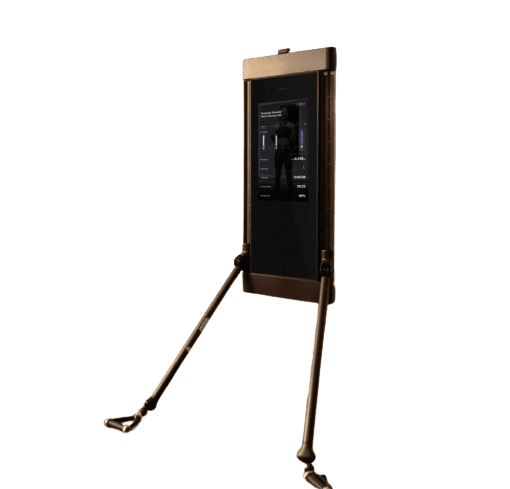
Quick specs
- Format - Wall-mounted smart cable machine
- Resistance - 200 lb digital (up to 250 lb peak), magnetic
- Footprint - 6” wall protrusion (50.9”H × 21.5”W × 5.25”D)
- Includes - AI form camera, Smart View coaching, smart handles, smart bar
- Subscription - Monthly fee (12-month minimum commitment)
The Tonal 2 is the only cable machine on this list that fits in an apartment without removing a wall.
Warranty - 2 years
Summary of experience, tests & opinions
What’s smart
- 250 lb digital resistance ceiling with the AI adjusting to your strength level in real-time.
- Built-in Smart View camera flags poor reps before they cause injury.
- Dynamic modes (eccentric overload, chain mode, spotter mode) you can’t replicate on a stack trainer.
What’s awkward
- Premium-tier sticker plus mandatory monthly subscription (12-month minimum). The long-run total is a serious investment.
- Wall-mount only. Requires wooden studs. Won’t work on cinder block, concrete, or steel-stud apartments.
- No barbell attachment. No leg press option. The accessory ecosystem is small.
Pros & cons
Pros
- Quietest cable machine in this list. Magnetic resistance has zero clank.
- Smallest physical presence by an order of magnitude.
- AI workout programs adapt to your strength curve session by session.
Cons
- Subscription is mandatory for most features.
- The 250 lb ceiling is generous for most lifts but a stack trainer at 1:1 (Force USA G12 at 200 felt) gives you the same loaded feel without the subscription.
Read more about Tonal 2
Tonal launched the original Tonal in 2018 as the first commercial-grade smart home gym. The 2024 Tonal 2 launch was the maturation. Bigger resistance ceiling (250 lb vs 200), better AI form coach, sharper display, and the same wall-mount form factor.
The case for Tonal is narrow but real. Apartment lifters who need cable training and can’t fit a stack trainer essentially have this and the MAXPRO SC as the only options. Magnetic resistance also means zero drop noise. Apartment neighbours stay friends.
The case against Tonal is the lock-in. The monthly subscription is mandatory for the AI features and the full workout library, with a 12-month minimum commitment. Cancel after that and you’re left with a premium wall-mounted cable machine that still works for basic exercises but loses the smart features. Other smart trainers (Speediance, Lit Method) have launched with similar models but Tonal has the deepest workout library and the most mature AI form coach.
Tonal’s hardware-plus-software build earns it a strong position on our quality score:
Bottom line
Apartment lifter with no floor space and a desire for AI-coached programming? This is the only realistic option. I’ve trained on a Tonal at a member’s flat in central London where a power rack would never fit, and the wall-mount form factor is genuinely unmatched in that context. For anyone with a garage and space for a stack trainer: the REP Ares 2.0 gets you better cable feel, no subscription, and a lifetime frame warranty for a fraction of the long-run total.
Tonal 2 might be for you if… you live in an apartment or your home gym is the corner of a room with no floor space for a stack trainer.
It’s not for you if… you have a garage or a basement with floor space. Every other pick on this list gives you better value per dollar.
Inspire Fitness FT2
Best Premium Versatile Cable Machine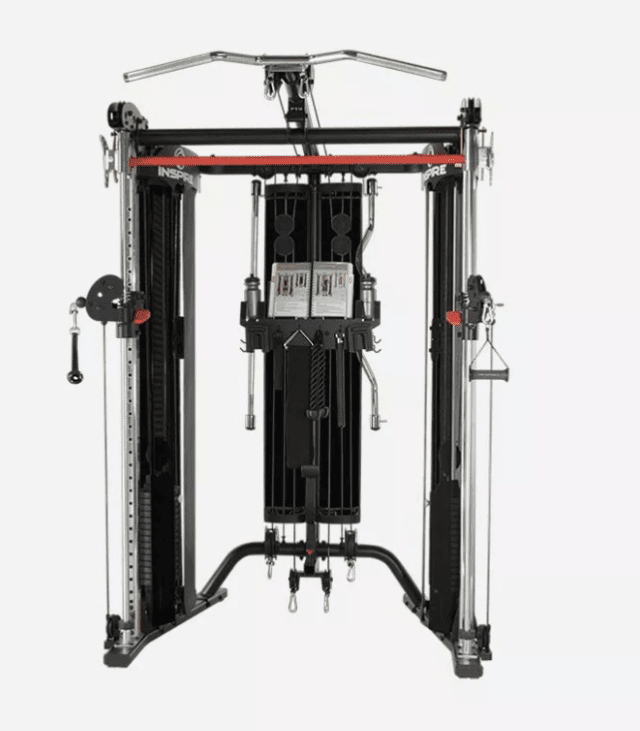
Quick specs
- Format - Standalone functional trainer + integrated Smith machine
- Stacks - Dual 165 lb selectorized (upgradeable)
- Ratio - 2:1
- Functions - Functional trainer + Smith + lat pulldown + low row
- Warranty - Lifetime frame and parts (residential)
The FT2 is the cable machine for buyers who want commercial-grade build without the floor space of a Force USA all-in-one.
Summary of experience, tests & opinions
Why it earns the premium tier
- Lifetime frame AND parts warranty on residential use. Only kit on this list with parts coverage that broad.
- Integrated Smith machine works as a real second lift station, with proper bushings and safety stops.
- Inspire’s customer service rates 4.5/5 in our community survey. Commercial-quality build standards on a home gym scale.
Where it costs you
- 165 lb stacks. Smaller than the REP Ares 2.0 or Force USA G12. Heavy lifters will max out the stack on cable rows.
- Premium-tier price. More than the REP Ares 2.0 + a separate Smith machine bought separately.
- Wider footprint than a single functional trainer, though smaller than the Force USA G12.
Pros & cons
Pros
- Family-friendly machine. Multiple people can use it without reconfiguration.
- Built-in cable accessory storage on the side uprights.
- Often discounted at Costco (where Inspire sells through), making it the rare premium pick that goes on sale.
Cons
- No 1:1 ratio option. The 2:1 ratio at 165 lb stacks gives you 82.5 lb felt per side, which is light for heavy back work.
- Stack upgrades cost extra and aren’t always in stock.
Read more about the Inspire Fitness FT2
Inspire Fitness sit in a quiet corner of the home gym market. They sell mostly through Costco and specialist dealers rather than direct, which means they get less press than the bigger direct-to-consumer brands. The build quality is there though. I’ve had an Inspire functional trainer on my commercial gym floor for six years and it’s needed exactly one cable replacement.
The FT2 is the most versatile machine in their lineup. The integrated Smith machine isn’t an afterthought. The bushings are proper, the safety stops work, and the bar weight is a sensible 25 lb rather than the 35 lb commercial spec that’s awkward for home gym lifters. Smith plus functional trainer in one structure is a genuine space saver if you’d otherwise buy both.
The head-to-head that matters is against the Force USA G12. The G12 is bigger, carries bigger stacks, and includes more attachments. The FT2 has a longer parts warranty, a smaller footprint, and a quieter overall feel. For a 200-300 sq ft gym, the FT2 fits better. For a 400+ sq ft room where space isn’t the binding constraint, the G12 wins.
Size up to a bigger-stack pick if you train above 150 lb on cable rows or pulldowns, because the 165 lb stacks at 2:1 give you 82.5 lb felt per side. Everyone else gets commercial-grade build in a moderate footprint.
The FT2 sits in the middle of our value-for-money score, a respectable result at this price tier:
Bottom line
The Inspire FT2 is the right buy if you want one machine that does cable, Smith, lat pulldown, and low row at commercial-grade build quality, and you have ~22 sq ft of floor space. For lifters who need bigger stacks or 1:1 ratio, the Force USA G12 is the better all-in-one. For lifters who already own a rack, the REP Ares 2.0 saves the floor space.
How to choose a cable machine for your home gym
Before you click “buy” on any of the picks above, here’s the order I’d think through the decision.
Format comes first, brand comes second. This is the most important sentence in this guide. Most buyer regret in cable machines comes from buying the wrong format. A rack-mounted REP Ares 2.0 and a wall-mounted Tonal 2 cost roughly the same, but they’re built for completely different use cases. Pick the format that matches your space, training style, and existing equipment FIRST. Then narrow on brand.
Format check:
- Already own a REP rack? → REP Ares 2.0 or REP Athena
- Building a complete gym in one footprint? → Force USA G12
- Tight budget, already own plates? → BoS Cable Tower 2.0
- Heavy crossover work, 200+ sq ft of space? → Body-Solid GDCC250
- Apartment, no floor space? → Tonal 2
- Travel for work, need portability? → MAXPRO SC
- Mid-size gym, want everything including Smith? → Inspire FT2
Pulleys are the single most important quality marker on a mid-tier cable machine. Aluminium pulleys with brass bushings (REP Ares 2.0, REP Athena, Body-Solid GDCC250) stay smooth at year 10. Aluminium with sleeve bearings (BoS Cable Tower 2.0) is the next tier. Nylon pulleys (cheap Amazon brands) glaze over by year 3. Demand aluminium.
Stacks come next. 160 lb selectorized is the home gym floor. 200+ is comfortable. 1:1 ratio doubles the felt resistance per stack pound. A 200 lb stack at 1:1 feels like 200 lb in your hand; the same stack at 2:1 feels like 100 lb.
Warranty small print is the next trap. Most “lifetime” warranties on cable machines cover the frame only. The wear parts (pulleys, cables, bearings) usually get 1-3 years. REP, Inspire, and Body-Solid honour their stated warranties cleanly per SHG community feedback. Force USA’s 10-year moving parts on the G12 is genuinely longer than most.
Finally, factor accessories. A bare cable machine with two D-handles isn’t ready to train. Budget a meaningful extra for a lat pulldown bar, tricep rope, ankle strap, and a stirrup or two. The Force USA G12 bundles the most. The REP Ares 2.0 and Athena ship sparse.
Other cable machines we tested - close-but-no-cigar
- REP Ares Builder - the previous overall pick. Still a fine machine, but the REP Ares 2.0 update fixed the rear-mounted stack issue at the same price tier.
- Force USA G20 - covered in our best functional trainer roundup. The G12 wins for the cable-machine category specifically.
- Inspire Fitness FTX - the cheaper sibling of the FT2. Solid value but no Smith machine integration. Beaten on versatility by the FT2 at slightly higher cost.
- REP FT-5000 - replaced by the REP Arcadia in REP’s current lineup. Inventory winding down.
- Tonal (original) - replaced by the Tonal 2. Open-box deals on the original are worth a look if you can find one.
- Beyond Power Voltra I - genuinely innovative magnetic-resistance smart cable, but the MAXPRO SC covers the portable category at much lower cost.
- Powertec Workbench Levergym - useful multi-functional lever + cable combo, but height-restrictive for users over 6 ft.
- Valor Fitness BD-61 - the previous SHG budget pick. The Bells of Steel Cable Tower 2.0 now does the same job with better pulleys.
- SERTT pulley system - cheap on Amazon but the pulleys are nylon and the cables fray. Beaten by anything else on this list.
Cable machine FAQs
What’s the difference between a cable machine and a functional trainer?
A functional trainer is a specific kind of cable machine with two independent dual-stack columns, each adjustable through the full vertical range, with both columns usable simultaneously.
A cable machine is the broader category. It includes single-column towers, plate-loaded towers, smart cable machines, and crossover stations as well as functional trainers.
The REP Ares 2.0 is a cable machine that attaches to a rack. The REP Athena is a single-column cable machine. The Bells of Steel Cable Tower 2.0 is a plate-loaded cable machine. Our best functional trainer guide covers the dual-stack functional trainer category specifically.
Is a 1:1 or 2:1 pulley ratio better?
It depends what you train.
A 1:1 ratio means a 200 lb stack feels like 200 lb in your hands. Best for heavy back work. Rows, pulldowns, deadlift-style cable pulls. The Force USA G12 and the Body-Solid GDCC250 use 1:1.
A 2:1 ratio halves the felt weight, so the cable travels twice as far and feels smoother for fast movements (cable crossovers, woodchops, lateral raises, face pulls). The REP Ares 2.0 and most home functional trainers use 2:1.
The REP Athena and BoS Cable Tower 2.0 offer both ratios via swappable attachments.
Do I need a rack-mounted or freestanding cable machine?
Freestanding is the default for any home gym with floor space and no existing power rack.
Rack-mounted (REP Ares 2.0, REP Athena) only works if you already own a compatible REP PR-4000 or PR-5000.
The third option, wall-mounted (Tonal 2), works only in spaces with wooden studs (not cinder block or steel-stud apartments).
How much weight stack do I need?
For most home gym lifters, dual 160-200 lb selectorized stacks at 2:1 ratio (80-100 lb felt per side) is plenty for cable rows, pulldowns, and face pulls.
If you train heavy back work above 200 lb felt resistance, look at the Force USA G12 with its 1:1 ratio at 200 lb stacks (200 lb felt).
If you’re a true strength athlete training above 300 lb on cable rows, the REP Ares 2.0 with its 310 lb stack upgrade is your only real option in the home gym market.
Can a cable machine replace free weights?
No, but it complements them very well.
Cable machines are excellent for accessory work, isolation movements, and constant-tension exercises that free weights struggle with (lateral raises, face pulls, cable crossovers, woodchops).
For the big four lifts. Squat, bench, deadlift, overhead press. You still want a barbell, a rack, and plates. The cable machine is the second buy after the rack and bar are sorted.
What attachments do I actually need?
The minimum useful kit: two D-handles, a lat pulldown bar, a tricep rope, and an ankle strap.
The Force USA G12 bundles all four plus a multi-grip pull-up bar and a landmine attachment. Most other cable machines on this list ship with just two D-handles. Budget a meaningful extra for the basics.
You’ll add specialty handles (single-handle ergonomic, multi-grip lat bar, MAG attachment) over time as you find what you actually use in your training.
How long do cable machines last?
A quality cable machine with aluminium pulleys and 11-gauge steel should last 10-15 years in a home gym setting.
Commercial gym kit lasts longer. My 2011 Body-Solid GDCC250 is still smooth in 2026 after 15 years of daily commercial use. Home gym use is far gentler, so a comparable machine in a home gym should easily clear 15 years.
Budget machines with nylon pulleys typically need pulley replacement around year 5, sometimes sooner if you train heavy.
Are smart cable machines (Tonal, Speediance) worth it?
For apartment lifters or solo trainees who value AI form coaching, yes.
For garage gym buyers with floor space, no. The premium upfront plus the monthly subscription costs more per year than a REP Ares 2.0 plus a Strong Home Mass programme.
The Tonal 2 is the best of the smart category. The MAXPRO SC is the best portable cable for buyers who don’t want a subscription.
The bottom line
I spent over 150 hours on this guide because cable machines are the most varied and most expensive category in home gym kit, and the wrong format buy costs you serious money you can’t get back.
For most people with a power rack: the REP Ares 2.0. Zero added footprint, dual 260 lb stacks, lifetime frame warranty, and the same pulley quality you’d get in a commercial Life Fitness G7.
Building a complete gym in one footprint? The Force USA G12 replaces the rack, the Smith machine, and the cable station in 33 sq ft. Tight budget, already own plates? The BoS Cable Tower 2.0 is the cheapest serious cable on the market. Living in an apartment? The Tonal 2 is the only realistic option. Need portability? The MAXPRO SC folds into a backpack.
For the functional trainer category specifically. Dual-stack standalones like the REP Arcadia and Bells of Steel FT. See our best functional trainer guide.
If you want another look at the picks, skip back to the table. Otherwise bookmark this and check back. We keep it fresh.
Stay strong and smart.
