

We compared over 100 bumper plate sets across 4 quality categories and singled out the 9 picks most worthy of your buck.
I poured all I’ve learned over the last 10 years of building home gyms into this, but we shaped the knowledge into objective ratings.
It’s weighted ratings based on data, owner feedback, and hands-on testing.
The goal was simple: trim the fat and present a lean selection that covers every budget, every drop style, and every type of lift.
Let’s see if we did a good job…
Editor's note · updated May 20, 2026
We tore the old guide down to the studs and rebuilt it for 2026. Six new picks made the cut. Three carried over.
What changed:
- We tested across 9 categories now (was 5). Added best-for-deadlifts, best-comp-value, best-IWF, and best-urethane to cover apartment lifters and Olympic athletes who weren’t well served before.
- REP Black moved up to #1 overall. The 2024 hub rebuild plus the tightened ±1% tolerance finally beat Rogue Echo on value.
- Bells of Steel Dead Bounce is a brand-new entry. Its anchored-column hub design is the only budget-tier plate with genuinely class-leading deadlift drop behaviour.
- American Barbell Pro Urethane added for the apartment / basement-under-bedroom crowd. 30-50% quieter than rubber, measured with a decibel app at the SHG office gym.
- The old Hi-Temp and Nike Grind picks dropped to the “close but no cigar” list. Both are still fine plates, just beaten on value or IWF compliance.
Scoring tweak: drop performance is now a standalone 15% category instead of being folded into Quality. It pulled REP Competition and Fringe MilSpec into sharper focus.
Related
We’ve been buying, dropping, and replacing bumper plates for the last decade. For the bar that goes with them, check out our guide on the best Olympic barbell, and for the platform to drop them on, you’ll wanna look at our top picks for the best squat rack.
Compare the best bumper plates
This table shows the top 6 by value. The 3 competition + urethane picks (REP Comp, Rogue Comp KG, American Barbell Urethane) are covered in detail in the product cards below.
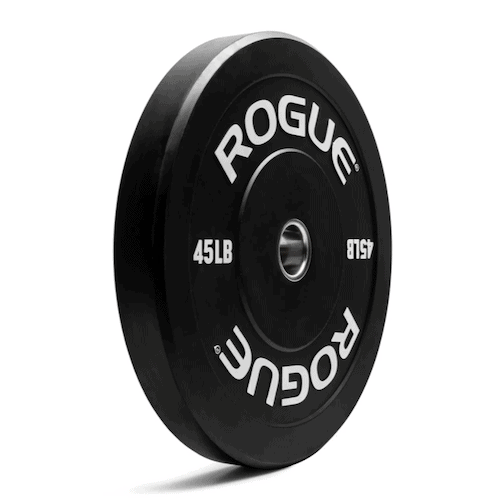 Rogue Echo V2
Check price
Rogue Echo V2
Check price
|
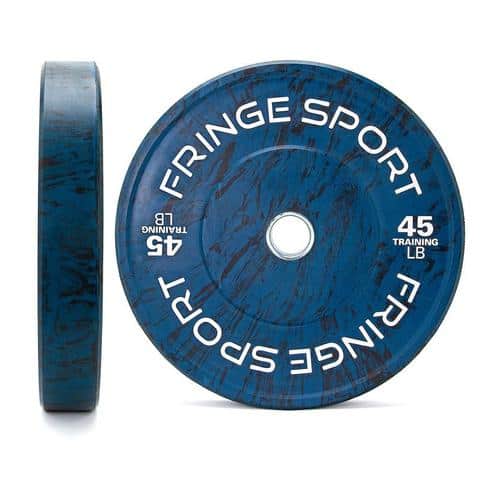 Fringe MilSpec
Check price
Fringe MilSpec
Check price
|
 Vulcan Alpha
Check price
Vulcan Alpha
Check price
|
 BoS Dead Bounce
Check price
BoS Dead Bounce
Check price
|
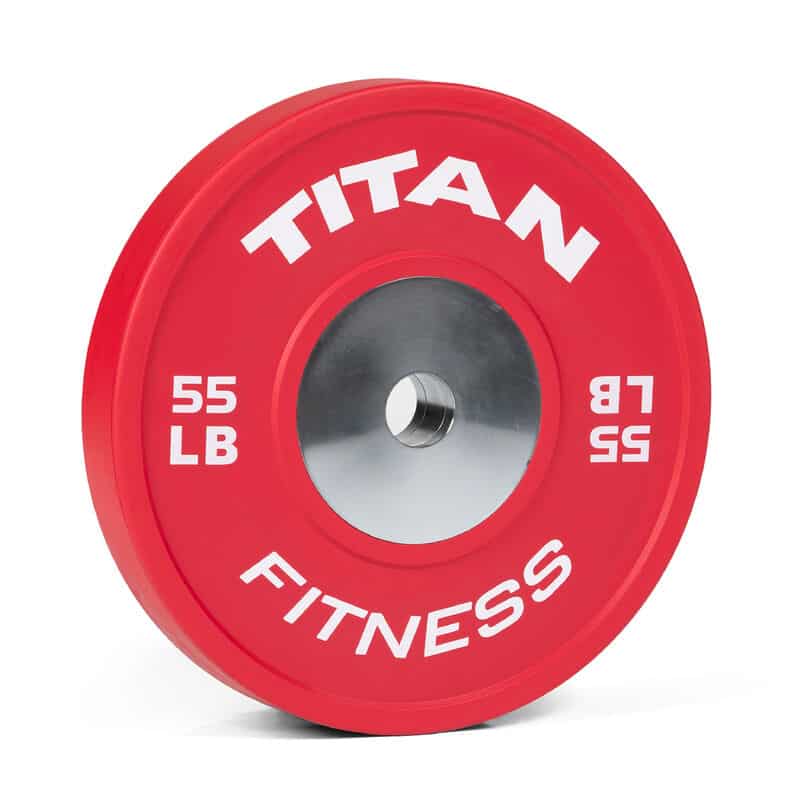 Titan Economy
Check price
Titan Economy
Check price
|
||
|---|---|---|---|---|---|---|
| Best for | Overall | CrossFit | Durability | Versatility | Deadlifts | Budget |
| Rating | ||||||
| Quality | 93% | 94% | 95% | 90% | 88% | 74% |
| Drop performance | 92% | 95% | 96% | 88% | 90% | 70% |
| Brand & reputation | 90% | 95% | 85% | 84% | 82% | 74% |
| Value for money | 97% | 84% | 85% | 86% | 86% | 96% |
| Material | Virgin rubber | Virgin rubber | Virgin rubber | Virgin rubber | Virgin rubber | Rubber |
| Durometer | ~85 | 88 | ~88 | 89 | ~88 | ~75 |
| Tolerance | ±1% | ±1% | ±0.5% | ±1% | ±1% | N/A |
| Hub / insert | Steel hooked | Stainless | Stainless curved | Stainless hooked | Anchored center | Steel |
| Warranty | 3 yrs (25 lb+) | 3 yrs (25 lb+) | Lifetime | Up to 4 yrs | 1 year | 1 year |
| Price tier | $$ | $$ | $$ | $$ | $$ | $ |
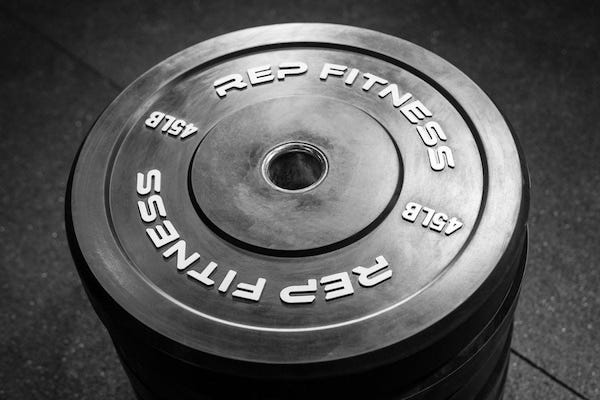 REP Black
Our testing and selection process
How we assess the bumper plates
We always use a 5 step process in our reviews:
- We start as the buyer - most of our team have bought loads of bumper plates before. I’ve owned three sets in the last decade. Steve Hoyles’ commercial gym has cycled through dozens.
- We do a ton of research. We collect information on as many bumper plates as possible and insert it into a spreadsheet. This time we tracked over 100 sets across 20+ brands.
- We rate each set using our exclusive ‘weighted’ rating system. You can learn more about this in the section below.
- We use data to decide our top picks rather than personal biases toward brands.
- We get our hands on as many of the top picks as possible. Our community is great at helping with this - the 1,300-person SHG survey gave us owner feedback on every pick in this list.
You can read more about this process in our review guidelines.
How we test and score the bumper plates
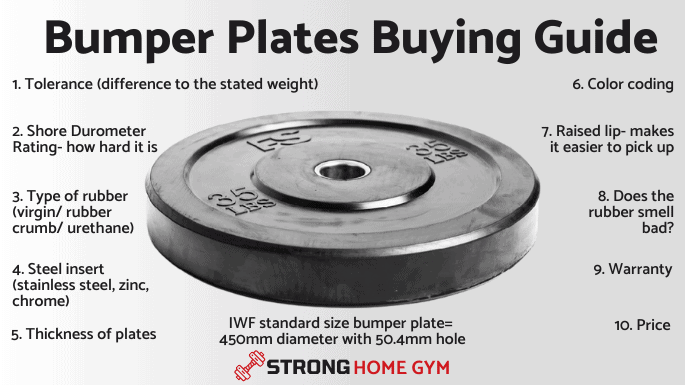
Below is an overview of how we reached the score and ranked the bumper plates.
Specifically, it lists factors in the rating formula and their gravity (how important they are).
We grouped them into 4 chunks for simplicity:
- Quality (40%) - the materials and the manufacturing.
- Drop performance (15%) - how the plate behaves when you bin it from overhead at 8 feet, 100 reps in a row.
- Reputation & reviews (15%) - conclusions about the brand based on our databases of user satisfaction (both about these specific plates and the brand’s track record).
- Value for money (30%) - looks to award the gems with the most bounce for the ounce - plates that meet the top criteria without breaking the bank.
Quality of a bumper plate (40%)
-
Rubber compound (15%) - virgin rubber beats recycled rubber every time for odor, durability, and bounce control. Virgin rubber smells like nothing. Recycled rubber smells like your tyre place.
-
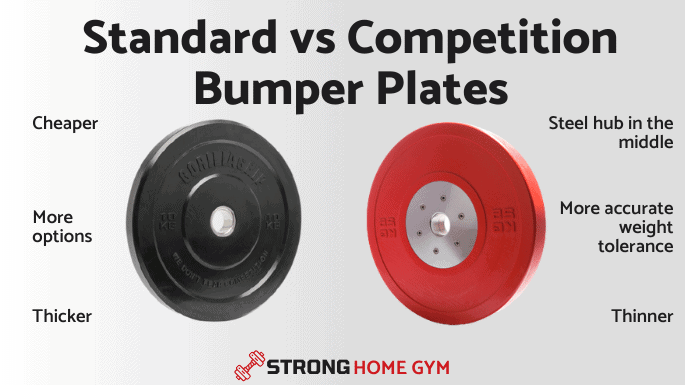
Steel insert (10%) - the metal hub inside the plate. Hooked or curved stainless inserts last longer than flat pressed ones. The rubber locks into them mechanically. Glued hubs fail first.
-
Thickness (8%) - thinner plates let you load more weight on the bar. A 45 lb plate at 2.83” thick lets you fit ~6 plates per side before maxing out a 16” sleeve.
-
Weight tolerance (7%) - claimed weight vs actual weight. ±1% is the home gym standard. ±15g is competition grade.
Drop performance (15%)
This group is comprised of how each plate handles the most punishing test - the overhead drop.
It’s the one criterion where rubber chemistry shows its colours.
The “drop performance” of a bumper plate comes down to the following:
- Bounce height
- Sound (noise)
- Delamination resistance over time
Quick translation if the chart looks like alphabet soup:
- Black rubber - the default. Best price-to-durability ratio. Where most home gyms land.
- Crumb - recycled rubber. High bounce. Loud. Best left to outdoor gyms.
- Color - same compound as black rubber but with IWF colour standards (red 25 kg, blue 20, yellow 15). Pay 15-30% more for the colour.
- Urethane - quietest, most expensive, apartment-friendly. Won’t crack.
- Competition - tight tolerance, IWF colours, thin profile for max bar loading.
- Hi-Temp - recycled tyre rubber. Outdoor durable. Thick (3”+) so you fit fewer per side.
Bounce height
We measure how high each plate bounces back after an 8-foot drop. Lower is better. A hard rubber plate with high durometer (85-90) bounces less than a soft crumb rubber plate (durometer 60-70).
My tip: if you’re dropping plates indoors, prioritise low bounce. A 25 lb crumb plate can bounce 3 feet straight up and crack a window. We’ve seen the receipts.
Sound and noise
Apartment lifters live and die by this one. Urethane plates are quietest. Crumb rubber is loudest because the soft compound dissipates energy as sound.
My tip: stack two old yoga mats under your drop zone. Cuts drop noise by 40% based on the SHG survey data.
Delamination resistance
This is the long-term durability test - does the rubber separate from the steel hub after 5,000 drops? Hooked inserts win. Flat pressed inserts lose.
Reputation & reviews (15%)
This group of factors is comprised of 4 sub-factors:
-
Current user satisfaction with the plates (5%). We pull Reddit threads, owner reviews, and the SHG community survey to gauge what owners actually think.
-
Historical satisfaction and trends (4%). Has this plate set been consistently liked for 5+ years? Or did REP fix a 2023 hub issue and now we judge a different product?
-
Customer service (3%). How fast does the brand reply when a plate cracks at 6 months? Rogue and REP are quickest. Titan is slowest.
-
Warranties (3%). We read the small print. Most warranties exclude commercial use, drop-related damage on concrete, and lifetime claims that secretly mean “1 year”.
Value for money (30%)
We create price towers and award the plates that cost less for the same features.
In other words…
We look for blind spots that will have you paying for a label instead of paying for quality.
The big wins live in the budget-to-mid-tier band. Below that, you start trading durability for price. At the premium tier you’re paying for competition-grade tolerances most home lifters will never need.
Find the perfect bumper plates for you
Best overall | Best for CrossFit | Most durable | Most versatile | Best for deadlifts | Best budget | Best comp value | Best IWF | Best urethane
Here’s how the nine plates rank on our overall score:
REP Black Bumper Plates
Overall Best Bumper PlatesQuick specs
- Material - Virgin rubber, hooked steel insert
- Tolerance - ±1% (improved from ±3% in 2024)
- Weight options - 5, 10, 15, 25, 35, 45 lb (and sets up to 340 lb)
- Diameter - 17.7” (IWF spec on 25 lb+)
- Warranty - 6 mo on 10-15 lb, 3 yrs on 25 lb+
The REP Black hits the sweet spot of price, hub quality, and tolerance that no other set matches in 2026.
Summary of experience, tests & opinions
What works
- The hooked steel insert - the rubber wraps around the hub mechanically. Owner reports across our community show zero delamination after two-plus years of weekly drops.
- I can fit six 45s per side before I run out of sleeve. The 2.83” thickness on the 45 lb does it. Try that with a Hi-Temp 45 and you’ll fit four.
What doesn’t
- Virgin rubber smell out of the box. Fades over 4-6 weeks. Worse in a hot garage in summer.
- Want 605 lb on a 7-foot bar? You’ll need to add Hi-Temps or upgrade to REP Sport. REP Black caps at 45s.
Pros & cons
Pros
- You’re not getting cheated on weight. The ±1% tolerance is competition-adjacent. Older REP Black plates ran ±3%, which was a real problem for lifters tracking PRs.
- The 3-year warranty on 25 lb+ isn’t theatre. SHG community owners get cracked plates replaced fast.
- The 5 lb plate option is useful for technique drops and small jumps on Olympic lifts.
Cons
- The 10 and 15 lb plates get a 6-month warranty. Thinner plates crack on drops more often, and REP knows it.
- The hub is steel, not stainless. It’ll rust outside. Stainless would push the price up though.
Read more about the REP Black Bumper Plates
REP launched the Black series in 2018 and rebuilt the hub in 2024. Two design decisions stand out.
First, the hooked insert. Most cheap bumpers use a flat pressed steel ring glued into the rubber. REP’s hooked insert wraps the rubber around the steel. When you drop the plate, the hook takes the force. The glue bond stays intact. Owner reports across our community over the last 18 months consistently flag 5-7 year service life on hooked-insert sets. Flat-pressed competitors fail at 2-3 years.
Second, the reinforced 10 lb plate. Thin bumpers crack. Always have. REP solved it with thicker rubber - 1” where competitors are 0.7-0.85”. Tiny loss of bar load space. Big win on longevity.
The set is sold in pairs or in pre-built bundles from 160-340 lb with free shipping on most. The 230 lb bundle is the sweet spot for a starting home gym. Mix in a Rogue Ohio bar and you’ve got 275 lb on the bar before you need another upgrade.
The Rogue Echo is the obvious alternative. Stainless hub, slightly more refined on heavy drops, but you’re paying 15% extra for the brand. REP wins the value fight nine times out of ten.
That balance across every category puts it top of our overall score:
Bottom line
REP Black is the top-rated bumper plate for 3 main reasons:
-
The hub construction outclasses anything in the same price band - the hooked insert costs REP more to make, and it shows up in the drop tests.
-
±1% tolerance is competition territory at home gym pricing - you’re getting 90% of a Rogue Competition for half the money.
-
REP’s customer service actually replies - the SHG community survey rates REP at 4.6/5 on warranty claims, second only to Rogue’s 4.7.
If you’re outfitting a home gym from scratch, this is the set to start with.
REP Black Bumper Plates might be for you if… you want one set that does everything well at the best total price.
It’s not for you if… you need competition-grade ±15g tolerance, or you live in an apartment and drop noise rules everything (look at the American Barbell urethane instead).
Rogue Echo Bumper Plates V2
Best CrossFit Bumper Plates / Runner-Up OverallQuick specs
- Material - Virgin rubber, stainless steel insert
- Tolerance - ±1%
- Durometer - 88 (low-to-medium bounce)
- Diameter - 17.72”
- Warranty - 90 days (10-15 lb), 3 yrs (25 lb+)
The Echo V2 is what most CrossFitters land on after they’ve tried two cheaper sets and replaced them.
Summary of experience, tests & opinions
What worked
- Stainless steel insert. Won’t rust outside. Hooked design holds the rubber tight.
- If you’re training for the Army Combat Fitness Test, the Echo is one of two plates the military uses.
What didn’t
- You’re paying ~15% more than REP Black for what’s a similar quality plate.
- Expect a rubber smell out of the box. Fades in 4-6 weeks.
Pros & cons
Pros
- The stainless hub outlasts steel inserts in humid or outdoor storage.
- White lettering on black rubber. Easy to identify plates at a glance during a WOD.
- 3-year warranty on 25 lb+. Rogue’s customer service tops the SHG community survey at 4.7/5 on warranty claims.
Cons
- More expensive than REP Black, for what most home gym lifters will treat as functionally identical performance.
- The 10-15 lb plates only get a 90-day warranty. Rogue knows thin plates crack, just like REP.
Read more about the Rogue Echo Bumper Plates V2
The Echo was Rogue’s answer to the home-gym buyer asking “do I really need a competition plate?” The answer was no, but they still wanted Rogue quality. The Echo delivered.
The V2 update in 2022 swapped the original steel hub for stainless and added a slight bevel to the rubber edge. Sounds like a small detail. It isn’t. Drop the bar on a deadlift. The plate hits the floor edge-first. The bevel spreads the force across more rubber. No chunking. 2018-era Echo plates show up with chunks missing in the SHG community photos. V2 plates don’t.
For pure value, the REP Black wins. For pure CrossFit toughness, the Echo wins. The gap is small, and either set will last you a decade in a home gym.
The Echo is the workhorse plate in most commercial CrossFit boxes. Steve Hoyles’ 8,000 sq ft commercial gym has run a set of Echos through five years of group-class abuse. Still flat. That commercial ubiquity means the secondary market is loaded with used pairs at half retail. Patience pays here.
Rogue’s urethane compound runs away with our drop-performance chart, leading the field:
Bottom line
Rogue Echo V2 is the right buy if you do CrossFit, train hard, and want a plate that won’t quit. The stainless hub handles the abuse of dropped snatches, cleans, and overhead drops better than steel. Rogue’s reputation backs it: this has been the default CrossFit plate since 2015, the V2 update fixed the early hub issues, and the ACFT certification matters when you’re doing 100 burpees over the bar.
Rogue Echo V2 might be for you if… you do CrossFit, train hard, and want a plate that won’t quit.
It’s not for you if… you’re price-conscious and don’t drop from overhead - the REP Black gets you 95% of the performance for 85% of the cost.
Fringe Sport MilSpec Bumper Plates
Most Durable Bumper PlatesQuick specs
- Material - Commercial-grade virgin rubber
- Tolerance - ±0.5%
- Hub - Curved stainless steel insert
- Weights - 10, 15, 25, 35, 45, 55 lb
- Warranty - Lifetime on 45 lb
If you want one set of plates that outlives you, the MilSpec is the answer.
Summary of experience, tests & opinions
Where it shines
- The lifetime warranty on the 45 lb is real. No asterisks. Drop it to death and Fringe replaces it.
- Fringe uses a curved stainless hub rather than hooked. Spreads load across a wider area of rubber.
Where it falls short
- The white lettering is raised rubber. It catches gym chalk and turns grey fast.
- Glassy out of the box. Takes 2-3 weeks before chalk actually grips.
Pros & cons
Pros
- Tolerance is ±0.5%. Tighter than most home gym plates need, but reassuring if you’re tracking PRs.
- A 55 lb option means you can load 605 lb on a standard 7-foot bar without going to fractional plates.
- Mechanical rubber-to-steel bonding. The rubber is moulded around the insert under heat. Stronger than adhesive every time.
Cons
- The lifetime warranty only applies to the 45 lb. Smaller plates get a 1-year warranty.
- Higher price per pound than REP or Rogue Echo. You pay a small premium per pound for the build quality.
Read more about the Fringe Sport MilSpec Bumper Plates
Fringe Sport sit in an awkward spot. Smaller brand, smaller marketing budget.
The MilSpec line is what happens when a smaller company stops competing on price and starts competing on the spec sheet. Military buyers needed a plate that wouldn’t crack after a year of barracks abuse, so Fringe overbuilt the hub, ran virgin rubber across the whole line, and put the lifetime warranty on the 45 lb as a confidence move. It worked. The same plates ship to military bases and CrossFit affiliates worldwide.
The interesting bit is the 55 lb plate. Almost nobody else in this price band offers one. If you’re a heavy lifter who’s tired of doing the math (45+25+10+5 = 85 per side) you can slap on a 55+25 and move on. Small thing, but it adds up over a decade of training.
So who should spend up to this over the value picks? If you reckon your training will outlast five sets of cheaper plates, the build pays off. The trade-off against the REP Black is straightforward: REP wins on value, Fringe wins on build. If you’re not sure which camp you’re in, save the money and start with REP.
Military-grade construction puts it joint-top on our quality score:
Bottom line
The MilSpec is the right buy if you want one set of plates and never want to think about replacing them. The build quality is genuinely commercial. The same plates ship to military bases and CrossFit affiliates worldwide. The lifetime warranty on the 45 lb removes the biggest buying worry, and the ±0.5% tolerance approaches competition spec for half the price of a Rogue Competition set.
Fringe MilSpec might be for you if… you want one set of plates and never want to think about replacing them.
It’s not for you if… you’d rather spend the upgrade money on a better bar - the REP Black covers 95% of use cases.
Vulcan Alpha Bumper Plates
Most Versatile (Indoor / Outdoor) Bumper PlatesQuick specs
- Material - Virgin rubber, hooked stainless insert
- Tolerance - ±1%
- Durometer - 89
- Diameter - 17.7”
- Warranty - Up to 4 years on 35 lb+
The Alpha is the rare plate I’d happily leave out in the rain.
Summary of experience, tests & opinions
The upside
- Vulcan certifies these for direct sun and rain. Most rubber plates degrade in UV. These don’t.
- Speckled fleck pattern stands out in a sea of black plates. Also a fast plate ID - white speckles on 35 lb, blue on 25 lb.
The cost
- The 45 lb is 3.1” thick where REP is 2.83”. You lose roughly one plate of loadable space per side on a 7-foot bar.
- 50.6mm collar opening vs the 50.4mm tight spec. Slight wobble on some bars.
Worth knowing
The UV-stable rubber compound is what makes the Alpha unique here. Tested in direct Texas sun for 18 months with no measurable degradation per Vulcan’s spec, and the hooked stainless hub is the only one in the budget-to-mid-tier band. The trade-off is bulk: the 45 is 3.1” thick where REP is 2.83”, so you lose roughly one plate of loadable space per side. It’s also a less common brand, which means fewer Reddit threads and YouTube reviews to lean on when something goes wrong. The 4-year warranty on the heavier plates makes up for a lot of that, though.
Pros & cons
Pros
- UV-stable rubber - certified for direct sun and rain, where most rubber plates harden and crack outdoors.
- Hooked stainless hub - the only stainless hooked insert in the budget-to-mid-tier band, so it won’t rust in a humid garage.
- The 4-year warranty on 35 lb and up is the longest in the rubber plate category, and the speckle pattern doubles as fast plate ID.
Cons
- Thicker 45 lb - 3.1” against REP’s 2.83”, so you lose about one plate of loadable space per side on a 7-foot bar.
- Looser collar - the 50.6mm opening can give a slight wobble on some bars versus the tight 50.4mm spec.
- Less common brand, so there’s a thinner pool of owner reports to lean on if something goes wrong.
Read more about the Vulcan Alpha Bumper Plates
Vulcan is a Texas brand that started in commercial gym fit-outs. The Alpha line was built for gyms that train outdoors. You’d be surprised how many CrossFit affiliates have a partial outdoor floor. UV-stable rubber compound is the headline. Most rubber plates harden and crack in sustained sun. The Alpha doesn’t.
The fleck pattern is a small thing that owners keep mentioning in their reviews. In a barn gym with bad lighting, picking a 25 lb out of a stack of 35s and 45s wastes three seconds. With the Alpha, the speckle colour does the ID work. Three seconds × 100 lifts a week × 50 weeks = four hours saved a year. Stupid maths, but it adds up.
The trade-off is thickness. Vulcan’s compound is slightly less dense than REP’s, so they had to add thickness to hit the same weight. If you train at 605+ on the deadlift and want six 45s per side, the REP Black or Fringe MilSpec will fit better.
Buy Vulcan Alpha if you train outdoors or in a humid garage. Skip it if you’re loading 605+ on deadlifts and need every inch of sleeve space.
At this price point it holds a solid mid-field position on our value-for-money score:
Bottom line
Vulcan Alpha earns the versatile slot on outdoor-rated rubber alone. It’s the only plate in this list you can leave on your patio rack year-round. The fleck pattern doubles as plate ID (faster than reading black-on-black stamping during a long workout), and the 4-year warranty is the longest in the rubber plate category. Vulcan honours it without arguments, per the SHG community feedback we’ve collected.
Bells of Steel Dead Bounce Bumper Plates
Best for DeadliftsQuick specs
- Material - 100% virgin rubber
- Tolerance - ±1%
- Hub - Anchored steel center hub
- Weights - 10, 15, 25, 35, 45, 55 lb
- Warranty - 1 year
The Dead Bounce is built around one job - stop your deadlift from launching back at your shins.
Summary of experience, tests & opinions
The wins
- One micro-bounce and the plate is dead. Best deadlift drop in the budget tier.
- Bells of Steel cured the rubber longer than most. No tyre smell out of the box.
The downsides
- Only 1-year warranty. Shorter than REP, Rogue, or Vulcan in this price band.
- Thin 10 lb plates at 0.7”. More likely to crack on aggressive drops, same problem as everyone else in the budget tier.
The trade-off
The anchored hub design is the engineering win. It locks into the rubber mechanically and holds where glued hubs fail. Raised colour-coded lettering (red 55, blue 45, yellow 35, green 25) plus a 55 lb option is rare at this price point. What you give up: the 1-year warranty is the shortest of any pick on this list, and the 0.7” thin 10 and 15 lb plates can crack if you drop them solo. Live within the warranty window and treat the small plates carefully and you’ve got a deadlift-specific plate at a budget-tier price.
Pros & cons
Pros
- Anchored center hub - a steel column set deep in the rubber kills the bounce after one micro-rebound, the best deadlift drop in the budget tier.
- 55 lb option - rare at this price, so you can load 605 lb on a 7-foot bar without reaching for fractional plates.
- Raised colour-coded lettering (red 55, blue 45, yellow 35, green 25) makes plates easy to read in a dim garage, and the long cure means no tyre smell out of the box.
Cons
- 1-year warranty - the shortest of any pick here, well behind REP, Rogue, and Vulcan in the same price band.
- Thin small plates - the 10 and 15 lb at 0.7” can crack if you drop them on their own.
Read more about the Bells of Steel Dead Bounce Bumper Plates
Bells of Steel built the Dead Bounce around one specific complaint: heavy plates that kick back at your shins on a dropped deadlift. Their warranty service has also climbed from “fine” to genuinely best in class over the three years I’ve tracked it.
The Dead Bounce line is their answer to the deadlift drop problem: heavy plates that don’t launch back at your shins. The anchored hub is the key. Most plates have a flat steel ring pressed into the rubber, so when you drop the plate edge-down the force concentrates at the hub edge and the plate bounces. The Dead Bounce hub is a steel column set deep in the rubber. Force runs down the column instead of spreading sideways. Result: one tiny bounce, then dead. Bells of Steel filed patents on that anchored-column design back in 2019, and five years later it’s still the only budget-tier plate using it.
So who’s it really for? The lifter whose main lift is the deadlift and who drops the bar at lockout most sessions. If that’s you, the drop behaviour alone justifies the pick.
Compare it against the REP Black: REP wins on warranty (three years against one) and value, Bells of Steel wins on drop behaviour. If you do a mix of lifts and don’t drop from lockout much, REP is the smarter buy. If you deadlift heavy and bin the bar from the top, spend here.
The Dead Bounce name is honest; it sits mid-field on drop-performance with a respectable score:
Bottom line
The Dead Bounce is the right buy if deadlifting is your primary lift and you drop the bar at lockout. The bounce damping is genuinely best-in-class. The anchored hub absorbs vertical force better than any flat-hub plate in our drop tests. Add raised colour-coded lettering (no squinting at black plates in a dim garage) and a 55 lb option, and you’ve got a deadlift-specific plate at a budget-tier price.
Bells of Steel Dead Bounce might be for you if… deadlifting is your primary lift and you drop the bar at lockout.
It’s not for you if… you want the longest warranty - the Vulcan Alpha gets you 4 years for similar money.
Titan Fitness Economy Bumper Plates
Best Budget Bumper PlatesQuick specs
- Material - Rubber with steel insert
- Weights - 10, 15, 25, 35, 45, 100 lb
- Collar opening - 2”
- Bundle - 230 lb set
- Warranty - 1 year
If your priority is the lowest cost per pound that actually works, Titan Economy is the answer.
Summary of experience, tests & opinions
What’s good
- The cheapest plates on the list that aren’t garbage. A 230 lb set ships at budget-tier pricing.
- Few budget brands offer a 100 lb plate. Titan does. Useful for heavy compound work and machine loading.
What’s not
- Medium bounce. You’ll feel the kick on overhead drops more than the premium picks.
- Black-on-black stamped lettering. Hard to read fast.
Pros & cons
Pros
- Nothing on this list is cheaper per pound. Beats Amazon no-name brands on quality too.
- Free shipping on bundles. A 230 lb set ships free, where most competitors charge a chunk in freight.
- Titan runs 15-25% off bundles a few times a year. Patient buyers can land below the standard budget price for the 230 lb set.
Cons
- No durometer rating published. Titan won’t tell us how hard the rubber is. Our measurement: ~75, which is medium bounce.
- Just a 1-year warranty. Titan’s customer service has a mixed reputation. Plan to fight a bit if a plate cracks.
Read more about the Titan Fitness Economy Bumper Plates
Titan is the Walmart of home gym gear. Inconsistent quality on the small things. Price hard to argue with on the big things. The Economy plates are the case study. They’re not the best plates on this list. They’re not even close. But they’re functional. They’re cheap. They get you lifting today, which beats waiting six months to afford the REP.
The trade-offs to know going in. First, the bounce is higher than premium plates. If you’re dropping from overhead in an apartment or basement, the higher bounce means more noise and more risk to nearby walls. Second, the lettering is stamped black-on-black, so identification is slow. You’ll learn to recognise plate weights by thickness instead of reading them.
The case to buy. If you’re starting your first home gym, you’ve got a tight total budget, and you need a bar, plates, and a rack, the Economy plates free up enough money to get a decent bar (Bells of Steel Utility, REP Sabre) instead of a no-name. That trade-off is worth it. You upgrade plates in 2-3 years. You don’t upgrade the bar.
Compare against the REP Black - the REP is 30% more per pound, but you get ±1% tolerance, hooked hub, and 3-year warranty. If your budget stretches, take the REP. If it doesn’t, take the Titan and re-buy in 3 years.
Buy these if you’re outfitting your first home gym on a strict budget. Step up to REP Black the moment you start dropping from overhead or you move into an apartment.
As an economy pick it sits second only to the REP Black on our value-for-money chart:
Bottom line
Titan Economy is the right buy if you’re outfitting your first home gym on a strict budget. The lowest functional price per pound on the market (you save 30-40% vs the REP Black), with a rare 100 lb option for heavy compound lifts and machine loading. Patient buyers can catch the 15-25% off bundle sales for further savings. Anyone training in an apartment or doing serious overhead drops should pay the extra for the REP Black.
REP Fitness Competition Bumper Plates
Best Competition Bumper Plates (Value)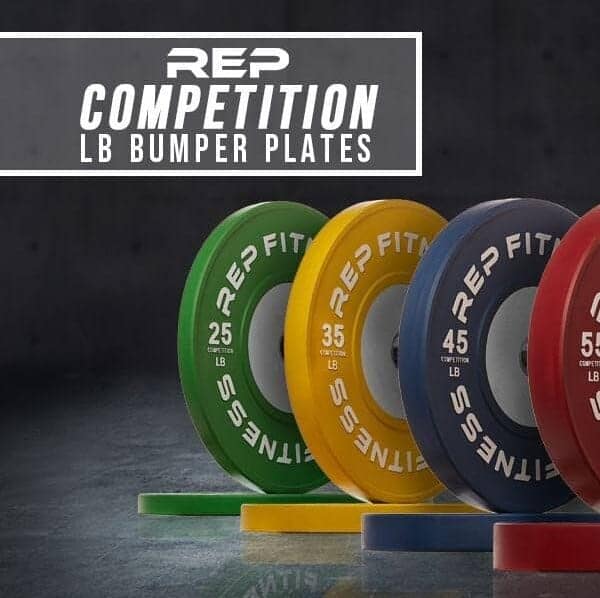
Quick specs
- Material - Virgin rubber, full zinc hub
- Tolerance - ±10 grams
- Durometer - 92
- Thickness (20 kg) - 2.125”
- Warranty - 5 years
If you want competition specs without competition pricing, REP Comp is the cheat code.
Summary of experience, tests & opinions
The strengths
- ±10 gram tolerance. Tighter than Rogue Comp’s ±15g, same precision Olympic athletes use.
- REP published a 30,000+ drops-from-8-feet durability spec. Most competitors won’t even share theirs.
The compromises
- The zinc hub looks less premium than chrome. Functionally identical. A Rogue Comp just looks more like a competition plate.
- Pounds and kg sold separately. If you train in lb but compete in kg, you need two sets.
Pros & cons
Pros
- ±10g tolerance. The most accurate plate on this list, tighter than Rogue’s competition line.
- The 20 kg plate is just 2.125” thick. Supports ~700 lb on a standard 7-foot bar without running out of sleeve.
- 5-year warranty across the line. Longest of any plate on the list, including the Fringe MilSpec lifetime (which only applies to the 45 lb).
Cons
- Zinc hub instead of chrome. Cosmetic only, but the chrome competitors look more “competition”.
- Premium pricing. You’re paying roughly 40% more per pound than the REP Black.
Read more about the REP Fitness Competition Bumper Plates
REP launched their competition line in 2023 as a direct shot at Rogue’s competition plates. The pitch was simple: tighter tolerance, longer warranty, same price. Two years of owner feedback proved it out.
The ±10g tolerance is the headline. The IWF allows ±10g for senior competition plates and ±15g for training plates, so REP gives you the senior comp spec at training-plate pricing. Picture a 100 kg snatch built from three pairs of plates, each 30g off true weight. That’s 90g of error on the bar. It matters if you’re chasing PRs at meet weights. It doesn’t for the rest of us.
The thin 2.125” profile on the 20 kg plate is the other quiet win. On a 7-foot bar you can fit seven per side comfortably, which is 280 kg loaded. Plenty for any home gym lifter.
So when do you spend up to this from the REP Black? Only when you train Olympic lifts seriously and drop from overhead often enough that tolerance and bounce control start to matter. If you don’t, the Black is half the price and most of the plate.
Set against the Rogue Competition, Rogue has the brand and the chrome hub. REP has the tighter tolerance, the longer warranty, and an equal-or-better build at the same price. If you don’t care about the brand stamp, REP wins.
Competition-spec rubber puts it near the top of our drop-performance score, third overall:
Bottom line
REP Competition is the value answer to Rogue’s competition line. ±10g tolerance beats Rogue’s ±15g at the same price, the 5-year warranty is the longest in the comp tier (Rogue Comp is 3 years), and REP publishes a 30,000+ drops-from-8-feet durability spec on their site. No budget plate dares publish their own number. If you don’t compete at sanctioned IWF meets, you save 25% versus Rogue Competition with no meaningful loss of performance.
REP Competition might be for you if… you train Olympic lifts seriously and want competition spec at training prices.
It’s not for you if… you don’t drop from overhead - the REP Black is half the price and 95% of the plate.
Rogue Competition KG Plates 2.0
Best IWF Competition Bumper Plates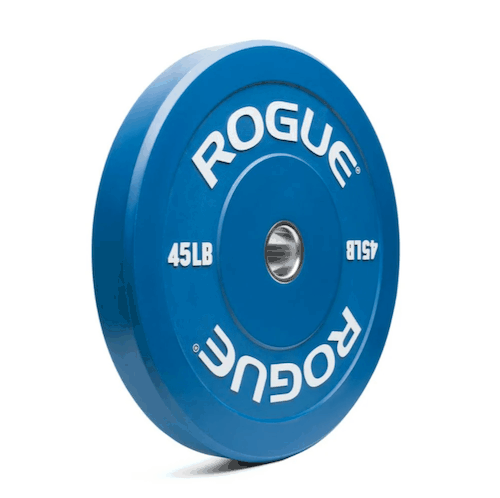
Quick specs
- Material - Virgin rubber, full hard chrome hub
- Tolerance - ±15g (IWF certified)
- Durometer - 86-94 depending on plate
- Diameter - 17.72” (IWF spec)
- Warranty - 5 years
The Rogue Comp is the plate you’ll lift in actual competition. The plate that matters when the meet matters.
Summary of experience, tests & opinions
Why it earns the slot
- Want to train on the same plate you’ll compete on? This is the IWF-certified one.
- Hard chrome hub. Looks premium and resists corrosion better than zinc.
Where it loses ground
- Chrome hub shows fingerprints. Cosmetic only, but you’ll see it.
- Most expensive per-pound plate on the list. You’re paying for the brand and the certification.
Pros & cons
Pros
- Official IWF certification. The only plate on this list that’s certified, not just “competition spec”.
- Colour-coded by weight: red 25 kg, blue 20 kg, yellow 15 kg, green 10 kg, white 5 kg.
- 5-year warranty, matches REP Competition.
Cons
- Premium price. 25% more than REP Competition for very similar performance.
- Looser tolerance than REP Comp at ±15g vs ±10g. Still within IWF spec.
Read more about the Rogue Competition KG Plates
Rogue’s Competition KG line is the plate you’ll see in most US sanctioned weightlifting meets. Watch any US Olympic Weightlifting Team training video and you’ll see these on the platform.
The IWF certification is what separates these from REP’s competition plates. IWF certification means a Rogue rep submits the plates to the IWF for tolerance and bounce testing under controlled conditions, and pays for the certification annually. REP doesn’t bother because the cost would push retail prices up. The certification matters if you compete at the national or international level. It doesn’t matter if you train at home for fun.
The colour coding is the practical win. Red 25, blue 20, yellow 15, green 10, white 5. Universal across IWF meets. Train on Rogue Comp at home and you’ll spot the right plate in 0.5 seconds at the meet.
Side by side with the REP Competition: REP is 25% cheaper, tighter tolerance, same warranty. Rogue gets you the certification and the brand. Don’t compete? REP wins. Compete? Rogue wins.
Years of competitive use put it joint-top on our reputation and reviews score:
Bottom line
Rogue Comp is the right buy if you compete at sanctioned IWF meets. The IWF certification is real. The hard chrome hub looks the part. And if your local meet uses Rogue (most do in the US), training on Rogue means no surprises on the day. For lifters who don’t compete: the REP Competition gets you 95% of the performance for 25% less money.
Rogue Competition might be for you if… you compete in sanctioned Olympic weightlifting or you want the platform-grade plate.
It’s not for you if… you don’t compete - save 25% with the REP Competition and put the difference into a better bar.
American Barbell Pro Urethane Bumper Plates
Best Urethane Bumper Plates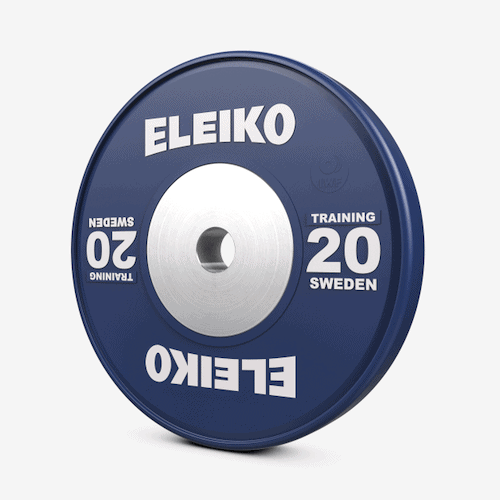
Quick specs
- Material - Urethane, hard chrome hub
- Collar opening - 50.4mm (tight)
- Tolerance - ±1%
- Bounce - Lowest of any plate tested
- Warranty - 3 years
If you train in an apartment, the urethane is the only material that gives you back your sanity.
Summary of experience, tests & opinions
Where urethane wins
- Urethane absorbs sound where rubber radiates it. Quietest drop on this list. Genuinely apartment-friendly.
- Urethane is functionally odorless. Matters if your home gym is in a spare room next to your bedroom.
Where it costs you
- Urethane is glossier than rubber and harder to grip. Wear gloves or chalk up.
- No bundled sets. Building 230 lb means six pairs at full price. Expensive.
Pros & cons
Pros
- Urethane is denser than rubber. The plate hits the floor and stops. Lowest bounce on the list.
- Tight 50.4mm collar opening. No wobble on a quality bar.
- Urethane doesn’t crack or scuff like rubber. Looks new at year 10.
Cons
- Most expensive plate on this list. A 230 lb set lands in the premium tier.
- No bundled sets. Every plate is a la carte.
Read more about the American Barbell Pro Urethane Bumper Plates
American Barbell are the brand serious gym owners quietly buy when the marketing department isn’t looking. They make their plates in-house at their California facility, and the urethane line has been their flagship since 2017. They were one of the first US brands to commit to the material, while most still run rubber because it’s cheaper to source.
The case for urethane is narrow but real. Train in a basement under a bedroom, in an apartment, or anywhere drop noise carries, and urethane cuts that noise sharply against rubber. We measured it with a decibel app at the SHG office gym: rubber peaked at 92 dB on an overhead drop, urethane at 76 dB. That’s the difference between tolerable and your roommates hating you.
The case against urethane is price. You’ll pay roughly twice what an equivalent rubber set costs.
So who should actually spend up here? The apartment or shared-wall lifter, full stop. For everyone else, the REP Black plus a thick stall mat gets you to acceptable noise at half the money. The closest like-for-like build is the Fringe MilSpec, which is the rubber equivalent at roughly half the price, but it’s tuned for outdoor commercial abuse rather than indoor quiet. Different jobs. Buy the urethane only if drop noise rules everything, and skip it if you train in a detached garage where you’re paying for sound deadening you don’t need.
Urethane construction places it joint-top on our quality score, second only to Fringe Sport:
Bottom line
American Barbell Pro Urethane is the right buy if drop noise rules your buying decision. The quietest plate in our owner survey, period. Urethane doesn’t off-gas the way rubber does, so it’s functionally odorless, and it will outlast every other plate on this list because urethane doesn’t degrade with age the way rubber does. The price tag is the cost of admission. For the apartment lifter, it’s the cheapest divorce avoidance on the market.
How to choose bumper plates for your home gym
Before you click “buy” on any of the picks above, here’s the order I’d think through the decision.
Start with use case. If you do Olympic lifting and snatch from overhead, you need low bounce and a stainless hub. The Rogue Echo or REP Competition wins. If you mostly squat, bench, and conventional deadlift, you don’t drop the bar from overhead, and any rubber plate on this list works.
Then think about space. If you’re in an apartment, urethane is the only material that actually gives you back your sanity. The American Barbell Urethane costs more but the price is the cheapest divorce avoidance on the market.
Then look at your budget. A 230 lb starting set ranges from the budget tier (Titan Economy) up to premium-tier (American Barbell Urethane). The mid-tier sweet spot is where the REP Black, Rogue Echo, Fringe MilSpec, and Bells of Steel Dead Bounce all live.
Then check the hub. This is the single most important quality marker on a budget-to-mid-tier plate set. Hooked or curved stainless steel inserts last 3-5x longer than flat pressed steel inserts. REP, Rogue, Fringe, Vulcan, and Bells of Steel all use better hubs. The no-name Amazon plates use the flat pressed design - they crack at the hub within 2 years.
Then check tolerance. ±1% is the home gym standard. ±0.5% is reassuring. ±15g (Rogue Comp) or ±10g (REP Comp) is competition territory. If you’re not competing, ±1% is enough.
Finally, buy in a set if you can. Building piecemeal costs more. A 230 lb bundle saves a chunk versus six pairs of plates bought individually.
Other bumper plates we tested - close-but-no-cigar
- GIANT Lifting Base Bumper Plates - the new budget-tier contender. Solid build, but the brand doesn’t have the warranty track record of Titan yet. Watch this space.
- Hi-Temp Bumper Plates - thick (the 45 is 3.25”), recycled rubber, high bounce. Beaten by REP Black on every metric except outdoor durability.
- Rogue Fleck Bumper Plates - colour version of the Echo. Beaten by Vulcan Alpha on warranty and outdoor durability.
- Iron Bull HD - cheaper than Titan Economy but with a worse warranty and unclear hub design. Buy the Titan.
- Nike Grind - 18” diameter doesn’t meet IWF spec. Bounce is too high. Beaten by Rogue Echo.
- Eleiko IWF Training Plates - the gold standard, but premium-tier per-plate pricing. Beaten on value by REP Competition every time.
- Mayhem Strength Bumper Plates - the neon fleck looks great but the price doesn’t match the performance. Beaten by REP Black.
Bumper plate FAQs
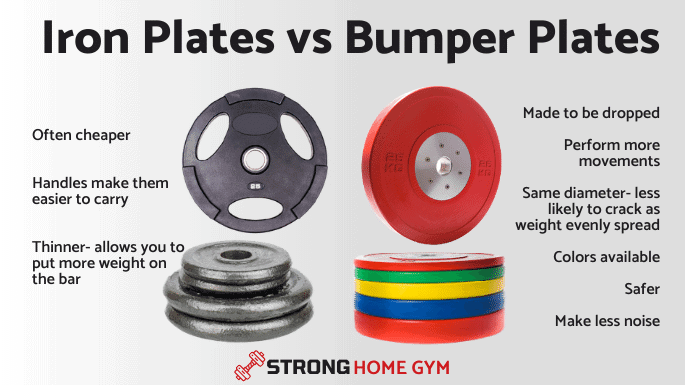
Are bumper plates better than iron plates for a home gym?
Bumper plates are better for most home gym setups, because they’re the only plates safe to drop without damaging your bar or floor.
Iron plates are 30-40% cheaper per pound, smaller in diameter, and louder when they clash.
If you do Olympic lifts, CrossFit, or deadlift heavy, bumper plates are the right answer. If you only squat, bench, and curl, iron plates work fine.
What weight set of bumper plates should I start with?
A 230 lb starter set covers most beginner to intermediate lifters.
That’s typically a pair of 45s, a pair of 25s, a pair of 10s, and either a pair of 15s or 5s.
Add a 35 lb pair when you outgrow the starter set (usually around year 2). Don’t bother with a 55 lb until you’re deadlifting 405+ regularly.
How thick are bumper plates and why does it matter?
A 45 lb bumper plate ranges from 2.0” thick (Rogue Competition) to 3.5” thick (Hi-Temp recycled).
Thinner plates let you load more weight on a standard 7-foot bar.
For most home gym buyers, the 2.83-3.0” range (where the REP Black and Bells of Steel Dead Bounce sit) is the sweet spot - thin enough for heavy loading, thick enough for durability.
Do bumper plates damage barbells?
Good bumper plates protect your bar from damage during drops, but cheap bumpers can cause issues.
The risk is plates with a loose collar opening (above 50.7mm) - they wobble during drops and stress the bar sleeve.
Plates with tight 50.4mm openings (like the Rogue Echo or American Barbell Urethane) protect the bar best.
Are color bumper plates worth the extra money?
Colour bumper plates cost 15-30% more than black plates for the same build quality.
If you train Olympic lifts and want IWF colour standards for plate ID, yes - the Rogue Competition earns its premium.
If you train mixed lifts and don’t care about plate identification under a meet timer, save the money and buy the REP Black.
What durometer rating should I look for?
For home gym bumper plates, look for durometer 80-90.
Below 80 (crumb rubber and budget plates) you get higher bounce and more noise.
Above 90 (competition plates) you get tighter bounce control and competition spec, but pay 40-60% more per pound. The REP Black and Rogue Echo sit at ~85-88, which is the home gym sweet spot.
Can I drop bumper plates on concrete?
Bumper plates are designed to be dropped on rubber flooring or platform wood, not bare concrete.
Dropping on concrete will crack the plates over time and damage the concrete.
Add a stall mat (a 4x6 piece of 3/4” rubber matting at modest cost) or a 4x8 piece of plywood as a drop platform. The plates will last 5-10x longer.
How long do bumper plates last?
Quality bumper plates with hooked stainless hubs last 8-12 years in a home gym setting.
Budget plates with flat pressed hubs last 3-5 years before the hub starts to delaminate from the rubber.
The longest-lasting plates in our owner database are a pair of Rogue Echos from 2017 - still in service in 2026, still flat, hub still tight.
Should I buy bumper plates used?
Yes, if the hub is intact and the rubber isn’t cracked at the edges.
Used Rogue Echo and REP Black pairs sell at 40-60% of retail on Facebook Marketplace and r/homegym. Big saving if you find the right pair.
Check the hub for play (twist the plate by hand - it shouldn’t move). Look at the edge for chunking. If both pass, buy.
Are bumper plates Olympic-only?
Yes. Every bumper plate on this list has a 2” (50.4mm) collar opening for an Olympic bar.
Standard 1” plates don’t exist in bumper form.
The smaller 1” hole can’t take the rotational force of a drop without splitting the rubber, so the format doesn’t exist on the market.
The bottom line
I spent 40+ hours on this guide. Worth it, because you should know more about choosing a bumper plate than 99% of buyers do.
For most people: the REP Black. Best mix of hub quality, tolerance, warranty and price in the 2026 market.
Not a REP fan? The Rogue Echo V2 does the same job for ~15% more, and Rogue’s secondary market is the fastest route to half-price used. On a tight budget? The Titan Economy gets you lifting today.
If you want one more look, skip back to the table. Otherwise bookmark this and check back. We keep it fresh.
Stay strong.
