

We tested and scored 29 flat weight benches to find the 4 best flat weight benches, judged across the 5 categories that decide whether a flat bench is worth your money.
I’ve built home gyms for ten years. The team took my opinions and ran them through our scoring system, so it isn’t just me talking.
It’s scoring based on data, owner reports, and hands-on use.
The goal was simple: skip the fluff and hand you a short list of flat benches that press like a rock and last a lifetime.
Let’s see if we did a good job…
Related
We’ve spent years pressing on benches in this gym. Want incline and decline too? Our best weight bench guide covers adjustable picks, and our best adjustable weight bench round-up goes deeper on FID benches. For the rack these benches sit under, see our best squat rack guide.
Compare the best flat weight benches
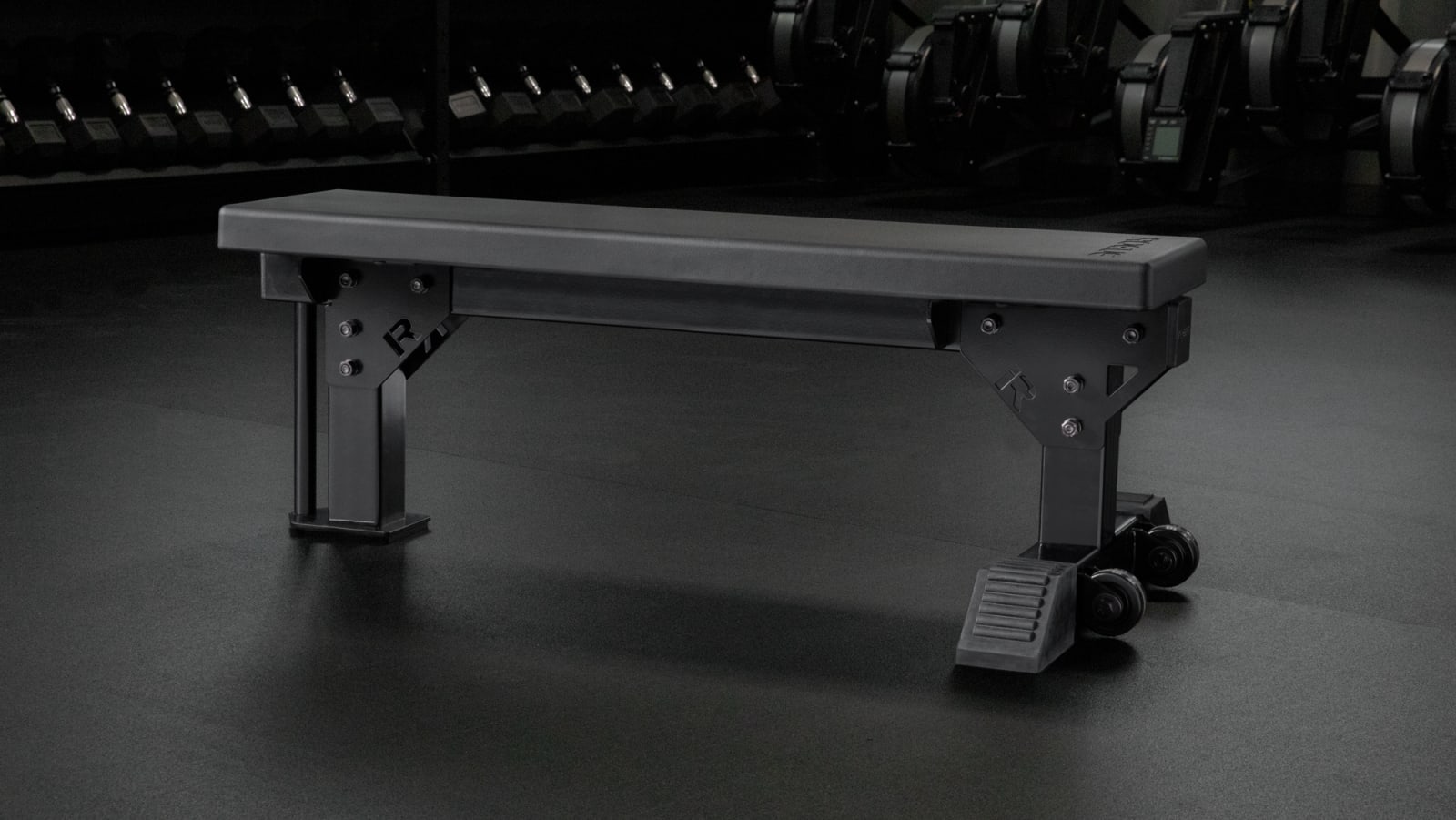 Rogue Monster Utility 2.0
Check price
Rogue Monster Utility 2.0
Check price
|
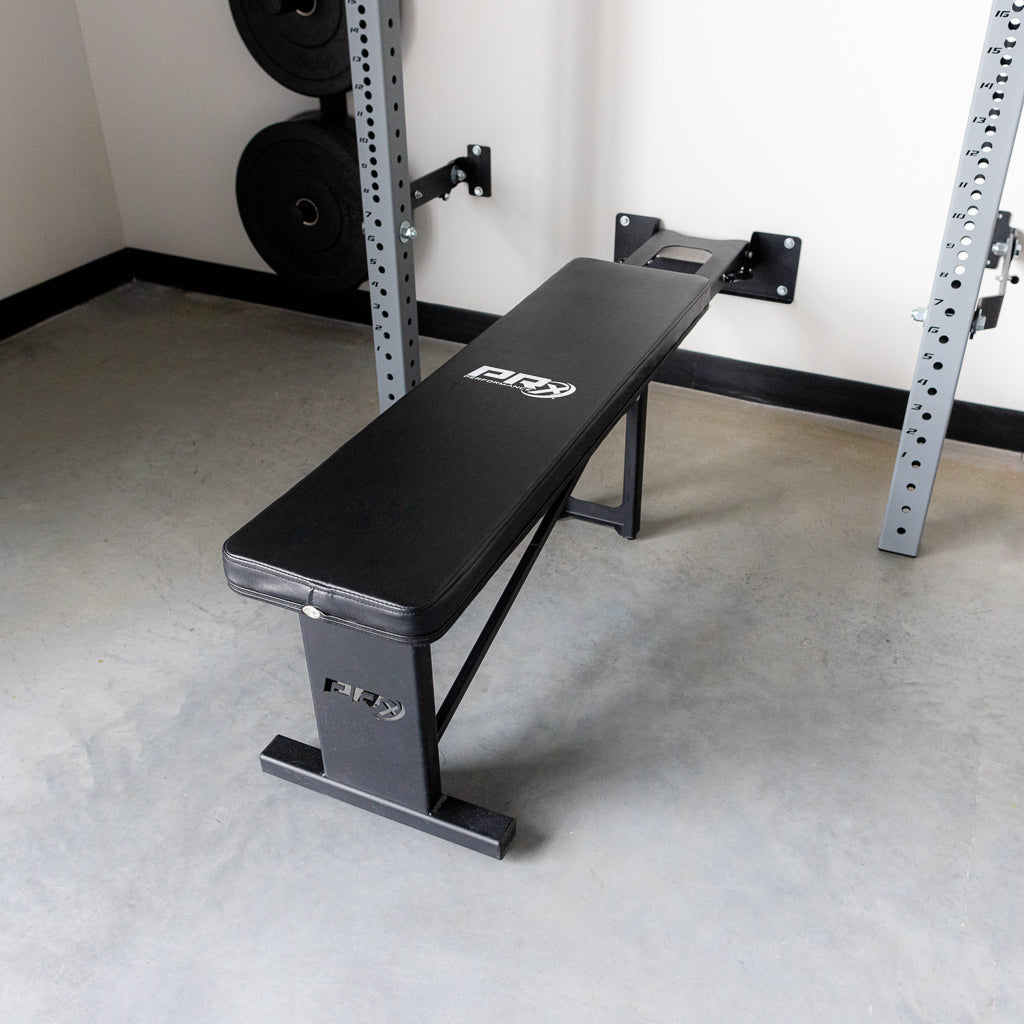 PRx Profile Flat Folding
Check price
PRx Profile Flat Folding
Check price
|
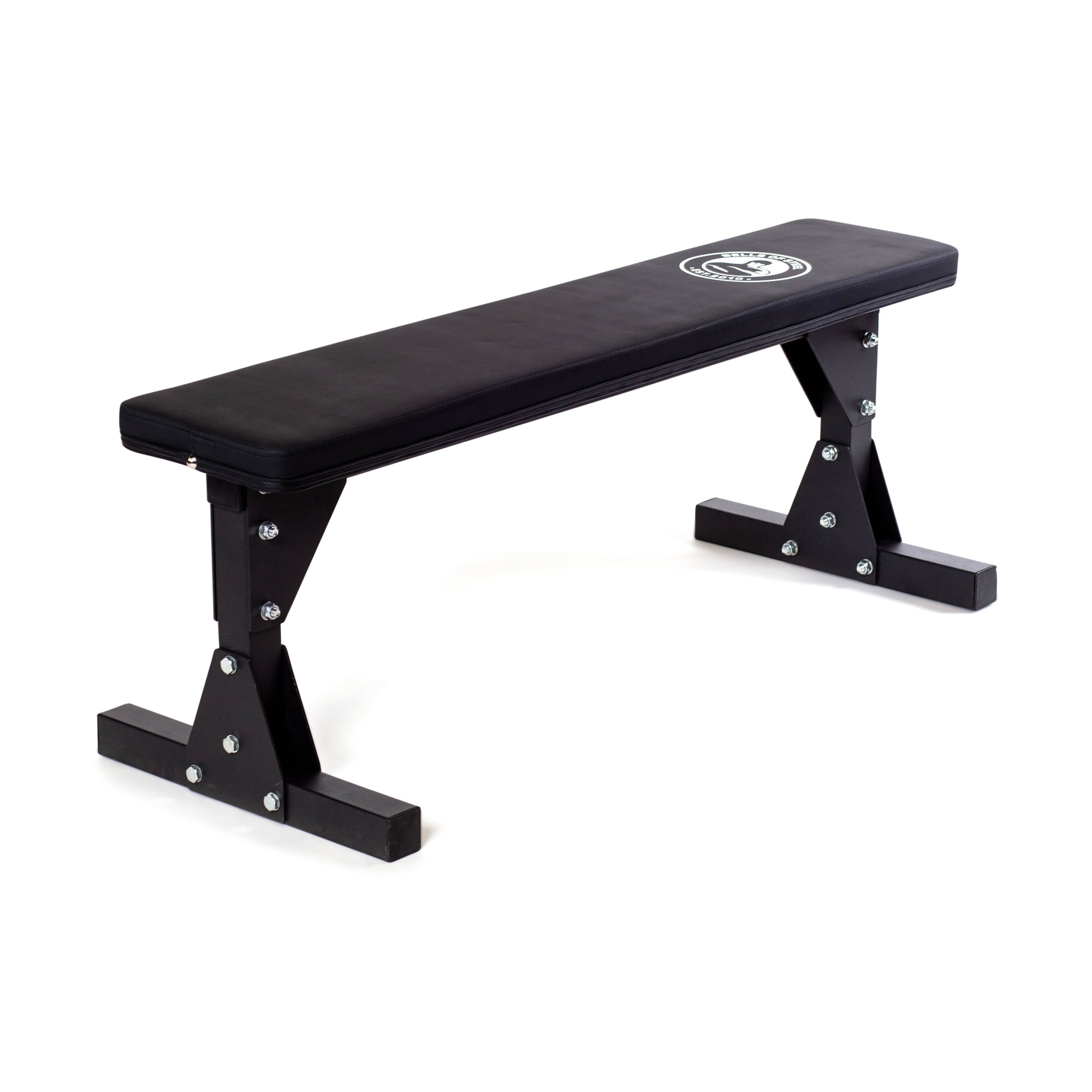 Bells of Steel Flat Utility
Check price
Bells of Steel Flat Utility
Check price
|
||
|---|---|---|---|---|
| Best for | Overall | Premium build | Small spaces | Tightest budget |
| Rating (*) | ||||
| Stability & base (30%) | 95% | 96% | 80% | 74% |
| Pad design (25%) | 90% | 91% | 80% | 70% |
| Build & capacity (25%) | 95% | 97% | 78% | 72% |
| Footprint (10%) | 70% | 62% | 97% | 86% |
| Value (10%) | 95% | 74% | 60% | 96% |
| Type | Flat | Flat | Flat foldable | Flat |
| Weight capacity | 1,000 lb | 1,000 lb | 600 lb | 661 lb |
| Bench height | 17" IPF | 17" | 17" | 17" |
| Base design | Three-post tripod | Tripod, laser-cut | Wall-mount fold | Four-leg |
| Warranty | Lifetime frame | Lifetime frame | Lifetime frame | Lifetime frame |
| Price | $$ | $$$ | $$$ | $ |
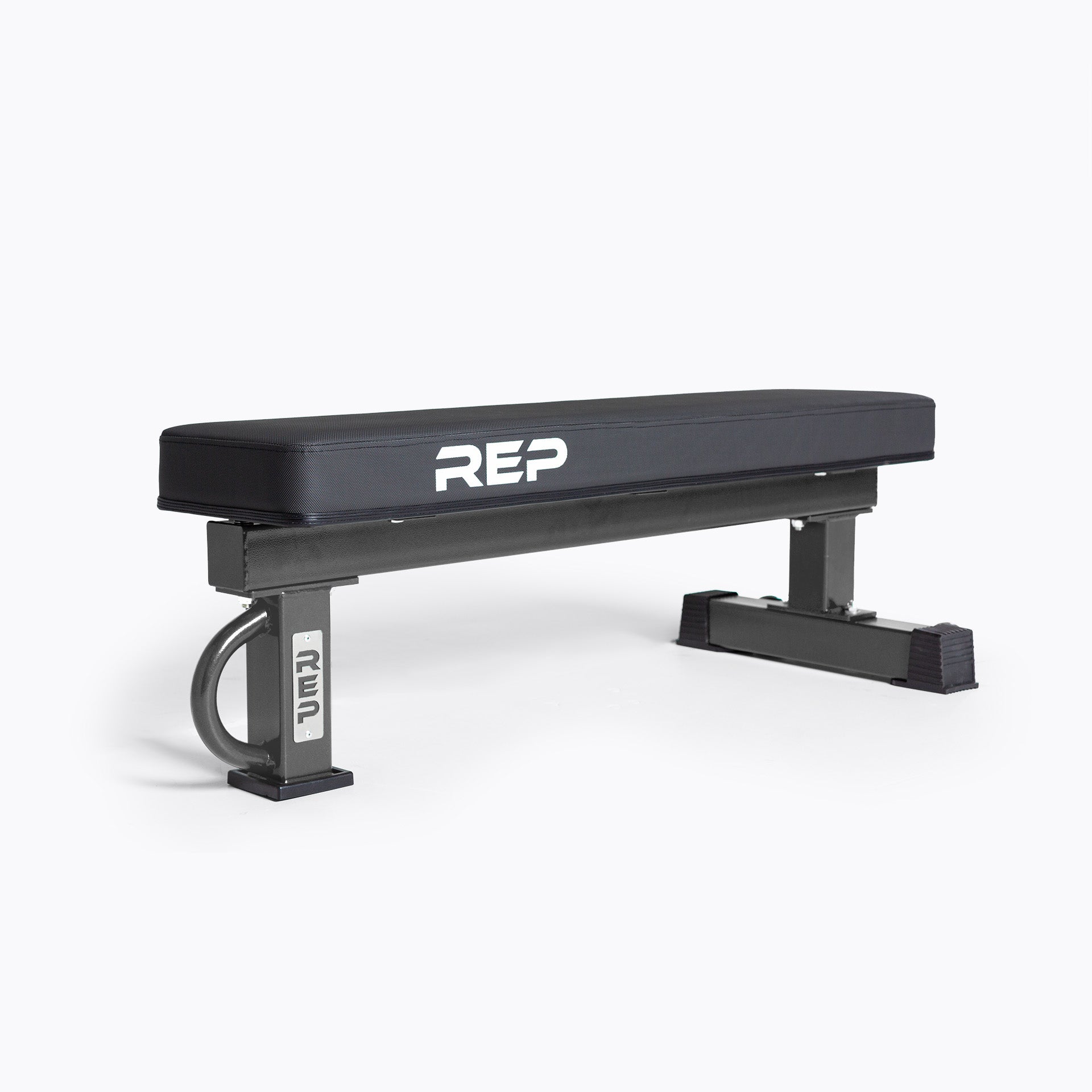 REP FB-5000
Our testing and selection process
How we assess the flat benches
We always use a 5 step process in our reviews:
- We start as the buyer. Most of our team have bought benches before, and Steve owns an 8,000 sq ft commercial gym with a row of flat benches in daily use.
- We do a ton of research. We pull specs, prices, and owner reports on every flat bench worth a look into one master spreadsheet.
- We rate each bench with our weighted scoring system. The categories and weights are below.
- We let the data make the call, not brand loyalty. A REP can beat a Rogue. A Rogue can beat a Bells of Steel.
- We get our hands on as many top picks as possible. Our community is a big help here.
You can read more in our review guidelines.
How we test and score the flat benches
A flat bench is a simpler animal than an adjustable, so the scoring is simpler too.
There is no versatility category here. Every bench on this list does one thing, and the only question is how well it does it. So we put the weight where a flat-bench buyer actually feels it.
I grouped it into 5 chunks:
- Stability and base (30%) - how planted the bench feels under a heavy press, and the base design that gets it there.
- Pad design (25%) - width, density, vinyl grip, and how the pad holds your arch.
- Build and weight capacity (25%) - frame gauge, weld quality, and total carry capacity.
- Footprint and storage (10%) - floor space and whether it stores away.
- Value for money (10%) - what you pay against what you get, normalized to the lineup.
Here is how the four picks stack up on the overall score, with the REP FB-5000 out in front:
Stability and base (30%)
This is the biggest category, and on a flat bench it is most of the decision.
A flat bench has one job: don’t move while you press your max off it. The base design is how it earns that. A three-post tripod base, like the one on the REP FB-5000 and the Rogue Monster, plants one rear anchor directly under the press. A four-leg square spreads the load wider but can rock if a floor is uneven.
My tip: load a bench to your working weight and shove it sideways with one hand before you trust it. A bench that skates on the floor under a light shove will scare you under a heavy bar.
Pad design (25%)
Three things matter. Width, density, and grip.
Most pressers want a pad around 10 to 12 inches wide. Narrow helps your shoulder blades pinch for a tighter arch, wide gives a bigger platform for heavier lifters. Density decides whether you bottom out on a top single or bruise a shoulder blade.
A flat bench has one quiet advantage the whole adjustable category cannot match. There is no pad gap. The pad is one continuous piece, so you get an unbroken surface from your hips to your head, every rep.
Build and weight capacity (25%)
Capacity is your body plus the bar plus the plates.
Most lifters never trouble 600 lb. Go 1,000 lb if you press heavy, share the gym, or just want to buy this once. The two premium picks here hit it.
11-gauge steel is the home-gym standard, and the frame gauge is where a budget bench saves money. These all ship flat-packed, so budget twenty minutes with an Allen key and check the hardware bag against the manual first.
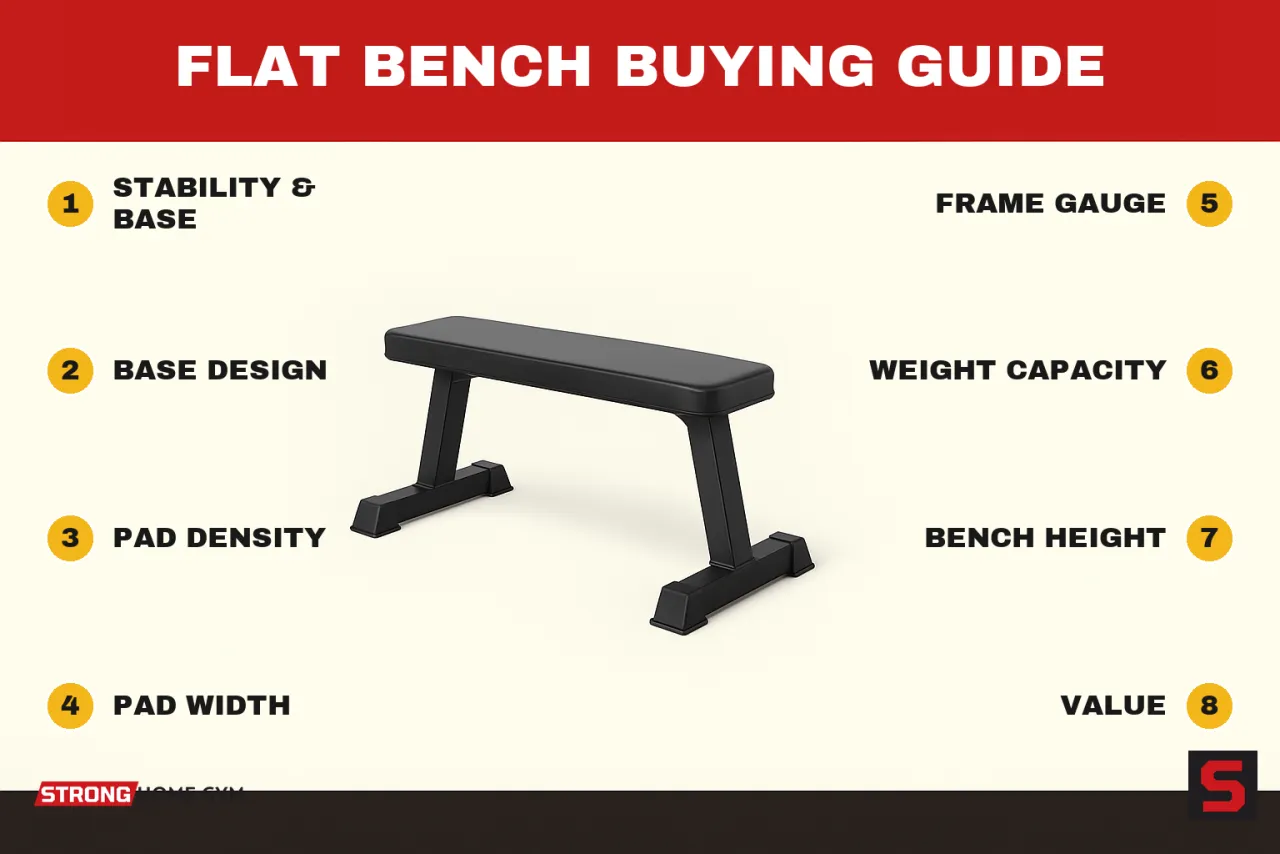
My tip: read the warranty before the spec sheet. Every bench here backs the frame for life, which is the tell that the brand trusts its own welds.
Footprint and storage (10%)
A flat bench is small to begin with, so this matters less than it does for a rack.
It only swings the decision if your bench shares a garage with a car. The PRx Profile Flat Folding wins it outright by mounting to the wall and folding up to inches of clearance.
Value for money (10%)
We normalize value against the score-per-dollar across the lineup. The Bells of Steel scores below the premium benches but wins this category outright, because you are paying for the bench and almost nothing else.
In other words…
We are hunting for the bench that makes you pay for the logo rather than thicker steel.
Find the perfect flat weight bench for you
Best Overall | Best Premium | Best For Small Spaces | Best Budget
REP FB-5000 Competition Flat Bench
Best Overall Flat Weight BenchQuick specs
- Type - flat competition bench
- Capacity - 1,000 lb
- Height - 17 inch IPF standard
- Frame - 3x3 11-gauge with 7-gauge connectors
- Warranty - lifetime frame
The flat bench I recommend to most people. IPF-legal height, a 1,000 lb build, a planted tripod base, and a price that undercuts every premium rival.
Summary of experience, tests & opinions
What I like
- Assembly took me under twenty minutes, and every bolt in the hardware bag was there and labeled. That sounds small until you have wrestled a bench with a missing pin and no diagram.
- It is light enough at around 56 lb that the wheel-and-handle tilt is genuinely one-handed. I roll it out, press, and roll it back against the wall without a second thought, which is rare on a competition-grade frame.
- The grippy vinyl is the detail you stop noticing because it just works. My back does not slide on a heavy top set, so I can drive into the pad instead of fighting to stay put.
- It stands up on end for storage when I want the floor back, and the tripod foot keeps it from creeping while it leans.
What I don’t
- The pad sits firm out of the box and takes a couple of weeks to break in. Early sessions felt a touch hard through the upper back until it gave a little.
- Stock inventory comes and goes on the popular colors, so the exact finish you want can mean a short wait rather than a same-day buy.
Pros & cons
Pros
- Three-post tripod base - the rear post anchors directly under the press, so the bench stays dead still where a four-leg model can rock.
- IPF-legal 17-inch height - your feet plant for leg drive without arching off the pad, which matters more than any spec on a heavy single.
- You get a 1,000 lb competition-grade build without paying the premium-brand markup, which is why the value score tops the list.
Cons
- Broader-shouldered lifters pay a little extra, because the standard pad is narrower and the wide option is a paid upgrade.
- Not a small bench - the tripod footprint is planted but wide, so it does not tuck away like a folding model.
Read more about the REP FB-5000
The FB-5000 wins the overall slot because it does the one job of a flat bench better than anything near its price.
This is the bench for the lifter who barbell presses seriously and wants a competition platform under the bar without the competition-brand markup. The 3x3 11-gauge frame with 7-gauge connector plates does not flex, the 12-inch wide-pad option gives a broad back room to set the shoulder blades, and the 17-inch IPF height puts your feet where leg drive lives. Around 56 lb with wheels and a front handle, it is the one heavy-duty bench here you can actually reposition mid-session. The lifter who should skip it is the one with no floor to give: it plants wide and does not fold, so a cramped garage will feel it.
Side by side with the Rogue Monster Utility 2.0, the press feel is honestly close. The Rogue runs a heavier frame, laser-cut hardware, and the optional Thompson Fat Pad, and it costs a full tier more for build you will admire more than feel. The real trade is weight: the Rogue sits more like 87 lb and is a job to shift, where the FB-5000 rolls out of the way one-handed.
One owner note worth setting expectations on is the pad. It ships firm and takes a couple of weeks of pressing to soften, so the first sessions feel harder through the upper back than they will a month in.
That balance of press, build, and price is why it tops the overall score:
Bottom line
The REP FB-5000 is the top-rated flat bench for 3 main reasons:
-
It presses like a competition bench - IPF height and a tripod base give you the platform of a far pricier bench.
-
It is built to outlast your training - 1,000 lb capacity and a lifetime frame warranty put it in buy-once territory.
-
It undercuts the premium tier - you pay a mid-tier price for a top-tier press, which is why the value score tops the list.
If you want the absolute heaviest-duty build and brand service, the Rogue Monster Utility 2.0 is the step up.
The REP FB-5000 might be for you if… you want one flat bench that presses like a competition platform and never needs replacing.
It’s not for you if… you have no floor space to spare, in which case the PRx Profile Flat Folding mounts to the wall instead.
Rogue Monster Utility Bench 2.0
Best Heavy-Duty Flat Weight BenchQuick specs
- Type - flat utility bench
- Capacity - 1,000 lb
- Height - 17 inches
- Frame - laser-cut, tripod base, Thompson Fat Pad option
- Warranty - lifetime frame
The heavy-duty pick. Laser-cut hardware, a tripod base, and the optional Thompson Fat Pad give it a commercial-gym press feel, backed by Rogue’s service.
Summary of experience, tests & opinions
What works
- Steve has run a pair on his commercial floor for years, through daily member abuse, and nobody ever thinks about the bench. It just sits there and takes the load, which is about the highest praise a flat bench gets.
- The single front post is the design detail you feel on a heavy single. It clears the space your feet want, so you can drag them back and arch hard without a leg catching a frame rail.
- It is the bench in the gym you stop maintaining. Years in, nothing has worked loose, nothing rattles, and no bolt has ever needed a re-torque, which is not something the team can say about most kit.
What doesn’t
- Stored on its end with the Fat Pad fitted, it teeters more than you would like. The pad is heavy enough up top that it can rock on its base, so the team leaves these flat on the floor rather than upright.
- The textured powder coat splits people. It hides scuffs well but feels grittier under the hands than a gloss finish, and it is the one place the build choices feel more functional than premium.
Pros & cons
Pros
- Laser-cut hardware - the parts fit with no slop, so nothing rattles or works loose over years of heavy pressing.
- Tripod base and overbuilt frame - it is the most planted bench here, which is the one thing you want most under a max single.
- If anything ever fails, you are dealing with a brand known for making it right, which is real peace of mind on a buy-once bench.
Cons
- Premium price - it is the pricier of the two heavy-duty flats for a press feel that the FB-5000 gets very close to.
- Thompson Fat Pad costs extra - the stock pad is good, but the wider upgrade that broad-shouldered pressers want adds to the price.
Read more about the Rogue Monster Utility 2.0
The Monster 2.0 spends your money on the stuff a photo won’t show.
Buy this one if you want the last word in build and plan to pass it down. The 3x3 11-gauge frame and single front post give it a planted, get-your-feet-under-it press, and at around 87 lb it has the dead weight that makes a bench feel immovable when you unrack a heavy single. Anyone who moves a bench often, or who counts every dollar against press feel, is better off elsewhere, because most of what you pay for here lives in the welds and the service rather than the bar.
Put it next to the FB-5000 and the build gap is real but the press gap is small. The Rogue runs a heavier frame, laser-cut hardware that never develops play, and an optional Thompson Fat Pad that gives a broad back a wider, firmer platform than the REP’s standard pad, yet most lifters will not feel a night-and-day difference on the bar.
One lived quirk to plan around is upright storage: with the Fat Pad fitted it teeters on its end, so the team keeps these flat on the floor rather than leaned against a wall.
On pure build and capacity, it is the most overbuilt bench on the list:
Bottom line
The Rogue Monster Utility 2.0 is the bench to buy if you want the last word in build and you value brand service. It is the most planted, most overbuilt flat bench on this list, and the optional Thompson Fat Pad gives wide-shouldered pressers a platform nothing else here matches.
You pay a tier more than the FB-5000 for it. On the bar the difference is real but small, felt more in the hands than in the lift. For the buyer who wants the best and is happy to pay for it, this is the one.
The Rogue Monster Utility 2.0 might be for you if… you want the most overbuilt flat bench on the market and brand service to match.
It’s not for you if… you want the smartest spend, in which case the FB-5000 gets you most of the way for a tier less.
PRx Profile Flat Folding Weight Bench
Best Space-Saving Flat Weight BenchQuick specs
- Type - flat, wall-mount folding
- Capacity - 600 lb
- Height - 17 inches
- Storage - folds flat to inches off the wall
- Warranty - lifetime frame
The space-saver. It bolts to a wall or a PRx rack and folds up flat, so a full bench lives where a picture frame would.
Summary of experience, tests & opinions
Where it shines
- The storage genuinely changes what a room can be. I have seen one mounted in a spare bedroom that reads as an office until the bench drops down, which no free-standing bench can claim.
- The whole install lives or dies on getting the bracket dead level. I spent more time with the stud finder and the spirit level than I did with the wrench, and an hour in it was solid for good.
- At a touch under 50 lb the dropped-down platform is easy to set and stow, so the daily routine of folding it up after a session never feels like a chore.
Where it falls short
- You commit to one spot on one wall. Once it is lagged in, the bench presses where the wall is and nowhere else, which a free-standing bench never asks of you.
- The pad runs thinner than the heavy-duty benches here. It is fine for pressing, but you notice the firmer floor under your shoulder blades on longer sessions next to a thicker competition pad.
Pros & cons
Pros
- Vanishes against the wall - it folds flat to inches of clearance, so a full bench lives in the space of a picture frame.
- No pad gap - a one-piece flat pad gives an unbroken pressing surface, with no seat seam to bridge.
- Ships fully assembled - it arrives ready to mount, with all the hardware in the box.
Cons
- Needs drilling - it lags into studs or a PRx rack, which rules it out for most renters.
- 600 lb capacity - the lowest of the dedicated flats here, fine for most lifters but not the very heaviest pressers.
Read more about the PRx Profile Flat Folding
PRx made its name on wall-mount folding gear, and this bench is that idea stripped to the bone.
This is the pick for the homeowner whose gym shares a room with the rest of life, the spare-bedroom or single-car-garage lifter who needs the floor back between sessions. It hinges down to a 17-inch flat platform and folds up to inches of wall clearance, with a one-piece pad and no seat gap to bridge. Renters and anyone still unsure of their layout should look at a free-standing bench instead, because this one lags into studs and presses in exactly one spot forever.
There is no moving it to chase better light or a different corner once it is in.
Against the Bells of Steel, the other non-premium pick here, the split is simple. The Bells of Steel costs far less and goes anywhere you can set four legs down, while the PRx costs more and asks for a drill and a wall but gives you back floor space neither free-standing bench can. What surprised us in testing: mounted to studs it presses far more solidly than its sub-50 lb frame suggests, because the wall does the work a heavy base would on the floor.
On footprint and storage, nothing else here is close:
Bottom line
Buy the PRx Profile Flat Folding if your gym shares a room with the rest of your life. It folds flat to the wall, presses solidly once mounted, and turns a corner you thought was unusable into a bench station. The trade is a 600 lb capacity, a premium price, and a permanent home on one wall. For the apartment or shared-room lifter, that trade is an easy one.
If floor space is your real problem, this is the answer. If you can leave a bench standing, the FB-5000 gives you more bench for less money.
Bells of Steel Flat Utility Bench
Best Budget Flat Weight BenchQuick specs
- Type - flat utility bench
- Capacity - 661 lb
- Height - 17 inches
- Frame - four-leg, powder-coated steel
- Warranty - lifetime frame
The value pick. It is the lowest price in the lineup with the best score-per-dollar, and it still takes a real working weight.
Summary of experience, tests & opinions
What’s good
- For the price, it presses more honestly than it has any right to. I ran working sets on it and the frame held steady, where I expected the wobble you usually get at this tier.
- At roughly 34 lb it is the easiest bench here to pick up and carry one-handed, which earns its keep in a shared room where the bench moves out of the way after every session.
- The pad vinyl is grippy enough that my back holds position on a dumbbell press, so the budget shows in looks more than in the one thing you actually feel.
What’s not
- The pad runs narrow, under 10 inches, so a broad back hangs off the edges a little and never feels as cradled as it does on the wider competition pads above it.
- The wide front base gets in the way of foot drive. To plant your feet hard for a heavy press you have to splay them around the base rather than tuck them straight back, which costs you a little leg drive on a max effort.
Pros & cons
Pros
- Lowest price on the list - the cheapest way onto a genuine flat bench that still carries a lifetime frame warranty.
- Lifetime frame warranty - Bells backs the welds for life, so the budget price does not mean buying twice.
- 17-inch IPF height - it sits at the same pressing height as the premium benches, so your leg drive is not compromised.
Cons
- Four-leg base - it is less planted than the tripod benches, so it suits working sets more than max singles.
- Plainer pad - the vinyl and padding are basic next to the premium picks, which is where the budget shows.
Read more about the Bells of Steel Flat Utility
Bells of Steel spends where it counts, on the frame and the warranty.
Beginners and working-set lifters who want a real flat bench on a tight spend are the natural buyers here; powerlifters chasing a max-single platform are not. It pairs a four-leg powder-coated frame with the same 17-inch IPF height as the premium picks, so your pressing height is not compromised by the price. The heavy presser is the one to steer clear: the four-leg base does not plant as hard as a tripod, and the wide front rail crowds the feet you would otherwise tuck straight back for leg drive.
Set against the FB-5000, the difference is the base and the pad: the FB-5000 runs a tripod base that plants harder, a wider 12-inch pad, and a higher capacity, and it costs more for all of it. The Bells of Steel answers back on weight and price, at roughly 34 lb it is the easiest bench here to lift one-handed and stow against a wall.
The budget shows in the pad: it runs narrow with basic vinyl, so a broad back will feel the edges a wider competition pad would carry.
That is why it tops the lineup on value for money:
Bottom line
Buy the Bells of Steel Flat Utility if you want a real flat bench and the budget is tight. It presses more honestly than its price suggests, the lifetime warranty means you are not buying it twice, and it lands the best score-per-dollar in the lineup. You give up the planted tripod base of the pricier benches, which is the one place the saving really shows.
For the most bench at the lowest price, this is the pick. If you press near your max often, step up to the tripod base of the FB-5000.
How we created this list of best flat weight benches
Here are the criteria we used to pick these benches, and how much each one counted:
- Stability and base (30%)
- Pad design (25%)
- Build and capacity (25%)
- Footprint and storage (10%)
- Value for money (10%)
You can read all about our selection process here.
Other flat benches we tested - close but no cigar
- REP FB-3000 - REP’s cheaper flat bench and a fine buy, but the FB-5000 adds the tripod base and wide-pad option for a small step up in price.
- Titan Fitness Flat Weight Bench - solid 11-gauge build for the money, but the pad and finish fall behind the Bells of Steel at a similar price.
- Fringe Sport Flat Utility Bench - a good bench that presses well, but it does not beat the FB-5000 on price or the Rogue on build, so it lands between them with no clear win.
Flat weight bench FAQs
What is the best flat weight bench?
The best flat weight bench is the REP FB-5000.
It pairs an IPF-legal 17-inch height with a 1,000 lb capacity, a planted tripod base, and a price that undercuts every premium rival.
For a commercial-grade upgrade, the Rogue Monster Utility 2.0 is the bench to beat.
Is a flat bench better than an adjustable bench?
A flat bench is better than an adjustable bench if you mainly barbell bench press.
It presses more solidly, has no pad gap, sits lower for leg drive, and costs less.
An adjustable bench is better if you want incline and decline work, which our best adjustable weight bench guide covers in full.
What weight capacity does a flat bench need?
A flat bench needs a weight capacity of at least 600 lb for most home lifters.
That covers your body, the bar, and the plates for any realistic press.
Heavy and shared-use lifters should target 1,000 lb, which the FB-5000 and the Rogue Monster 2.0 both hit.
Why do flat benches have no pad gap?
Flat benches have no pad gap because the pad is one continuous piece, with no separate seat that tilts.
That gives you a flat, unbroken surface to press on, which is why a flat bench feels more solid than an adjustable when you bridge high.
It is the single biggest pressing advantage a flat bench has.
What bench height is best for bench press?
The best bench height for bench press is 17 inches, the IPF competition standard.
It lets most lifters plant their feet for leg drive without arching off the pad.
Every pick here sits at or near 17 inches.
The bottom line
I spent a long time pressing on these benches, because a flat bench is the one piece of kit you want to buy once.
For most people, the REP FB-5000 is the call. It presses like a competition bench and costs a tier less than the benches it matches.
If you want the most overbuilt flat bench money buys, step up to the Rogue Monster Utility 2.0.
If floor space is tight, the PRx Profile Flat Folding mounts to the wall. And if money is tight, the Bells of Steel Flat Utility is the most bench for the least cash.
There are two things to do now:
- If you want another look at the picks, click here to skip back to the table.
- If you want to put a pin in it, bookmark this page and come back. We re-test it and update the picks whenever a bench changes.
Stay strong.
