

We scored 27 hack squat and leg press combo machines across 5 quality categories and picked the 6 most worthy of a home gym.
I’ve spent 2 decades as a personal trainer and gym owner, and I’ve squatted on just about every kind of hack machine, from the lousy ones that wobble under load to the commercial sleds that cost more than a car. The team ran my shortlist through our weighted scoring, so these picks come from data and owner reports, not one person’s gut call.
The goal was simple: sort these machines by the way you’ll actually use one at home, since almost every “hack squat machine” sold for a garage is really a leg-press and hack-squat combo.
Let’s see if we did a good job…
Editor's note · updated June 15, 2026
We rebuilt this guide for 2026 and reworked the rankings with it.
What changed:
- The Titan Leg Press Hack Squat is the new #1 overall. It’s the most machine you get for a mid-range spend, and it ships from a brand we can actually link you to.
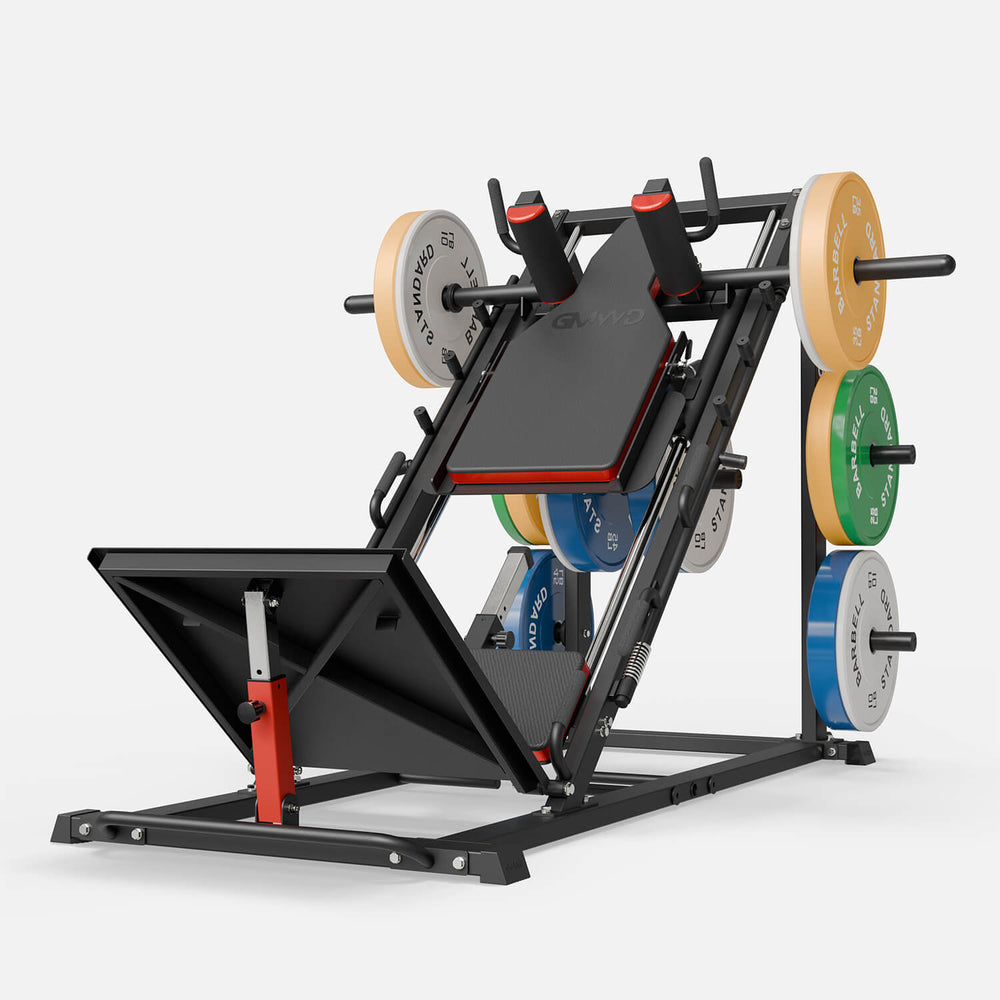
- The GMWD combo is our budget pick. It runs linear bearings and a heavy frame at a price that undercuts the field, and it’s earned a lot of goodwill with owners over the past year.
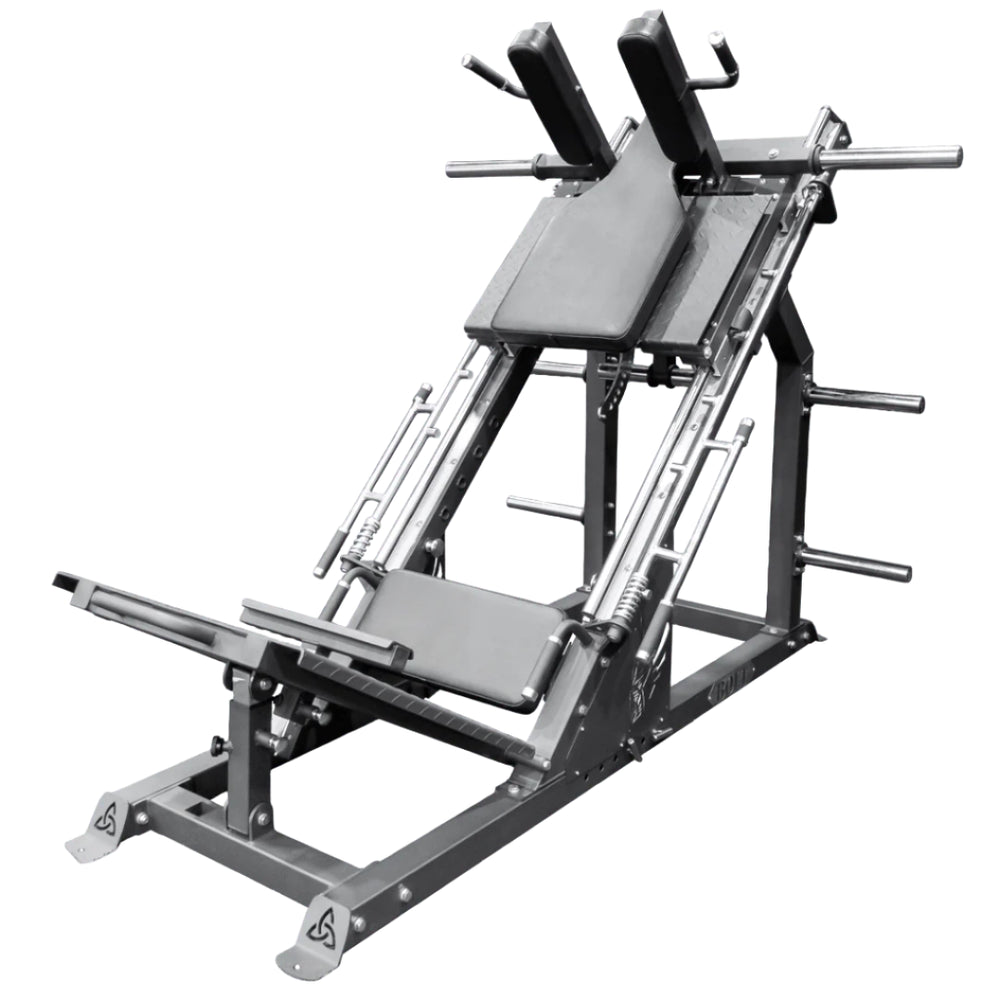
- The Bolt Outlaw takes the premium slot. It’s the closest thing to commercial steel that still fits a home gym.
- The old Force USA Ultimate Combo is gone from the top list. It’s now retail-exclusive, so you can’t buy it online. We moved it to a brief mention.
Related
Most of these are combos, so they double as your press. If a press is what you’re really after, read our best leg press machine picks. For a standing-squat machine instead, see our best squat machine guide. And for a knee- and back-friendly squat that loads from the hips, read our best belt squat machine picks.
Compare the best hack squat machines
This table shows all 6 picks side by side. Scores come from our weighted rating, which we explain in the testing section below.
 Bolt Outlaw
Check price
Bolt Outlaw
Check price
|
 GMWD Combo
Check price
GMWD Combo
Check price
|
 Titan Sled
Check price
Titan Sled
Check price
|
 Force USA Compact
Check price
Force USA Compact
Check price
|
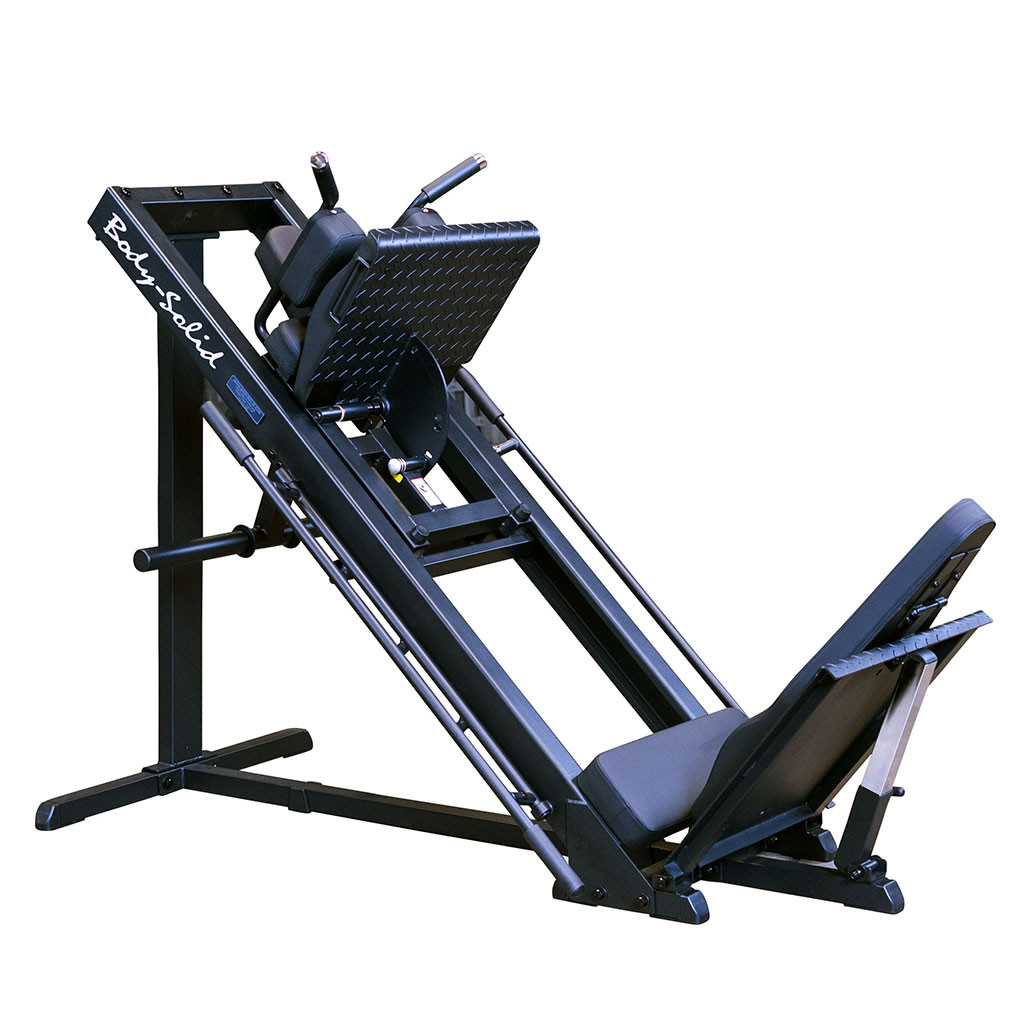 Body-Solid GLPH1100
Check price
Body-Solid GLPH1100
Check price
|
||
|---|---|---|---|---|---|---|
| Best for | Overall | Premium | Budget | Spine-sparing sled | Small spaces | Conservative pick |
| Rating | ||||||
| Build & stability | 86% | 96% | 84% | 78% | 85% | 78% |
| Range of motion | 86% | 92% | 82% | 80% | 82% | 76% |
| Footprint | 80% | 72% | 74% | 92% | 90% | 84% |
| Capacity | 1,000 lb | 1,000 lb | 1,250 lb | 700 lb | 900 lb | 1,000 lb |
| Value | 90% | 70% | 94% | 90% | 76% | 84% |
| Price tier | $$ | $$$ | $ | $ | $$ | $$ |
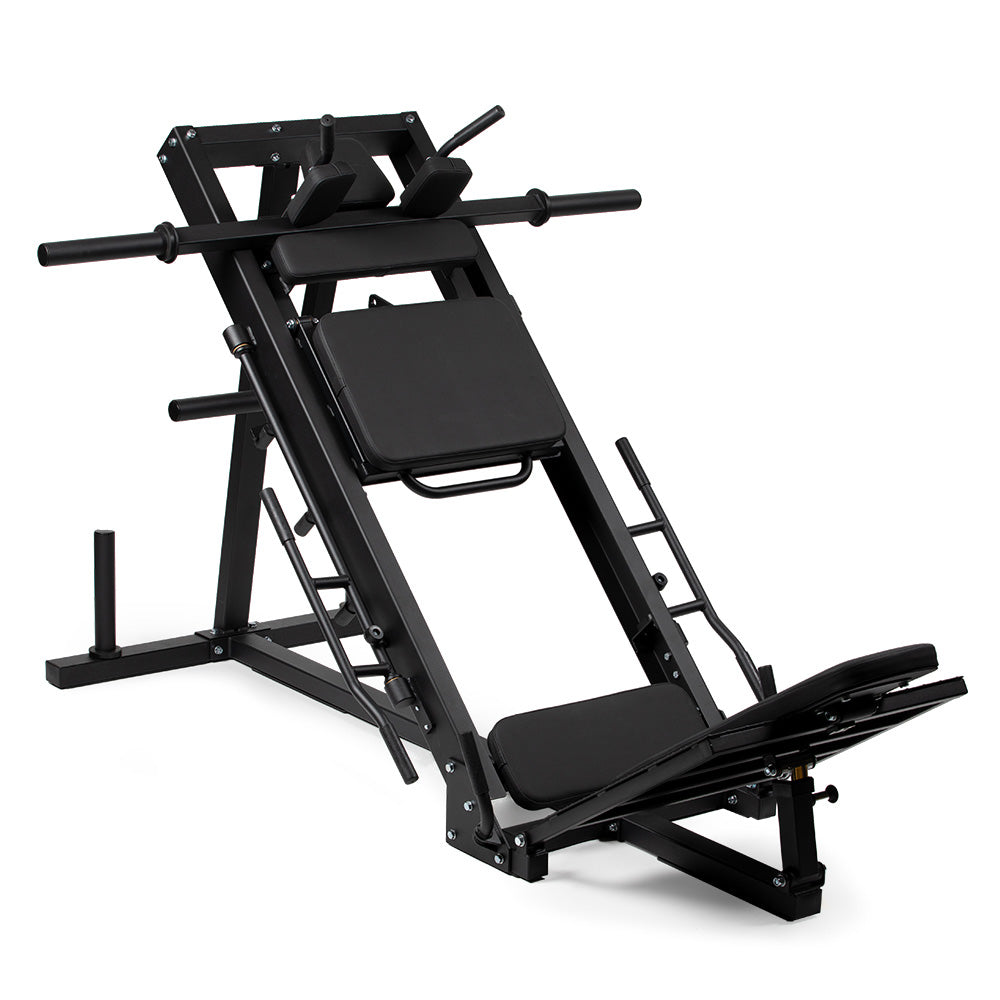 Titan Combo
Our testing and selection process
How we assess hack squat machines
We run every machine roundup through the same 5 steps:
- We start as the buyer. Most of our team has owned or coached on one of these, and my own gym has cycled through combos and sleds over 2 decades.
- We research wide. We pulled specs, warranty terms, and owner feedback on 27 machines into one spreadsheet.
- We score each machine with our weighted system. Data sets the ranking, not brand loyalty.
- We split the field by job, because a 45-degree combo and a seated sled don’t do the same thing to your spine.
- We get hands-on where we can and lean on the SHG community for the rest.
You can read more in our review guidelines.
How we score hack squat machines
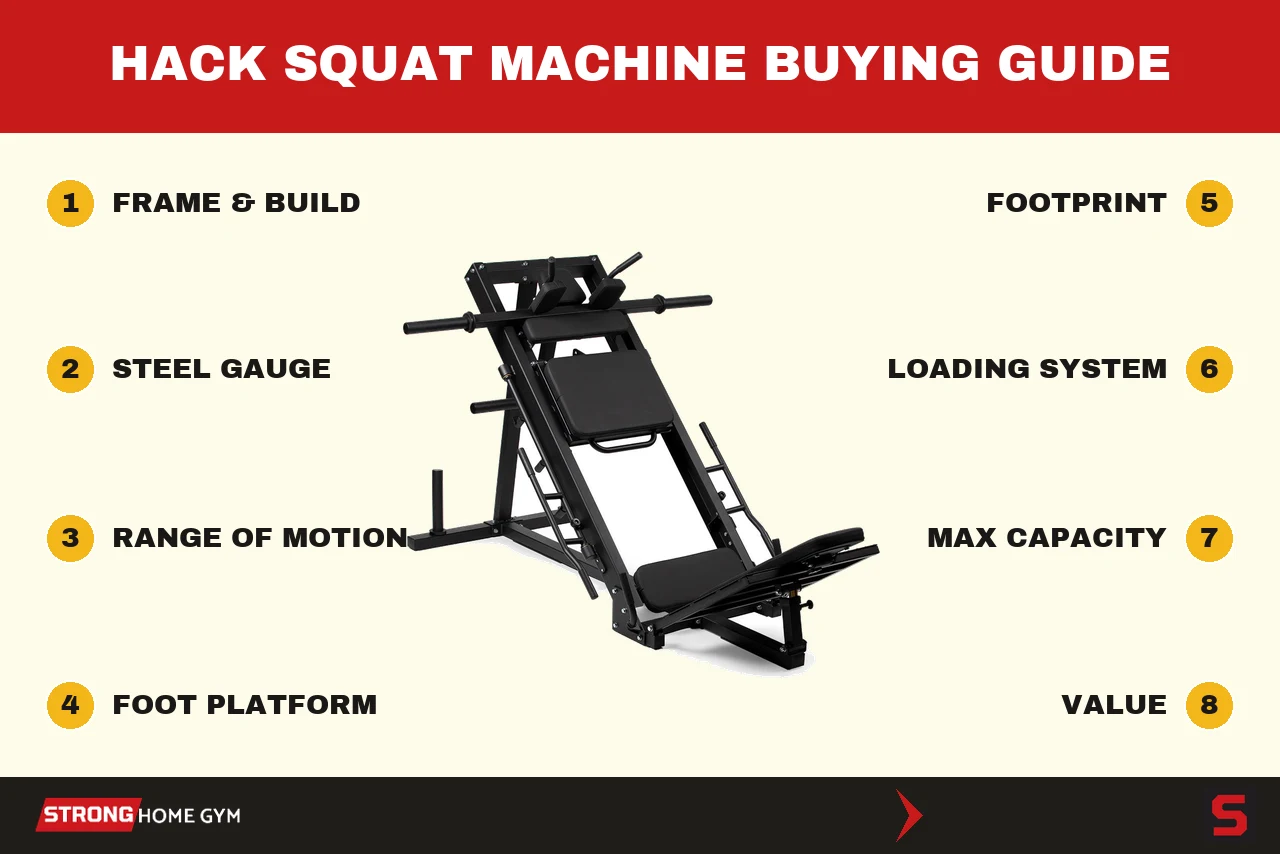
Here’s what feeds the score and how much each part counts.
We grouped it into 5 chunks:
- Build & stability (35%) - steel gauge, frame cross-section, welds, and machine weight.
- Range of motion (20%) - footplate angle, safety-stop height, and the geometry that lets you squat deep.
- Footprint (10%) - floor space and where the plates load and store.
- Loading & capacity (10%) - max weight and how smoothly the carriage rides.
- Value (25%) - what you get for what you pay, against the field.
Build and stability (35%)
Picture the frame tube end-on, and the difference between a wobbly machine and a planted one gets obvious fast.
A hack squat machine takes your full body weight plus a stack of plates, often thrown into a fast rep. Thin steel and a narrow base are the two things that give a weak one away.
- Steel gauge and tube size - thicker steel and a wider tube cross-section resist flex. The best here run 11-gauge or heavier on 2x3” or 3x3” frames.
- Machine weight - a heavier frame plants itself. Light combos can creep or rock when you press off the bottom hard.
- Welds and carriage fit - tight tolerances mean less rattle a year down the line.
Range of motion and ergonomics (20%)
Seen from the side, the two numbers that make or break the fit are the footplate angle and where the safety stops sit.
This is the part most buyers underrate. A machine that fights your build is one you’ll quietly stop using.
The footplate angle decides whether you push through the heel without straining the knee. The safety-stop height decides how deep you can go, and shorter lifters get short-changed here on a lot of machines. Adjustable shoulder pads and a flat footplate are the marks of one that fits more bodies.
Footprint and storage (10%)
Looked at from above and drawn to the same scale, the three layouts ask for very different amounts of floor.
Measure your space before you fall for a machine. And measure honestly, because a loaded plate sticks out past the listed footprint.
The most compact designs hide the weight horns under the carriage and skip extra storage. That saves floor space, but it tends to make the machine taller and a touch less stable. A seated sled is the real space-saver, at the cost of the angled-squat feel.
Loading and capacity (10%)
Cut the carriage open and you’ll see one of two guiding systems, and they don’t feel the same rep to rep.
Capacity is rarely the real limit. An intermediate lifter hack-squats around 350 lb, an advanced one nearer 500 lb, and every machine here clears that with room to spare. The number matters more as a tell of how well the frame is put together.
What you feel rep to rep is the guiding mechanism. Most combos run quad-track rollers, which are fine when the tolerances are tight. Linear bearings in a closed housing ride smoother and last longer, but they cost more.
Value (25%)
We weigh the build, the geometry, and the warranty against what you pay, then rank the machines on what you actually get back.
In plain terms…
A combo that squats well, presses well, and survives a decade beats a cheaper one you fight every session. The budget winners are the ones that get the basics right and skip only the frills.
Should you get a 45-degree combo or a seated sled?
Get a 45-degree leg press and hack squat combo if you want the closest thing to a real hack squat at home. The angled sled loads the quads hard while keeping the bar off your spine, and the press station means one machine covers two jobs.
That’s the short answer. The longer one is that your back and your floor space get a vote.
A seated sled sits you upright and pushes the weight away along a near-flat path. It spares the spine more than any angled machine, and it tucks into a corner. The trade-off is less of that deep, quad-burning squat feel. If your lower back is the reason you’re shopping at all, that trade is worth making.
My tip: if you already own a leg press, sell it and buy a combo. You’ll free up floor space and gain the hack station for less than keeping both.
Use the finder below to land on the right type, then jump to our pick in that slot.
Find your machine type in 3 questions
Tell us about your space, your back, and your budget. We'll match you to the machine type and our top pick in that type.
-
1 How much floor space have you got?
-
2 How's your lower back?
-
3 What's the budget like?
Find the perfect hack squat machine for you
Best overall | Best premium | Best budget | Best spine-sparing sled | Best for small spaces | Best conservative pick
Here’s how the six machines rank on our overall score:
Titan Leg Press Hack Squat Machine
Best Overall Hack Squat MachineQuick specs
- Type - 45-degree combo: leg press + hack squat
- Frame - 2x3” 11-gauge steel
- Capacity - 1,000 lb
- Carriage - Quad-track rollers
- Made for - Mid-range home gyms
Summary of experience, tests & opinions
What I like
- The carriage runs cleaner than the price suggests. I racked a set of heavy doubles on it and the rollers stayed quiet, no catch at the turnaround.
- Switching from press to hack takes seconds, so I actually use both stations in one session instead of dreading the swap.
What could be better
- The footplate is on the smaller side, so a wide stance crowds the edge. I mark my foot spots and stick to them.
- The warranty is shorter than I’d want at this price. It’s the one place Titan clearly trimmed.
Pros & cons
Pros
- Two stations in one frame so you get a hack squat and a full leg press without buying both.
- Quad-track rollers ride smooth and stay quiet when the tolerances are tight, as they are here.
- Brand we can link you to with parts and support behind it, not an anonymous import.
Cons
- Short warranty for the spend, the weak spot in the package.
- Smaller footplate crowds a wide stance.
Read more about the Titan Leg Press Hack Squat
A combo earns the top slot for one plain reason: it does the most for the money. You squat on the angled sled and press on the same frame, so one purchase covers the two leg movements most home lifters want.
This Titan gets the balance right. The 11-gauge frame holds steady under a working load, the rollers are smooth, and the geometry suits the average build without a fuss. None of it is flashy. All of it works.
The honest knock is the warranty. It’s shorter than the premium machines offer, and the footplate could be wider. Neither stops it being the machine I’d point most people to first.
One note on stock: it can run to backorder, with restocks landing through early July at the time of writing. Worth checking the date before you commit. It tops our field on the overall blend of build, geometry, and value:
Bottom line
The Titan Leg Press Hack Squat is the machine most home gyms should buy. It squats well, presses well, rides smooth, and costs less than the premium combos while doing nearly everything they do. The warranty is the one compromise, and for most lifters it’s a fair one.
The Titan combo might be for you if… you want one machine for hack squats and leg presses and a mid-range budget to match.
It’s not for you if… your back needs sparing or your room is tight. Look at the Titan Seated Leg Sled or the Force USA Compact instead.
Bolt Fitness Outlaw Adjustable Leg Press Hack Squat
Best Premium Hack Squat MachineQuick specs
- Type - 3-in-1 combo: press + hack + calf
- Frame - 3x3” base, 11-gauge steel
- Footplate - Oversized, 5 tilt angles
- Pad - Adjustable, antimicrobial upholstery
- Made for - Buy-it-for-life home gyms
Summary of experience, tests & opinions
What I like
- The thing feels bolted to the earth. There’s no flex off the bottom of a heavy press, which is rare outside a commercial floor.
- The back pad drops for hacks, lifts for presses, and takes a calf block, so one frame genuinely covers three movements.
What could be better
- It’s heavy and it’s big. Getting it into a basement is a two-person job and then some.
- You pay a clear premium for the steel. The value score reflects that, not any fault in the build.
Pros & cons
Pros
- 3x3” base and 11-gauge steel give it a commercial-grade feel that shrugs off explosive reps.
- Five-angle oversized footplate suits more bodies than any other machine here.
- Adjustable pad with a calf block turns it into a true three-in-one.
Cons
- Heaviest footprint of the combos, so it wants a dedicated spot.
- Premium price is the reason it sits behind on value.
Read more about the Bolt Outlaw
Step up to the Outlaw and you feel where the money went. This is the machine for the lifter who wants gym steel under their feet and plans to keep it for decades.
The build is the headline. A 3x3” base and 11-gauge frame give it a planted, no-flex ride that the lighter combos can’t match. Press off the bottom hard and nothing shifts. Our team rated its construction at the top of this group, and it earned it.
The footplate is the other reason it’s here. It’s the largest in the class with five tilt settings, so a tall lifter, a short lifter, and a wide-stance squatter can all find a position that works. That adjustability is worth more than any spec sheet suggests.
The catch is the obvious one. It costs the most and it’s the bulkiest to move and house. On raw build, though, nothing else here comes close:
Bottom line
The Bolt Outlaw is the pick if you want a machine that feels like the one at a proper gym and you’ll happily pay for it. Commercial-grade steel, the best footplate here, and a pad that handles three movements. It’s heavy, it’s pricey, and for the right lifter that’s exactly the point.
The Bolt Outlaw might be for you if… you want a buy-it-for-life combo and have the room and budget for it.
It’s not for you if… you’re watching the spend or short on space. The GMWD combo or Force USA Compact make more sense.
GMWD Leg Press Hack Squat Combo
Best Budget Hack Squat MachineQuick specs
- Type - 3-in-1: press + hack + calf
- Carriage - Linear bearings
- Capacity - Up to 1,250 lb
- Machine weight - ~385 lb
- Footprint - ~84” x 47”
Summary of experience, tests & opinions
What I like
- The linear-bearing ride caught me off guard at this money. It’s glassy where I expected a budget rattle.
- At around 385 lb it sits dead still, so the wobble that plagues cheap combos just isn’t there.
What could be better
- It ships in a heap of boxes, so set aside an afternoon and a mate for the build.
- Support is the import-brand kind. It’s grown a lot of fans, but it isn’t the parts network a legacy brand gives you.
Pros & cons
Pros
- Linear bearings ride smoother and last longer than the rollers most budget combos use.
- Heavy frame plants the machine, so explosive reps don’t set it rocking.
- High capacity and a calf station cover progressive loading and a third movement.
Cons
- Fiddly assembly out of multiple boxes.
- Import-brand support rather than a long warranty and a parts desk.
Read more about the GMWD Combo
Spend a year watching this category and one budget machine keeps coming up: the GMWD combo. It has built real goodwill with owners, and after going through the specs and the feedback, I get why.
The surprise is the carriage. Most machines at this price ride on rollers, and GMWD fits linear bearings, which are smoother and tend to outlast them. Pair that with a frame near 385 lb and you get a combo that stays put when you drive hard off the bottom. Stability is usually the first thing budget machines sacrifice, and this one doesn’t.
It isn’t perfect. Assembly is a long job out of several boxes, and you’re trusting an import brand’s support rather than a legacy parts network. For the saving, plenty of lifters will take that deal.
This is an Amazon machine, so you buy it direct from the listing. On cost against what you get back, it leads the pack:
Bottom line
The GMWD combo is the smart-money buy if you can fit it. You get linear bearings and a heavy, stable frame for the price of a basic roller machine, plus a press and calf station. The assembly is a slog and the support isn’t a legacy brand’s, but the steel under you is better than the price tag.
The GMWD combo might be for you if… you want the most machine per pound and have the floor space and patience to build it.
It’s not for you if… you need a long warranty and a parts desk, or you’re tight on room. The Titan combo or Force USA Compact suit those.
Titan Seated Leg Sled
Best Spine-Sparing SledQuick specs
- Type - Plate-loaded seated sled
- Capacity - 700 lb
- Footplate - Adjustable angle
- Sleeves - 2” Olympic posts
- Made for - Backs that need sparing
Summary of experience, tests & opinions
What I like
- Pushing through the heels, it hits the quads hard without the low-back tax an angled hack puts on you.
- It barely takes up room. Mine lived in a corner and never got in the way of anything else.
What could be better
- The 700 lb ceiling is the lowest here, though it’s plenty for the lifters this sled suits.
- The movement isn’t a true hack squat. If you want that deep angled burn, this won’t scratch it.
Pros & cons
Pros
- Upright seated path keeps the load off the spine better than any angled machine here.
- Smallest footprint of the lot, so it suits a shared or cramped room.
- Beginner-friendly and safe for working around a tender back.
Cons
- Lower capacity at 700 lb than the combos.
- Not a real hack squat, so the quad stimulus is different.
Read more about the Titan Seated Leg Sled
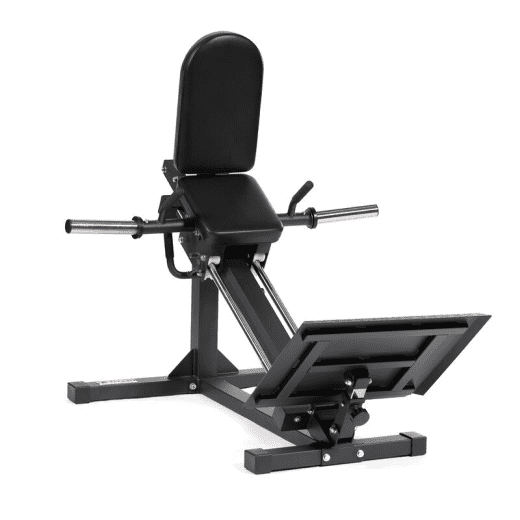
A good chunk of people shopping for a hack squat machine are really after one thing: strong legs without the back ache. For them, the seated sled is the honest answer.
Titan markets this as a hack squat machine, and strictly it isn’t one. The path sits somewhere between a leg press and a hack, and you mimic the hack feel by driving through the heels. The German word “hacke” means heel, which is where the exercise gets its name in the first place. Done right, it loads the quads while the seat carries your back.
The trade-offs are clear. Capacity tops out lower than the combos, and you don’t get that deep angled-squat burn. If your spine is the reason you’re here, neither will bother you. If the spine is badly compromised, a pendulum squat is the better road.
It can’t match the combos for raw load, but on space it walks the field:
Bottom line
The Titan Seated Leg Sled is the leg machine to buy when your back sets the terms. It works the quads from an upright seat that carries the spine, and it tucks away in a corner. You give up the deep hack feel and some top-end load, which is a fair price for training pain-free.
The Titan Seated Leg Sled might be for you if… you want strong legs while sparing a tired or injured back, in a small space.
It’s not for you if… you want the true angled hack-squat burn and heavy loading. The Titan combo or Bolt Outlaw deliver that.
Force USA Compact Leg Press & Hack Squat
Best Hack Squat Machine for Small SpacesQuick specs
- Type - Compact combo: press + hack
- Frame - Powder-coated steel
- Capacity - ~900 lb
- Footprint - Shrunk for tight rooms
- Made for - Garages and basements
Summary of experience, tests & opinions
What I like
- Force USA’s finish punches above the price. The padding and rollers feel like a dearer machine.
- It fits where a full combo can’t, yet still gives you both the hack and the press.
What could be better
- Shrinking the frame costs you some range, so a very tall lifter will feel the limits.
- Availability is patchy. Force USA keeps shuffling its lineup, so check it’s buyable before you set your heart on it.
Pros & cons
Pros
- Small footprint fits a tight garage or basement without losing the press station.
- Force USA finish on padding and rollers feels a tier above the price.
- Both stations in a frame most full combos can’t match for size.
Cons
- Reduced range from the shrunk frame, awkward for very tall lifters.
- Patchy stock, so confirm it’s available to order.
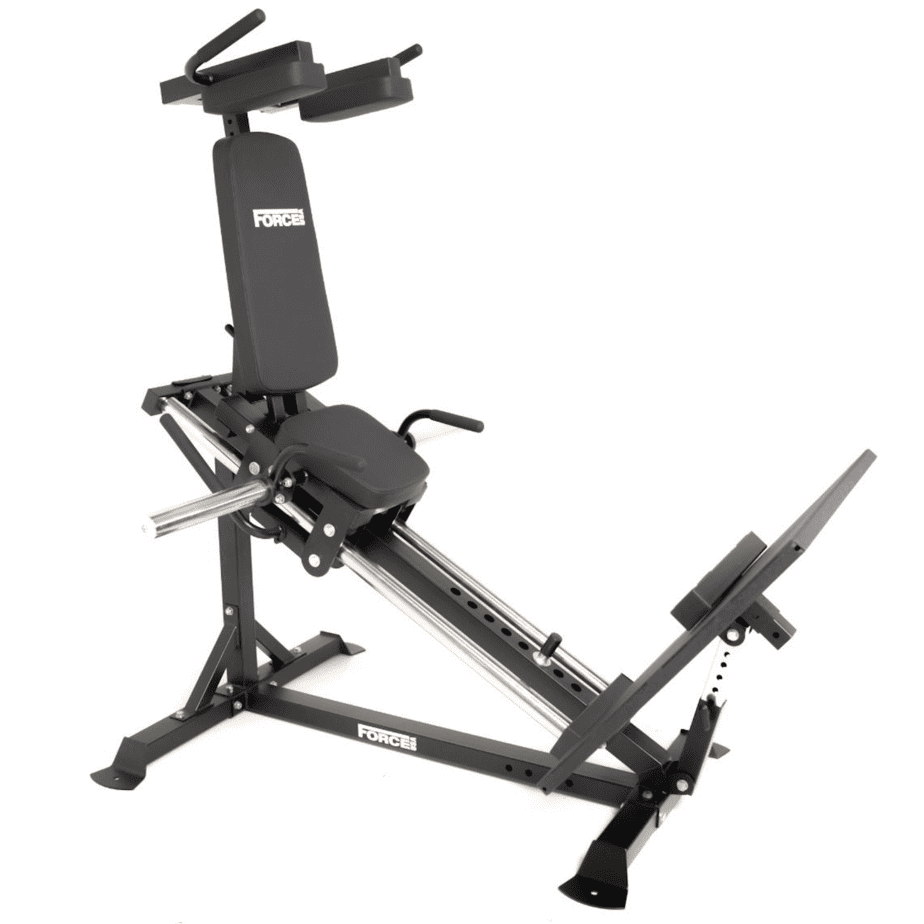
Read more about the Force USA Compact
When the room is the real constraint, this is the combo that bends to fit. It keeps the hack and the press in a frame small enough for a corner of the garage.
Force USA’s strength has always been finish for the money, and it shows here. The padding, the rollers, and the lockouts feel a step above what the price suggests, which is why the brand earns repeat buyers. For a compact machine, the build holds up well under load.
The compromise is built into the concept. Shrink a combo and you trim the range of motion, so a very tall lifter or a deep-stance squatter will meet the limits sooner. There’s also the Force USA stock question. The brand reshuffles its catalogue often, and SKUs go retail-exclusive without much warning, so check this one is buyable before you plan around it.
It can’t out-squat the full-size combos, but on fitting a small room it sits right at the top:
Bottom line
The Force USA Compact is the answer when space, not budget, is the problem. It folds a hack-and-press combo into a frame that fits a tight room, and the finish is better than the size implies. You trade some range for that, and you’ll want to confirm stock first, but for a small gym it earns its slot.
The Force USA Compact might be for you if… you want a real combo and your room can’t take a full-size one.
It’s not for you if… you’re very tall or want maximum range. The Titan combo or Bolt Outlaw give you more room to move.
Body-Solid GLPH1100
Best Conservative PickQuick specs
- Type - Leg press + hack squat combo
- Frame - 2x4” 11-gauge steel
- Capacity - 1,000 lb
- Pad - Flip-and-lock back pad
- Warranty - Lifetime frame
Summary of experience, tests & opinions
What I like
- The flip-and-lock pad makes the hack-to-press switch about as quick and foolproof as it gets.
- The welds and powder coat are clean, and a lifetime frame warranty is rare in this price band.
What could be better
- It’s the least stable here on explosive reps. Thicker tubing and a wider base would fix it cheaply, and I wish they had.
- The adjustment pins sit awkwardly, and a tall lifter loses some range on the press.
Pros & cons
Pros
- Proven and popular with a long track record of owners.
- Lifetime frame warranty, uncommon at this price.
- Compact and easy to load for a full combo.
Cons
- Least stable of the group on fast, heavy reps.
- Awkward pins and limited press range for taller lifters.
Read more about the Body-Solid GLPH1100
If you’d rather buy the safe, well-known option than the newest name, this is your machine. The GLPH1100 has been a fixture in home gyms for years, and there’s comfort in that track record.
The good is genuine. The welds and finish are clean, the flip-and-lock pad makes switching stations painless, and Body-Solid backs the frame for life, which few rivals do at this price. It loads easily and doesn’t hog space.
The honest weakness is stability. Compared with the rest of this group, it’s the one most likely to feel shaky when you squat explosively, and a thicker base would have solved it for not much money. The adjustment pins are fiddly too, and tall lifters lose some range on the press. Stay within what it’s built for and it serves well. Push it hard every session and you’ll feel the limits, which is why it sits at the foot of our build chart:
Bottom line
The Body-Solid GLPH1100 is the steady, known-quantity buy. A clean build, an easy station swap, and a lifetime frame warranty, all from a brand that’s been doing this a long time. It’s the least stable of our picks under hard reps, so it suits the lifter who trains sensibly within its limits rather than chasing big explosive numbers.
The Body-Solid GLPH1100 might be for you if… you want a popular, well-supported combo and you train at a measured pace.
It’s not for you if… you squat explosively or chase heavy top-end loads. The Titan combo or Bolt Outlaw stay planted where this can rock.
How to choose a hack squat machine
The finder above sorts you by type. This section explains the why behind it, so you can sanity-check the call.
Geometry comes first
A good machine lets you find proper form. A great one helps you keep it.
The footplate angle is what lets you push through the heel without straining the knee, so an adjustable plate matters more than any other single feature. After that comes the safety stop. Set too high, it blocks full depth, and shorter lifters feel this on most machines. The fix is a flat footplate that takes a mat or a board, plus stops you can drop or remove.
My tip: if you’re under 5’8”, check the stop height before anything else. It’s the spec that quietly ruins a machine for shorter lifters.
Build and stability
A hack machine holds your weight plus a stack of plates, often moved fast. So the steel and the base do the real work.
Thicker steel on a wider tube resists flex, and a heavier frame stays put. The cheap machines skimp on both, which is why they rock when you drive off the bottom. Machine weight is the spec people skip, and it’s one of the best tells of a stable unit.
Rollers or linear bearings
Most combos ride on quad-track rollers, four wheels guiding the carriage up the rails. With tight tolerances, that’s good enough for most lifters and most years.
Linear bearings in a closed housing ride smoother and last longer, but they cost more. Worth it when the whole machine is good, as on the GMWD combo. Not worth chasing on its own if the rest of the machine is weak.
Footprint and the space trap
Measure your room before you fall for any machine, and remember that loaded plates stick out past the listed footprint.
The most compact combos hide the horns under the carriage with no extra storage. That saves space but tends to make the machine taller and a little less stable. A seated sled like the Titan is the genuine space-saver if you can live without the angled-squat feel.
Warranty
Warranty terms track quality on a machine this size. A lifetime frame warranty is the bar once you’re past the budget tier, and the parts and upholstery want at least a year. A short warranty on a pricey machine, as on our top pick, is the one place to weigh carefully.
Best hack squat machine FAQs
What muscles does a hack squat work?
A hack squat works the quads, hamstrings, glutes, calves, and abs. It loads the quads especially hard because the angled path and back support let you push more weight than a free back squat, while taxing the trunk less. That’s the appeal: heavy leg work with the spine kept out of the firing line.
Is a hack squat machine worth it for a home gym?
A hack squat machine is worth it if you want heavy leg work without loading your spine, and most home versions double as a leg press. A combo like the Titan Leg Press Hack Squat covers two movements in one frame, which makes the floor space and the spend easier to justify than a single-purpose machine.
Hack squat machine or leg press, which is better?
Neither is strictly better, since they do different jobs. A hack squat stands you up and works the quads through a deeper range, while a leg press keeps the spine fully out of it. The good news is that most machines here, like the GMWD combo, are combos that do both, so you don’t have to choose.
How much space does a hack squat machine need?
A full 45-degree combo needs roughly a 7ft by 4ft area, and more once you count the plates hanging off the sides. If that’s tight, a compact combo like the Force USA Compact shrinks the frame, and a seated sled like the Titan Seated Leg Sled takes the least room of all.
Can a hack squat machine replace barbell squats?
A hack squat machine can replace barbell squats for building the quads, and it does so with less load on the spine and a fixed, safer path. What it can’t replace is the whole-body coordination and core demand of a free squat. For most home lifters chasing leg size and strength, that’s a trade worth making.
The bottom line
Two decades of squatting on these machines, and this guide is the short version of what stuck.
For most home gyms, the Titan Leg Press Hack Squat is the best hack squat machine you can buy. It squats well, presses well, and costs less than the premium combos while doing nearly all they do. Want gym-grade steel and don’t mind paying? The Bolt Outlaw is the buy-it-for-life pick. Watching the budget? The GMWD combo gives you linear bearings and a heavy frame for the least money.
If your back sets the terms, the Titan Seated Leg Sled spares it best. Tight on room, the Force USA Compact folds a full combo into a small space. And the Body-Solid GLPH1100 is the steady, well-supported choice for a measured trainer.
A quick word on what’s gone: our old top pick, the Force USA Ultimate 45-degree Combo, is now retail-exclusive, so you can’t buy it online. The standalone commercial units from the likes of Panatta and SportArt are superb and far too dear for nearly every home gym.
- Skip back to the comparison table to see all 6 side by side.
- Bookmark this page. We keep it updated as stock and picks change.
Stay strong and smart.
