

We scored 32 half racks across 4 quality categories and picked the 7 most worthy of your money.
Mike has built and loaded more racks than he’d care to admit, and the half rack is the one he points most home gyms to first. The team ran every rack here through our weighted scoring, so these picks come from data and hands-on time, not one lifter’s hunch.
The aim was simple: find the racks that hold heavy weight without wobbling, fit a real garage, and grow with your training, at a price that makes sense.
Let’s see how they stacked up…
Editor's note · updated June 18, 2026
We rebuilt this guide for 2026 and reworked the rankings with it.
What changed:
- The Rogue HR-2 is the new #1 overall. The old guide didn’t even feature it, which was a miss. It gives you cage-grade 3x3 steel and the deep Monster Lite attachment path in a free-standing frame that doesn’t need bolting to the floor.
- We reordered the list around how people actually buy: a clear pick now for budget, value, premium, small spaces and folding.
- We added a straight answer to “half rack or power rack?” lower down, because that’s the question most people are really asking when they land here.
Related
We’ve built and tested rack gear for years. A half rack is one piece of the setup, so see our best squat racks guide for every rack type at every price including full cages, and the best power rack attachments to kit yours out.
Compare the best half racks
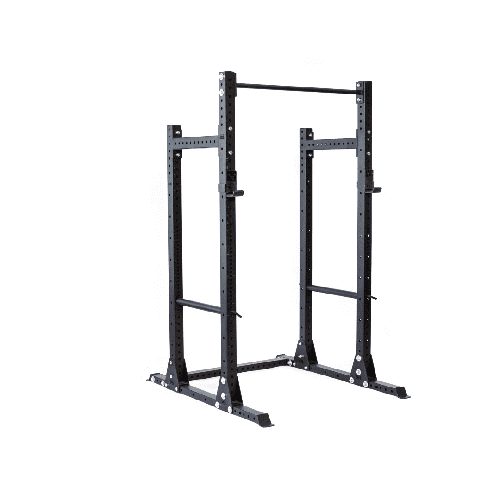 BoS Hydra 3x3
Check price
BoS Hydra 3x3
Check price
|
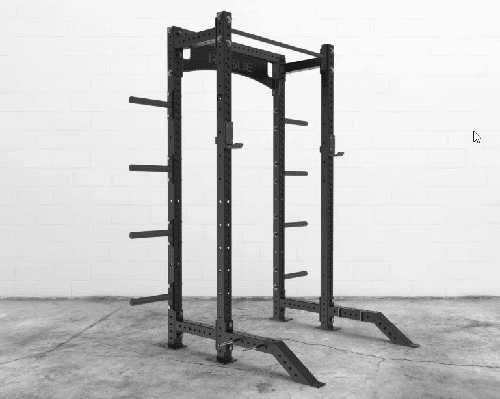 Rogue Monster Lite
Check price
Rogue Monster Lite
Check price
|
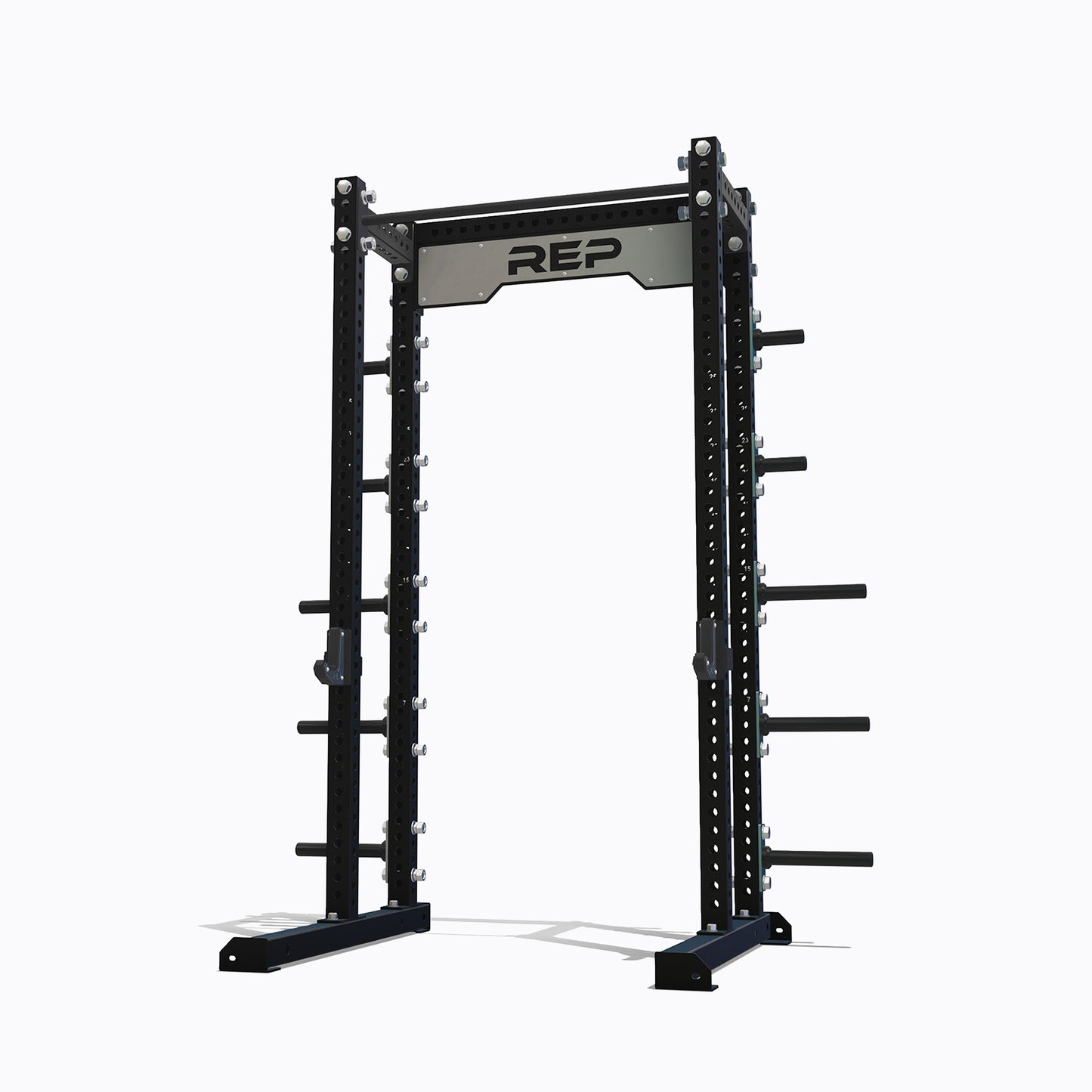 REP Apollo
Check price
REP Apollo
Check price
|
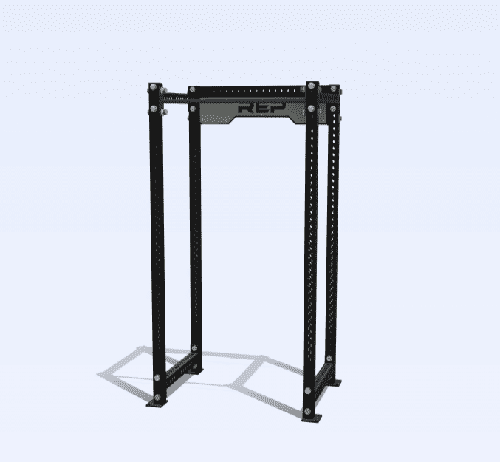 REP PR-5000
Check price
REP PR-5000
Check price
|
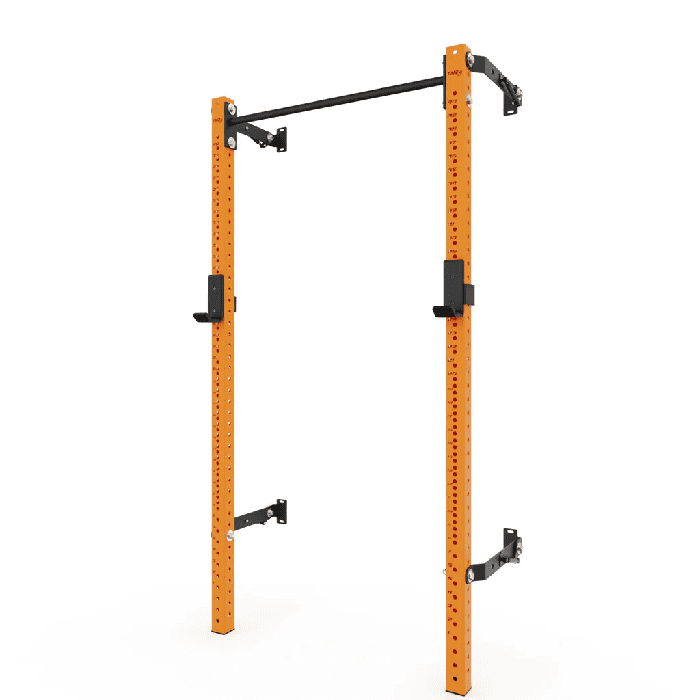 PRx Profile PRO
Check price
PRx Profile PRO
Check price
|
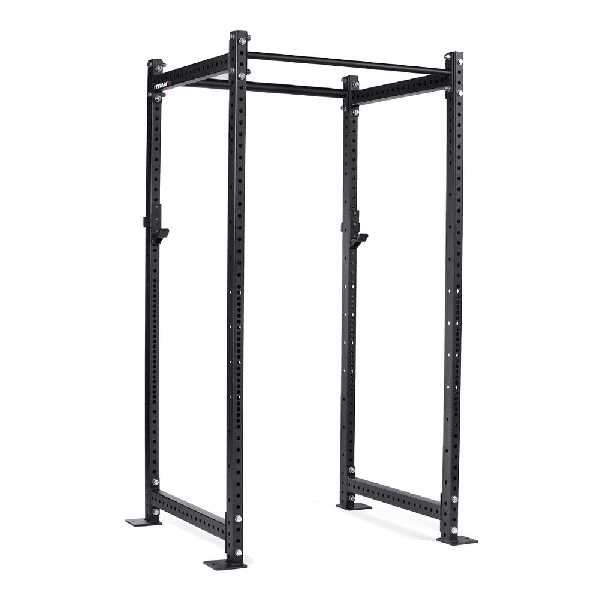 Titan T-3
Check price
Titan T-3
Check price
|
||
|---|---|---|---|---|---|---|---|
| Best for | Overall | Value & customizing | Premium | Do-it-all mid | Small spaces | Folding | Budget |
| Rating (*) | |||||||
| Build & durability | 93% | 90% | 95% | 88% | 90% | 84% | 80% |
| Stability & footprint | 92% | 88% | 90% | 86% | 86% | 80% | 78% |
| Versatility & attachments | 92% | 92% | 90% | 90% | 88% | 80% | 82% |
| Value | 90% | 94% | 80% | 88% | 84% | 88% | 92% |
| Price | $$$ | $$ | $$$$ | $$$ | $$$ | $$$ | $ |
| Upright steel | 3x3" 11ga | 3x3" 11ga | 3x3" 11ga | 3x3" 11ga | 3x3" 11ga | 3x3" 11ga | 2x3" 11ga |
| Anchoring | Free-standing | Bolt-down | Bolt-down | Bolt-down | Bolt-down | Wall-mount | Bolt-down |
| Footprint | Compact | Medium | Medium | Medium | Shallow 16" | Folds flat | Compact |
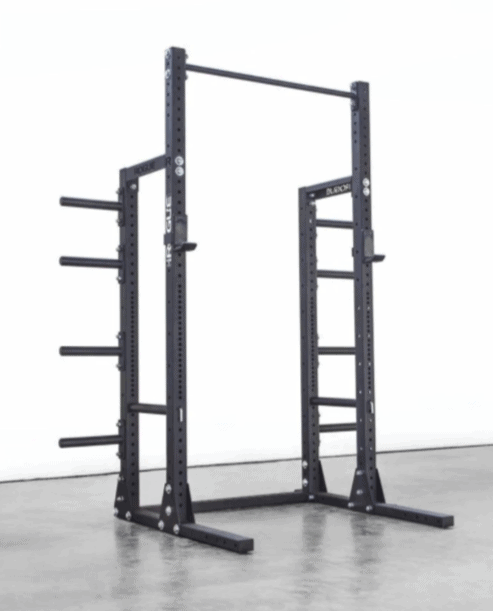 Rogue HR-2
Our testing and selection process
How we assess half racks
We run every half rack roundup through the same 5 steps:
- We start as the buyer. Most of our team trains on a rack at home, and Mike has built out more than a few garages, so we know what a good one is worth living with.
- We research wide. We pull steel specs, hole patterns, capacity, anchoring and owner feedback on as many racks as we can find, 32 this time, into one spreadsheet.
- We score each rack with our weighted system. Data decides the ranking, not brand loyalty.
- We split the field by job, because a forever-gym premium rack and a folding wall-mount are bought for very different reasons.
- We get hands-on where we can and lean on the SHG community for the rest.
You can read more about the process in our review guidelines.
How we score half racks
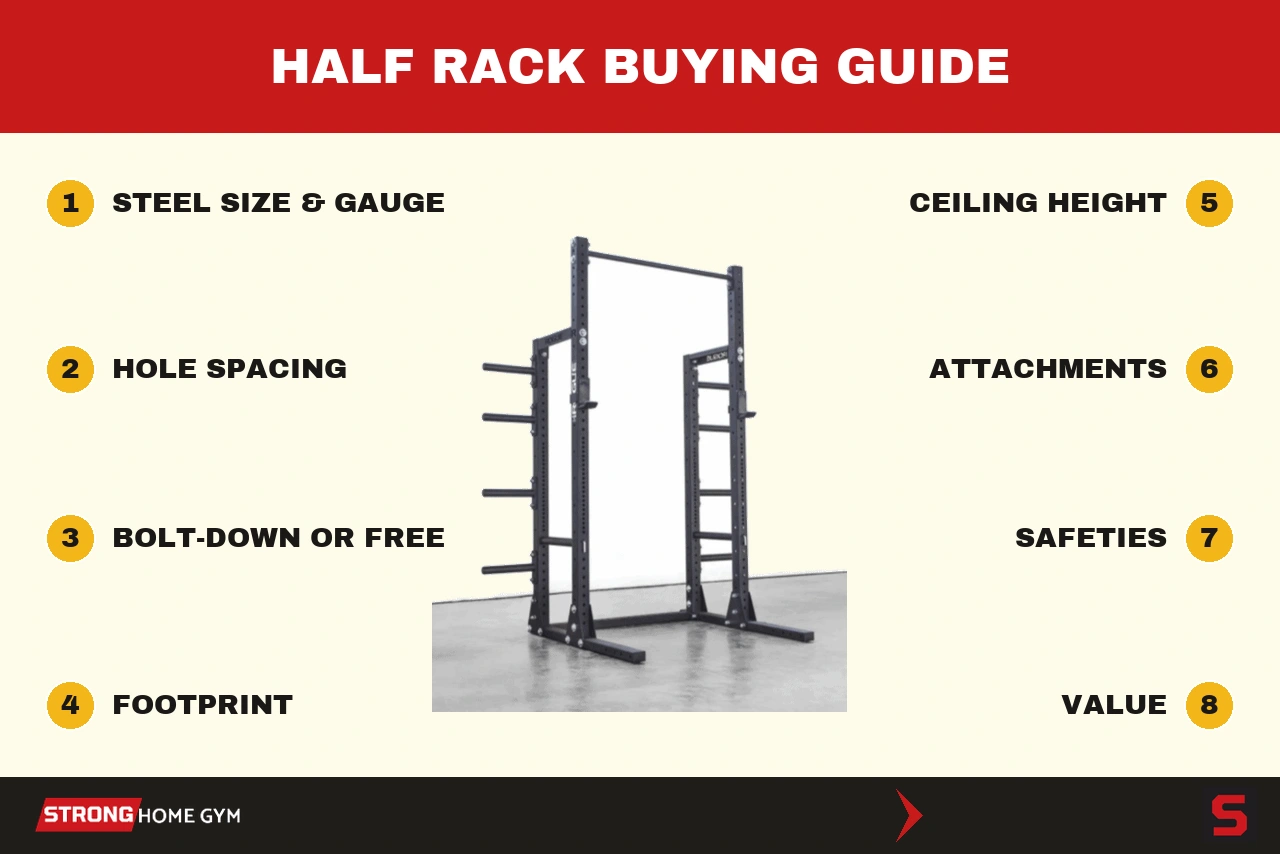
Here’s what feeds the score and how much each part counts. Build leads, because a rack you load heavy has to be stiff and safe before anything else matters.
We grouped it into four weighted factors:
- Build & durability (30%) - steel size and gauge, welds, hardware, and finish.
- Stability & footprint (25%) - how planted it is under load, and what it costs you in floor space.
- Versatility & attachments (25%) - hole pattern, pull-up options, and how deep the accessory path runs.
- Value (20%) - what you get for the tier you pay in.
Build & durability (30%)
This carries the most weight for a reason. A rack lives or dies on the steel under load. We weight the upright size and gauge (an 11-gauge 3x3 is a different animal to a 14-gauge 2x3), the welds, the hardware, and how the finish holds up to dropped bars and chalk.
For a home lifter, 11-gauge is the line we want to see. Drop below it and a heavy rack pull starts to feel vague.
Stability & footprint (25%)
A half rack already saves space over a cage. We score how much it saves, and how planted it stays for it. Some racks, like the HR-2, hold firm free-standing. Most feel their best bolted down. We reward a rack that gives you a small footprint without a wobble.
Versatility & attachments (25%)
A rack you can grow is a rack you keep. We look at the hole pattern (Westside spacing through the working zone earns points), the pull-up options, and how deep the brand’s accessory catalogue runs. A dip attachment or cable tower you can add in a year matters.
Value (20%)
We build a quality-adjusted picture of price. A rack that nails the build and stays planted for a fair price beats a premium one that only justifies its cost on the spec sheet. Tiers and relative value, not chasing the cheapest sticker.
Find the perfect half rack for you
Overall | Value | Premium | Do-it-all | Small spaces | Folding | Budget
Here’s how the seven half racks stack up on our overall score:
Rogue HR-2 Half Rack
Best OverallQuick specs
- 3x3” 11-gauge uprights, bolt-together build
- Westside hole spacing through the working zone
- Free-standing, no floor anchors needed
- Single fixed pull-up bar, Monster Lite compatible
The rack we point most people to first: cage-grade 3x3 steel and the deep Monster Lite attachment path, in a frame that stays planted without bolting to the floor.
Summary of experience, tests & opinions
What I like
- It does not need anchoring. The base is deep enough that even heavy rack pulls don’t tip it, so renters get cage-grade lifting without drilling a single hole.
- The pull-up bar sits low enough to clear a tight garage ceiling. That’s the exact thing that pushed Mike off a full Monster cage in one build.
- Westside spacing through the press and squat zone, so the safeties and J-cups land exactly where you want them.
What I don’t
- The single pull-up bar is fixed, so you don’t get the multi-grip options some half racks throw in.
- Rogue’s lead times come and go. When a colour or attachment is in demand, you wait for it.
Pros & cons
Pros
- 3x3 11-gauge uprights with Westside hole spacing through the press and squat zone.
- Free-standing, so no floor anchors and no landlord conversation.
- Monster Lite compatible, so the attachment path runs deep as your training grows.
Cons
- Premium-of-mid pricing, above the value picks even before attachments.
- One fixed pull-up bar rather than a multi-grip option.
Read more about the Rogue HR-2
The HR-2 is the rack that removes the half rack’s usual compromise. Plenty of half racks are only solid once they’re lagged into concrete. The HR-2 stays planted free-standing, so it suits a rented garage or a floor you’d rather not drill. That one feature solves the biggest problem half racks usually carry.
Then there’s the ecosystem. Because it runs Rogue’s Monster Lite hole pattern, the rack you buy this year takes the dip bars, landmine and extra pull-up options you add later. You’re buying into a system, and that’s what keeps a rack in the gym for a decade.
Who should skip it? If you want the cheapest solid rack, the Bells of Steel Hydra gives up very little for a real saving. If you bench heavy and alone, a full cage is the safer call, which we get into further down. For most home lifters who want one rack that lasts and grows, it’s the one to beat, and it tops our overall score:
Bottom line
The Rogue HR-2 wins because it removes the half rack’s usual compromise. You get cage-grade 3x3 steel and a deep attachment path, in a free-standing frame that fits under a low ceiling and never needs anchoring. You pay a mid-premium price and you give up multi-grip pull-up options, but nothing else here balances build, stability and growth as cleanly.
The Rogue HR-2 might be for you if… you want one rack that lasts decades, fits a tight or rented space, and grows with your training.
It’s not for you if… you’re on the tightest budget. Look at the Bells of Steel Hydra or the Titan T-3.
Bells of Steel Hydra 3x3 Half Rack
Best Value & Most CustomizableQuick specs
- 3x3” 11-gauge uprights, bolt-down
- Westside hole spacing through the working zone
- Modular build-your-own from a parts menu
- Powder coat, several colours
The same 3x3 11-gauge steel as racks a tier up, on a build-your-own frame that lets you spend only where it counts.
Summary of experience, tests & opinions
What I like
- You build it from a parts menu, so you can start with a bare frame and add the cable tower or extra crossmembers when the budget comes back around.
- Bells of Steel’s warranty service has quietly become one of the better ones in home gym gear. We’ve watched it climb year on year.
What I don’t
- It wants bolting down to feel its best. Free-standing and loaded heavy, there’s a touch more movement than the HR-2.
- The huge options list is great until you’re three browser tabs deep trying to spec it. Decision fatigue is real here.
Pros & cons
Pros
- 3x3 11-gauge steel at a price tier below the brand-name racks it matches on paper.
- Modular to the core, so it grows one attachment at a time.
- Westside spacing for fine bar-catch and safety positioning.
Cons
- Best bolted down, so renters lose a little of its stability edge.
- Spec paralysis from the sheer length of the options menu.
Read more about the Bells of Steel Hydra 3x3
If the HR-2 is the rack that removes compromises, the Hydra is the one that removes the price barrier without dropping the steel. It runs the same 3x3 11-gauge uprights as racks a full tier up. You’re paying less for the badge while the metal stays exactly the same, and that’s the whole pitch.
The modular build is the second reason it lands here. You can buy a bare frame now and bolt on a cable tower, extra uprights or a landmine later, spreading the cost over months instead of taking it in one hit. For a gym growing on a real-world budget, that flexibility is worth as much as the spec.
Where it gives ground to the HR-2 is anchoring. Bolted to a slab the Hydra is planted and quiet. Left free-standing and loaded heavy, it moves a hair more than Rogue’s no-bolt base. Drill it down and that gap closes to nothing, which is why it runs away with our value score:
Bottom line
The Bells of Steel Hydra is the value pick because it refuses to cut the part that matters. The steel matches racks that cost more, the modular menu lets you grow it on your own timeline, and the warranty behind it has earned trust. You give up a little free-standing stability versus the HR-2, but bolt it down and that disappears.
The Bells of Steel Hydra might be for you if… you want brand-name steel and a rack you can build out over time, for less.
It’s not for you if… you can’t bolt into your floor and want to lift heavy free-standing. The Rogue HR-2 holds that ground better.
Rogue Monster Lite Half Rack
Best PremiumQuick specs
- 3x3” 11-gauge uprights, 5/8” hardware
- Westside hole spacing, bolt-down
- The full Monster Lite attachment catalogue
- Rogue powder coat, several colours
The deepest attachment ecosystem in home gym gear, on a rack built to outlive the house it sits in.
Summary of experience, tests & opinions
What I like
- Once it’s lagged down, this is the most planted rack on the list. Heavy rack pulls feel like they’re tied to the building.
- The attachment list is the longest in the game. We keep finding Rogue parts that bolt straight on years after the original build.
What I don’t
- It has to be bolted to the floor. There’s no free-standing version, so renters are out unless they can drill.
- You pay Rogue prices, and the attachments add up faster than the headline cost suggests.
Pros & cons
Pros
- 3x3 11-gauge with 5/8” hardware, the toughest frame here.
- The full Monster Lite ecosystem, so it never runs out of road.
- Resale holds better than almost any rack brand.
Cons
- Bolt-down only, no free-standing option.
- Premium pricing that climbs with every attachment.
Read more about the Rogue Monster Lite
The Monster Lite half rack is the one you buy when you’ve decided this is the last rack you’ll own. The frame is overbuilt for home use, the hardware steps up to 5/8 inch, and the attachment catalogue is the deepest in the industry. If a rack accessory exists, Rogue probably makes a Monster Lite version of it.
What stops it taking the top spot is the bolt-down requirement and the price. The HR-2 gets you most of this build free-standing, for less. So the Monster Lite earns its slot for the buyer who owns their slab, plans to anchor it, and wants the ceiling raised on how far the rack can grow.
It tops our build chart, and that’s the reason to pay up:
Bottom line
The Rogue Monster Lite is the premium pick because it sets the ceiling for build quality and attachment depth, and holds its value if you ever sell. You pay for it, and you have to bolt it down, so it’s the wrong call for renters or anyone watching the budget. For an owner building a forever gym, it’s as good as a half rack gets.
The Rogue Monster Lite might be for you if… you own your floor, plan to anchor, and want a rack that never caps your training.
It’s not for you if… you rent or want free-standing. The Rogue HR-2 is the smarter buy.
REP Apollo Half Rack
Best Do-It-All MidQuick specs
- 3x3” 11-gauge uprights, bolt-down
- Westside hole spacing through the working zone
- Rack-builder: configure to taste
- Optional cable, pulley and storage add-ons
REP’s rack-builder lets you spec exactly the half rack you want, and the base build already does almost everything most lifters need.
Summary of experience, tests & opinions
What I like
- The rack-builder is genuinely useful. You’re not paying for attachments you’ll never bolt on, which keeps the entry cost honest.
- REP’s finish quality has caught the big names. Side by side, the powder coat and welds don’t give anything away.
What I don’t
- It’s a younger ecosystem than Rogue’s, so the long-tail accessory list isn’t as deep yet.
- It wants bolting down to feel fully planted, same as the Hydra.
Pros & cons
Pros
- 3x3 11-gauge steel with a clean, configurable build.
- Rack-builder pricing, so you pay for what you’ll use.
- Strong finish and welds for the tier.
Cons
- Younger attachment catalogue than Rogue.
- Best bolted down for full stability.
Read more about the REP Apollo
The Apollo is the rack for the buyer who lands between the Hydra’s value and the Monster Lite’s ceiling. REP’s rack-builder lets you start with a sensible base and add only the parts you’ll use, so the money goes where your training does. That’s a smarter buy than a fixed package you half-use.
REP has quietly become a brand you can buy on trust. The steel, the finish and the welds all sit a notch above the price, and the warranty is solid. The one honest caveat is ecosystem age. Rogue has a decade head start on niche attachments, so if you want some exotic bolt-on, check it exists for the Apollo first.
For most people that won’t matter, because the base rack already squats, presses and pulls without complaint. It lands mid-pack with no glaring weakness, which is exactly what a do-it-all pick should look like, and its attachment flexibility scores right at the top:
Bottom line
The REP Apollo is the do-it-all mid pick because it nails the balance: real 3x3 steel, configurable cost, and a finish that punches above its tier. It gives up a little to Rogue on attachment depth and wants anchoring for best stability. If you want one well-built rack without overpaying for a name, it’s the easy call.
The REP Apollo might be for you if… you want a configurable, well-built rack and you’d rather pay for parts you’ll actually use.
It’s not for you if… you need the deepest attachment catalogue going. The Rogue Monster Lite owns that.
REP PR-5000, 16-inch depth
Best for Small SpacesQuick specs
- 3x3” 11-gauge uprights in the shallow 16” depth
- Hugs the wall, squat-press-pull in a tight footprint
- REP rack-builder add-ons as space allows
- Bolt to wall or floor for confident heavy work
Full-fat REP steel folded into a 16-inch depth, so a small spare room or a shallow garage bay still gets a serious rack.
Summary of experience, tests & opinions
What I like
- In the 16-inch depth it sits almost flat to the wall. We’ve fit one in a box room where a full cage was never going to happen.
- It’s still PR-5000 steel underneath. You’re not trading build for the small footprint, only depth.
What I don’t
- The shallow depth means you lift in front of the uprights, so you give up the caged feel of a full PR-5000.
- Bolting to the wall or floor is the move here, given how little depth there is to resist tipping.
Pros & cons
Pros
- 3x3 11-gauge in a genuinely small footprint.
- 16-inch depth that suits box rooms and shallow bays.
- REP ecosystem for sensible add-ons.
Cons
- In front of the rack, not caged, in this depth.
- Wants anchoring for confident heavy work.
Read more about the REP PR-5000 (16-inch depth)
This is the answer for the gym that doesn’t have room for a proper cage or a deep half rack. Configured at 16 inches deep, the PR-5000 hugs the wall and still gives you 3x3 11-gauge uprights to squat, press and pull against. For a box room or a shallow garage bay, that’s a rare combination.
The trade is depth alone. The build quality stays untouched, so you lift in front of the rack rather than inside it, but against the same steel the full-depth PR-5000 gives you. Anchor it and that shallow footprint stops being a stability worry.
If you have the floor for it, a deeper rack like the HR-2 gives more margin. But when the room is the hard limit, this is the most rack you can press into the least space, and it still holds its own on our footprint-and-stability score:
Bottom line
The REP PR-5000 in 16-inch depth wins the small-space slot because it refuses to drop the build to fit the footprint. You get real REP steel against a wall where nothing bigger fits. You give up the caged feel and you’ll want to anchor it, but for a tight room it’s the smartest use of the floor you have.
The REP PR-5000 (16-inch) might be for you if… your room is the hard limit and you still want serious steel.
It’s not for you if… you’ve got the floor for a deeper rack. The Rogue HR-2 gives more margin.
PRx Profile PRO Squat Rack
Best FoldingQuick specs
- Wall-mounted folding rack, 3x3” 11-gauge uprights
- Folds to around 4 inches from the wall
- Fixed pull-up bar on the PRO
- Needs a stud or masonry wall to mount
Lifts like a real rack, then folds to about four inches so the garage goes back to being a garage.
Summary of experience, tests & opinions
What I like
- It folds to about four inches. We’ve watched one disappear against a garage wall so a car could park where the squat session just happened.
- It uses real 3x3 steel, so folded-flat doesn’t mean flimsy when it’s open and loaded.
What I don’t
- You need a solid wall with studs or masonry to mount to. A weak wall is a non-starter.
- Folding racks live in front of the wall by design, so spotter arms do the safety job rather than a full cage.
Pros & cons
Pros
- Folds to roughly four inches, the smallest footprint here when stowed.
- 3x3 11-gauge for a confident open-position lift.
- Frees the room for parking or other use between sessions.
Cons
- Needs a strong mounting wall.
- Lift in front, with spotter arms rather than a cage.
Read more about the PRx Profile PRO
The Profile PRO is the rack for the space that has to do two jobs. Open it and you’ve got a real 3x3 rack to squat and press in. Fold it and the wall gives you about four inches of clearance, so the garage parks a car or the spare room goes back to normal. No other pick here disappears like that.
The catch is the wall. You’re hanging a rack and your loaded barbell off it, so it has to mount into studs or solid masonry. Get that right and it’s rock solid in use. Get it wrong and no rack will save you.
It scores lower on stability and attachments than the fixed racks, which is the honest cost of folding. But it wins on value for the buyer whose real constraint is shared space:
Bottom line
The PRx Profile PRO is the folding pick because nothing else here reclaims the room like it does, and it does it without dropping to thin steel. You need a strong wall and you accept spotter-arm safety over a cage. For a shared garage or a multi-use room, that’s a trade worth making.
The PRx Profile PRO might be for you if… your training space has to fold away for a car or another use.
It’s not for you if… your rack can stay standing. A fixed pick like the Bells of Steel Hydra gives more for the money.
Titan T-3 Half Rack
Best BudgetQuick specs
- 2x3” 11-gauge uprights, bolt-down
- Westside hole spacing, 5/8” hardware
- The lowest entry price on the list
- Titan’s own attachment line to grow it
11-gauge steel and Westside spacing at the cheapest entry here, so a first rack doesn’t have to mean a flimsy one.
Summary of experience, tests & opinions
What I like
- It’s 11-gauge steel at a price that usually buys 14-gauge. For a first rack that’s a lot of metal for the money.
- The fit and finish has improved a lot over the years. The holes line up and the hardware seats cleanly more often than Titan’s old reputation suggests.
What I don’t
- The uprights are 2x3, not 3x3, so it flexes more than the premium racks under a truly heavy pull.
- Quality control is still a touch hit-and-miss on the small parts. Most boxes are fine, the odd one needs a fettle.
Pros & cons
Pros
- 11-gauge steel at the lowest entry price here.
- Westside spacing and 5/8” hardware, specs above its price.
- Cheap to grow with Titan’s own attachment line.
Cons
- 2x3 uprights, so more flex than the 3x3 racks.
- Variable QC on small parts.
Read more about the Titan T-3
Titan is where a lot of home gyms start, and the T-3 half rack is why. You get 11-gauge steel, Westside hole spacing and 5/8 inch hardware at a price that normally buys thinner, vaguer kit. For a first rack on a tight budget, that’s the most metal you can buy for the money.
The honest knock is the steel size and the consistency. The uprights are 2x3 rather than 3x3, so under a genuinely heavy rack pull you’ll feel a little more give than the premium picks. And Titan’s quality control still wobbles on the small parts, so the odd box needs a file or a patient phone call.
For most beginners none of that bites. You’re squatting and pressing loads the rack shrugs off, and the value is unmatched at this end. When you outgrow it you’ll know, and a 3x3 rack like the HR-2 is the upgrade. Until then, it runs near the top of our value score:
Bottom line
The Titan T-3 is the budget pick because it gives you real rack specs, 11-gauge steel and Westside spacing, for the least money on the list. You accept 2x3 uprights and the occasional QC quirk. For a first rack or a tight budget, nothing here gives you more lifting for less.
The Titan T-3 might be for you if… you want the most rack for the least money to start training now.
It’s not for you if… you load truly heavy and want zero flex. Step up to the Rogue HR-2 or Bells of Steel Hydra.
Half rack vs power rack: which should you buy?
This is the question most people are really asking when they land here, so here’s the straight answer.
A power rack is a full four-post cage. You lift inside it, with safeties on all four uprights. A half rack has two main posts and a shorter front section, so you lift in front of it rather than caged inside. The cage is safer for solo near-max work. The half rack saves floor space and usually saves money.
For a lot of home lifters the half rack is the smarter buy, and not as a compromise.
If your ceiling is low, a half rack’s shorter uprights and pull-up placement clear it where a tall cage won’t. If your gym is a corner of a garage, the smaller footprint is the difference between a usable space and a cramped one. A good bolt-down or weighted half rack is rock solid for squats, presses and rack pulls, which is the bulk of what most people actually train.
When does the full cage win? Heavy solo benching is the real one. Inside a cage you can dump a failed bench onto four-post safeties and walk away. In front of a half rack you’re relying on spotter arms that stick out the front, which work, but give less margin. If you bench alone and chase one-rep maxes, lean cage. For everyone else, footprint and budget usually point at the half rack. If you want to see the full-cage options, our best squat racks guide covers them.
Other half racks we considered
A few good racks didn’t make the seven, and it’s worth saying why.
Sorinex XL Series and Eleiko Prestera. Both are superb, genuinely heirloom-grade builds, and both sit at the very top of the price range. For a home gym the jump in cost buys more rack than most people will ever use. If money is no object and you want a statement piece, look them up. For the buyer this guide is written for, the picks above give you the same training for a lot less.
Body-Solid Powerline and the Amazon-only cages. At the budget end these turn up in a lot of lists. They’ll hold a bar, but the steel and the safeties don’t match the Titan T-3 for similar money, so we’d point you there first.
The bottom line
If you want one answer, it’s the Rogue HR-2. It gives you cage-grade 3x3 steel and a deep attachment path in a free-standing frame that fits a low ceiling and never needs bolting down. That combination is why it tops the list.
From there it comes down to your constraint. Tight on budget, the Titan T-3 gives you real rack specs for the least money. Watching the spend but want brand-name steel, the Bells of Steel Hydra is the value sweet spot. Short on space, the REP PR-5000 hugs the wall and the PRx Profile PRO folds away entirely. Building a forever gym, the Rogue Monster Lite sets the ceiling.
Whichever you pick, anchor it if you can, load it sensibly, and it’ll outlast most of the kit in your gym.
Half rack FAQs
Is a half rack good enough for heavy lifting?
For most home lifters, yes. A bolted-down or free-standing 11-gauge half rack handles heavy squats, presses and rack pulls without complaint. The one job a full cage does better is catching a failed solo bench on four-post safeties. If you bench alone and chase one-rep maxes, lean cage. For everything else, a good half rack is plenty.
Do half racks need to be bolted to the floor?
It depends on the rack. Some, like the Rogue HR-2, have a deep enough base to stay planted free-standing, so renters can use them without drilling. Most others feel their best lagged into concrete, especially for heavy rack pulls. If you can’t bolt down, choose a rack designed to stand free.
Half rack vs power rack, which should I buy?
A power rack is a full four-post cage you lift inside, with safeties all around. A half rack has two main posts and a shorter front, saves floor space and usually costs less. The cage wins for heavy solo benching. The half rack wins on footprint, ceiling height and budget, which is why it suits more home gyms than people expect.
What steel size should a half rack be?
11-gauge steel is the target. For uprights, 3x3 is stiffer and better for very heavy loads, while 2x3 is lighter and cheaper and still fine for most training. The premium picks here use 3x3, the budget Titan uses 2x3, and both lift well within what a home gym throws at them.
Can you do pull-ups on a half rack?
Yes. Every pick here has a pull-up bar, usually fixed at the top of the uprights. On a half rack the bar often sits a little lower than on a tall cage, which is part of why half racks clear low ceilings better. Check the height against your ceiling before you buy.
