

We tested and scored 41 kettlebells to find the 6 best kettlebells, judged across the 5 categories that decide whether a bell is worth your money.
I’ve built home gyms for ten years, and a kettlebell was one of the first things I bought. The team ran my picks through our scoring system, so this isn’t just me talking.
It’s scoring based on data, owner reports, and hands-on use.
The goal was simple: cut the noise and hand you a short list of cast-iron and competition bells that swing right and last for decades.
Let’s see if we did a good job…
Related
We’ve spent years swinging, pressing, and snatching bells in this gym. Short on floor space? Our best adjustable kettlebell guide covers the bells that fold a whole rack into one handle. And if you’re starting from an empty room, our how to build a home gym guide maps out where a kettlebell fits.
Compare the best kettlebells
 Bells of Steel Competition
Check price
Bells of Steel Competition
Check price
|
 Rogue Kettlebell (E-Coat)
Check price
Rogue Kettlebell (E-Coat)
Check price
|
 Kettlebell Kings Powder Coat
Check price
Kettlebell Kings Powder Coat
Check price
|
 Titan Fitness Kettlebell
Check price
Titan Fitness Kettlebell
Check price
|
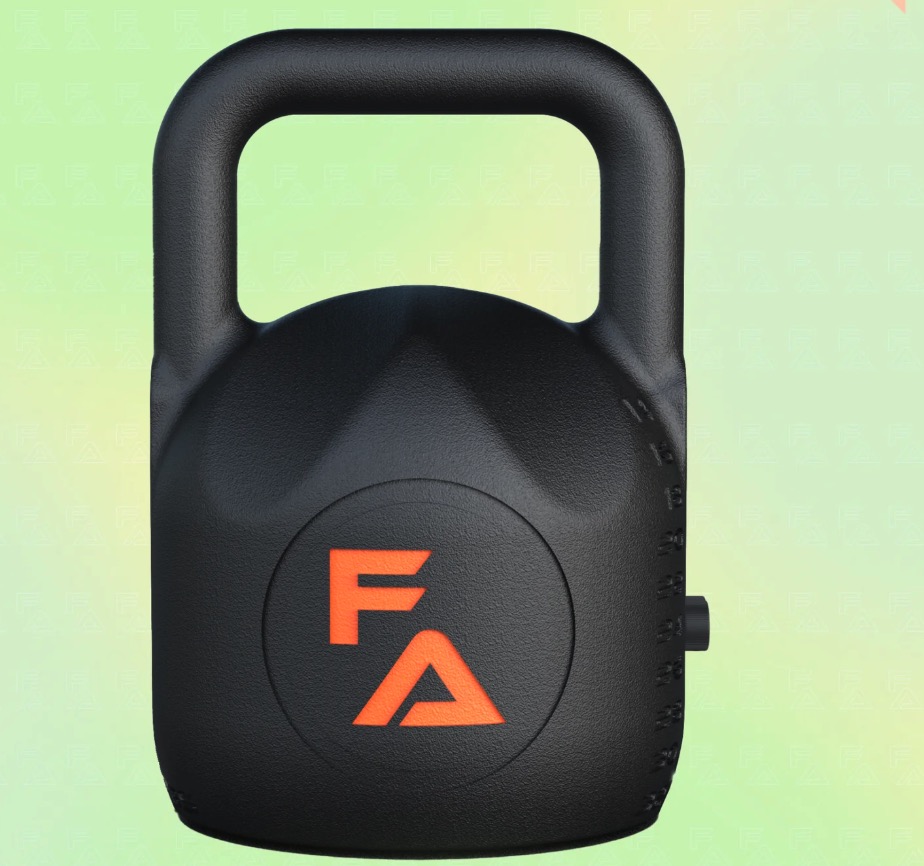 Freak Athlete Adjustable
Check price
Freak Athlete Adjustable
Check price
|
||
|---|---|---|---|---|---|---|
| Best for | Overall | Competition | Premium cast iron | Best grip | Budget | Small spaces |
| Rating (*) | ||||||
| Build & finish (35%) | 90% | 90% | 92% | 88% | 82% | 88% |
| Handle (25%) | 90% | 86% | 86% | 92% | 80% | 82% |
| Balance & feel (20%) | 88% | 90% | 86% | 85% | 80% | 80% |
| Range & sizing (10%) | 88% | 84% | 84% | 80% | 84% | 95% |
| Value (10%) | 86% | 88% | 80% | 76% | 92% | 84% |
| Type | Cast iron | Competition steel | Ductile cast iron | Cast iron | Cast iron | Adjustable cast iron |
| Finish | Powder coat | Painted steel | E-coat | Powder coat | Powder coat | Powder coat |
| Handle | Fits various hands | 33-35mm comp spec | Smooth, fits chalk | Textured, grippy | Thinner, slick | Standard cast handle |
| Weight range | Single bells, wide range | Single bells, color-coded | Single bells and sets | Single bells, very wide | Single bells only | One bell, many weights |
| Sizing | Grows with weight | Uniform across weights | Grows with weight | Grows with weight | Grows with weight | Fixed shell |
| Price | $$ | $$ | $$$ | $$$ | $ | $$ |
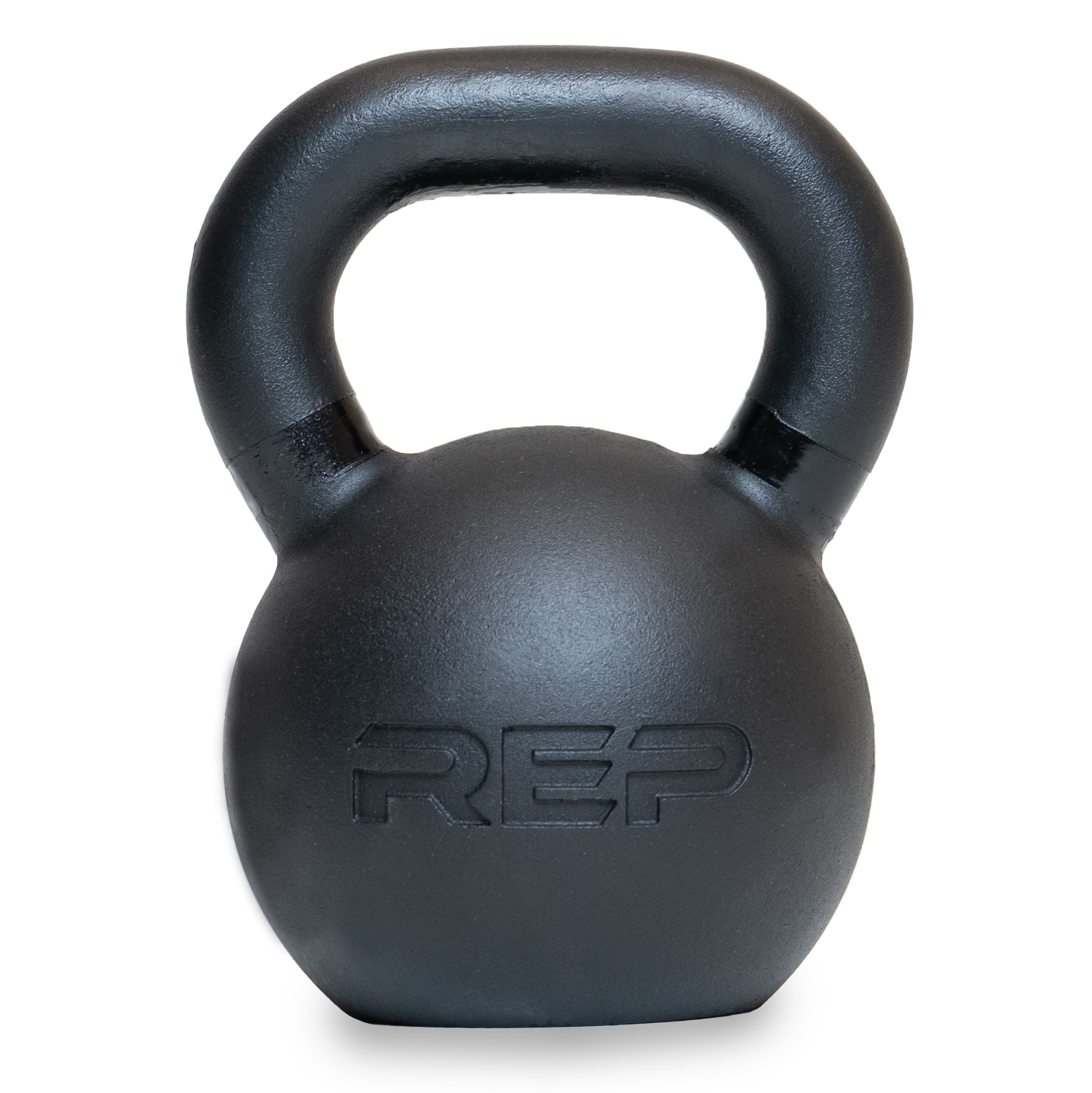 REP Fitness Kettlebell
Our testing and selection process
How we assess the kettlebells
We always use a 5 step process in our reviews:
- We start as the buyer. Most of our team have bought kettlebells before, and I have owned and trained with cast-iron bells in this gym for years.
- We do a ton of research. We pull specs, prices, and owner reports on every kettlebell worth a look into one master spreadsheet.
- We rate each bell with our weighted scoring system. The categories and weights are below.
- We let the data make the call, not brand loyalty. A REP can beat a Rogue. A Titan can beat them both on value.
- We get our hands on as many top picks as possible. Our community is a big help here.
You can read more in our review guidelines.
How we test and score the kettlebells
A kettlebell looks like the simplest thing in the gym, a cannonball with a handle. The differences live in the casting, the handle, and the way it sits against your arm.
So we put the weight where a kettlebell buyer actually feels it, swing after swing.
I grouped it into 5 chunks:
- Build and finish (35%) - the casting quality, the coating, and how well it shrugs off chips and rust.
- Handle (25%) - width, finish, and how it grips with and without chalk.
- Balance and feel (20%) - the center of gravity and how the bell racks against your forearm.
- Range and sizing (10%) - how many weights you can buy and whether the shape stays consistent.
- Value for money (10%) - what you pay against what you get, normalized across the lineup.
Here is how the six picks stack up on the overall score, with the REP Fitness Kettlebell out in front:
Build and finish (35%)
This is the biggest category, because the casting is the part you live with for decades.
A cast-iron bell is one solid pour, either gravity cast or machined, then coated to fight chips and rust. A powder coat adds a little grip and a lot of corrosion resistance. An e-coat goes on thinner and smoother, which favors chalk over bare grip. Competition bells are steel rather than iron, which is why a 16kg and a 32kg comp bell are the exact same size.
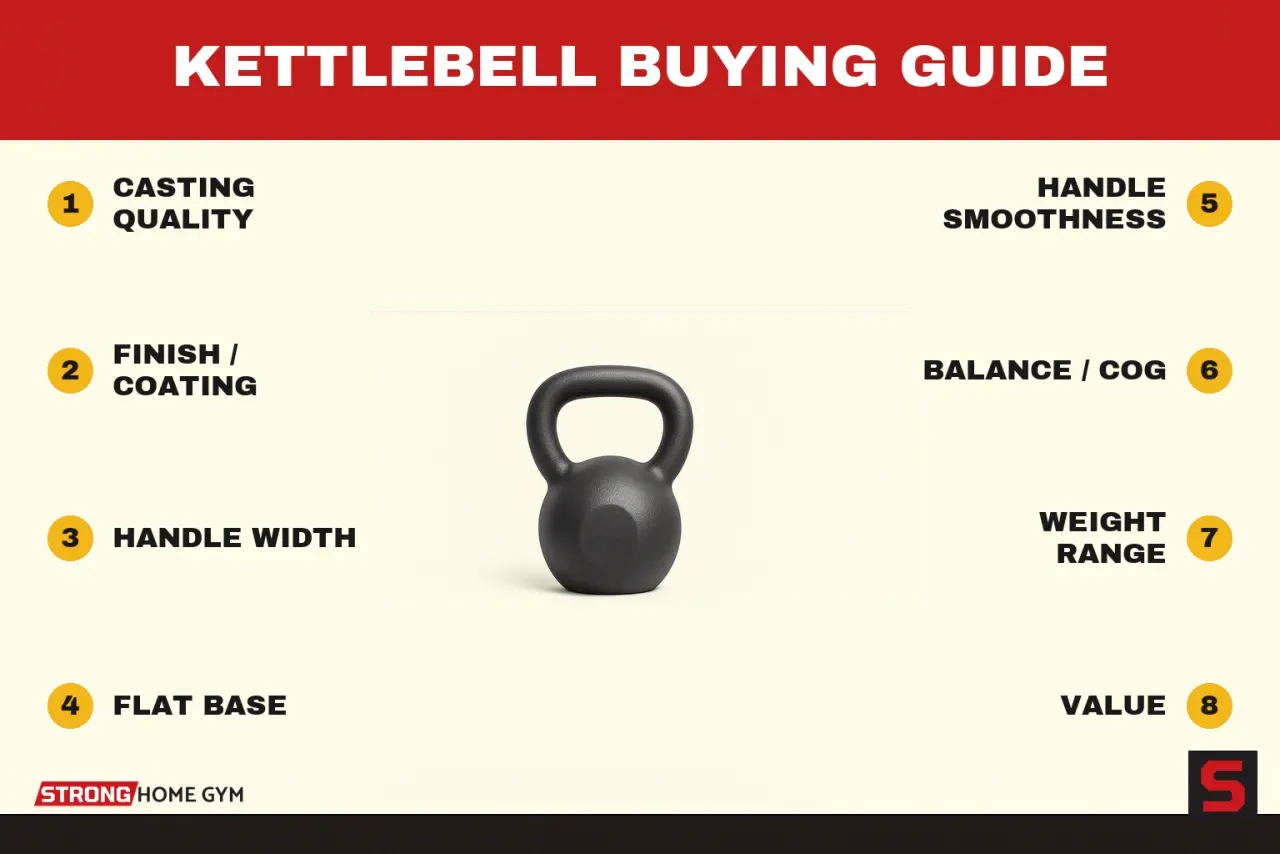
My tip: check the base before anything else. A flat, machine-finished base means the bell stands dead still on the floor and stacks without rocking, and it is a quiet sign the rest of the casting was done with care.
Handle (25%)
The handle decides everything for swings and snatches, so it earns a full quarter of the score.
Three things matter. Width, so it fits one or two hands plus chalk. Finish, where a raw or lightly coated handle lets chalk bite, while a thick powder coat can feel gummy or tear your palms on high reps. And smoothness, meaning no seams or burrs where the casting met the mold.
A bigger handle window, the gap between the handle and the bell, helps in fast cardio work where your fingers need room. Heavier bells naturally grow a thicker handle, which is where smaller hands start to struggle.
Balance and feel (20%)
Two bells of the same weight can feel completely different in the rack.
It comes down to the center of gravity and how the bell sits against your forearm at the top of a clean. A well-balanced bell, like a single-cast competition profile, settles in the same spot every rep so your technique stays honest. A bell that sits high or off-center will nag your wrist on a long set.
Range and sizing (10%)
This covers how many weights a brand sells and whether the shape stays consistent as you go up.
For cast iron, the bell grows with the weight, which is normal. For competition steel, the silhouette is fixed, so the bell you compete with feels identical to the one you train with. And for an adjustable, this is its whole reason to exist, since one shell covers a stack of weights in a single footprint.
Value for money (10%)
We normalize value against the score-per-dollar across the lineup. The Titan scores below the premium bells but wins this category outright, because you are paying for iron and almost nothing else.
In other words…
We are hunting for the bell that makes you pay for the logo rather than the casting.
Find the perfect kettlebell for you
Best Overall | Best Competition | Best Premium | Best Grip | Best Budget | Best For Small Spaces
REP Fitness Kettlebell
Best Overall KettlebellQuick specs
- Type - cast iron with powder coat
- Finish - textured powder coat, gravity die-cast
- Handle - fits a range of hand sizes
- Weights - kg and lb dual-stamped, color-coded
- Warranty - check current brand terms
The cast-iron bell I recommend to most people. A clean gravity-cast body, a chip-resistant coat, dual kg and lb stamps, and a handle that suits most hands.
Summary of experience, tests & opinions
What I like
- The swing arc on these is honest. The bell floats up and drops back along the same line every rep, so I can coach a client off it without correcting their path halfway through a set.
- Run a thumb around the handle window and there is no seam or burr where the casting met the mold, which is the kind of finishing I usually only feel on bells costing a tier more.
- This is the bell I steer most first-timers toward. It does goblet work, cleans, and presses without ever being the wrong tool, and nobody outgrows it in a hurry.
What I don’t
- The handle reads a touch broad in a one-hand grip if your hands run small, so the lighter bells sit a little better for petite lifters than the heavier ones do.
Pros & cons
Pros
- Gravity die-cast body - the casting is smooth with a flat machine-finished base, so it stands and stacks dead still.
- Dual kg and lb stamps - color-coded handles and twin weight totals make grabbing the right bell foolproof in a fast flow.
- You get a genuinely durable, chip-resistant coat without paying the premium-brand markup, which is why it tops the all-round score.
Cons
- The coating runs a touch smooth, so it slips before chalk on long sessions where a grippier finish would hold.
- Smaller window on lighter bells - the opening can feel tight for cardio-heavy work with the lighter weights.
Read more about the REP Fitness Kettlebell
The REP takes the overall slot because it does every job a cast-iron bell needs to do, and does none of them badly.
This is the bell for the lifter who wants one cast-iron bell, or a small matching set, to cover swings, goblet work, cleans, and presses without ever needing replacing. The casting is clean, the coat lasts, and the dual kg and lb stamps with color-coded handles are the detail I keep coming back to, because in a fast flow you grab by color and never second-guess the weight. The flat machine-finished base is the other quiet tell of a careful pour: my bells stand dead still on a concrete floor that is not quite level, and they stack without rocking. Skip it only if you train sport-style and need a uniform competition profile, where the Bells of Steel Competition is built for the job.
Side by side with the Rogue E-Coat, the REP gives up a little raw finish quality and a touch of corrosion resistance, and it costs a tier less. For most home lifters that is the smart trade, because the Rogue’s durability edge is more than most of us will ever put to the test.
Grip is the one place the REP shows its tier. The coat runs a touch smooth, so past the twenty-rep mark on a hot day my hands start sliding before my grip gives out, and I now chalk up out of habit on long sets. For a tackier handle that holds chalk-free, the Kettlebell Kings is the step across.
That all-round balance is why it tops the overall score:
Bottom line
The REP Fitness Kettlebell is the top-rated kettlebell for 3 main reasons:
-
It nails the cast-iron basics - a smooth gravity-cast body, a flat base, and a coat that keeps rust off the iron for years.
-
The markings are foolproof - dual kg and lb stamps plus color-coded handles mean you never grab the wrong weight mid-flow.
-
It costs less than the bells it matches - a mid-tier price for top-tier all-round performance, which is the smartest spend on the list.
If you want the absolute best finish and corrosion resistance, the Rogue E-Coat is the step up.
The REP Fitness Kettlebell might be for you if… you want one cast-iron bell, or a small set, that does everything well and never needs replacing.
It’s not for you if… you train sport-style and need a uniform competition profile, in which case the Bells of Steel Competition is built for you.
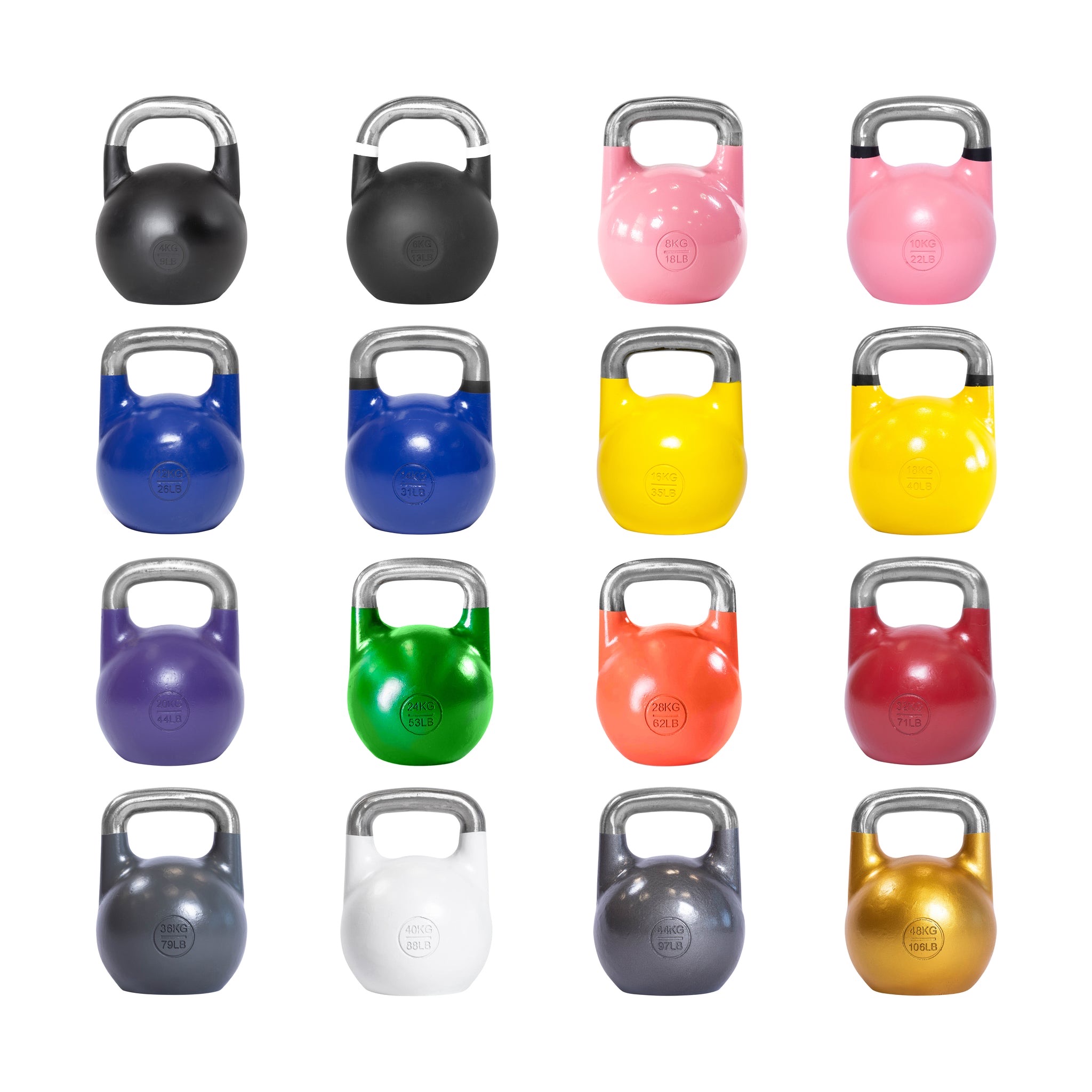
Bells of Steel Competition Kettlebell
Best Competition KettlebellQuick specs
- Type - competition steel, single cast
- Finish - color-coded painted steel
- Handle - competition-standard 33-35mm
- Sizing - uniform silhouette across all weights
- Standards - meets GSU, IKFF, and IUKL specs
The competition pick. A single-cast steel profile that stays the same size from the lightest bell to the heaviest, color-coded so you grab the right one every time.
Summary of experience, tests & opinions
The high points
- The bare steel handle bites cleanly in chalk. On long snatch sets the grip stays predictable instead of going gummy the way a thick-coated handle can once your palms heat up.
- The window is roomy enough that the hand-insertion on snatches stays smooth, so the team weren’t fighting the bell to get fingers through on the turnover.
- It is the bell I’d hand a lifter who has booked a comp date. Training on the exact spec they’ll lift on the platform takes one variable out of their head on the day.
The low points
- Because the handle never grows with the weight, the heaviest bells feel cramped for big two-hand swings, where a cast handle would have given the second hand somewhere to go.
Pros & cons
Pros
- Uniform competition silhouette - the same size at every weight, so technique transfers straight from training to the platform.
- Single-cast hollow core - it sits perfectly balanced in the rack and takes drops in its stride.
- Meets GSU, IKFF, and IUKL standards - you train on the same spec you compete on, which is the entire reason to buy a comp bell.
Cons
- Paint chips with abuse - the color coding fades and flakes over years of hard use.
- Comp handle is a fixed size - the 33-35mm bare handle suits sport lifters but won’t grow for two-hand swing work the way a cast handle does.
Read more about the Bells of Steel Competition Kettlebell
If you train the kettlebell sport, or you just want every weight to feel the same in the hand, this is the one.
The single-cast steel body holds a tight, repeatable balance, and the bare 33-35mm handle is sized to competition spec so your grip carries over from one weight to the next. Our team ran a snatch session jumping across three weights and nobody had to re-find the rack position once, because the bell landed in the same spot on the forearm every rep.
The color coding earns its keep too. You learn the colors in an afternoon and your eyes sort the bells from across the room, no stamp-checking. Skip it if you mostly do two-hand swings and goblet work, where the fixed comp handle won’t grow with the load the way a cast handle does and the all-round REP fits more hands.
The trade-off versus the REP is the finish. A painted comp shell chips where REP’s textured powder coat shrugs off garage abuse, and the bells we have hammered longest are scuffed at the contact points and a shade duller than out of the box. That is purely cosmetic, but if a pristine bell matters to you, this one tells its story over the years. On balance and feel, though, nothing here beats it, and for a competition-legal profile that meets GSU, IKFF, and IUKL standards the price is genuinely fair.
That balance is where it leads the lineup:
Bottom line
Buy the Bells of Steel Competition if you train sport-style or just want every weight to feel identical in your hand. The uniform single-cast profile and competition-spec handle give you the most consistent feel on this list, and for a comp-legal bell the price is fair.
You give up some finish durability to the powder-coated bells, since the painted shell chips with hard use, but for the sport lifter that is a trade worth making.
The Bells of Steel Competition might be for you if… you compete or want training that transfers straight to a competition platform.
It’s not for you if… you mostly do two-hand swings and goblet work, where the REP all-rounder fits your hand better and resists chips harder.
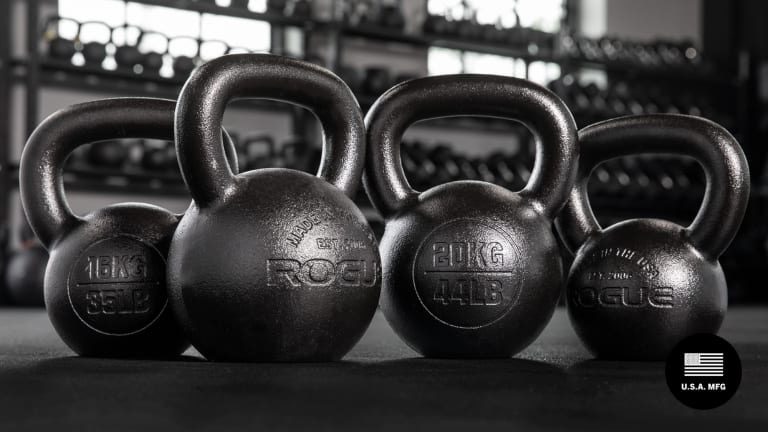
Rogue Kettlebell (E-Coat)
Best Premium Cast-Iron KettlebellQuick specs
- Type - ductile cast iron, single piece
- Finish - electrocoated (e-coat) for corrosion resistance
- Handle - smooth, made for chalk
- Weights - many increments, single bells and sets
- Warranty - check current brand terms
The premium cast-iron pick. A single-piece ductile-iron body with a thin, smooth e-coat that resists chips and rust better than a standard powder coat.
Summary of experience, tests & opinions
What earns its keep
- The single-piece pour gives it a dead-even feel in the rack. There is no faint seam under the palm and no wandering center of gravity, so it sits where you put it and stays there.
- When a client stalled between two weights I had them split the jump on a Rogue, and the in-between bell most ranges skip turned a frustrating plateau into two clean weeks of progress.
- This is the bell for the lifter buying once and never thinking about it again. The kind of person who’d rather pay up front than replace a cheaper bell down the line.
Where it asks more of you
- The surface is so smooth that I keep a chalk bowl within reach for it specifically, where my powder-coated bells I’ll happily grab dry for a quick set.
Pros & cons
Pros
- Ductile single-piece casting - more drop-resistant and corrosion-resistant than standard cast iron or steel.
- E-coat finish - a thin, smooth coat that fights chips and rust without feeling gummy.
- Available in plenty of increments and set configurations, so it scales as you get stronger.
Cons
- Bare-hand slick - the smooth handle wants chalk to feel locked in on long sets.
- Premium price - it is the costliest cast-iron bell here, and the durability gain is more than most home lifters will ever put to the test.
Read more about the Rogue Kettlebell (E-Coat)
The Rogue spends your money on the part a photo can’t show, the casting itself.
Single-piece ductile iron under a smooth e-coat is the most durable build in this guide, and it is the bell our community reaches for when longevity matters more than price. This is the one I would expect to outlive me: I have watched it take drops onto a hard floor that left me checking for a chip and finding nothing, time after time, and the longevity story is the one our community keeps telling unprompted. The e-coat is the technical reason why, going on thinner and smoother than a powder coat so it fights chips and rust without ever feeling gummy.
Buy it if you want the last word in build and you already chalk up. Skip it if your budget is tight, where the Titan gets you onto solid iron for far less.
The catch is the handle. Smooth and e-coated, it is built for chalk, so go at it bare-handed on a sweaty set and you feel the bell creep through your fingers well before your forearms have had enough. Chalk-free lifters will find the textured Kettlebell Kings far easier to hold dry. Set against the REP, the Rogue wins on pure build but costs a tier more, and once both hands are chalked I could not always feel where the extra money had gone. That gap is real but small, which is the honest case for and against the premium.
On build and finish, nothing here beats it:
Bottom line
The Rogue E-Coat is the bell to buy if you want the last word in build and you train with chalk. The single-piece ductile-iron casting and e-coat finish make it the most durable bell on the list, and it is the one our community trusts to outlast everything else in the rack.
You pay the premium tier for that, and on the bar the gap to the REP is real but small once chalk is on your hands. The casting is the part you’re paying for, and it’s the best here. For the buyer happy to pay up for that, this is the one.
The Rogue E-Coat might be for you if… you want the most durable cast-iron bell on the market and you already chalk up.
It’s not for you if… you train chalk-free, where the textured Kettlebell Kings grips dry far better, or you want the smarter spend in the REP.
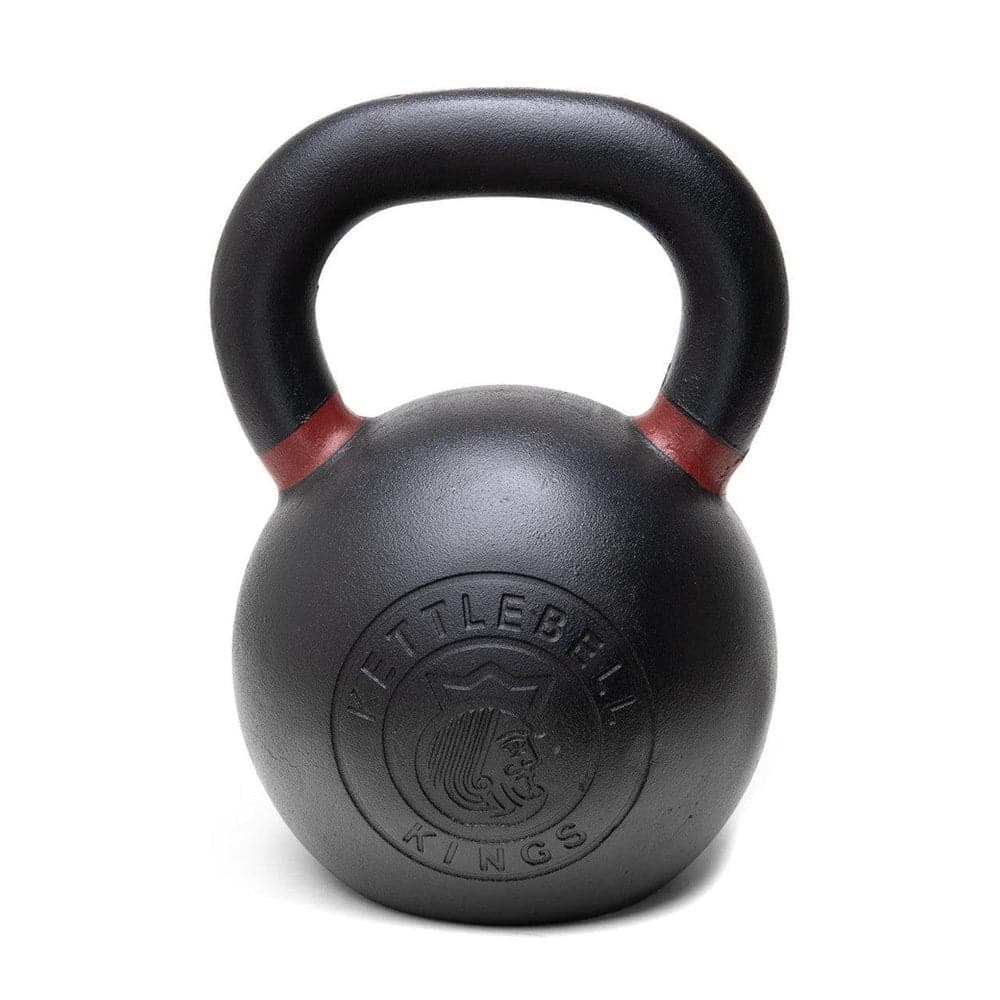
Kettlebell Kings Powder Coat Kettlebell
Best Grip KettlebellQuick specs
- Type - single-cast cast iron
- Finish - textured powder coat, gravity cast
- Handle - tacky textured grip, roomy window
- Weights - very wide range up to heavy totals
- Warranty - check current brand terms
The grip pick. A gravity-cast body with a refined, textured powder coat that bites into your palm without chalk and holds its tack over years of use.
Summary of experience, tests & opinions
Where it shines
- Because the grip never asks for chalk, Steve runs whole chalk-free sessions on it with clients who hate the mess, and nobody is wiping their palms between sets.
- The coat has earned its reputation in our gym. The bells in heaviest rotation still look close to new at the contact points, where a thinner finish would be wearing through by now.
- It racks softly against the forearm. There is no hard cannonball thud on the catch, which is the detail that keeps long clean-and-press sets from beating up your wrist.
Where it falls short
- The premium spend only makes sense if grip is genuinely your bottleneck. Lifters who chalk up anyway are paying for a feature they’d be covering with a chalk bowl regardless.
- The chunkier handle quietly suits bigger hands. On the heavier bells I watched a smaller-handed client lose the seat mid-set, where a slimmer grip would have held.
Pros & cons
Pros
- Textured powder-coat grip - the tackiest handle here, locking in without chalk on long sets.
- Refined single-cast body - evenly balanced with a finish that holds its quality over years of use.
- Very wide weight range - scales up to heavy totals for serious pulls and carries.
Cons
- Priciest on the list - it costs more per bell than the REP or Rogue, with no set discounts.
- Thick handle - the larger handle diameter can feel cumbersome for smaller hands on the heavier weights.
Read more about the Kettlebell Kings Powder Coat
If your hands are the limiting factor, this is your bell.
The textured powder coat is the grippiest handle in the guide, and that matters most for anyone who trains chalk-free or hates re-chalking between sets. Steve, our certified personal trainer, rates it as the easiest bell to hold chalk-free across the clients he coaches, and pick it up cold and it reads as a more expensive bell than it is. The casting is refined and well balanced, and the range climbs high enough that I have loaded it heavier than I expected to need and never found the ceiling, which quietly changed how I program a client’s heavy carries. Buy it if grip is what makes or breaks your sessions; skip it if you want the smartest all-round spend, where the REP gets you most of the grip for less.
The cost is the catch. It sits a tier above the REP and the Rogue, with no set bundles to spread the spend, so building a full range stung more than I expected as the running total crept up bell by bell, one full-price order at a time.
The handle also runs thick. On the heaviest bell I tested my own hands were fine, but I watched a smaller-handed client re-grip mid-set to keep the bell seated, the one place this bell quietly picks a favorite hand size. The slimmer Titan or the all-round REP suits smaller hands better.
Grip is exactly where it leads the field:
Bottom line
When grip is what makes or breaks your sessions, the Kettlebell Kings is the answer. The textured handle holds dry better than anything else here, the casting is refined, and the range climbs high enough for the heaviest training. You pay the most for it, and the thicker handle suits bigger hands more than small ones.
For the chalk-free lifter who values feel over price, this is the pick. If the budget rules it out, the REP gets you most of the grip for less.
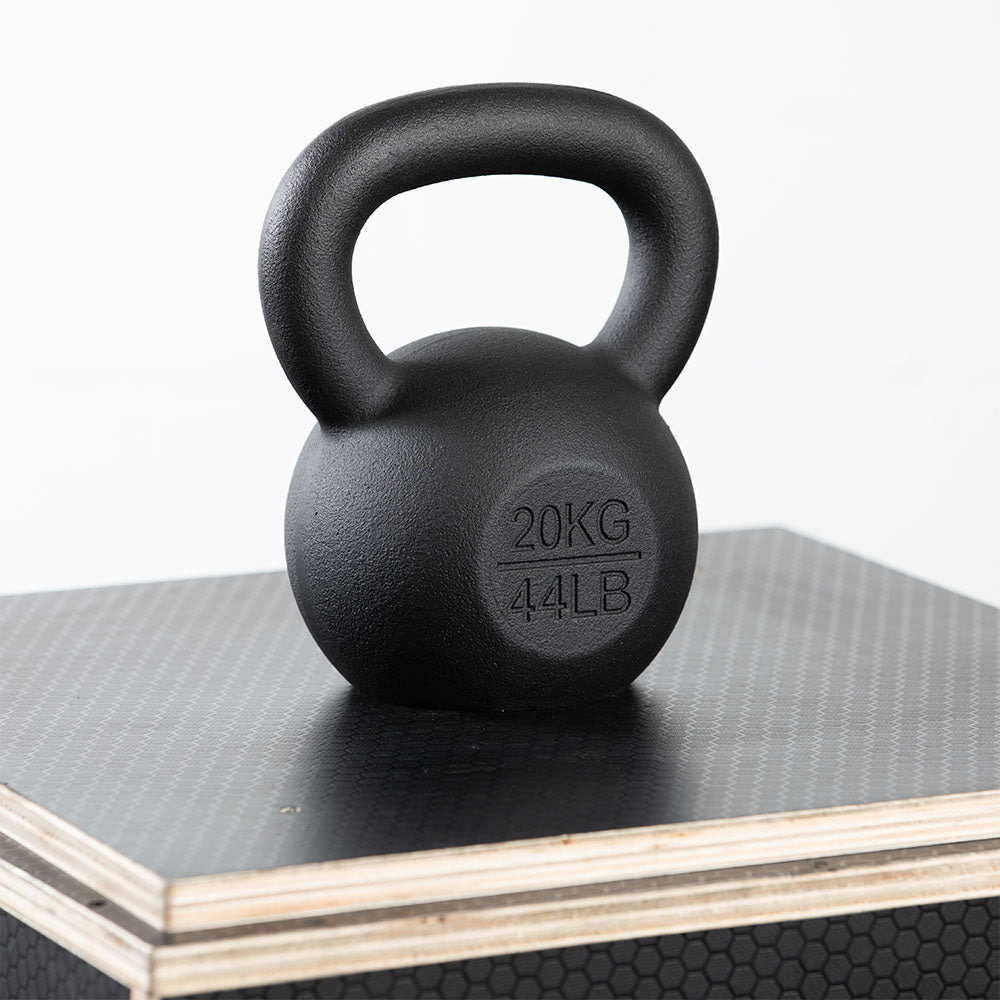
Titan Fitness Kettlebell
Best Budget KettlebellQuick specs
- Type - cast iron with powder coat
- Finish - durable powder coat
- Handle - thinner, slimmer diameter
- Weights - single bells, no sets
- Warranty - check current brand terms
The budget pick. A no-frills cast-iron bell with a hard-wearing coat and a slimmer handle, at the lowest price in the lineup.
Summary of experience, tests & opinions
The good
- It swings honestly for the price. The balance is plain rather than special, but nothing about the arc fights you, which is all most people need from a top-up bell.
- This is the bell I point true beginners and bargain-hunters toward. Spending up only pays off once you know you’ll keep training, and this gets you onto real iron in the meantime.
- The painted weight numbers on the face are big and easy to read across a room, so the lighter sizes are quick to spot in a mixed pile of bells.
The not-so-good
- Run a finger over where the handle meets the body and you can feel the faint ridge a one-piece bell doesn’t have. It’s the giveaway I always check first on a budget bell, and on this one it’s the only place the cost-cutting actually shows.
Pros & cons
Pros
- Lowest price on the list - the cheapest way onto a genuine cast-iron bell that still lasts.
- Tough powder coat - resists chips and rust well for the money, going years without real wear.
- Slimmer handle - the narrower diameter suits smaller hands better than the premium bells.
Cons
- Slick thin handle - it wants chalk sooner than the grippier bells, and the handle is welded rather than one-piece.
- No sets - sold as single bells only, so a full range means a lot of separate orders.
Read more about the Titan Fitness Kettlebell
Titan spends where it counts, on the iron and the coat, and saves everywhere else.
The casting and finish are a clear step below the premium bells, but for a first kettlebell or a cheap top-up that is the right place to cut, because the part doing the work is still solid cast iron. For the money the coat is genuinely tough: owner reports across our community run for years with no real chips or scuffs beyond the white lettering fading on the face. The first thing a smaller-handed lifter says when they pick this one up is that it just feels easier to hold next to the chunkier premium handles, and I have handed it across the gym enough times to bank on that reaction. Buy it if you want a real cast-iron bell and the budget is tight; skip it if you swing often and want a more polished, grippier feel.
Set against the REP, the difference is handle feel and balance: the REP is more refined and grips better for more money, while the Titan just does the job for the lifter who wants in for the least.
The one honest catch is the handle. It is welded rather than one-piece and runs thin and slick, so I find myself chalking up a few reps sooner on this one almost without thinking about it, and that same thin grip is exactly what suits the smaller hands that find the Kettlebell Kings too thick.
That is why it tops the lineup on value:
Bottom line
Buy the Titan Fitness Kettlebell if you want a real cast-iron bell and the budget is tight. The coat holds up for years, the slimmer handle suits smaller hands, and it lands the best score-per-dollar in the lineup. You give up the refined balance and grip of the pricier bells, which is the one place the saving shows.
For the most bell at the lowest price, this is the pick. If you swing often and want a more polished feel, step up to the REP.
Freak Athlete Adjustable Kettlebell
Best Space-Saving KettlebellQuick specs
- Type - adjustable cast-iron shell
- Finish - powder coat over a cast-iron body
- Handle - standard cast-iron handle
- Range - one bell covers many weights
- Footprint - replaces a row of single bells
The small-space pick. One adjustable bell that covers a stack of weights, so a whole kettlebell range lives in a single footprint.
Summary of experience, tests & opinions
Where it earns its place
- The handle is a plain cast grip, so it sits in the hand like a normal bell rather than the slab-sided handles some adjustables use. That alone is why owners stop missing their fixed bells.
- It is the bell I’d suggest to anyone training in a shared room, a bedroom, or a flat, where a row of single bells was never going to be allowed in the first place.
- The dial reads clearly enough that you trust the number without double-checking, which matters more than raw speed when you’re mid-circuit and breathing hard.
Where it limits you
- A weight change still breaks your rhythm in a way grabbing the next fixed bell off a rack never does, so it suits steady strength work better than frantic conditioning.
- After a year of community reports, the bells that get torqued or dropped hard are the ones that develop a rattle, so this is a bell you set down rather than throw.
Pros & cons
Pros
- One bell, many weights - it collapses a whole rack into a single footprint, ideal for tight rooms.
- Cast-iron shell - it keeps a traditional bell feel that most adjustables lose.
- Fast weight changes - the dial swaps loads in seconds once you know it.
Cons
- Bulkier than a fixed bell - the shell and mechanism add size and shift the balance slightly.
- Treat the mechanism with care - the adjusting hardware does not like hard drops or aggressive torque.
Read more about the Freak Athlete Adjustable Kettlebell
This is the bell for the lifter whose real constraint is floor space, not budget or grip.
One Freak Athlete on a small base replaces a row of single bells, which is why it tops the range-and-sizing category by a wide margin. The lifters in our community who own this almost all tell the same story: they bought it the week they ran out of floor, and the corner it lives in is the only corner it needs. The cast-iron shell is the detail that wins them over, giving it a more traditional bell feel than you’d expect from an adjustable, so swings and goblet work feel natural rather than top-heavy. Buy it if your gym shares a room with the rest of your life; skip it if you train high-rep sport work, where the bulk and the slightly different balance feel worse than a dedicated comp bell like the Bells of Steel.
It is the only adjustable in this hub for a reason: we rank the whole adjustable category in depth in our dedicated best adjustable kettlebell guide, where the REP Adjustable Kettlebell sits as the premium step-up if you want a more refined mechanism and have more to spend.
Against a fixed bell, the trade is the mechanism itself, which rewards a careful hand and dislikes being torqued or dropped hard, so it is the one part of this bell to respect. If space is not your problem, a fixed cast-iron bell like the REP will always feel a touch more natural in the hand for the money.
On range and sizing, nothing fixed comes close:
Bottom line
When your gym shares a room with the rest of your life, the Freak Athlete Adjustable earns its corner. One bell does the work of a whole rack, the cast-iron shell keeps the feel honest, and the weight changes are quick. The trade is a little extra bulk, a slightly different balance, and a mechanism that wants a careful hand.
If space is your real problem, this is the answer, and it is the top pick in our full best adjustable kettlebell guide, where the REP Adjustable is the premium step-up. If you have the floor, a fixed bell like the REP feels more natural for the money.
How we created this list of best kettlebells
Here are the criteria we used to pick these kettlebells, and how much each one counted:
- Build and finish (35%)
- Handle (25%)
- Balance and feel (20%)
- Range and sizing (10%)
- Value for money (10%)
You can read all about our selection process here.
Other kettlebells we tested - close but no cigar
- Fringe Sport Prime - a genuinely good budget cast-iron bell with a matte coat and dual stamps, but the handle balloons past 40mm on the heavy weights, so the Titan edges it for smaller hands at a similar price.
- Yes4All Vinyl - the cheapest way into kettlebells, but the vinyl coat and rougher casting put it a clear step below the Titan once you actually swing it.
- Kettlebell Kings Competition - a strong comp-style bell from a brand we rate, but the Bells of Steel Competition matches the standards for less, so it lands just behind on value.
- CAP cast iron - a familiar big-box bell that works fine for light goblet work, but the finish and balance fall behind every cast-iron pick that made the list.
Kettlebell FAQs
What is the best kettlebell?
The best kettlebell is the REP Fitness Kettlebell.
It pairs a smooth gravity-cast body with a chip-resistant coat, dual kg and lb stamps, and a handle that fits most hands, all at a price that undercuts the premium tier.
For the most durable casting, the Rogue E-Coat is the step up, and for sport training the Bells of Steel Competition is the bell to beat.
Cast iron or competition kettlebell, which should I buy?
Buy a cast-iron bell if you train general fitness, swings, and goblet work, which covers most home lifters.
Cast iron grows with the weight and usually costs less, while a competition bell is steel and stays the exact same size at every weight, so the Bells of Steel Competition feels identical from a 16kg to a 32kg.
If you compete or want consistent technique as you load up, the competition profile is worth the extra.
What weight kettlebell should I start with?
Most beginners start with one moderate bell and add weights from there rather than buying a full set on day one.
A single mid-range bell covers swings, goblet squats, and presses while you learn the movements, and a brand like the REP Fitness Kettlebell makes it easy to add matching weights later.
Buy the bell you can swing with good form for reps, not the heaviest one you can lift once.
Are adjustable kettlebells as good as fixed ones?
Adjustable kettlebells are excellent when floor space is your main constraint, since one bell replaces a whole rack.
A fixed cast-iron bell still has the edge on pure hand-feel, but a good adjustable like the Freak Athlete gets very close while saving the space.
We rank the whole category in our best adjustable kettlebell guide, where the REP Adjustable is the premium step-up.
Should I buy kettlebells in kg or lb?
Buy whichever unit you think in, because the weight is the same either way.
Kettlebell sport and most coaching cues use kilograms, while many US lifters track everything in pounds, so a dual-stamped bell like the REP Fitness Kettlebell removes the guesswork entirely.
If you train alone and already think in pounds, lb-only bells are perfectly fine.
The bottom line
I have swung, pressed, and snatched a lot of bells over the years, because a kettlebell is one of the few pieces of kit you genuinely buy once.
For most people, the REP Fitness Kettlebell is the call. It nails the cast-iron basics and costs a tier less than the bells it matches.
If you want the most durable casting money buys, step up to the Rogue E-Coat.
If you train sport-style, the Bells of Steel Competition keeps every weight the same size. And if money is tight, the Titan Fitness Kettlebell is the most bell for the least cash.
There are two things to do now:
- If you want another look at the picks, click here to skip back to the table.
- If you want to put a pin in it, bookmark this page and come back. We re-test it and update the picks whenever a bell changes.
Stay strong.
