

We scored over 100 lat pulldown bars and handles across 4 quality categories and picked the 6 most worth your money.
Steve runs an 8,000 sq ft commercial gym and has pulled on more lat bars than he can count, so these picks come from real grip time and owner reports, not one afternoon with a spec sheet.
The aim was simple: find the bars that grip when your hands sweat, hold their finish for years, and earn their clip on the cable for the way you actually train.
Let’s see how they stacked up…
Editor's note · updated June 23, 2026
We rebuilt this guide for 2026 and reworked the rankings with it.
What changed:
- The REP 48” Solid Lat Bar is the new #1 overall. It takes the top slot for the grip, length and price most home lifters want, where the old leader leaned on a premium badge. The community has shifted the same way over the last year.
- The Rogue Stainless Lat Bar moves to Best Premium. It is still the finest bar here on pure build, but you pay dearly for stainless and most people do not need it.
- We trimmed the list to the picks that are in stock and shippable. A couple of older entries were discontinued or thin on availability, so they have come off the ranked list. More on the rest at the end.
Related
A bar needs a cable to pull. If you are still choosing the station itself, see our best lat pulldown machine guide, and for a full cable setup our best functional trainers round-up. To kit out the rest of the rack, our best power rack attachments covers the add-ons worth owning.
Compare the best lat pulldown bars
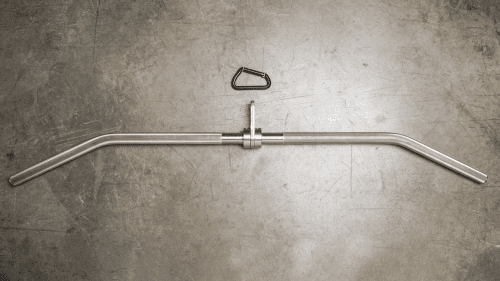 Rogue Stainless
Check price
Rogue Stainless
Check price
|
 Ivanko BLB 48"
Check price
Ivanko BLB 48"
Check price
|
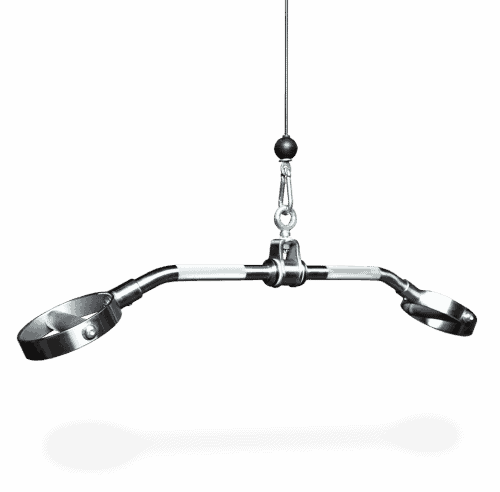 REP Pro Series Neutral
Check price
REP Pro Series Neutral
Check price
|
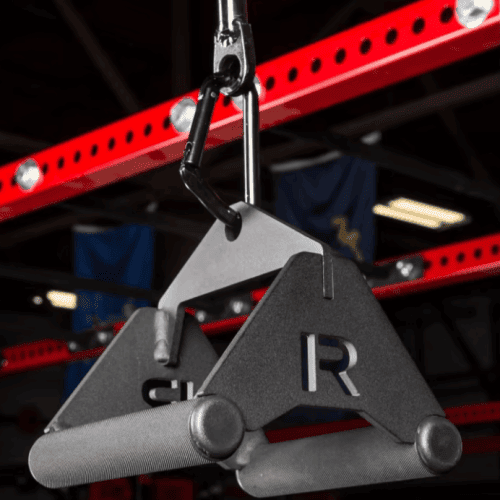 Rogue Grip Triangle
Check price
Rogue Grip Triangle
Check price
|
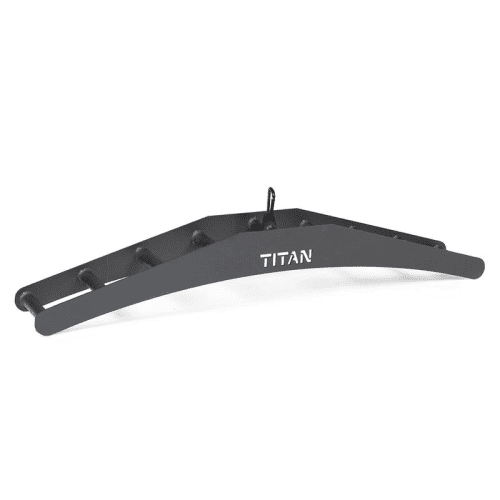 Titan Multi-Grip
Check price
Titan Multi-Grip
Check price
|
||
|---|---|---|---|---|---|---|
| Best for | Overall | Premium | Wide-grip value | Neutral grip | V-grip / close grip | Multi-grip |
| Rating (*) | ||||||
| Grip & knurl | 88% | 92% | 94% | 82% | 90% | 78% |
| Build & finish | 84% | 96% | 86% | 82% | 88% | 74% |
| Versatility | 86% | 80% | 82% | 88% | 74% | 90% |
| Value | 94% | 70% | 84% | 82% | 74% | 84% |
| Price | $ | $$$ | $$ | $$ | $$ | $$ |
| Type | Angled solid bar | Straight stainless bar | Bent wide bar | Neutral-grip pair | Close V-grip | Multi-grip bar |
| Length / width | 48" | 20" or 40" | 48" | 5" handles | ~7" handles | 48.5" |
| Grip | Knurled, angled | Knurled end-to-end | Deep-cut knurl | Hill passive knurl | Knurled handles | Medium diamond |
| Finish | Hard chrome | Stainless steel | Triple chrome | Hard chrome | Black zinc / steel | Chrome |
| Made in USA | No | Yes | No | No | Yes | No |
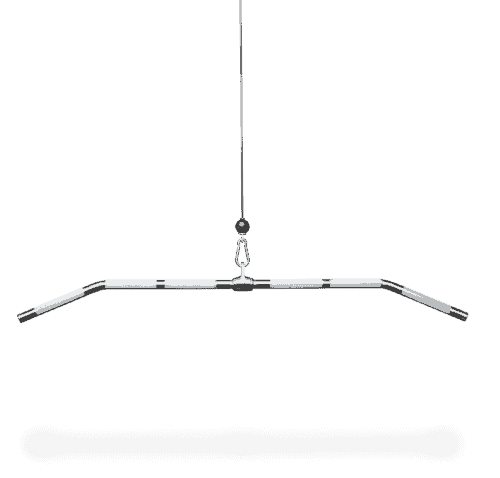 REP 48" Solid
Our testing and selection process
How we assess lat pulldown bars
We run every lat bar round-up through the same 5 steps:
- We start as the buyer. Most of our team trains back twice a week, and Steve has owned dozens of these bars across two decades of coaching.
- We research wide. We pull length, grip diameter, knurl type, finish and owner feedback on every bar we can find, more than 100 this time, into one spreadsheet.
- We score each bar with our weighted system. Data sets the ranking; the badge on the bar gets no say.
- We split the field by grip job, because a wide angled bar and a close V-handle are bought for completely different pulls.
- We get hands-on where we can and lean on the SHG community for the rest.
You can read more about the process in our review guidelines.
How we score lat pulldown bars
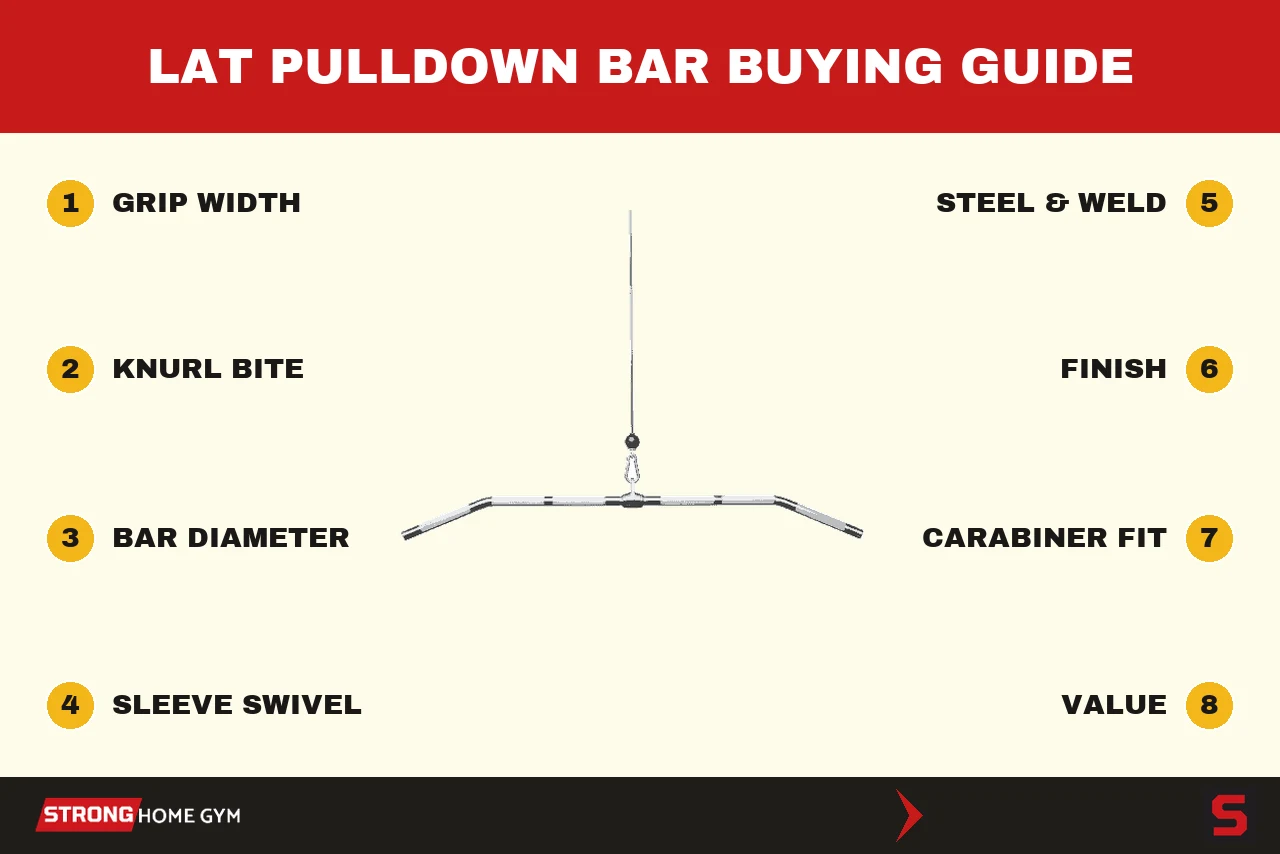
Here’s what feeds the score and how much each part counts. Grip and build share the top weighting, because a lat bar lives or dies on how it feels in your hands and whether that feel lasts.
We grouped it into four weighted factors:
- Grip & knurl (30%) - the knurl texture, the diameter, and how the bar holds a sweaty hand.
- Build & finish (30%) - the steel, the welds and bends, and whether the finish fights rust or flakes.
- Versatility & compatibility (15%) - the grip positions it covers and how easily it clips to any cable.
- Value (25%) - quality-adjusted price: what you actually get for the money.
Grip & knurl (30%)
This carries top weight alongside build. The whole job of a lat bar is to let you pull hard without your hands sliding, and the knurl decides that.
We judge how grippy the texture is, whether it bites or cuts, and the diameter. A bar in the one to one-and-an-eighth inch range suits most hands. Go thicker and you recruit more forearm, which some lifters want and others find fails before their lats do.
Build & finish (30%)
A lat bar takes daily clipping, dropping and pulling. We look at the steel, the precision of any bends, the welds on multi-grip bars, and the rotation of the swivel.
The finish does more work than people expect. Stainless and bare steel give the best grip and shrug off rust, but cost more. Hard chrome is the value sweet spot if it is multi-layered. Cheap decorative chrome marks and rusts, especially in a damp basement gym, so we dock bars whose finish we have watched fail.
Versatility & compatibility (15%)
The headline pull is the wide overhand lat pulldown, but the best handles do more. Angled ends ease the wrists. Multiple grip positions change the pull. A bar that clips to any cable without a fight, and covers low rows as well as pulldowns, earns points here.
Long stretch on the lats. The staple bar.
More mid-back, heavier loads.
Spares the wrists and elbows.
Value (25%)
We build a quality-adjusted picture of price. A bar that nails grip and finish for fair money beats a premium one that only justifies its cost on a spec sheet. Tiers and relative value, never the cheapest sticker for its own sake.
Find the perfect lat pulldown bar for you
Overall | Premium | Wide-grip value | Neutral grip | V-grip | Multi-grip
Here’s how the six bars stack up on our overall score:
REP 48” Solid Lat Bar
Best OverallQuick specs
- 48” long, 26 mm diameter
- ~13 lb solid steel bar
- Shallow volcano knurl, full length
- Hard chrome finish, lifetime warranty
The bar that gets the most right for the most lifters: a true wide grip, knurling that holds, and a price that leaves room in the budget for a second handle.
Summary of experience, tests & opinions
What I like
- REP sectioned off the knurl so your hands land in the same spot every set. It is a small touch you stop noticing, which is exactly the point.
- The swivel turns smoothly even after a couple of years on a busy cable. No grinding, no catch at the top of the pull.
- The angled ends sit your wrists in a kinder line than a straight bar. After high-volume back days that is the difference between sore forearms and none.
What I don’t
- It ships without a carabiner, so if your cable does not have one you are adding a clip before your first set.
- The hard chrome can chip if you bang it on the uprights racking it. Cosmetic, but you will spot the mark.
Pros & cons
Pros
- Full 48” length and angled ends - a genuine wide grip for the lats with no wrist compromise.
- Lifetime warranty, which almost nothing in this price bracket matches.
- Hard chrome that fights rust better than the decorative chrome on cheaper bars.
Cons
- No carabiner in the box.
- Chrome over stainless, so the grip is a notch behind the Rogue when your hands really sweat.
Read more about the REP 48” Solid Lat Bar
This is the bar to buy if you want one wide handle that just works and you would rather spend the saving on a second grip.
Buy it if most of this sounds like you:
- You train back at home on a cable tower or functional trainer and want a do-everything wide bar, not a collection.
- You have average-to-large hands. The 26 mm shaft is the comfortable middle ground, thin enough to close your hand around for high-rep pulldowns, thick enough that it never feels like wire.
- You sweat and want grip you can trust without a knurl that shreds your palms by set three.
Skip it if you are chasing the last few percent of grip and a finish you can forget about for a decade. That is the Rogue’s job, one slot down.
The angled ends are the quiet hero. A straight bar forces your wrists into a flat, slightly bent line at the bottom of the pull; the bend on the REP rolls your hands into a more natural position, which both eases the wrist and lets the lats finish the rep instead of the forearms bailing early. REP also makes a Pro Series version with steeper angles if you want even more of that, but for most lifters the standard bend is the sweet spot. The full 48 inches gives you a true wide overhand grip, the position that stretches and loads the lats through their longest range, and you can slide your hands inward on the same bar for a narrower pull when you want it.
How it lands against its nearest rival here:
- vs the Rogue Stainless (premium). Both grip well. The Rogue’s stainless gives a fraction more bite and never rusts, full stop. The REP is hard chrome over steel, which is a coating rather than grip-all-the-way-through, so on a truly sweaty max set the Rogue edges it. The REP costs far less and leaves budget for a close-grip handle. For the lifter buying one bar, that maths falls REP’s way nearly every time.
On compatibility: it clips to any standard cable via the eyelet at the top, but it ships without a carabiner, so if your machine does not already have one you will need to add a clip before your first set. The hard chrome shrugs off rust and the swivel stays smooth for years, with a lifetime warranty behind it. The only knock is cosmetic, chrome can chip if you clatter it against the uprights racking it.
It runs away with our value score, which is what drags it to the top overall:
Bottom line
The REP 48” Solid is our top lat pulldown bar for three reasons:
-
The grip is right. A grippy sectioned knurl on a 26 mm shaft suits the most hands with the least fuss.
-
The price leaves room. Buy this and you can still afford a close-grip handle, which is how most people should kit out a cable.
-
It just fits. Standard clip, full wide length, lifetime warranty. No surprises.
The REP might be for you if… you want one do-everything wide bar and you would rather spend the saving on a second handle.
It’s not for you if… you want the absolute best grip and a finish you can ignore forever. Step up to the Rogue Stainless.
Rogue Stainless Lat Bar
Best PremiumQuick specs
- 20” (6.6 lb) or 40” (12.2 lb)
- 1.125” shaft, knurled end-to-end
- 28.5 mm Ohio Bar stainless steel
- Made in Columbus, OH (USA)
The no-compromise bar. Stainless steel from end to end, knurled the whole way, built to a tolerance nothing else here matches.
Summary of experience, tests & opinions
What I like
- Stainless knurl is the best grip on this list, and it stays that way. No chrome layer to wear through, no rust spots in a humid garage. Years in, it feels like day one.
- It is knurled corner to corner, which matters the moment more than one person uses the bar. Everyone finds grip wherever they grab.
- The bends and laser cuts are exact. You can feel the difference the first time you pull, the bar just sits balanced.
What I don’t
- It is heavy, and on a light cable stack that weight eats into your working load before you have added a plate.
- There is no carabiner, and at this price you notice the omission more.
Pros & cons
Pros
- Solid stainless build - the best grip and the only truly rust-proof bar here.
- Knurled end-to-end, ideal for a shared home gym.
- USA-made to a tolerance you can feel in the hand.
Cons
- Premium price that the value score reflects.
- Heavy enough to matter on a light stack.
Read more about the Rogue Stainless Lat Bar
If grip is the one thing you refuse to compromise on, this is the bar.
This one is genuinely for:
- The lifter who wants the best and does not flinch at the price. It is USA-made to a tolerance you feel the first time you pull.
- Garage and basement gyms that get damp. Stainless cannot rust, so a humid room that quietly pits a chrome bar does nothing to this one.
- Shared home gyms. It is knurled corner to corner, so whoever grabs it, wherever they grab it, finds grip.
- Anyone who likes a thicker, barbell-like shaft. The 28.5 mm diameter feels like an Olympic bar in the hand.
Stainless does two jobs at once. It gives a raw, machined texture that holds a sweaty palm better than any applied coating, and because there is no plating to wear through, that grip is the same in ten years as it is today. That is the real split with the REP: the REP is hard chrome over steel, a layer that can chip or wear, where the Rogue is grip all the way through. On feel alone the gap is small. On longevity in a wet room it is not.
Two honest caveats before you buy:
- It is heavy, near 16 lb. On a commercial stack that is nothing. On a light home cable it quietly eats a few pounds off your working load before you have added a plate, and you want one hand on it when you change weight so it does not crash down.
- Smaller hands may find 28.5 mm a touch fat for long high-rep sets. If that is you, the slimmer REP or Ivanko shaft suits better.
The honest verdict against the REP: most home lifters will not feel the gap between a great chrome bar and a stainless one often enough to justify the spend. It includes a carabiner, where the REP does not, but that does not move the needle at this tier. Buy it because you want the best, not because the training demands it.
On build and finish, nothing else gets close:
Bottom line
The Rogue Stainless is the best-built bar here, with a grip that never fades and a finish that never rusts. You pay a premium most people do not strictly need.
The Rogue Stainless might be for you if… grip is non-negotiable, the bar gets shared, or you simply want the best and the price does not sting.
It’s not for you if… you train on a light home stack or you would rather put the saving toward more handles. The REP 48” Solid covers you.
Ivanko BLB 48”
Best Wide-Grip ValueQuick specs
- 48” bent lat pulldown bar
- ~13 lb steel bar
- Custom deep-cut knurl
- Triple chrome plated finish
The premium-feel wide bar at a sane price. Ivanko’s deep-cut knurl punches well above what you pay for it.
Summary of experience, tests & opinions
What I like
- The knurl is the headline. It is sharp enough to never slip yet smooth enough that it does not chew your palms on a long set. Ivanko has cut knurl for decades and it shows.
- Spacers along the knurled section take the guesswork out of hand placement, which makes symmetrical pulls easier to dial in.
- It feels like a bar that costs half as much again. Pick it up next to a generic chrome bar and the gap is obvious.
What I don’t
- Triple chrome is good chrome, but it is still chrome, so it is less rust-proof than stainless in a damp room.
- As an Amazon-only buy, the warranty backing is thinner than the brand-direct bars here.
Pros & cons
Pros
- Premium deep-cut knurl - the standout, and the reason it grips like bars costing more.
- Triple chrome plating, a step above basic decorative chrome.
- Knurl spacers that guide consistent hand placement.
Cons
- Chrome rather than stainless, so keep it dry in a humid gym.
- Amazon-only, with less warranty back-up than the brand-direct picks.
Read more about the Ivanko BLB 48”
For years this was our overall pick, and it earned that on grip alone.
Buy the Ivanko if:
- Grip feel is the thing you care about most. This is the sharpest, most confident knurl of the wide bars on the list.
- You train with chalk and pull heavy. The deep cut bites a chalky hand and holds it.
- You keep your gym reasonably dry. Triple chrome is good chrome, but it is still a coating, not stainless.
The knurl is where Ivanko spends its money. Most bars in this bracket give you a flat, vague texture you grip harder to compensate for; the BLB gives you a defined, deep-cut pattern that holds without chewing your palms on a long set. Spacers along the knurled section mark out your hand placement, so symmetrical pulls are easy to dial in set after set. Ivanko has been cutting knurl for decades and you feel it the moment you load the bar.
So why did it lose the top slot to the REP? It comes down to the whole package, not the grip:
- Price and warranty. The REP matches it closely on grip for less money and backs it with a lifetime warranty.
- Support. The REP is brand-direct; the Ivanko is an Amazon-only buy, so the warranty backing behind it is thinner.
- Finish. Both are chrome, both want keeping dry, so neither pulls ahead there.
On pure feel the Ivanko is arguably the nicer bar to pull. On the maths of what you get for the spend, the REP edges it. It fits any cable on the standard eyelet, and triple chrome is the one thing to mind, wipe it down and keep it out of a damp corner and it lasts, neglect it in a wet basement and chrome is chrome.
Its grip is the best of the wide bars here, and that is exactly what you are buying:
Bottom line
The Ivanko is the grip-lover’s value pick: a deep, precise knurl on a full wide bar for far less than that knurl usually costs. The chrome finish is the only real caveat.
The Ivanko might be for you if… grip feel is what you care about most and you will keep the bar dry.
It’s not for you if… you want a lifetime warranty and brand-direct support, in which case the REP 48” Solid is the safer buy.
REP Pro Series Neutral-Grip Lat Bar
Best Neutral GripQuick specs
- Neutral-grip handle pair
- 25 mm diameter, 5” handles
- Hill passive-depth knurl
- Plated steel, hard chrome
- Lifetime warranty
The wrist-saver. A neutral-grip handle that takes the strain off cranky elbows while still hammering the lats and teres major.
Summary of experience, tests & opinions
What I like
- The neutral palms-facing grip is the one that lets people with sore elbows keep pulling heavy. For a lot of lifters that is the whole reason it is in the rack.
- The multi-axis joint lets the handle find its own line as you pull, so your wrist tracks naturally instead of being forced flat.
- Hard chrome on the build means it shrugs off the knocks a small handle takes living in a drawer or hung on a rack.
What I don’t
- The passive knurl is comfortable but quiet, so on a maximal set with sweaty hands you trust it a touch less than a deep-cut bar.
- A single handle is less flexible than a full neutral-grip set, though it is also a fraction of the price.
Pros & cons
Pros
- Neutral grip that spares the wrists and elbows - the reason to own one.
- Multi-axis joint for a natural pulling path.
- Hard chrome build with a lifetime warranty behind it.
Cons
- Passive knurl, so less bite than a deep-cut bar.
- One handle covers less ground than a multi-grip set.
Read more about the REP Pro Series Neutral-Grip Lat Bar
Some lifters cannot pull heavy overhand without their elbows complaining. This is the handle that fixes that.
The neutral grip is the whole reason it exists. Palms facing each other puts your forearm in a position the elbow and shoulder both prefer, which is why it works the lats and teres major much like a medium overhand pull but without the joint grief. It pulls in a little more mid-back along the way. For anyone training around cranky elbows or a tweaky shoulder, that one change is the difference between heavy back days and skipping them.
This one is for you if:
- Your elbows or shoulders flare on overhand pulldowns and a palms-facing grip lets you keep loading.
- You already know the neutral width you like and want it built well rather than adjustable.
- You want a handle that does double duty on the cable, high for pulldowns and low for rows.
Skip it if you are still experimenting and do not yet know your preferred width, or if you want several widths to play with. That is the Titan’s territory.
The detail that separates it from a cheap D-handle is the multi-axis joint. As you pull, the handle finds its own line instead of being held flat, so your wrist tracks naturally through the whole rep, which matters most on heavy rows where a fixed handle would fight you. Hard chrome on the build shrugs off the knocks a small handle takes living in a drawer or hung on a rack, and there is a lifetime warranty behind it.
Where it sits against its nearest rival, the Titan Multi-Grip, is focus versus options:
- The Titan gives you several neutral widths on one frame, a rougher knurl, and more bulk to store.
- This REP gives you one well-judged width, a cleaner build, and the multi-axis joint that tracks better.
One trade to know going in: the passive-depth knurl is comfortable but quiet, so on a true max set with sweaty hands you trust it a notch less than a deep-cut bar. For most pulling it is plenty.
It leads the versatility ranking among the dedicated handles here:
Bottom line
The REP Pro Series is the neutral-grip handle for lifters who want to keep pulling heavy without aggravating the elbows. One well-built handle, clean joint, lifetime warranty.
The REP Pro Series might be for you if… a neutral grip is kinder to your joints and you know the width you like.
It’s not for you if… you want to experiment with several neutral widths on one bar. The Titan Multi-Grip does that.
Rogue Grip Triangle
Best V-Grip / Close GripQuick specs
- Close-neutral V-grip handle
- 1.31” × 7” knurled handles
- 6” grip spacing on centre
- 0.25” laser-cut steel plates
The heavy-row workhorse. A close neutral grip that lets you load the mid-back hard, built like every other piece of Rogue steel.
Summary of experience, tests & opinions
What I like
- The thick 1.31 inch handles fill the hand and give you something serious to pull against on a heavy close-grip row. Lighter triangles feel toy-like next to it.
- The knurl is properly machined rather than stamped flat, so the grip holds when you are grinding out the last rep of a heavy set.
- The quarter-inch laser-cut plates mean it shrugs off being dropped and clanked. It will outlast the cable it hangs on.
What I don’t
- It costs a lot for what is, in the end, a single-purpose handle. A basic V-bar does the movement for far less.
- The close fixed grip is the point, but it gives you less lat stretch than a wide bar, so it is a complement rather than a replacement.
Pros & cons
Pros
- Thick, well-cut knurled handles - grip you can trust on heavy pulls, the standout here.
- Quarter-inch laser-cut steel that takes abuse.
- Lets you load the mid-back heavier than a wide bar allows.
Cons
- Premium price for a single-grip handle.
- Less lat stretch than a wide bar, so it works best alongside one.
Read more about the Rogue Grip Triangle
A V-grip changes the job of the pull. Hands close together, palms facing, and suddenly you can move more weight with the mid-back doing the heavy lifting.
The mechanism is worth understanding before you buy. A wide overhand bar puts the lats on a long stretch and trains them through range. A close V-grip shortens that lever, brings the mid-back and rhomboids into the work, and lets you load heavier than the wide bar allows. You lose some lat stretch, you gain raw pulling load. That is why it is a complement to a wide bar, not a replacement for one.
Buy this version if:
- You load close-grip rows and pulldowns heavy and want a handle that does not flex or rattle under it.
- You have big hands. The thick 1.31 inch, 7 inch knurled handles fill the palm and give you something serious to pull against, where a thin triangle feels toy-like.
- You want it to outlast the cable. Quarter-inch laser-cut steel takes being dropped and clanked for years.
Here is the honest catch, and it is the same one every premium accessory carries:
- A basic V-handle does the identical movement for far less. Seven out of ten people would be perfectly happy with one.
- The grip itself is fixed and single-purpose. Compared to the REP Pro Series neutral, which swings on a multi-axis joint and covers more widths between two of you, the Rogue is one job done immovably well.
You pay the Rogue premium for the build and the machined knurl that actually bites on the last grinding rep, not for any extra exercise. On low rows especially, that solidity is the point, you brace and pull and nothing fights you. Treat it as the partner to your wide bar. Owning both is how a lot of strong backs got that way, and it is not your first-and-only purchase, the REP 48” Solid is.
On grip, it ranks right at the sharp end:
Bottom line
The Rogue Grip Triangle is the premium close-grip handle: thick knurled handles and brutal build for heavy mid-back work. You pay up for the steel and the grip, since the movement is one any V-handle can do.
The Rogue Grip Triangle might be for you if… you load close-grip rows and pulls heavy and want a handle that never flexes.
It’s not for you if… budget matters and a basic V-handle would scratch the same itch, or you are buying your first and only bar. Start with the REP 48” Solid.
Titan Multi-Grip Lat Bar
Best Multi-GripQuick specs
- 48.5” wide, 8.5” tall
- Grips at 12” / 23.5” / 35” / 46”
- 30 mm thick grips
- Medium diamond knurl, 25 lb
Several bars in one. Four grip widths on a single frame, so you can change the pull without changing the handle.
Summary of experience, tests & opinions
What I like
- Four neutral widths on one frame means you can move from a close pull to a wide one mid-session without unclipping anything. For tinkerers that is the appeal.
- The 30 mm grips are thick, which loads the forearms harder than a standard bar and feels secure in a big hand.
- It is a lot of bar for the money. Rivals with the same trick cost two or three times as much.
What I don’t
- The medium diamond knurl is functional rather than special, and on a sweaty max effort it does not hold like the cut knurl on the Rogue or Ivanko.
- At 25 lb on a wide steel frame it is the bulkiest thing here to store, and the finish is the most basic on the list.
Pros & cons
Pros
- Four grip widths on one bar - the most positions here, and the reason to buy it.
- Thick 30 mm grips for extra forearm work.
- Strong value against pricier multi-grip rivals.
Cons
- Functional knurl that trails the cut-knurl bars.
- Bulky to store, with the most basic finish on the list.
Read more about the Titan Multi-Grip Lat Bar
One frame, four widths. That is the entire pitch, and for a certain lifter it is exactly the right one.
The four neutral grips sit at 12, 23.5, 35 and 46 inches across a 48.5 inch frame, so a single clip covers close, medium and wide neutral pulls. Move from a tight mid-back pull to a wide pulldown mid-session without ever touching the carabiner. Each width changes which slice of the back does the work, the narrow grips bias the mid-back, the wide ones open up the lats, and you get all of it on one bar.
It is the right buy if:
- You like to vary grip width often but do not want a drawer full of single handles.
- You are still hunting for the neutral width that suits you and want to experiment cheaply.
- You have big hands or want forearm work. The 30 mm grips are thick, which loads the forearms harder than a standard bar.
Look elsewhere if you want the best grip feel on the list, or if storage is tight. At 25 lb on a wide steel frame it is the bulkiest thing here to stash.
Two compromises come with the low price:
- The knurl is a functional medium diamond. Fine for most sets, but not the confident bite of the Rogue or Ivanko on a sweaty max effort.
- The chrome finish is the most basic on the list. It works, it just is not built to feel special.
None of that stops it doing its job. It simply means this is a bar bought for what it does rather than how it feels doing it. Against the REP Pro Series neutral the choice is range versus refinement: the Titan gives you more widths on a rougher bar, the REP gives you one width done beautifully. For sheer value against pricier multi-grip rivals, though, the Titan is hard to argue with, you get the four-width trick for a fraction of what the boutique brands charge.
It tops the versatility ranking, and that is the whole reason it is here:
Bottom line
The Titan Multi-Grip is the experimenter’s bar: four neutral widths on one frame for sane money. The trade is a functional knurl and a basic finish.
The Titan might be for you if… you want to vary grip width often without owning several handles.
It’s not for you if… you want the best grip feel on the list or you train in a tight, storage-short space. The Rogue Grip Triangle or REP 48” Solid suit those better.
What is a lat pulldown bar (and which grip do you need)?
A lat pulldown bar is the handle you clip to the cable on a lat tower, functional trainer or any cable station to pull weight down toward your chest. It is not the machine itself. It is the attachment that decides how the pull feels and which muscles take the load.
The classic version is a wide bar, straight or with angled ends, that you grip overhand. That wide overhand pull stretches and loads the lats through their longest range, which is why it is the staple of nearly every back workout.
Where it gets interesting is the other grips. Change the handle and you change the job.
The grips and what each one does
Steve’s rule after twenty years of coaching is simple: own a wide bar, then add grips as you find the ones your body likes.
- Wide overhand. The staple. Long stretch on the lats, the pull most people build their back around.
- Close V-grip. Hands together, palms facing. Brings in more mid-back and lets you load heavier, at the cost of lat stretch.
- Neutral grip. Palms facing each other on separate handles. Works the lats and teres major while sparing the wrists and elbows, which keeps people with cranky joints pulling.
- Underhand. A narrow supinated grip with more overload potential, useful for variety even if it brings the biceps in a little more.
Grip width changes lat activation less than people think, but grip angle and variety matter a lot. The research and decades of gym-floor experience land in the same place: a medium-to-wide overhand pull is the best single grip, and rotating in the others is what keeps a back program working over the long run.
Other lat bars we considered
Bells of Steel Lat Pulldown Bar. A genuinely good budget wide bar that the community rates highly, and a fair rival to the REP on paper. We have left it off the ranked list for one honest reason: we do not yet have it cleanly set up to send you to, and we would rather not point you at a buy link we cannot stand behind. If that changes it is a strong candidate for the budget slot next time round.
Pro-style and curl bars. Short revolving bars that double for cable curls and triceps pushdowns are handy if you already own a wide bar, but they complement a main lat bar rather than replacing one, so they sat outside the core picks this round.
All-in-one attachment sets. The cheap multi-piece kits cover a lot of grips for very little money and are a fine way to find out which handle you actually like. They are covered in our wider cable-attachment coverage rather than here, where the focus is dedicated lat bars.
The bottom line
If you want one lat pulldown bar and no special reason to buy something else, get the REP 48” Solid. The grip is right, the length is right, and the price leaves you enough for a second handle, which is how most cables should be kitted out.
From there it comes down to the grip you train most. Want the best grip and finish money buys? The Rogue Stainless is the bar. Care most about knurl feel for less? The Ivanko BLB 48” punches above its price. Sore elbows? The REP Pro Series neutral grip keeps you pulling. Heavy close-grip rows? The Rogue Grip Triangle. And if you like to change widths every set, the Titan Multi-Grip is four bars in one.
Buy the wide bar first, then add the grips your back asks for. That is how you build a cable setup that keeps earning its place.
Lat pulldown bar FAQs
What is a lat pulldown bar?
A lat pulldown bar is the handle you clip to the cable on a lat tower, functional trainer or cable machine to pull weight down toward you. Most are a wide bar, either straight or with angled ends, that you grip overhand to train the lats and upper back. The angle, length, grip diameter and knurling all change how the bar feels and which muscles it loads. A bar is not the machine; it is the attachment that decides how the pull feels in your hands.
What size lat pulldown bar should I buy?
For most people an angled bar in the 40 to 48 inch range is the right staple. It gives you a true wide grip for the lats without forcing your wrists into a bad position, and you can still grab the inner section for a narrower pull. Shorter lifters with a small wingspan can drop to 36 to 40 inches. If you only buy one bar, a 48 inch angled bar covers the most ground.
Are knurled or rubber-grip lat bars better?
Knurled bars win for most lifters. The texture holds your hand when your palms sweat under a heavy set, the steel does not crack or wear like a rubber sleeve, and if the knurl feels harsh you can soften it with gloves or a strap. Rubber grips are comfortable and never cold, so they suit anyone who finds knurl uncomfortable, but they get slick when you sweat. On a cheap chrome bar a rubber grip is a fair trade; on a quality bar, knurl is the better long-term buy.
What is the difference between a wide-grip bar and a V-grip handle?
A wide-grip bar puts your hands out past shoulder width with palms facing forward, which stretches and loads the lats through a long range. A V-grip, or close-neutral handle, sits your hands close together with palms facing each other. That brings in more of the mid-back and lets you pull heavier, at the cost of some lat stretch. They train the same region from different angles, so a lot of lifters own both and rotate them.
Will any lat bar fit my cable machine?
Almost always, yes. Lat bars attach with a carabiner or a clevis pin through a hole or eyelet at the top of the bar, and that hardware is standard across home and commercial cable stations. Check two things: that your machine or carabiner clip will pass through the bar’s attachment hole, and that the bar is not so wide it fouls the uprights of your rack or trainer. Some bars ship without a carabiner, so you may need to add one.
Do I need more than one lat pulldown bar?
You do not need more than one, but most serious lifters end up with two or three. A wide angled bar is the staple, a close V-grip handle covers heavy mid-back work, and a neutral-grip handle spares the wrists and elbows. Grip variety genuinely changes which muscles do the work, so rotating handles is one of the cheapest ways to keep back training fresh. Start with one good wide bar and add from there.
