

We scored 88 lifting chalks across five categories and picked the seven worth buying.
Sweaty hands cost you reps long before your back does. A pinch of lifting chalk fixes it, which is why it is the cheapest performance upgrade in any gym.
Here is what most roundups will not tell you: nearly all of it is the same compound. I have gone through a lot of it over the years, and the format matters far more than the logo.
The aim was simple: work out which chalks genuinely grip better, which ones your gym will let you use, and where the extra money buys nothing.
Let’s see how they stacked up.
Related
We have been chalking up in this gym for years. If your grip is failing before your back does, the fix might be the best lifting straps here, and if your wrists are the weak link on heavy pressing, look at our top picks for wrist wraps.
Compare the best lifting chalks
 Friction Labs
Check price
Friction Labs
Check price
|
 SPORTMEDIQ Liquid
Check price
SPORTMEDIQ Liquid
Check price
|
 Z Athletic Ball
Check price
Z Athletic Ball
Check price
|
 Spider Chalk
Check price
Spider Chalk
Check price
|
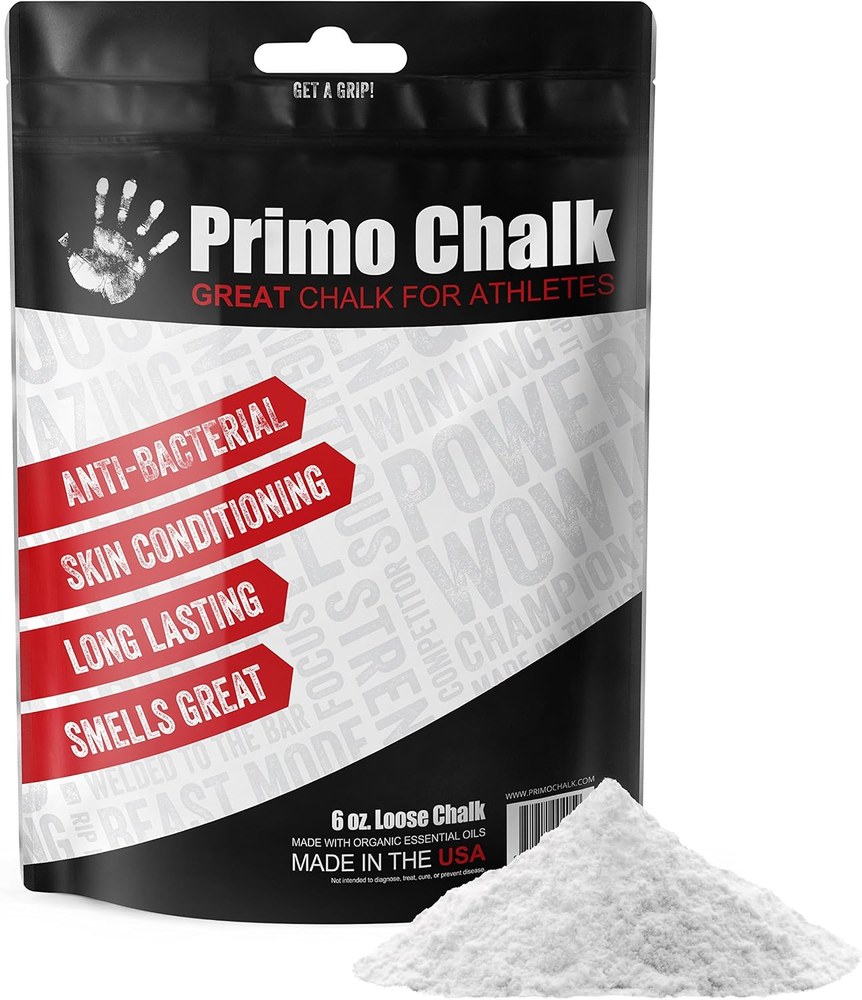 Primo Chalk
Check price
Primo Chalk
Check price
|
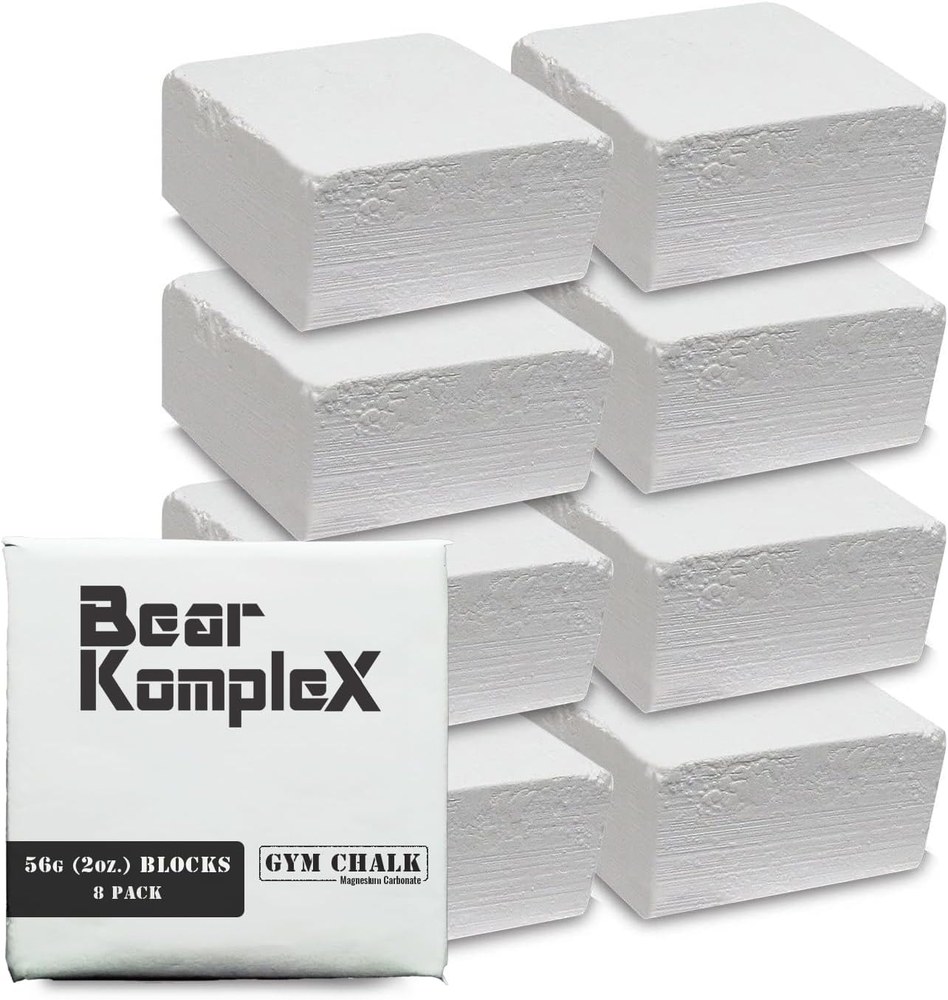 Bear KompleX
Check price
Bear KompleX
Check price
|
||
|---|---|---|---|---|---|---|---|
| Best for | Overall | Loose chalk | Liquid | Chalk ball | Maximum grip | Hand care | Block multipack |
| Rating (*) | |||||||
| Grip performance | 95% | 96% | 84% | 85% | 98% | 85% | 88% |
| Mess & gym-friendly | 80% | 71% | 97% | 90% | 69% | 70% | 74% |
| Longevity per use | 95% | 89% | 79% | 77% | 92% | 82% | 87% |
| Hand condition | 76% | 85% | 71% | 76% | 74% | 97% | 74% |
| Value for money | 99% | 89% | 87% | 98% | 75% | 70% | 71% |
| Format | Block | Loose powder | Liquid | Chalk ball | Loose powder | Loose powder | Block multipack |
| Passes a chalk ban | No | No | Yes | Usually | No | No | No |
| Added ingredients | None | Drying agents | Alcohol carrier | None | Grip additives | Essential oils | None |
| Price | $ | $ | $$ | $ | $$ | $$ | $$ |
 Rogue Gym Chalk
Our testing and selection process
How we assess the lifting chalks
We always use a 5 step process in our reviews:
- We start as the buyer. Between the team we have gone through more blocks, buckets, balls and bottles than we care to add up.
- We do a ton of research, collecting information on as many chalks as possible and putting it into a spreadsheet.
- We rate each chalk using our exclusive weighted rating system, explained in the section below.
- We use data to decide our top picks rather than personal bias toward brands.
- We get our hands on as many of the top picks as possible. Our community is great at helping with this.
You can read more about this process in our review guidelines.
How we test and score the lifting chalks
Below is an overview of how we reached the score and ranked the chalks.
Specifically, it lists the factors in the rating formula and their gravity (how important they are).
I grouped them into five chunks for simplicity:
- Grip performance (36%) - how well it dries the hand and how much the bar actually stops moving.
- Mess and gym-friendliness (24%) - dust, residue, and whether your gym will let you use it.
- Longevity per application (14%) - how many sets you get before you re-chalk.
- Hand condition (10%) - what a season of it does to your skin.
- Value for money (16%) - cost per use rather than cost per tub.
Grip performance (36%)
Start with the awkward truth: almost all of this is magnesium carbonate.
The cheap block and the boutique bag are chemically close to the same thing. Chalk works by absorbing the moisture on your palms so your skin can bite into the knurling instead of sliding across it, and magnesium carbonate does that job whoever puts their name on the bag.
What genuinely varies is milling and additives. Finely milled chalk covers more skin from less powder. Some brands add drying agents to pull more moisture, and a couple add texture that makes the bar feel grabbier rather than just drier.
| Block | Loose | Chalk ball | Liquid | |
|---|---|---|---|---|
| Cost per use | Lowest | Low | Low | Highest |
| Dust created | Lots | Lots | Some | None |
| Allowed in a strict gym | No | No | Often | Almost always |
| Top up mid-set | Instant | Instant | Instant | Wait to dry |
| Best home for it | Home gym | Home gym | Gym bag | Commercial gym |
My tip: if you train at home and nobody minds the dust, buy a block and stop thinking about it. Everything else on this list is solving a problem you do not have.
Mess and gym-friendliness (24%)
This carries almost a quarter of the score, which surprises people until they get told off.
Loose chalk and blocks throw dust that settles on every surface in the room, works into ventilation and coats equipment. That is exactly why commercial gyms ban it, and those bans are aimed at powder rather than at chalk as an idea.
A chalk ball keeps most of the dust inside a fabric shell, so it often slips through where a block would not. Liquid chalk does not create dust at all: it goes on wet, the alcohol carrier evaporates, and what stays is a thin bonded film.
Longevity per application (14%)
How often you are wiping your hands back into the bucket between sets.
Coarser chalk sits on the surface and sheds quickly. Finer milling and added drying agents hold on longer, and liquid outlasts any powder because it bonds to the skin instead of resting on it. Nobody publishes a figure for this, so we score it on owner reports and our own sessions rather than on anything a brand claims.
Hand condition (10%)
Chalk dries your skin. That is the entire mechanism, so you cannot have the grip without the drying.
The problem is not the dryness itself, it is what dryness does to a callus. Dry skin splits where the callus has built up a ridge, and that is how people end up with a torn hand on a heavy pull. Filing calluses flat and moisturising on rest days does more than any chalk choice will.
A couple of brands add skin conditioners to offset it, which is a genuine differentiator rather than marketing.
Value for money (16%)
We score cost per use, not cost per tub.
In other words…
A big bucket looks like value and mostly ends up going hard in a corner of the garage. One block lasts most home gym lifters the better part of a year, and that is the number that matters.
Find the perfect lifting chalk for you
Best overall | Best loose chalk | Best liquid | Best chalk ball | Best for grip | Best for hand care | Best block multipack
Here is how the seven chalks stack up on our overall score:
Rogue Gym Chalk
Best OverallQuick specs
- Pure magnesium carbonate, block form
- Crushes into loose chalk yourself
- No additives, no fragrance
- Lowest cost per use in the lineup
The plain answer to a question most people overthink: pure magnesium carbonate, in the cheapest and longest-lasting form you can buy it.
Summary of experience, tests & opinions
What I like
- Crushing a block yourself gives you a coarser grind than any pre-milled bag, and coarse chalk is easier to feel going on. You know when you have enough.
- It does not smell of anything. After trying a scented chalk I appreciated that more than I expected to.
What I don’t
- Blocks arrive in varying hardness. Some crumble in your hand, others need a proper whack, and there is no way to tell before you open the box.
- Broken blocks make a genuine mess in a gym bag. This wants a tub or a bucket rather than a side pocket.
Pros & cons
Pros
- Pure magnesium carbonate with nothing added and nothing to react to.
- The lowest cost per use of anything here by a clear margin.
- Buy it as blocks, use it as blocks or crush it loose, entirely your call.
Cons
- Blocks and dust are the first thing a commercial gym bans.
- No skin conditioners, so it dries hands as hard as chalk gets.
Read more about Rogue Gym Chalk
If you train at home, this is very likely the end of your search.
The reason it wins is not that Rogue have engineered something special. It is that chalk is a commodity, and once you accept that, the sensible move is to buy the purest version in the cheapest format from a brand that will not quietly cut it with filler. Block chalk is the cheapest format there is, and it is the most flexible: crush what you need, leave the rest solid, and a single block covers most of a year of training.
Coarse versus fine is worth understanding because it is the one real difference you will feel. A crushed block gives bigger particles than a milled bag, which means you can feel it going on and you use less by accident. Fine chalk from a bag disappears into the skin and it is easy to over-apply.
- You train at home and nobody minds the dust
- You want the lowest cost per use, full stop
- You would rather control the grind yourself
- Your gym has banned chalk (go liquid)
- You need it to live in a gym bag (go chalk ball)
- Your hands already crack badly (go Primo)
The honest limitation is where you can use it. Block chalk is the format gyms object to most, and no amount of being careful changes that. If you lift anywhere with a chalk policy, the SPORTMEDIQ liquid is the pick that actually gets used rather than the one that gets confiscated.
Against the Friction Labs, this is coarser, cheaper and less refined, and the Friction Labs is the better chalk if you want it milled and ready. Neither is meaningfully grippier than the other once it is on your hands.
Value is where it edges the field, and only just:
Bottom line
Rogue Gym Chalk is the top-rated chalk for 3 main reasons:
-
It is pure magnesium carbonate. No filler, no fragrance, nothing to react to.
-
Block is the cheapest and longest-lasting format. One block covers most of a training year.
-
You control the grind. Crush what you want, keep the rest solid.
It might be for you if… you train at home and want the chalk question closed for the price of a coffee.
It’s not for you if… your gym has a chalk policy, where the SPORTMEDIQ liquid is the only pick here that reliably passes.
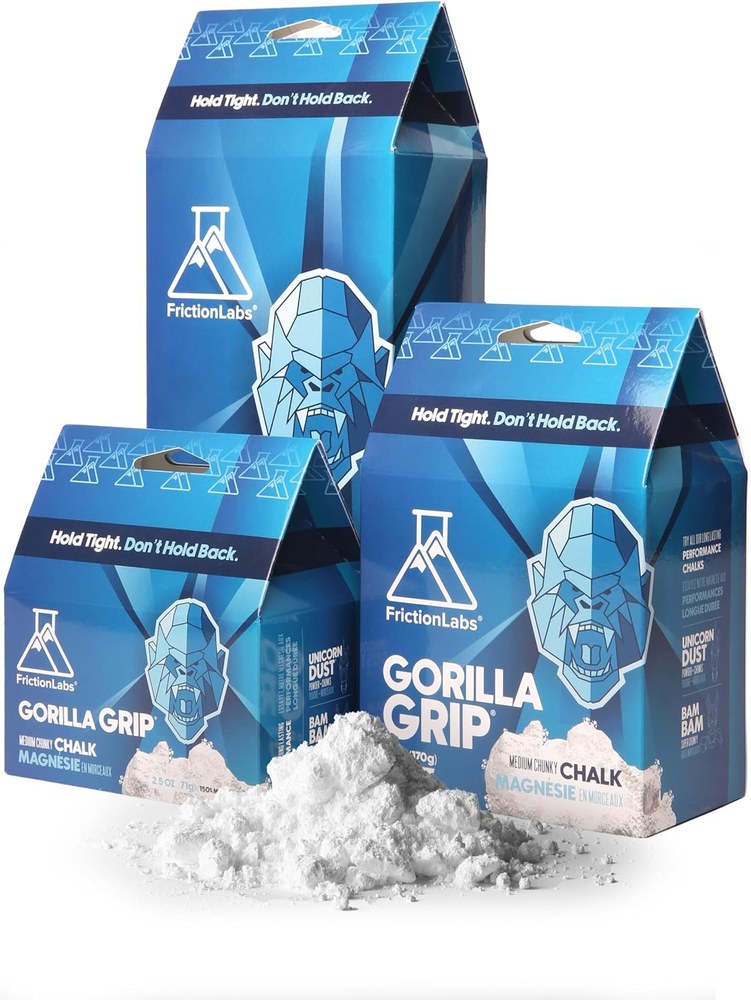
Friction Labs Premium Loose Chalk
Best Loose ChalkQuick specs
- Pre-milled loose magnesium carbonate
- Climbing-grade milling, added drying agents
- 4.7 stars from over 6,900 ratings
- Resealable bag
Climbing-grade chalk at gym-chalk money, and the biggest owner-review base of anything in this category.
Summary of experience, tests & opinions
What worked
- It goes further than it looks like it should. A pinch covers both hands properly, where a coarser chalk needs a proper scoop.
- It comes out of the climbing world, and climbers are far fussier about chalk than lifters are. You feel that in the consistency between bags.
What didn’t
- Fine chalk is the dustiest chalk. It hangs in the air longer than a crushed block does and settles on everything nearby.
- The resealable bag is fine for a while and then is not. Decant it into a tub if you want it to last.
Pros & cons
Pros
- Finest milling here, so a smaller amount covers more skin.
- Over 6,900 ratings at 4.7 stars, easily the largest review base in the category.
- Drying agents that hold on longer than plain chalk.
Cons
- The finest chalk is also the dustiest.
- Bag closure is the weak point.
Read more about Friction Labs Premium Loose Chalk
The pick if you want chalk that is already ready to use.
Milling is the whole story. Finer particles mean more surface area per gram, which means a smaller pinch does the same job, which is why a bag that looks small outlasts expectations. Climbers care about this far more than lifters do, because they are hanging off fingertips rather than gripping a knurled bar, and this chalk comes out of that world.
- Consistent grind bag to bag, rather than however hard you hit it
- Drying agents that keep working for more sets
- Less product per application, so the price gap closes fast
- No lumps to work out in your palm
The catch is the flip side of the same property. Fine chalk becomes airborne easily, hangs about, and settles. In a garage that is nothing. In a shared space it is what gets chalk banned.
Side by side with the Rogue, the honest summary is that this is better chalk and the Rogue is better value, and once both are on your hands you would struggle to pick them apart on a heavy set.
Only the Spider Chalk grips harder, and not by much:
Bottom line
The best chalk here if you want it milled, consistent and ready to go. It costs a little more than a block and you use a little less, so the gap is smaller than it looks.
It might be for you if… you want the finest chalk available and dust is not a problem where you train.
It’s not for you if… you would rather crush your own and save the difference, where the Rogue wins.
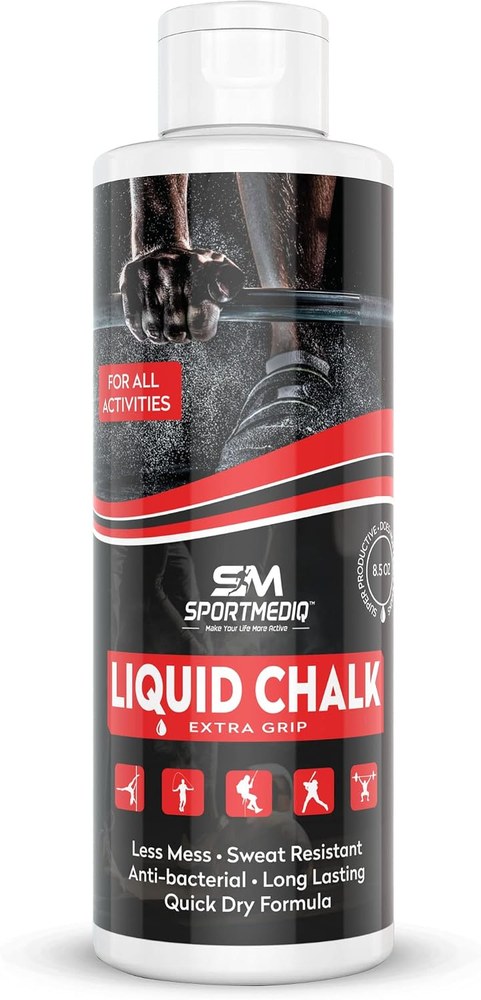
SPORTMEDIQ Pro Grade Liquid Chalk
Best Liquid ChalkQuick specs
- Liquid chalk with alcohol carrier
- No dust, passes most gym chalk bans
- 4.7 stars from over 3,900 ratings
- Squeeze bottle, fits a gym bag
The only format here that reliably gets past a gym chalk ban, and the best-rated bottle of it.
Summary of experience, tests & opinions
Where it shines
- The first time you use it in a commercial gym and nobody looks at you is the moment it justifies itself. No cloud, no residue on the bar, no conversation with staff.
- One application genuinely covers a full working set of heavy pulls rather than needing a top-up between each one.
Where it falls short
- The wait is real. Twenty to thirty seconds of standing there flapping your hands is annoying when you are between sets on a clock.
- The alcohol strips your hands harder than powder does, and you notice it after a few weeks of regular use.
Pros & cons
Pros
- Creates no airborne dust at all, so it passes almost any chalk policy.
- 4.7 stars across nearly 4,000 ratings.
- Bonds to the skin, so it outlasts powder per application.
Cons
- Drying time between application and lifting.
- Harshest option here on skin condition.
Read more about SPORTMEDIQ Pro Grade Liquid Chalk
Buy this one if your gym has a chalk policy. That is the whole decision.
Liquid chalk is not better than powder in the abstract. It grips slightly less well in the moment, costs more per use, and makes you wait. What it does is work in places powder is not allowed, and for a lot of lifters that is the difference between having chalk and not having chalk.
The mechanism is worth knowing because it explains both the upside and the annoyance. The chalk is suspended in alcohol, you rub it in, the alcohol evaporates, and what is left is a thin layer bonded to your skin rather than sitting on top of it. That bonding is why it lasts longer than powder. The evaporation is why you have to wait.
Two things worth doing. Use less than the bottle suggests, because a coin-sized blob covers both hands and more just goes tacky. And if you are pulling something genuinely heavy, put liquid down as a base and dust loose chalk over the top, which gets you the longevity of one and the instant bite of the other.
| Liquid | Powder | |
|---|---|---|
| Allowed in a strict gym | Almost always | Often not |
| Sets per application | Several | One or two |
| Ready to lift | After it dries | Instantly |
| Grip in the moment | Good | Slightly better |
| Kindness to skin | Harshest here | Gentler |
The trade against your skin is real and worth being honest about. Alcohol plus chalk is more drying than chalk alone, so if your hands already crack, the Primo is the kinder route and a chalk ball is kinder still.
Nothing here touches it on gym-friendliness:
Bottom line
The answer to a gym chalk ban, and a good one. It is not the grippiest chalk here, but it is the one you will actually be allowed to use.
It might be for you if… you train somewhere with a chalk policy, or you travel and cannot carry powder.
It’s not for you if… you train at home, where powder is cheaper, faster and grippier.
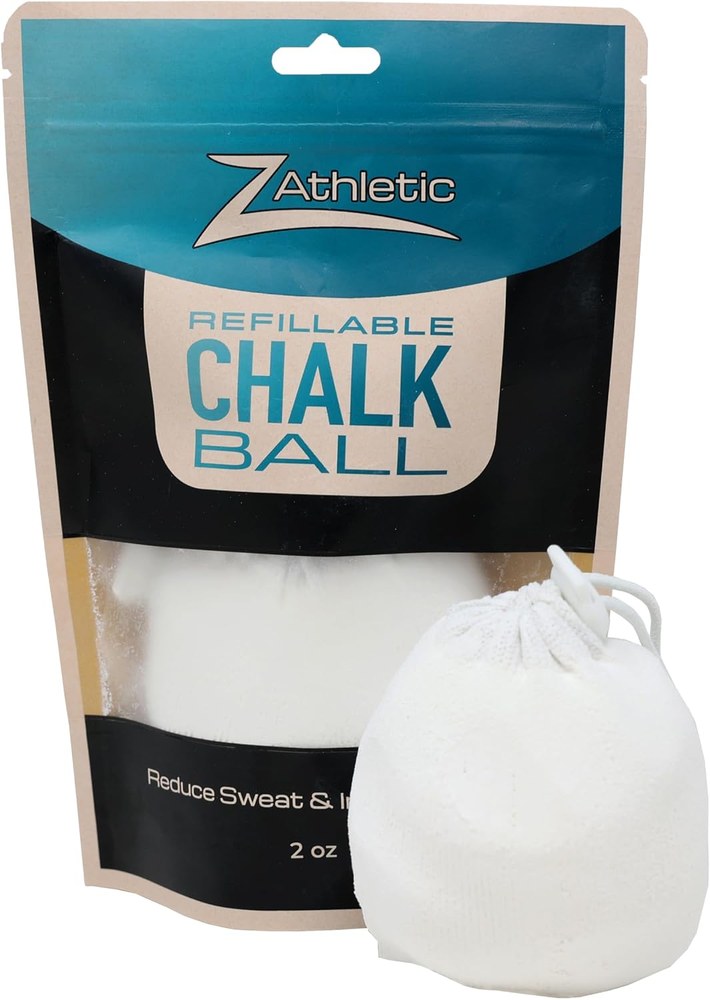
Z Athletic Gym Chalk Ball
Best Chalk BallQuick specs
- Refillable fabric chalk ball
- Contains most of the dust
- 4.6 stars from over 9,200 ratings
- Cheapest pick in the lineup
The most-reviewed chalk product we found, and the tidiest way to carry powder in a gym bag.
Summary of experience, tests & opinions
The wins
- It lives in a gym bag without redecorating the inside of it, which is the entire reason chalk balls exist.
- Over nine thousand people have bought and rated it. For a product this cheap, that is an unusual amount of evidence.
The downsides
- You get less chalk on your hands per squeeze than dipping into a bucket, so heavy singles need a couple of goes.
- The fabric shell eventually wears through at the seam and then it is a normal, very messy bag of chalk.
Pros & cons
Pros
- Contains most of the dust, so it often passes where a block would not.
- 9,200 ratings at 4.6 stars, the largest review base of any chalk we looked at.
- Cheapest pick here and refillable.
Cons
- Less chalk transferred per application than loose powder.
- Shell wears out over time.
Read more about the Z Athletic Gym Chalk Ball
The travel format, and the diplomatic one.
A chalk ball is loose chalk inside a porous fabric shell. Squeeze it, some comes through, most stays in. That containment is why it sits in the middle of the mess scale, and why plenty of gyms that have banned blocks will leave you alone with one.
For a home gym it is the wrong tool, and it is worth saying that plainly. You will get less chalk per application than reaching into a bucket, and if nobody is complaining about dust then there is no problem to solve. Where it earns its place is the bag that goes to a commercial gym, a competition, or a friend’s garage.
Buy it if your chalk needs to travel. Skip it if it lives next to your rack.
On value it is beaten by a single point, and only by a block of chalk:
Bottom line
The chalk that travels. Cheap, tidy, and backed by more owner reviews than anything else in the category.
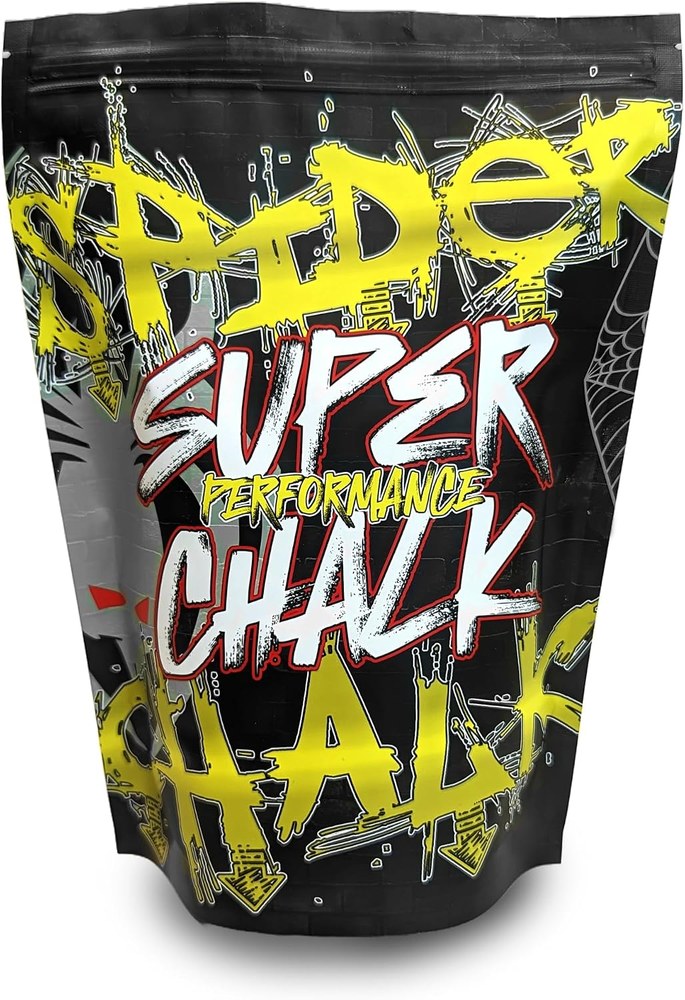
Spider Chalk
Best for Maximum GripQuick specs
- Loose chalk with added grip agents
- Noticeably grittier feel than plain chalk
- Lab-graded magnesium carbonate
- Large resealable bag
The grippiest chalk we scored, because it does something plain magnesium carbonate does not.
Summary of experience, tests & opinions
What’s smart
- It feels different in the hand. There is a grit to it that makes the bar feel like it is keying into your palm rather than just being dry.
- That texture is why it holds on for more sets than plain chalk. You are not reaching back for it every two minutes.
What’s awkward
- The residue is stickier than normal chalk, and it stays on the knurling. If you share a bar, someone will mention it.
- The review count is thin next to everything else here, so there is less long-term evidence than the numbers on the other picks.
Pros & cons
Pros
- Highest grip score in the lineup by a clear margin.
- Added grip agents that genuinely change the feel, not just the marketing.
- Lasts longer per application than plain chalk.
Cons
- Leaves more residue on bars and equipment.
- Small review base compared with the rest of the list.
Read more about Spider Chalk
The one to reach for when your grip is what is actually failing.
Most chalk works by one mechanism: absorb moisture, let skin bite knurling. This adds a second one. The additives leave a slightly tacky texture, so on top of a dry hand you get a bar that feels keyed into your palm. On a heavy deadlift that is a real difference rather than a marginal one.
That is also exactly why it scores worst here on mess. Tacky residue does not brush off a bar the way plain chalk does, and in a shared gym it builds up on the knurling. In a garage where the only person using the bar is you, that is a non-issue.
Worth being straight about the evidence: this has far fewer ratings than the other picks. The performance is well established among people who use it, but it does not have the thousands-of-owners backing that the Friction Labs or the Z Athletic do.
Buy it if grip is your limiter and you own your own bar. Skip it if you share equipment or you want the most proven option.
Grip is exactly where it wins:
Bottom line
The specialist. If your hands are the thing ending your deadlift sets, this does more about it than any other chalk here.
It might be for you if… grip is genuinely your limiter and the bar is yours alone.
It’s not for you if… you share equipment, where the residue makes you unpopular and the Rogue is the neighbourly choice.
Primo Chalk
Best for Hand CareQuick specs
- Loose chalk blended with essential oils
- Formulated to offset chalk’s drying effect
- 4.7 stars from over 340 ratings
- Resealable bag
The only chalk here that treats your hands as something to look after rather than something to dry out.
Summary of experience, tests & opinions
Where it earns its place
- Steve, our certified PT, moved a couple of clients onto this after they kept tearing calluses through winter, and the tearing stopped. That is a small sample, but it is a consistent one.
- Your hands do not feel stripped after a session the way they do with plain chalk. It is a noticeable difference at the sink afterwards.
Where it limits you
- It has a scent. Not unpleasant, but it is there, and some people would rather their chalk smelled of nothing.
- The oils mean it grips fractionally less than a pure chalk. You are trading a little performance for skin.
Pros & cons
Pros
- Blended with essential oils to offset the drying that causes callus tears.
- 4.7 stars, and the highest hand-condition score here by a wide margin.
- Still a genuinely effective chalk, not a hand cream pretending.
Cons
- Grips slightly less than plain magnesium carbonate.
- Scented, and a premium tier for what is still chalk.
Read more about Primo Chalk
Buy this if your hands are what stop you training, not your grip.
The problem it solves is specific and worth understanding. Chalk dries skin, dry skin splits where a callus has built a ridge, and a split callus takes a fortnight to train around. Most lifters treat that as the cost of doing business. It does not have to be.
The blend adds skin conditioners to the magnesium carbonate, so the chalk still absorbs moisture but does not strip the skin as aggressively on the way. You give up a small amount of grip for it, which is a fair trade if you have ever had to skip pulling for two weeks because of a tear.
What it is not is a substitute for looking after your hands. File the calluses flat, moisturise on rest days, and this chalk supports that routine rather than replacing it. Do neither and no chalk on this page will save you.
- File calluses flat once a week, before they build a ridge
- Moisturise on rest days, not on training days
- Use less chalk than feels right, since caked chalk dries more skin than it needs to
- Wash it off after training rather than letting it sit
Buy it if you tear calluses regularly. Skip it if you never have.
Hand condition is not close:
Bottom line
Chalk for people whose hands keep splitting. It gives up a fraction of grip and hands back a fortnight of training you would otherwise lose to a tear.
It might be for you if… callus tears are a recurring problem for you.
It’s not for you if… your hands cope fine, where the Rogue does the same job for less.
Bear KompleX Gym Chalk Blocks
Best Block MultipackQuick specs
- Eight small blocks, 56g each
- Pure magnesium carbonate
- 4.5 stars from over 240 ratings
- Individually sized for a chalk bowl
Eight small blocks instead of one big one, which is a better fit for a rack-mounted chalk bowl.
Summary of experience, tests & opinions
What’s good
- Small blocks are the right size for a chalk bowl. One goes in, gets used up, another goes in, and nothing turns into a bucket of dust.
- Eight of them means the spare stays sealed in the box rather than slowly crumbling on a shelf.
What’s not
- You pay a premium for the packaging convenience. It is the same compound as the cheapest block here.
- The blocks are softer than most, so they crumble faster than you might want if you like a hard block.
Pros & cons
Pros
- Eight individually portioned blocks, ideal for a rack-mounted chalk bowl.
- Pure magnesium carbonate with nothing added.
- Sealed spares stay fresh rather than crumbling on a shelf.
Cons
- Costs more than a plain block for the same compound.
- Softer blocks that crumble quickly.
Read more about Bear KompleX Gym Chalk Blocks
A packaging solution more than a chalk solution, and there is nothing wrong with that.
If you have a chalk bowl mounted on your rack, big blocks are slightly annoying: they do not sit right, and once one starts breaking up you have a bowl of dust and shards rather than a block you can use. Small blocks solve it. One at a time, used up, replaced.
The chalk itself is unremarkable in the good sense. Pure magnesium carbonate, nothing added, grips exactly as you would expect. It scores a little below the Rogue only because you are paying more for the same thing in a friendlier shape, and because the blocks are on the soft side.
| Eight small | One big | |
|---|---|---|
| Fits a chalk bowl | Neatly | Awkwardly |
| Spares stay fresh | Sealed in the box | Crumbles on a shelf |
| Cost for the same chalk | A premium | Cheaper |
Buy it if you own a chalk bowl. Skip it if you keep chalk in a bucket, where a single big block is cheaper and lasts longer.
It lasts well on the hand, which is the one place the packaging premium buys you nothing:
Bottom line
Buy it for the format if you have a chalk bowl on the rack. Otherwise a single big block does the same job for less.
How we created this list of best lifting chalks
Here are our criteria on how we picked these chalks, and how we valued each criterion when making decisions:
- Grip performance (36%)
- Mess and gym-friendliness (24%)
- Longevity per application (14%)
- Hand condition (10%)
- Value for money (16%)
You can find out all about our selection process here.
Other lifting chalks we tested - close-but-no-cigar
- Friction Labs Secret Stuff liquid - a well-known liquid chalk, but owner ratings sit clearly below the SPORTMEDIQ at a higher price.
- Gymreapers Gym Chalk - perfectly good loose chalk from a brand we rate, just nothing the Friction Labs does not already do better.
- Cramer Gym Chalk Block - the old gym-standard block. Fine, cheap, and beaten on consistency by the Rogue.
- SPRI Chalk Block and Ball - a reasonable starter combo, though the ball is thinner-shelled than the Z Athletic.
- Liquid Grip - long-lasting liquid with a loyal following, but harder to find in stock than the picks above.
- Bison chalk balls - solid budget ball that simply has a fraction of the owner evidence behind it.
Lifting chalk FAQs
Does the brand of lifting chalk actually matter?
Less than almost every roundup implies. Nearly all lifting chalk is magnesium carbonate, and the cheap block and the boutique bag are chemically close to identical.
What genuinely differs is the format, how finely it is milled, and whether the brand has added drying agents or skin conditioners.
Pick the format first and the brand second, because the format decides whether it works in your gym at all.
Block, loose, chalk ball or liquid: which should I buy?
Block is the cheapest per use and you crush it yourself, which suits a home gym where nobody minds dust. That is the Rogue.
Loose is the same thing pre-ground and usually finer. A chalk ball is the tidy travel option and the one most commercial gyms tolerate.
Liquid is the only format allowed almost everywhere, which makes it the right answer if your gym has banned chalk outright.
Is liquid chalk better than regular chalk?
It is better at some things and worse at others.
Liquid lasts longer per application, makes no mess and passes gym bans, because the alcohol carrier evaporates and leaves a thin bonded layer. Powder grips slightly better in the moment, costs far less per use, and tops up instantly.
Plenty of lifters use liquid as a base layer and dust powder over the top for heavy pulls.
Does lifting chalk ruin your hands?
Chalk is drying rather than damaging, but drying skin is what makes calluses tear.
The chalk pulls moisture out of your palms, and dry skin splits where a callus has built up a ridge. The fix is not skipping chalk, it is filing calluses flat and moisturising on rest days.
Some chalks add skin conditioners specifically to offset the drying, which is the whole point of the Primo.
Why do some gyms ban chalk?
Because loose chalk becomes airborne dust that settles on everything, gets into ventilation and costs money to clean.
Most bans target loose powder and blocks rather than chalk as a concept.
A chalk ball keeps the dust contained and often slips through, and liquid chalk almost always does, because there is nothing to become airborne.
How much lifting chalk do I actually need?
Far less than you think, and far less often.
A thin film on the fingers and the heel of the palm is all that does anything. Caking it on just leaves a layer that slides against itself.
One block lasts a home gym lifter the better part of a year, which makes the biggest tub the wrong buy for most people.
The bottom line
For most people, Rogue Gym Chalk is the answer and the question was smaller than it looked. Pure magnesium carbonate, in the cheapest and longest-lasting format, from a brand that will not cut it with filler.
Buy the format that fits where you train, then stop thinking about chalk.
If your gym has a chalk policy, the SPORTMEDIQ liquid is the only pick here that reliably passes. Want it milled and ready rather than crushing blocks? The Friction Labs. Chalk that lives in a gym bag? The Z Athletic ball. Grip genuinely failing on heavy pulls? The Spider Chalk does more about it than anything else. And if your calluses keep splitting, the Primo is worth the premium.
There are two things to do now:
- If you want to give the chalks another look, click here to skip back to the table.
- If you want to put a pin in it, bookmark this page and come back. We keep it updated, fresh, and relevant.
Stay strong.
