
We scored more than 40 weightlifting shoes across four quality categories and picked the seven most worthy of your money.
I’ve squatted in flat trainers, in socks, and in proper raised-heel shoes, and the day I switched to a real lifting shoe my depth and balance changed on the spot. A solid, elevated heel does something no cushioned trainer can.
The aim was simple: find the raised-heel shoes that plant you to the floor, fit real feet, and match the way you actually lift.
Let’s see how they stacked up.
Editor's note · updated 6 July 2026
This is a guide to raised-heel weightlifting shoes: the shoes built for squats and the Olympic lifts, rather than flatter cross-trainers dressed up as lifting shoes. We’ve scored every pick on stability, fit, versatility and value, and cross-checked them against years of coaching lifters in our gym and owner reports from our community. Prices sit in tiers ($ to $$$) rather than exact figures, because shoes go on sale constantly. Amazon picks link straight to Amazon.
Related
Compare the best lifting shoes
 Adidas Powerlift 5
Check price
Adidas Powerlift 5
Check price
|
 Adidas Adipower 3
Check price
Adidas Adipower 3
Check price
|
 Reebok Legacy Lifter IV
Check price
Reebok Legacy Lifter IV
Check price
|
 TYR L-2 Lifter
Check price
TYR L-2 Lifter
Check price
|
 Inov-8 Fastlift Power G
Check price
Inov-8 Fastlift Power G
Check price
|
 Reebok Lifter PR III
Check price
Reebok Lifter PR III
Check price
|
||
|---|---|---|---|---|---|---|---|
| Best for | Overall | Value | Premium Olympic | Serious lifters | Wide feet | CrossFit / WODs | Budget |
| Rating (*) | |||||||
| Stability & heel | 96% | 80% | 92% | 95% | 92% | 84% | 82% |
| Fit & width | 88% | 84% | 76% | 80% | 96% | 84% | 80% |
| Versatility | 78% | 86% | 76% | 72% | 68% | 96% | 82% |
| Value | 86% | 96% | 78% | 80% | 80% | 82% | 94% |
| Price | $$ | $ | $$$ | $$$ | $$$ | $$$ | $ |
| Heel drop | 20mm | 15mm | 22mm | 22mm | 21mm | 22mm | 15mm |
| Heel material | TPU | EVA foam | TPU | TPU | TPU | Graphene foam | EVA foam |
| Width | Narrow / medium | Medium | Narrow | Medium | Wide | Medium | Medium |
 Nike Romaleos 4
Our testing and selection process
How we assess lifting shoes
A lifting shoe lives or dies on how planted it keeps you under a loaded bar. Here’s how we sort the real thing from a padded trainer with a marketing sticker.
- Cut the list to real weightlifting shoes. We started with more than 40 models and threw out anything that was really a soft cross-trainer, anything with a compressible foam heel that squashes under load, and anything with a pattern of sole or upper failures. What survived were genuine raised-heel shoes.
- Squat and lift in them. Steve, our certified personal trainer, put the shortlist under heavy squats, cleans and jerks with his own clients. A shoe that feels supportive walking around means nothing. We care whether the heel stays dead solid when there’s real weight on the bar.
- Judge the fit on different feet. Width is where most lifters end up disappointed, so we checked each shoe on narrow, medium and wide feet, and noted who each one pinches and who it suits.
- Live in them for weeks. Break-in, strap durability, how the upper holds up when you catch a heavy clean: those only show over time, backed by owner reports from our community.
- Score, rank and be straight about the trade-offs. Every shoe is scored on four weighted criteria, and where a pick is brilliant for one lifter and wrong for another, we say so.
How we score lifting shoes
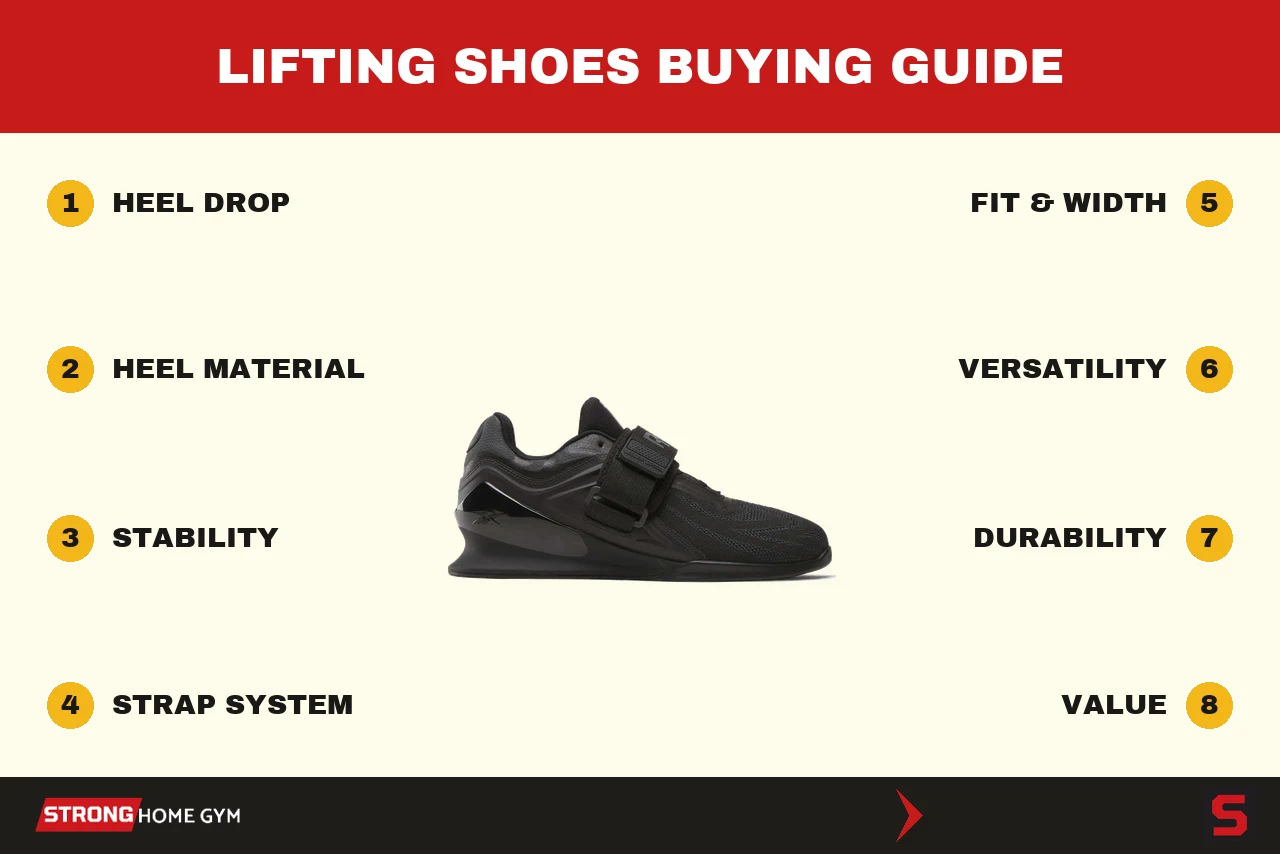
Four things decide whether a shoe earns a spot in your bag. Stability leads, because a heel that gives under load defeats the entire point of the shoe, then fit, then how much else the shoe can do, then value.
Stability and heel (35%)
The heart of a lifting shoe. A firm, incompressible heel means the force you drive through the floor goes into the barbell instead of sinking into soft cushioning, and the raised height lets your ankles bend further so you hit depth with an upright torso. This is why you squat better in a rigid TPU heel than in a running shoe.
Fit and width (25%)
The single biggest source of buyer regret. Most lifting shoes are built on a narrow-to-medium last, so wide feet get pinched across the toes on a heavy squat, exactly when you want the foot to spread and grip the floor. We scored how true each shoe fits and who it leaves out.
Versatility (20%)
Some of these shoes do one job brilliantly and nothing else. A rigid pure-lifter is superb under a squat and miserable for a burpee. A more flexible forefoot lets a shoe cross over into CrossFit-style training at the cost of a little squat stability. We scored how far each shoe stretches beyond the platform.
Value (20%)
We weigh price against how long the shoe lasts and how well it does its job. A budget EVA-heeled shoe that gets a beginner squatting well is smart money, and so is a premium TPU pair a serious lifter keeps for years. We hold value a notch below stability and fit because the wrong shoe at any price is a waste.
Find the perfect lifting shoe for you
Overall | Value | Premium | Serious lifters | Wide feet | CrossFit | Budget
Here’s how the seven shoes stack up on our overall score:
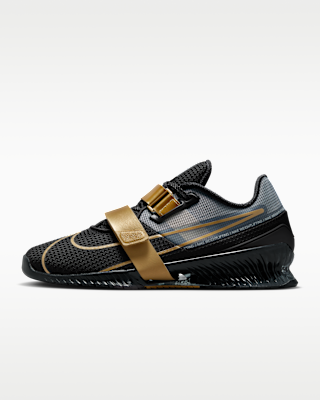
Nike Romaleos 4
Best OverallQuick specs
- 20mm heel drop, rigid TPU heel
- Dual hook-and-loop straps
- Narrow to medium fit
- Best for Olympic lifts and heavy squats
The shoe that gets the fundamentals more right than anything else: the widest, stiffest platform we tested, locked down by two straps that do not budge.
Summary of experience, tests & opinions
What I like
- The first heavy squat in these is a proper “oh” moment. You brace, you drive, and the shoe simply doesn’t move under you. After a flat trainer it feels like your feet have been bolted to the floor.
- Cinch the second strap and the whole midfoot goes quiet. You only notice how much a lesser shoe let your foot shift once one holds you this still.
What I don’t
- The upper is where they show their age. Mine still perform fine, but the toe creased and looked tired well before the sole wore at all. You buy these for the platform. Looks come a distant second.
- They run a shade snug through the toe, and after a long session, when the foot swells, I feel it. If you’re between sizes, take the half up.
Pros & cons
Pros
- Widest, stiffest platform of anything we tested.
- Dual-strap lockdown that holds through the deepest catch.
- Rigid TPU heel that never compresses under load.
Cons
- Upper durability and breathability are the weak points.
- Narrow through the ankle, with occasional heel slip for slim feet.
Read more about the Nike Romaleos 4
The platform is the whole story. Our team’s testing, echoed by the wider industry’s lab measurements, puts this heel among the firmest of any lifting shoe going, on the widest base we planted a bar over. Firm and wide together do one job: more of the force you drive through the floor reaches the bar instead of sinking into the sole. That is the whole “oh” moment on your first heavy squat.
- You squat heavy and train the Olympic lifts
- You have narrow-to-medium feet
- You want the most stable platform going and one pair for years
- You have wide feet (the TYR L-2 is built for you)
- You want one shoe for lifting and WODs (look at the Fastlift)
- You're on a tight budget (the Powerlift 5 does most of the job for less)
Sizing rewards a little care, because two kinds of narrow foot behave very differently here. A narrow or medium forefoot is exactly what this last is cut for, and it feels superb. A genuinely slim ankle or heel is another matter: our team and owners both notice a little slip climbing out of a deep squat. The fix is rarely a different size. Cinch the top strap a notch harder and the slip usually settles.
The 20mm drop is a sensible middle. Tall lifters and low-bar squatters who want the tallest heel edge towards the Adipower at 22mm, trading width for a stiffer, single-purpose shoe. Wide feet belong in neither and should go straight to the TYR L-2.
The upper tires long before the sole does, so wipe it clean rather than drowning it, and pull the insoles out to air after a sweaty session. Look after the fabric and the platform outlasts it by years.
One honest limit, and the scorecard shows it: this is a dedicated platform shoe, so versatility is its lowest score. It’s superb under a heavy squat and through the Olympic lifts, and actively wrong for deadlifts, where a raised heel tips you onto your toes. Keep a flat shoe for pulling from the floor and reach for the Nike when there’s a bar on your back.
On the thing a lifting shoe exists to do, keep you planted, nothing here matches it:
Bottom line
The best all-round weightlifting shoe you can buy: the most stable platform we tested, dual-strap lockdown, and a rigid heel that gives nothing back. Narrow-to-medium feet only.
They might be for you if… you squat and Olympic lift seriously and want one dependable pair for years.
They’re not for you if… you have wide feet, where the TYR L-2 is built for you, or you need a do-everything shoe for WODs, where the Fastlift wins.
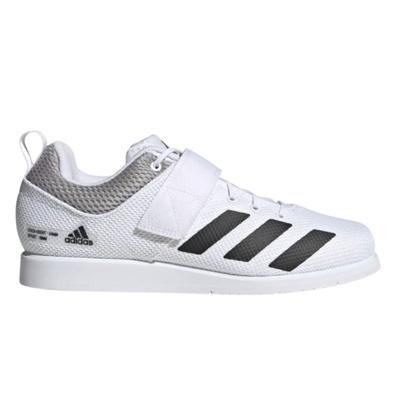
Adidas Powerlift 5
Best ValueQuick specs
- 15mm heel drop, high-density EVA heel
- Single hook-and-loop strap
- Light, breathable canvas upper
- Best for beginners and budget buyers
The shoe nearly every coach hands a lifter buying their first proper pair: light, low-drop, cheap, and more than enough to transform a flat-shoe squat.
Summary of experience, tests & opinions
What I like
- These are the shoes I hand a nervous beginner. They look and feel like a normal trainer right up until you squat, so there’s none of the intimidation of strapping into a rigid, alien platform shoe.
- The canvas upper breaks in fast and moulds to the foot within a week, so they feel like yours quickly rather than needing a painful wearing-in.
What I don’t
- They run a touch narrow through the middle. A wide foot should size up or look at the TYR instead.
- Mine scuffed and looked tired at the toe sooner than the pricier shoes, even though they kept performing fine.
Pros & cons
Pros
- Lightest shoe in the budget tier, with a forgiving forefoot.
- Low 15mm drop that suits beginners and high-bar squatters.
- The strongest value in the whole lineup.
Cons
- EVA heel lacks the rigidity of a TPU platform under maximal loads.
- Poor ventilation on hot, high-volume sessions.
Read more about the Adidas Powerlift 5
Most people don’t need to spend big on a first weightlifting shoe, and this is the proof: a raised, stable-enough heel at a price that makes trying one an easy yes.
The forefoot is the most flexible in this whole lineup. A pure lifter’s blocky sole fights you the moment you lunge, push a sled or walk between sets. The Powerlift bends where those shoes stay rigid, so it doubles as a sane shoe for the accessory half of a session.
The honest trade is the heel. EVA foam is firmer than a running shoe but softer than the TPU in the Romaleos or Adipower, so a very heavy squatter will eventually want that last bit of solidity. The low 15mm drop is the other thing to weigh: brilliant for a beginner or high-bar squatter, less ideal if stiff ankles need every millimetre of heel.
On fit, give the canvas its week. Out of the box it can feel a shade snug through the middle, then it softens and moulds far quicker than a leather or synthetic upper would. Length comes up true, so buy for length and let the material do the widening.
Set against the Reebok Lifter PR III, the two are near-twins: same 15mm EVA heel, single strap and breathable budget upper. The Powerlift’s bendier forefoot and lighter build make it the nicer shoe for mixed training, and adidas keeps it in stock across sizes. Flip to the Reebok only if it’s cheaper the day you buy, or its fit suits your foot better.
Longevity is the flip side of the price. The canvas scuffs and the EVA won’t shrug off years of near-maximal squatting the way TPU does, though replacing a shoe this cheap costs little. Look past it if you squat near your limit several times a week, or have stiff ankles chasing the tallest heel.
Nobody here gives you more shoe for the money:
Bottom line
The first weightlifting shoe to buy: light, low-drop, and cheap enough that there’s no reason to hesitate. The EVA heel is the ceiling you’ll eventually bump into, not a dealbreaker.
They might be for you if… you’re buying your first pair, or you’re a high-bar squatter who likes a lower heel.
They’re not for you if… you squat near-maximal often and want the last word in heel rigidity. Step up to the Romaleos or Adipower.
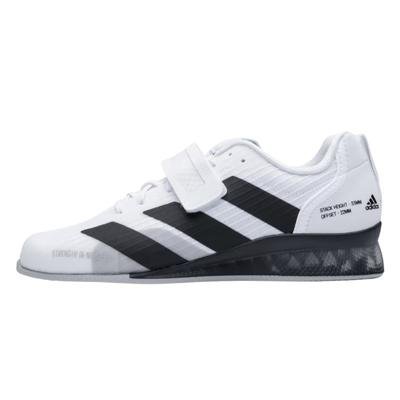
Adidas Adipower 3
Best Premium OlympicQuick specs
- 22mm heel drop, stable TPU heel
- Single strap plus laces over a ripstop upper
- Narrow, precise fit
- Best for competitive Olympic lifting
The serious Olympic lifter’s shoe: a tall, precise TPU platform wrapped in a hard-wearing ripstop upper, built for narrow feet that want to feel every gram of the bar.
Summary of experience, tests & opinions
What I like
- There’s a precision to a tall, narrow shoe that competitive lifters get hooked on. You feel exactly where your weight sits over the foot, and catching a clean feels crisp and controlled rather than vague.
- These are the pair on the rack that still look sharp after two years of chalk and dropped bars. That longevity is a big part of why lifters happily pay up.
What I don’t
- The fit is unforgiving if it isn’t your shape. A mate with wider feet lasted one session before the pinch across the toes drove him back to his old shoes.
- They do one job. Wear them for anything but lifting and they feel like ski boots, so they only make sense as a dedicated platform shoe.
Pros & cons
Pros
- Tall, precise 22mm TPU platform for deep catches.
- Hard-wearing ripstop upper that lasts for years.
- Locked-in, competition-ready feel.
Cons
- Narrow toe box and stiff forefoot, wrong for wide or flat feet.
- Premium price for a single-purpose shoe.
Read more about the Adidas Adipower 3
This is the specialist’s Olympic shoe, and the heel is where to start. At 22mm it’s the tallest here, tipping your shin further forward than almost anything on this list and opening the ankle for a deep, upright catch. That suits long femurs on a shorter torso, a low-bar setup, or ankles that won’t cooperate in a flatter shoe. If your squat already hits depth cleanly, that much heel is more than you need, and the Romaleos at 20mm keeps you a shade more grounded.
Be clear-eyed about the fit, because it’s the whole decision. It runs narrow through the toe with a stiff forefoot, and there’s no breaking it wider. Wide feet and high arches struggle, and flat feet can find the pronounced arch actively uncomfortable rather than merely snug. If any of that is you, the TYR L-2 or Powerlift 5 will make you far happier.
Against the other premium pick, the Legacy Lifter IV shares the same 22mm-class TPU platform yet feels nothing alike. Reebok’s shoe is heavy and anchored, for a powerlifter grinding a maximal single. The Adipower is markedly lighter and more precise, for the lifter snatching and cleaning, where a nimble, connected feel counts for more than mass. Both run narrow.
The ripstop upper is the quiet strength: it’s the pair still looking sharp after years of chalk and dropped bars, which is why committed lifters pay up front. Like most rigid lifters here it runs warm, so spot-clean and air them rather than sealing them damp in a bag. And like every raised heel, it fights you the moment you deadlift, so switch to something flat off the floor.
Its narrow last is exactly why it locks the foot down so well:
Bottom line
A premium, competition-grade Olympic shoe with the tallest heel here and a superb durable upper. Narrow feet only, and don’t expect it to do anything but lift.
They might be for you if… you’re a committed Olympic lifter with narrow feet who wants the tallest stable platform.
They’re not for you if… you have wide or flat feet, or you want any versatility at all. The TYR L-2 or Fastlift fit those needs.
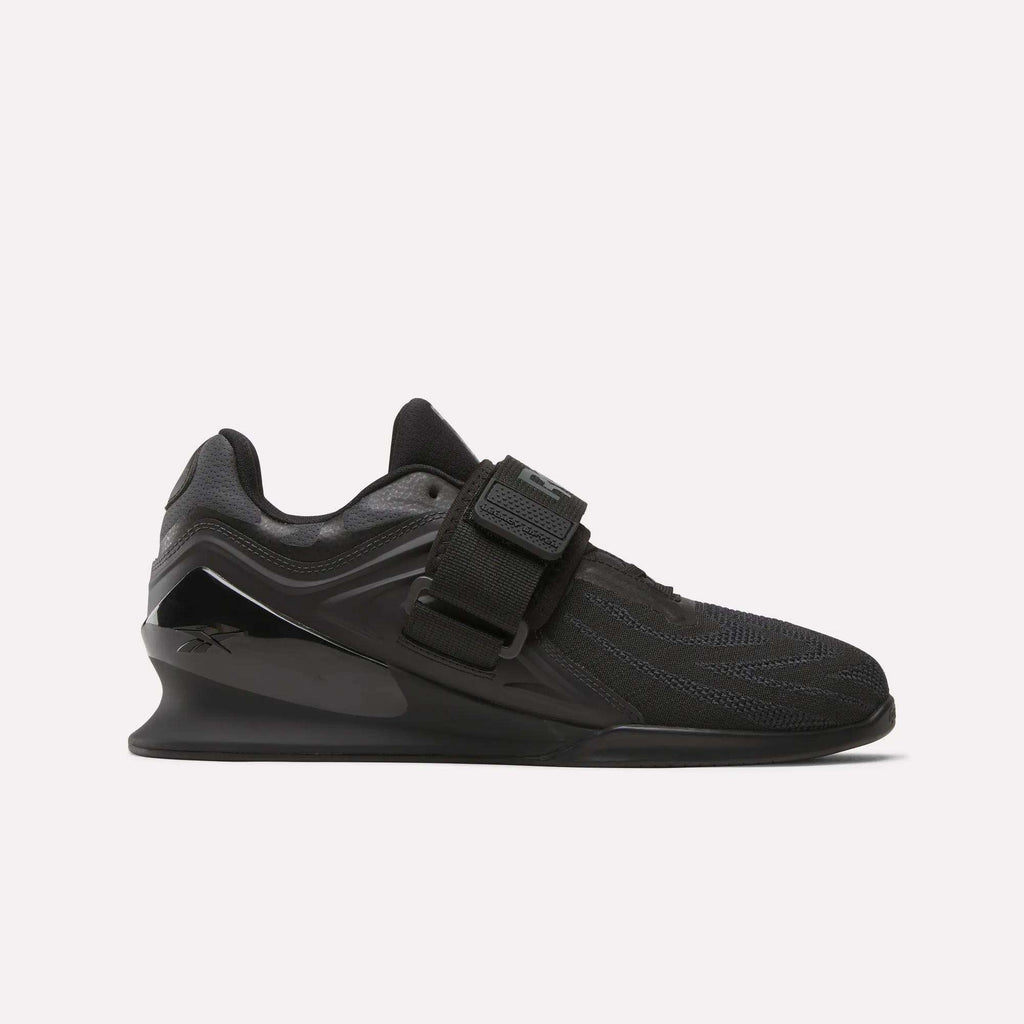
Reebok Legacy Lifter IV
Best for Serious LiftersQuick specs
- 22mm heel drop, high-density TPU heel
- Dual strap plus an inflatable Pump tongue
- Medium fit, very durable upper
- Best for near-maximal squats and heavy lifting
Reebok’s flagship, and one of the most anchored shoes you can lift in. The new fourth version fixes the one thing owners kept moaning about on the old model.
Summary of experience, tests & opinions
What I like
- Under a near-maximal squat, the heft actually reassures. There’s so much shoe under you that you feel bolted down rather than balanced on top, and on a grinding rep that confidence counts for something.
- The strap on this fourth version is a proper fix, not a tweak. Where the old model’s was short and fiddly, this one cinches down cleanly first time, every time.
What I don’t
- They run warm, and there’s a genuine break-in before the stiff upper gives at all across the top of the foot.
- You feel every ounce walking them from the rack to the bench. Brilliant once you’re planted, a lot of shoe the rest of the session.
Pros & cons
Pros
- Rock-solid, heavily built platform for near-maximal loads.
- The most durable upper in the group.
- The fourth version’s revised strap fixes the old model’s weak point.
Cons
- Heaviest shoe on the list.
- The Pump feature is more novelty than function.
Read more about the Reebok Legacy Lifter IV
Grinding a squat near your limit, extra shoe underfoot reassures, and this is the most substantial platform in the lineup. Reebok built it heavy and rigid on purpose, and the TPU heel measures among the firmest here, so under a near-maximal single there’s simply nothing to compress beneath you.
The reason to buy the current fourth version over a discounted older one comes down to a single fix:
| Legacy Lifter III | Legacy Lifter IV | |
|---|---|---|
| Strap | Short, fiddly, most-flagged flaw | Revised, fixes the complaint |
| Heel platform | Rigid 22mm TPU | Same rigid 22mm TPU |
| Pump tongue | Present | Carried over |
| Which to buy | Only if heavily discounted | The current pick |
The fit runs medium and neutral, and it genuinely isn’t a shoe for very wide feet, so a 3E or wider foot should look straight at the TYR L-2. Budget an honest week of break-in too: the tough upper is stiff out of the box and runs warm, so air them out after a session.
Against the Romaleos, both are supremely stable, but the Nike is lighter on a wider base while this one trades that nimbleness for anchored mass. Want a light shoe you barely notice between sets? The Fastlift suits you far better.
On durability and how anchored it feels under a maximal load, it leads the pack:
Bottom line
The most anchored, most durable shoe here, and the current version finally fixes the strap that let the old one down. Heavy, medium-width, and built for lifters who push near their limit.
They might be for you if… you squat near-maximal, value a planted, indestructible shoe, and don’t mind the weight.
They’re not for you if… you have wide feet or want a light, nimble shoe. Try the TYR L-2 or the Fastlift.
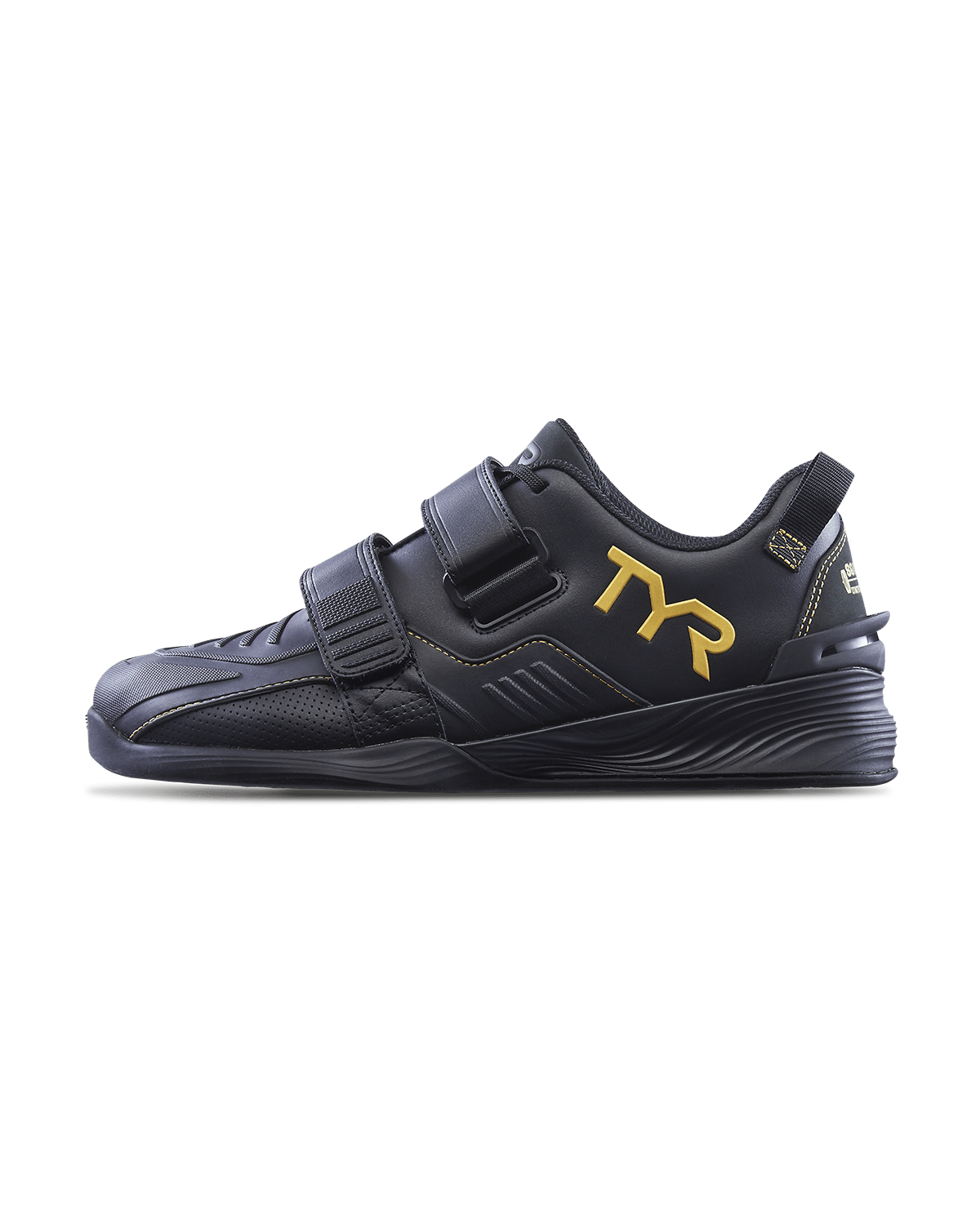
TYR L-2 Lifter
Best for Wide FeetQuick specs
- 21mm heel drop, rigid TPU heel
- Dual straps, reinforced forefoot with a rubber toe guard
- Wide anatomical toe box
- Best for wide feet, squats and Olympic lifts
The shoe that finally took wide feet seriously. A patented wide toe box built with a physiotherapist, on top of a platform solid enough for the heaviest squats.
Summary of experience, tests & opinions
What I like
- If you’ve spent years having your toes crushed in narrow lifting shoes, the first squat in these is a small revelation. Your foot spreads and grips the floor the way it’s supposed to.
- There’s a grounded, planted feel to a wide base that a narrow shoe just can’t give you, quite apart from the comfort. You sit into a squat and the whole foot is working.
What I don’t
- The leather-blend forefoot wants a short break-in before it feels moulded. The first week is a touch stiff across the top.
- They’re a faff to travel with. Heavy and boxy, they dominate a gym bag, so mine end up living at the home gym rather than coming with me.
Pros & cons
Pros
- The widest toe box of any serious lifting shoe.
- A rigid TPU platform that holds firm under the heaviest squats.
- The second version fixes the durability niggles of the first.
Cons
- Heavy and rigid, useless outside the weight room.
- Premium price, and far too roomy for narrow feet.
Read more about the TYR L-2 Lifter
TYR is better known for swimwear, which makes this the surprise of the category. They built the shoe around one idea the big brands ignored for years: let wide feet actually splay. The toe box is noticeably wider than anything else here, designed with a well-known squat physiotherapist, and for anyone who’s suffered in a narrow last the difference is night and day.
Under that toe box sits a serious platform. The rigid TPU heel holds firm under squats well past 600lb without a hint of compression, and the 21mm drop flatters lifters with stubborn ankle or hip mobility. This is no soft, forgiving wide shoe; it’s a tank that happens to fit real feet. The second-generation build is worth having too: the reworked forefoot and added rubber toe guard cure the outsole-peeling that dogged the original.
Width is a specialist’s feature, not a universal upgrade. Narrow feet will swim in it, and like the pure lifters it’s heavy and rigid, so it stays in the weight room. One sizing tip: if you need even more room, go up a half size and pull the insole out. A merely medium foot is better served by the Powerlift 5.
On fit for genuinely wide feet, it’s in a class of its own here:
Bottom line
The clear answer for wide feet: a genuinely wide toe box on a serious, rock-solid platform. Heavy, specialist, and far too roomy for narrow feet, but a revelation for the feet it’s built for.
They might be for you if… you have wide feet and squat or Olympic lift seriously.
They’re not for you if… you have narrow feet, where the Romaleos or Adipower fit better, or you want one shoe for lifting and WODs.
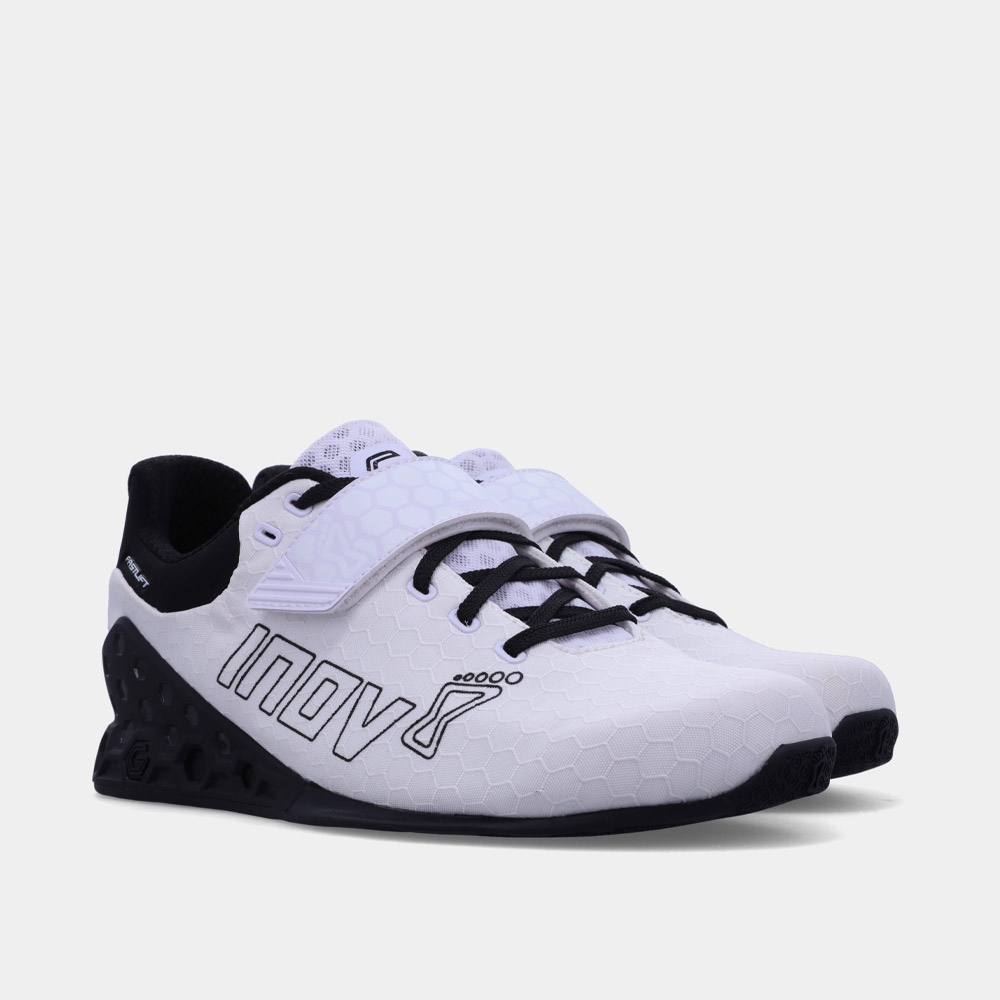
Inov-8 Fastlift Power G 380
Best for CrossFit / WODsQuick specs
- 22mm heel drop, graphene-reinforced foam heel
- Single midfoot strap, ripstop upper
- Lightest shoe here, flexible forefoot
- Best for lifting mixed with WODs
The shoe for lifters who won’t own two pairs. A raised, stable heel for the barbell work, and a forefoot flexible enough to survive the burpees.
Summary of experience, tests & opinions
What I like
- You forget you’re wearing a lifting shoe until you squat, and then the heel is there. Light and quick through a metcon, planted the moment there’s a bar on your back.
- The forefoot moves with you. Drop into a burpee or a box jump and the shoe bends where a pure lifter fights you, which is the whole reason to own it.
What I don’t
- One strap where the pure lifters have two. It’s fine, but on a max squat you notice you’d like a touch more lockdown across the midfoot.
- They breathe and drain sweat well, which is lovely, but the flip side is they feel less substantial underfoot. Some lifters just want more shoe.
Pros & cons
Pros
- The only pick here that genuinely handles WODs and heavy lifting.
- Lightest shoe on the list by a clear margin.
- Graphene heel gives stability without the weight.
Cons
- A touch less planted than a pure lifter at maximal loads.
- Premium price for a do-two-jobs shoe.
Read more about the Inov-8 Fastlift Power G 380
Most lifting shoes are hopeless the moment you step off the platform: the rigid, blocky forefoot that’s perfect under a squat turns a burpee or box jump into a fight. This one solves that with a flexible forefoot, so it lifts like a proper shoe and still lets you move.
The clever part is the heel. Instead of a solid TPU block, Inov-8 reinforces light foam with graphene, holding you steady under the bar without the weight a pure lifter carries. The result is comfortably the lightest shoe here, far lighter than the anchored Legacy Lifter IV, yet still a full 22mm of drop, as tall as the dedicated Olympic shoes.
Here’s the trade it makes against a pure lifter, side by side:
| Fastlift Power G | Pure lifter | |
|---|---|---|
| Forefoot | Flexible | Rigid |
| Weight | Lightest here | Heavier |
| Max squat | Very good | Best |
| Burpees & jumps | Handles them | Miserable |
The medium fit comes up true, and the toe box stays supple enough to move in, which is exactly what a rigid lifter can’t offer. If you only ever lift, and lift heavy, a dedicated pure lifter serves you better: set against the Romaleos at a maximal squat the Nike simply plants you harder, and the single midfoot strap here concedes a little lockdown next to a dual-strap shoe.
Nothing else here comes close to doing this many jobs:
Bottom line
The one shoe here that genuinely does two jobs: a stable raised heel for the barbell and a flexible, feathery build for the conditioning. The trade is a fraction of top-end squat stability and a premium price.
They might be for you if… your sessions mix heavy lifting with WODs and you want a single pair.
They’re not for you if… you only lift and want the most planted platform, where the Romaleos or Legacy Lifter IV win.
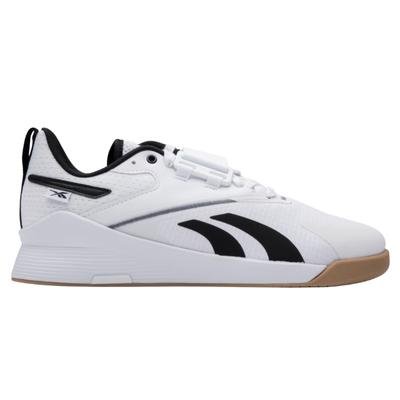
Reebok Lifter PR III
Best BudgetQuick specs
- 15mm heel drop, high-density EVA heel
- Single midfoot strap, breathable textile upper
- Medium fit
- Best for beginners on the tightest budget
The cheapest way into a proper lifting shoe. Low-drop, breathable and surprisingly stable for the outlay, and often the least expensive shoe here by a distance.
Summary of experience, tests & opinions
What I like
- They wear like a normal trainer, so you can warm up, lift and potter around the gym without swapping shoes. For a beginner easing into lifting footwear, that everyday feel is reassuring.
- They come up true to size and need almost no breaking in, which for a budget shoe is more than you’d expect.
What I don’t
- After months of heavy use the upper looks tired sooner than a pricier shoe, even while it keeps doing the job.
- The low heel that suits beginners can feel like not quite enough if your ankles are stiff and you want every millimetre of lift.
Pros & cons
Pros
- The lowest price in the lineup, often well under the rest.
- Stable and capable well beyond what the price suggests.
- Breathable, comfortable, and easy to wear.
Cons
- EVA heel lacks the rigidity of a TPU platform under heavy loads.
- Availability can be patchy across sizes and colours.
Read more about the Reebok Lifter PR III
If your budget is tight and you just want to know whether a raised heel helps your squat, this is where to start. It shares the low 15mm drop of the Powerlift 5, undercuts almost everything here on price, and still gives you a firm-enough heel and a locked-down strap. For a shoe this cheap, our team rated the stability surprisingly high; the raised heel does a real job rather than paying lip service to one.
This and the Powerlift 5 are near-twins: both low-drop, EVA-heeled, single-strapped and budget. The choice comes down to which fits your foot better and whichever is cheaper the day you buy. The Reebok runs a medium fit and, like its adidas rival, isn’t cut for genuinely wide feet.
One caveat from our testing: stock can be patchy across colours and sizes, so check yours is actually available before you set your heart on a pair.
On everyday comfort and how easy it is to just wear, the low drop and airy upper put it top:
Bottom line
The cheapest genuine lifting shoe worth owning: stable beyond its price, low-drop and breathable. The EVA heel is the ceiling, and stock can be patchy, but for a first pair on a budget it’s hard to beat.
They might be for you if… you want a real lifting shoe for as little as possible, or you like a lower, walkable heel.
They’re not for you if… you squat near-maximal and want a rigid TPU platform. Step up to the Romaleos or Legacy Lifter IV.
Other lifting shoes we considered
A few shoes come up a lot in this conversation without earning a place on our ranked list. Here’s why, and where they fit.
- Flat and deadlift shoes. For deadlifts you want the exact opposite of a raised heel, so a flat, zero-drop shoe keeps you balanced over the middle of your foot as the bar leaves the floor. A dedicated deadlift slipper does this cheaply, and plenty of lifters just pull in socks. Adidas makes a purpose-built deadlift shoe if you want one.
- Nike Savaleos. Nike’s lighter, softer and cheaper lifting shoe. It’s a real step down in stability from the Romaleos 4, but a sensible mid-budget pick if you want the Nike fit without the top-tier price and don’t squat truly heavy.
- Converse and Vans. The classic budget hack. Their flat, firm soles make a surprisingly good platform for low-bar squats and deadlifts, which is why you see them under barbells in every powerlifting gym. What they can’t do is give you the raised heel that helps a high-bar or Olympic-style squat.
Everything on the ranked list is a genuine raised-heel weightlifting shoe. If a flat shoe is what you’re really after, buy for that on purpose rather than settling for a soft trainer.
How to choose a lifting shoe
Do you actually need weightlifting shoes?
Honestly, plenty of lifters don’t. If you’re a beginner lifting moderate weights, or you mostly train for general fitness, a flat and firm shoe is fine, and research suggests the raised heel helps experienced lifters more than novices. Where a lifting shoe earns its place is when squats and the Olympic lifts become a serious focus, or when tight ankles stop you reaching depth in flat shoes. Think of it as a tool that unlocks better positions rather than a requirement for touching a barbell.
Heel drop: how much do you want?
Heel height is the first real decision. A lower drop around 15mm keeps you closer to the floor and suits shorter lifters, high-bar squatters, and anyone with good ankle mobility. A higher drop around 20 to 22mm tips your shin further forward and helps taller lifters, low-bar squatters, and anyone who struggles to hit depth. If your ankles are stiff and your squats feel blocked, lean towards the taller heel. If you already squat comfortably deep, a lower drop keeps you grounded.
Get the fit and width right
This is where most buyers end up disappointed, so measure your foot properly rather than trusting your usual trainer size, and check it against each brand’s own chart, because they all fit differently. You want a snug, locked-in feel with about a thumb’s width at the toe, never a cramped one. If you have wide feet, don’t fight a narrow last hoping it will stretch. Buy a shoe built wide, like the TYR L-2, and if you still need room, size up half a size and pull the insole out.
Weightlifting shoes vs CrossFit shoes
These get muddled constantly, and it matters. A true weightlifting shoe has a purposely raised, rigid heel, a locked-down midfoot strap, and a dense, incompressible sole, all built to keep you planted under a heavy barbell. A CrossFit or cross-training shoe is flatter, softer, and more flexible so it can run, jump and climb. Many “best lifting shoe” lists quietly mix the two together. This guide is raised-heel lifting shoes, with the Inov-8 Fastlift as the one hybrid for lifters who genuinely have to do both.
The bottom line
For most lifters with narrow-to-medium feet, the Nike Romaleos 4 is the shoe to buy. It has the most stable platform we tested and the lockdown to match, and it does the core job of a lifting shoe better than anything else here.
After that, match the shoe to your feet and your training. Wide feet should go straight to the TYR L-2. Beginners and tight budgets are brilliantly served by the Powerlift 5 or the Lifter PR III. Lifters who mix barbells with WODs want the Fastlift, and committed Olympic lifters with narrow feet will love the Adipower 3. Whatever you pick, get the fit right first. The best platform in the world is no good in a shoe that pinches.
Lifting shoe FAQs
Do weightlifting shoes actually help your squat?
For most lifters, yes. The raised heel lets your knees travel further forward and your ankles bend more, so you hit depth with a more upright torso and less strain on your lower back. That usually means a more comfortable, balanced squat, especially if your ankle mobility is limited or you have long legs. They won’t add plates to your bar overnight, but they fix the positions that a flat shoe fights against.
Do beginners need weightlifting shoes?
Need is a strong word. A beginner can train perfectly well in flat, firm shoes and add lifting shoes later as the weights climb and squats become a focus. That said, there’s no rule against starting in them, and a raised heel can make learning to squat deep noticeably easier if your ankles are stiff. Treat them as a useful tool rather than a day-one requirement, and buy once you know you’ll squat and Olympic lift seriously.
What heel height should a lifting shoe have?
Most sit between 15mm and 22mm. A lower drop around 15mm suits shorter lifters, high-bar squatters and anyone with good ankle mobility. A higher drop around 20 to 22mm helps taller lifters, low-bar squatters and anyone who struggles to reach depth. If you’re unsure and your ankles are tight, lean higher. The heel is there to unlock positions your body can’t reach on its own, so match it to how your squat actually looks.
Are weightlifting shoes good for deadlifts?
No, and this is the one lift where they work against you. The raised heel tips you forward, which is the opposite of what you want when the bar starts in front of your body. For deadlifts you want a flat, zero-drop shoe, a dedicated deadlift slipper, or even socks. Plenty of lifters keep a pair of lifting shoes for squats and the Olympic lifts and switch to something flat the moment they pull from the floor.
What is the difference between weightlifting shoes and CrossFit shoes?
A true weightlifting shoe has a purposely raised, rigid heel, a locked-down midfoot strap and a dense, incompressible sole, all built to keep you planted under a heavy barbell. A CrossFit or cross-training shoe is flatter, softer and more flexible so it can handle running, jumping and rope climbs. Many roundups blur the two. This list is raised-heel lifting shoes, with one hybrid pick for lifters who genuinely need to do both.
