

Choosing the right pec deck machine is no small task, and I’d know.
With over 20 years of experience owning and running a commercial gym, I’ve tested just about everything on the market.
This guide is the result of two full weeks of hands-on testing and head-to-head comparisons across the best pec deck machines on the market.
Me and my team reviewed 51 pec deck machines in total.
The six that made it to the top of this list represent the best options available today.
Whether you’re after the best overall value, a money-no-object premium option, a budget-friendly pick, or you’re still figuring out what suits you best, this article has your needs covered.
Looking to improve your home gym?
Once you’ve found the perfect pec deck machine, keep on with the good work!
Have a look at our guides to the best all-in-one home gyms and the best short power racks, or get the fundamentals down with building your dream home gym from the ground up.
Let’s dive right in!
Compare the 6 best pec deck machines
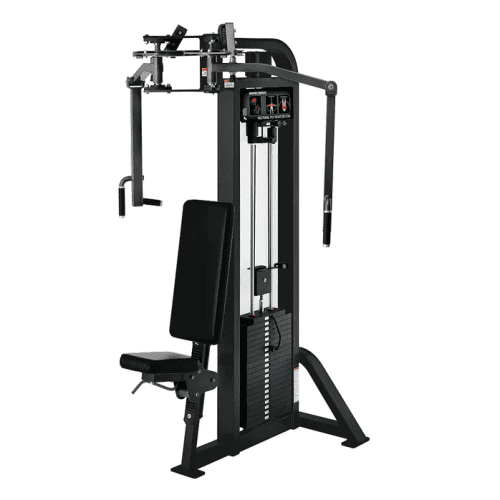 Hammer Strength Pectoral Fly/Rear Deltoid
Check price
Hammer Strength Pectoral Fly/Rear Deltoid
Check price
|
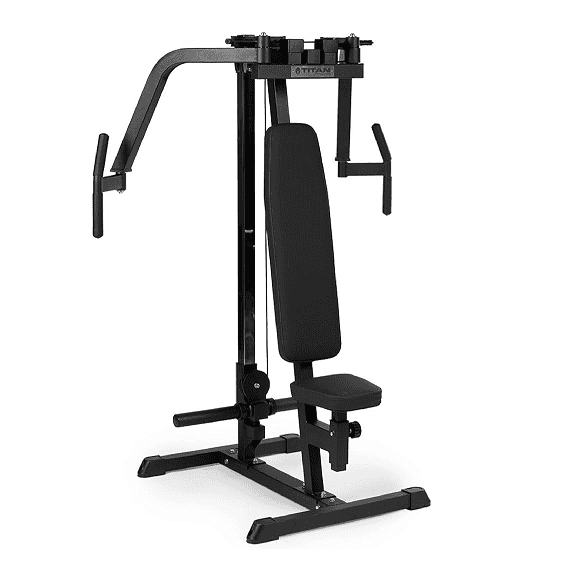 Body-Solid Plate-Loaded Pec Machine
Check price
Body-Solid Plate-Loaded Pec Machine
Check price
|
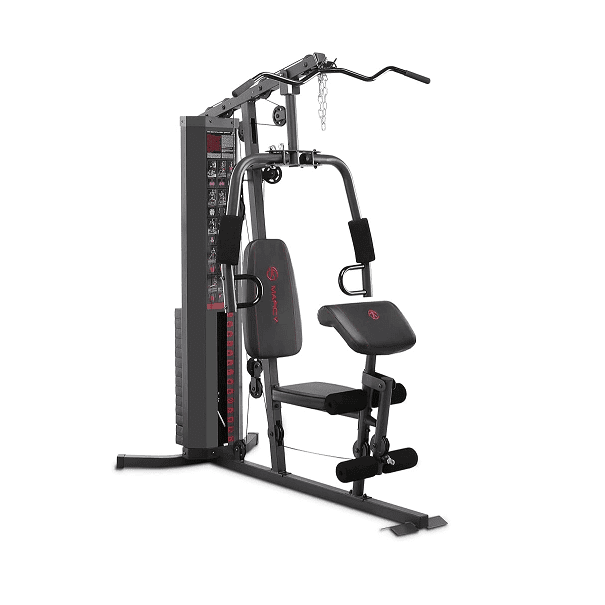 Marcy Multifunction Machine
Check price
Marcy Multifunction Machine
Check price
|
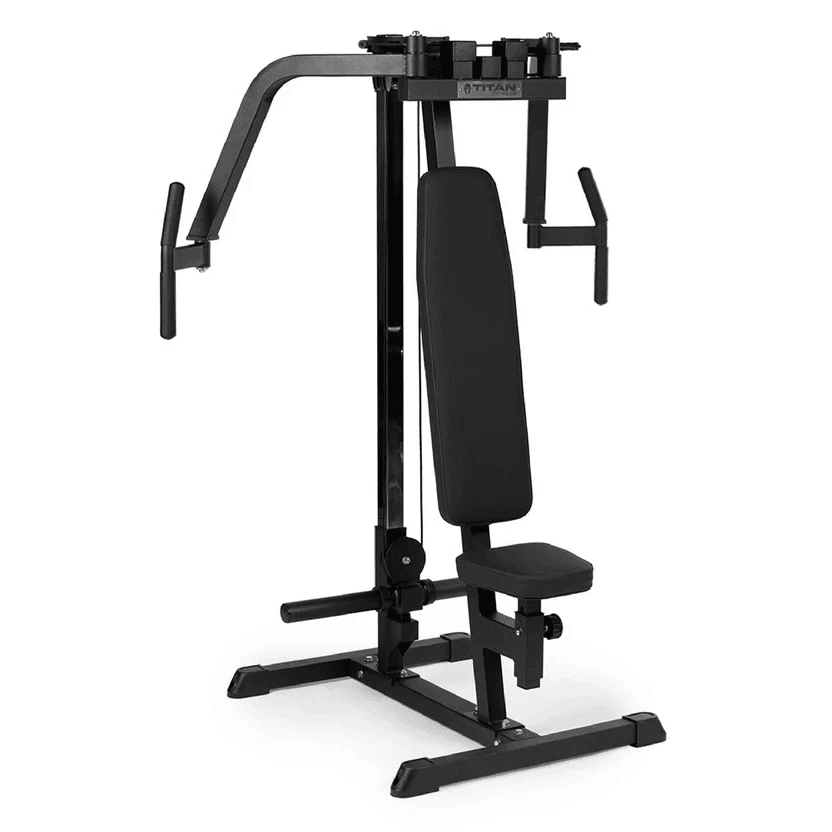 Titan Fitness Plate-Loaded Pec Fly Machine
Check price
Titan Fitness Plate-Loaded Pec Fly Machine
Check price
|
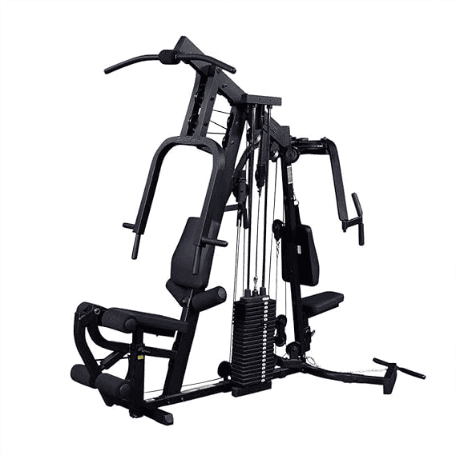 Body-Solid EXM3000LPS
Check price
Body-Solid EXM3000LPS
Check price
|
||
|---|---|---|---|---|---|---|
| Best for | Overall | Money-no-object | Budget | Most Versatile | Standalone Machine | Multifunction |
| Rating (*) | ||||||
| Quality | 94% | 96% | 74% | 74% | 81% | 88% |
| Pec deck rating | 91% | 91% | 82% | 79% | 80% | 78% |
| Versatility | 83% | 85% | 73% | 86% | 74% | 86% |
| Brand reputation & reviews | 94% | 94% | 82% | 78% | 74% | 75% |
| Compactness | 84% | 79% | 90% | 85% | 88% | 72% |
| Value for money | 84% | 78% | 74% | 82% | 88% | 90% |
| Type | Selectorized | Selectorized | Plate-loaded | Selectorized pulley | Plate-loaded | Selectorized multi-station gym |
| Movement type | Dual-function (true pec deck + reverse delt) | Dual-function (true pec deck + reverse delt) | Dual-function | Multi-function | Dual-function | Multi-function |
| Gauge steel | 11 | 11 | 11 | 14 | 12 | 11 |
| Weight capacity (lbs) | 262.5 (weight stack) | 295 | N/A (unlimited within plate load limit) | 150 | Unlimited within plate load (~300) | 420 |
| Max user weight (lbs) | 300 | 300 | 300 | 300 | 400 | Not specified |
| Machine weight (lbs) | 543 | 580 | 91 | 260 | 91 | 550 |
| Width (") | 75 | 56 | 54 | 42 | 28 | 73 |
| Length (") | 61 | 49 | 42 | 68-89 | 32 | 91 |
| Height (") | 81 | 71 | 66 | 79 | 65 | 83 |
| Fold footprint (sq ft) | 31.8 | 48.7 | 15.75 | 19.8-23.1 | 15.8 | 44.5 |
| Warranty | 10 yr frame;5 yr pulleys/plates/guide rods;1 yr bearings/cables/grips | 10 yr frame; 5 yr parts; 1 yr upholstery/cables | Lifetime frame & welds; Lifetime bushings, bearings, hardware; 3 yr bushings & hardware (commercial); 1 yr upholstery & grips | 2-year limited parts warranty | 1 yr limited warranty | Lifetime warranty for residential settings |
| Price | $$ | $$$ | $$ | $ | $ | $$ |
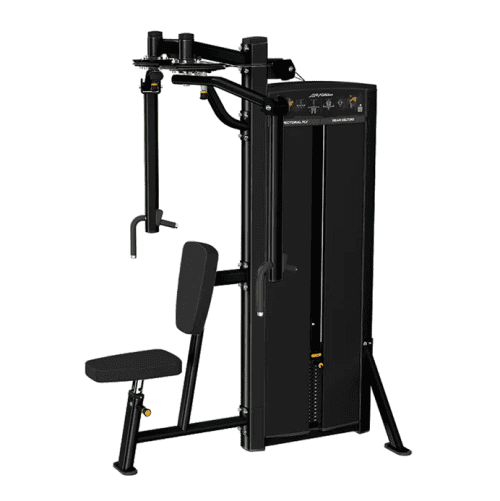 Life Fitness Axiom
Our testing and selection process
How we rated the pec deck machines
We always use a 5-step process in our reviews:
- We start as the buyer - for example, I have my commercial gym – MyGym. Inside MyGym, I own a wide range of equipment, and we are constantly testing and gathering experience.
- We do a ton of research – we collect information on as many pec deck machines as possible and insert it into a spreadsheet.
- We rate each pec deck machine using our exclusive ‘weighted’ rating system. You can learn more about this in the section below.
- Our top picks are driven by data, not personal bias or individual preferences about what makes a great pec deck machine.
- We get our hands on as many of the top picks as possible. Our community is great at helping with this.
You can read more about this process in our review guidelines.
How we test and score the pec deck machines
Choosing the best pec deck machine shouldn’t be a guessing game – and in our case, it isn’t.
We combine data from hands-on testing, in-depth research, specs verification, and user input to rate each machine across six key criteria.
These criteria reflect what truly matters in a home or garage gym – from performance and build quality to space efficiency and value.
We don’t just pick what looks good – we scrutinize every detail so that you get recommendations grounded in function, not fluff.
To keep things transparent, here’s a breakdown of the scoring criteria and how each contributes to the final grade:
Quality (25%)
Build quality is non-negotiable.
Whether you’re training to failure or just getting in some light volume work, the machine must feel solid, stable, and smooth.
We assess everything from frame gauge and welds to upholstery and joint integrity – because quality is what keeps the machine tight after years of reps.
Build of the frame – steel gauge and cross-section of a pec deck/fly
The gauge (thickness) of steel used for your average pec deck machine is in the 12 to 14 range (lower means thicker).
The 11-gauge steel makes the machine more expensive, heavier, and usually rated for commercial use.
The second part of the stability equation is the cross-section of the frame. All the machines we looked at are in the 4-9 square inches range here.
Less of a factor than with other machines
Gauge and cross-sections are about stability rather than durability.
You’re not bending anything here - the more important factor is the quality of the joints/bolts.
In terms of stability, chest flies are less demanding on a machine compared to stuff like lat pulldowns.
No one in their right mind is doing flies vigorously.
Bottom line – 4+ square inches of 12 or 13-gauge steel is good enough for a pec deck machine. Even 14-gauge is not a deal-breaker.
ROM and biomechanically accurate geometry
ROM (range of motion) is rarely a problem for chest flies.
It’s the rear-delt fly that can be a problem.
There are good machines (like the Titan PEC) that should go deeper on the delt fly.
And it’s not overly complicated.
It’s a simple matter of having one more hole on the sundial up top.
If you get the Titan and feel like you’re not getting full ROM on the reverse fly, just drill one more hole.
I know…I hate paying for stuff and working on it immediately, but you might have to..
Biomechanically accurate geometry
This sounds more complicated than it is.
Here’s a summary - geometry-wise, the best pec deck machine is the one that allows for perfect movement.
Now, what’s a perfect movement on chest flies?
Below are a few key rules and how they translate to machine geometry.
Movement rule: Keep your back flush with the bench and keep your shoulders back.
What it means for the machine: Bench height is adjustable.
Movement rule: Don’t go back 2-3 inches past the neutral T line. Going further back puts too much stress on your rotator cuff.
What it means for the machine: The sundial adjustments on the front fly don’t go too far back.
Movement rule: Keep your knees apart (8-12 inches, depending on what feels stable). This gives you a proper base, keeps the core active, and reminds you not to lean in.
What it means for the machine: The bench is well-padded and adjustable.
Movement rule: Keep your elbows down to take the neck and shoulder muscles out of the exercise.
What it means for the machine: The bench is adjustable and just wide enough to meet your shoulder blades, but not restrict the movement.
You still have to consciously keep your shoulders back, especially if you’re working to failure, as the instinctive reaction is to lean in and help.
Note: Rotating handles help if you’re exceptionally tall or short but aren’t a must. Some of the best pec deck machines have fixed handles.
Capacity of the machine – maximum resistance and user weight
For most lifters, anything over 200 lbs will be high enough for the pec deck and chest flies.
If the stack is 200 lbs, it will give you 100 pounds of resistance because of the pulley ratio (more on that in a minute).
The problem with the product sheets
If you just go to the product page and look for “maximum capacity,” you can get confused or, at worst, misled.
Here’s how…
The maximum capacity of a pec deck machine is often mixed in with other pieces of data in the specs:
It can mean:
- The maximum weight you can use on the pec deck/delt fly
- Maximum user weight
- User weight combined with the plates
- Combined maximum weight from different stations
We need the first one to make things uniform and the ratings fair.
So we took our time to extract one specific bit of data.
Bottom line - if you’re shopping outside our list, make sure the language describing the capacity is precise, and you fully understand what you’re getting.
Pulley ratio and actual weight capacity
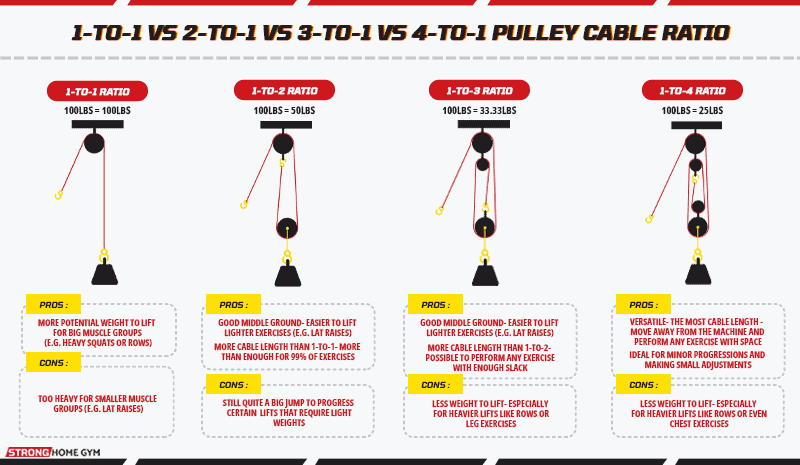
These machines use cables to transfer resistance.
All the good ones have a 2:1 ratio, which means that a 200-lb stack translates to 100 pounds of resistance.
Below is an image that clearly explains how the pulley ratio works.
Pec deck rating (20%)
Not all machines deliver the same chest engagement.
We evaluate how well each machine isolates the pecs, the biomechanical accuracy of the movement, and whether it offers true pec deck geometry or only a chest fly path.
The goal here is simple: maximum pec activation with minimal joint stress.
Type of machine – true pec deck, chest fly, or both
You’ll see the terms pec/chest fly and pec deck used interchangeably.
The movement is similar, but the differences are significant.
To get straight to the point, below is an image of the two - the left is a chest fly machine, and the right is a pec deck.
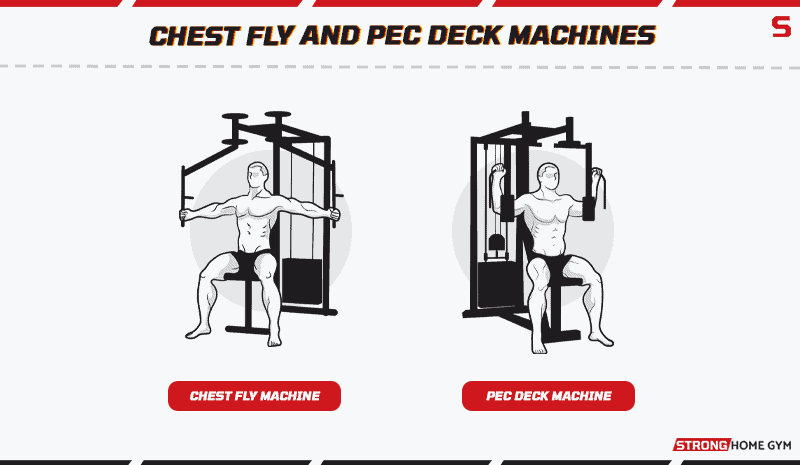
I’ll refer to the latter as a “true pec deck machine” in this guide.
The main difference between the two is the range of motion.
A pec deck machine allows for a greater range of motion toward the finish of the movement. At that moment, the elbow distance is minimal…if there weren’t for the pads and frame, your elbows would touch.
Chest fly machines allow for a greater range of motion at the start because there’s no rotation in the humerus (upper arm), and the elbows point backward.
What this means for you
The pec deck engages the fibers in the inner pecs more and isolates the chest muscles better - because you can’t bring your shoulder in as you tire.
That’s also why you can lift more on the pec fly.
Chest flies stretch the muscle more, isolate it less, and allow for greater overload. The overload can translate to growth, which is not a forte of the pec deck.
Bottom line:
- Pec deck is better for inner pecs and isolation.
- Chest fly is better for outer pecs and growth.
There are machines that include both, which is the case with our top pick.
Unilateral and bilateral chest workout machines - overhyped if you ask me
“Unilateral and bilateral” refers to whether you can move one hand of the machine separately.
People talk about it as if they’re doing it every day.
Nobody does it.
Yes, it engages the obliques, but there are smarter ways to do that.
A safety plus
The one advantage of bilateral mechanisms is the safety of getting into position.
You can pull one arm at a time before sitting.
Granted, you can do that even if the mechanisms weren’t separate…it just wouldn’t be as easy.
Bottom line - the differences here are marginal, and any good best pec deck machine allows for separate movement.
That makes it a moot point.
Reverse delt-fly and chest/bench press station
Nine out of ten times, a pec deck machine will be a combo with a rear-delt fly.
All the standalone pec deck machines also feature a rear delt-fly station.
On the multipurpose home gym units, the reverse fly is sometimes sacrificed to the Gods of versatility…to make “room” for chest presses.
Not often, but sometimes.
It’s theoretically possible to have all three on one pair of handles, but making that machine well would cost more.
Here’s what that means for you…
You need to decide which of these is a must-have: pec deck, chest press, and chest fly.
If they’re all in the group, go for a chest-oriented machine like the Body-Solid EXM3000LPS, which has a separate pressing station.
Alternatively, go for one of the home gyms with a Smith bar and a bench press, like the Marcy Smith cage.
Versatility (15%)
Most buyers don’t want a one-trick pony.
Whether it’s a built-in rear delt station, adjustable range of motion, or bonus exercises beyond chest, we reward machines that offer more utility per square foot, especially in smaller home gyms.
Type of weight – plates or weight stack
If you have the budget, go with the selectorized weight-stack machines.
Which is better?
We balance our rating formulas to include both because the plate-loaded models are cheaper, but in terms of convenience, there’s no comparison.
It’s a bigger factor with pec deck machines than with other cable machines.
Why?
Because a pec deck/flies are primarily finishing (or pre-fatigue) exercises. So, you might use them for burnout or drop sets.
In this scenario, loading and unloading fractional plates will get old really fast.
If this sounds like you, do yourself a favor, spend more, and get a good weight-stack machine.
Thank me later.
Versatility beyond the chest muscles – stations for other muscle groups
One of the first decisions to make when choosing a pec deck is whether you have the space and money for a standalone unit.
For most people, it’s a numbers and priorities game.
- Do you already have a cable and Smith machine?
- Do you have a leg press/extension?
- If you don’t, which of these is your priority exercise?
Pay special attention to the last question because a standalone machine will be better 8 out of 10 times.
For example…
If legs are a priority, get a good standalone leg extension/curl machine and pay no attention to the flimsy leg attachment you see on a pec deck machine (and most of them are indeed flimsy).
There‘s no way for me to be perfectly precise here, but you get where I’m going with this…
Note about our ratings: There is no one category in our ratings that awarded points for “versatility.” That would be too general.
We went granular and awarded points for the presence/absence of specific stations like a leg curl or Smith machine.
Brand reputation & reviews (10%)
Brand trust doesn’t come from marketing – it comes from consistency.
We factor in each brand’s track record, customer support, warranty backing, and industry reputation.
The best machines come from companies that know the home gym market inside out.
Compactness (15%)
Great equipment is only great if it fits your space.
We consider the machine’s footprint, required clearance for movement, and overall maneuverability.
It’s not just about what the specs say – it’s about how much space you genuinely need to train comfortably.
Size – footprint and height of a pec deck machine
The footprints of pec deck machines are in the 6-25 range for the standalone units.
Plate-loaded models like Titan have a small footprint (just over 6 square feet), but you’ll need space to maneuver around them when loading and unloading.
Footprint vs. space used
Plus, the listed footprints don’t account for the space needed to actually use the machines.
In the outermost part of the movement, the distance between the handles of a pec flye machine will be in the 65-75 range.
That changes the math for you
The width from the specs (graph below) is still useful, but only for floor space.
To create enough separation from other pieces in your gym, work with these two rules:
Add 15-20 inches behind the machine for plate-loaded units.
Use 75 inches for width instead of the one in the specs.
Value for money (15%)
A solid pec deck machine doesn’t have to break the bank. We weigh the price against features, construction, and overall usability.
Machines that deliver serious chest training without a bloated price tag get rewarded here, as do those that justify a higher price with premium features.
Price
A standalone pec deck/fly machine can run from entry-level budget territory all the way up to serious commercial-grade money. It’s a big spread, which is exactly why we weigh price against build, features and usability rather than just chasing the cheapest unit.
The question of price ties into the previous points, three above all others:
- Plates vs. weight stacks
- Versatility
- Standalone or multipurpose
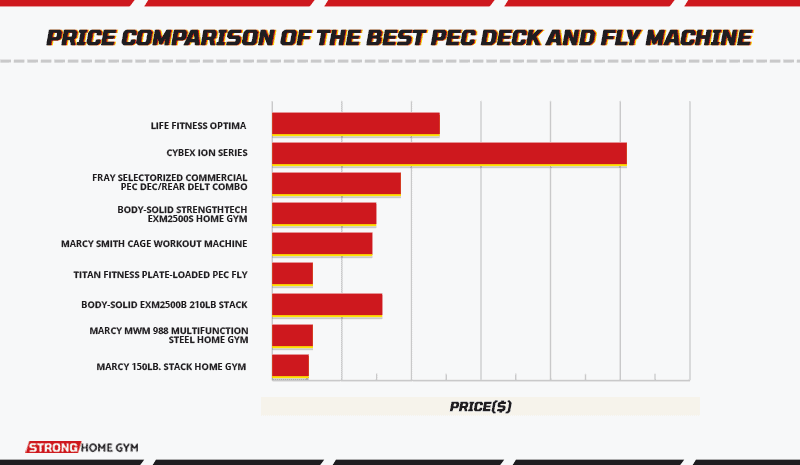
Below is a reference graph comparing the prices of our 20 top-rated pec deck and fly machines.
Warranty terms
The best pec deck machines are backed with a Lifetime warranty on the frame, padding, and parts.
Those are the terms that Body-Solid offers for the EXM3000LPS.
But that’s an exception.
In the home-gym price range, you get 1-3 years of coverage, and that’s good enough.
Bonus tip: Stay away from the pec deck machines that offer a 90-day warranty on the frame or something along those lines.
Yes…no matter how cheap.
Find the best pec deck machine for you
Best Overall | Money-No-Object | Budget | Most Versatile | Standalone Machine | Multifunction
Here’s how all six machines stack up on our overall score:
Life Fitness Axiom
Best Overall Pec Deck MachineQuick specs
- Machine type: Selectorized
- Movement type: Dual-function (true pec deck + reverse delt)
- Fold footprint (sq ft): 31.8
This sleek, dual-function pec/rear delt machine brings commercial-grade quality and buttery-smooth movement into a compact unit built to last a lifetime.
Summary of experience, tests & opinions
Main praises - what I like
- The motion feels exactly like the machines in premium gyms – ultra-smooth and natural.
- I love the dual-function design – it’s like getting two elite machines in one footprint.
- Adjustment is super intuitive – switching between chest and rear delt work takes seconds.
Main grievances - what could be better
- It’s not cheap – definitely a long-term investment.
- Would love to see an option for custom weight stack upgrades out of the box.
Pros & cons
Pros
- Commercial-grade build with 262 lb selectorized weight stack
- Smooth, natural motion for both pec and rear delt work
- Quick-adjust arms and seat for seamless switching
- Compact footprint for its class
- Premium brand with trusted reliability
Cons
- Pricier than plate-loaded alternatives
- Assembly and delivery logistics may take time
Read more about the Life Fitness Axiom
If you’re after a commercial-grade pec deck that fits nicely into a no-nonsense home gym setup, this machine might be your new favorite.
It brings together high-end design, dual-functionality, and smooth-as-butter mechanics – all in a relatively compact footprint.
This machine doesn’t just look good; it feels like the machines in high-end commercial gyms… because it is.
Let’s break it down.
Quality
This is Life Fitness we’re talking about – a brand that’s been in pro gyms, college facilities, and top-tier hotels for decades.
The build is rock-solid, using high-grade materials, with attention to detail in every weld and cable.
The steel frame is powder-coated for durability and resistance to scratches, rust, and everyday gym abuse.
Weight stack? 262 lbs of selectorized goodness, offering plenty of resistance for fly and rear delt work.
And here’s the kicker: the movement trajectory is very natural.
Smooth cams, ergonomic handles, and adjustable arms make it feel just right, whether you’re isolating the pecs or torching your rear delts.
Convenience
I love a 2-in-1 machine, especially for home gyms where space is a premium.
This unit handles both chest fly and rear delt fly exercises with just a quick arm and seat adjustment – no tools, no drama.
The selectorized stack means no messing about with plates. Just pin and go.
And since it’s part of the Axiom line, it’s been designed with intuitive use in mind – great for solo training and family gyms where not everyone is a gym bro (yet).
Value
Now, this isn’t the cheapest option on the market – but it’s not trying to be.
What you’re paying for here is:
- Commercial-grade engineering
- A trusted brand
- Dual-function space-saving design
- And an aesthetic that won’t make your home gym look like a scrapyard
It’s definitely an investment, but if you want a pec/rear delt combo that will last for decades (and probably outlive your squat rack), this is it.
It tops our overall score by a clear margin:
Bottom line
If you’re looking for the best overall pec deck machine currently on the market, this is it.
The Life Fitness Axiom nails everything that matters: build quality, smooth performance, dual-function versatility, and long-term reliability.
It’s the kind of machine that makes you forget you’re training at home… until you realise there’s no line to use it.
If you’re after a true lifetime pec deck machine that will anchor your home gym for years, this is the one.
Hammer Strength Pectoral Fly/Rear Deltoid
Premium Pec Deck MachineQuick specs
- Machine type: Selectorized
- Movement type: Dual-function
- Fold footprint (sq ft): 48.7
A heavy-duty, dual-function pec/rear delt machine with unmatched stability and biomechanical precision, designed to take on serious volume in any commercial or high-end home gym.
Summary of experience, tests & opinions
Main praises - what I like
- The resistance feels consistent throughout the entire motion – zero dead zones.
- Hammer Strength lives up to the hype – this thing is built like a tank.
- Love the heavy stack – it pushes even advanced users without maxing out.
Main grievances - what could be better
- It takes up a ton of space, so make sure you’ve got the real estate.
- Costs more than most single-station machines – you’re paying for commercial-grade.
Pros & cons
Pros
- 295 lb weight stack delivers serious resistance potential
- True dual-function design for both chest and rear delts
- Smooth, biomechanically sound range of motion
- Adjustable arms with clearly marked pivot points
- Legendary Hammer Strength durability
Cons
- Very large footprint – not ideal for tight spaces
- Premium commercial price point
Read more about the Hammer Strength Select Pectoral Fly / Rear Deltoid
Suppose you’re looking for a seriously rugged, dual‑function pec/rear delt machine that offers top-tier biomechanics and elite-level durability. In that case, you’ve found it.
This one’s built like a tank and engineered to excel in a busy gym – or a serious home setup.
- The machine weighs in at a beefy 580 lb (263 kg) – solid footprint, minimal wobble under load;
- It features a 295 lb (138 kg) selectorized weight stack, allowing ample resistance progression and smooth transitions between fly and rear delt movements;
- Built from 11-gauge steel with military-spec cables and sealed‑bearing pulleys, this unit is designed to withstand serious volume year after year.
- Cushioned, double-stitched pads with radius edges ensure comfort, while instructional placards and alignment markers guide correct form
With the Hammer Strength pec deck machine, you can switch seamlessly between pec fly and rear delt movements without touching a single tool.
The pivoting arm design and well-placed handles mean there’s no need to adjust the seat mid-session – it’s quick, smooth, and intuitive.
Despite its commercial footprint, the machine is surprisingly user-friendly.
Even if someone’s never touched gym equipment in their life, they’ll figure this out in a minute.
That makes it a solid pick for home gyms shared by multiple users or fitness-focused families.
Yes, it sits firmly at the premium end – but you’re not just paying for a brand name.
You’re getting rock-solid construction, buttery-smooth mechanics, and two machines rolled into one.
It’s the same quality trusted by pro training facilities, just made more accessible for residential use.
From someone who’s run a commercial-grade home gym for years, this thing is built to last.
The movement is natural, the build is over-engineered in the best way, and your joints will thank you, whether you’re grinding through hypertrophy sets or chasing strength PRs.
If you want a pec/rear delt combo machine that performs flawlessly, looks the part, and holds up to a lifetime of abuse, this one delivers.
Hammer Strength leads the field on build quality:
Bottom line
The Hammer Strength Select is a top-shelf pec/rear delt machine made to perform under pressure, year after year.
It’s unapologetically big, bold, and built for lifters who train hard and heavy.
If you’ve got the budget and floor space, this is a no-compromise machine that delivers on all fronts.
Body-Solid Pec Machine
Budget Pec Deck MachineQuick specs
- Machine type: Plate-loaded
- Movement type: Dual-function
- Fold footprint (sq ft): 15.75
A no-nonsense plate-loaded pec fly machine that keeps things simple, sturdy, and surprisingly smooth for its price point.
Summary of experience, tests & opinions
Main praises - what I like
- It’s compact, quiet, and does exactly what it’s supposed to.
- Adjustable ROM makes a big difference – easy to dial in the stretch.
- Great value for a dual-function chest and shoulder machine.
Main grievances - what could be better
- Not ideal if you want quick weight changes mid-set.
- Could use thicker backrest padding for longer sessions.
Pros & cons
Pros
- Great pec deck (pec fly) - full ROM*, smooth motion, rotating handles.
- Separate chest press station.
- Optional leg press station (doubles the resistance).
- Well-built and stable - 12-gauge steel.
*Range of Motion
Cons
- Assembly instructions should be better (no text).
- Bigger and pricier than standalone pec deck machines.
- Single stack.
Read more about the Body-Solid Plate-Loaded Pec Machine
If you want to save money and already own a barbell and weight plates this is the machine for you.
You simply add your weight plates to add resistance.
It doesn’t have a “selectorized weight stack,” which is how these types of machines are significantly cheaper than the options above.
If you already have a home gym set up then this could be a great option.
It’s also really great as you can use fractional plates to be really specific about the progress you make, rather than needing to rely on whatever the plates increments are.
It’s ideal if you’re new to lifting.
Instead of needing to jump from 20 lbs to 30 lbs (a 50% increase), you can increase by 5 lbs or less depending on what plates you have available.
The downside to these types of machines is usually they are small. If you’re over 6 foot 2” I would highly recommend one of the first two picks.
If you’re looking to get a great bang for your buck and maximize the use of space when getting a pec deck, this is the machine for you.
The low weight is a large concern (in fact, scrap that - it’s a shame), but the build quality, versatility, and warranty save the day.
Its slim footprint puts it ahead on compactness:
Bottom line
This Body-Solid pec deck machine is a reliable choice for lifters who want plate-loaded simplicity without sacrificing function.
It’s not flashy, but the independent motion and adjustability punch above its weight.
A smart pick for home gym owners or budget-conscious buyers who still want targeted pec and rear delt work.
Marcy Multifunction
Most Versatile PickQuick specs
- Machine type: Selectorized pulley
- Movement type: Multi-function
- Fold footprint (sq ft): 19.8-23.1
A beginner-friendly all-in-one home gym station that includes a pec fly mechanism, making it ideal for newcomers building a full-body setup on a tight budget.
Summary of experience, tests & opinions
Main praises - what I like
- Excellent starter option for full-body training at home.
- Pec fly station adds genuine chest isolation to a generalist setup.
- Easy-to-use selectorized stack is perfect for beginners.
Main grievances - what could be better
- Flys aren’t as smooth or adjustable as on standalone units.
- More serious lifters may outgrow the resistance and build quality.
Pros & cons
Pros
- Great value for money - costs less than most standalone pec decks.
- True pec deck station (not chest flies) with good ROM.
- Versatile - you can work the whole upper body and most major muscle groups.
- Includes a solid Smith machine (linear bearings).
Cons
- No rear-delt fly and chest press.
- The guiding mechanism is basic.
- Powder coating is average.
Read more about the Marcy Multifunction Home Gym Weight Stack Machine
For a full and clear understanding of what’s better about the pec deck machine on the Marcy Smith cage, we need to go three layers deep:
- Compare it to similar machines that feature chest flies (instead of a true pec deck).
- Compare it to similar machines with true pec deck stations.
- Compare it to standalone pec deck machines.
1 - Compared to similar machines with chest flies
Compared to most machines we’ll look at today (chest flies), a true pec deck will give you better isolation of chest muscles.
That’s because the rotation in the forearm position practically excludes the front delt.
Moreover, the range of motion is greater towards the end, and your elbows almost touch.
That allows you to squeeze in some more contraction of inner chest muscles, especially if you consciously make it happen.
Simply put, it’s all pecs on this one.
2 - Compared to similar machines that feature a true pec deck
Complete units like this that feature a true pec deck are few.
The direct competitors fall into three groups - they’re:
- More expensive.
- Not as versatile (usually missing a Smith bar).
- Of lesser overall quality.
Finally, the higher-end of all-in-one has no pec deck station. You can see our guide on the best all-in-one home gyms here.
The multi-station design gives it the highest versatility score:
Bottom line
If you’re looking for a cost-effective way to get full-body workouts at home, with pec fly functionality built in, the Marcy 150lb Home Gym delivers solid value.
It won’t match a commercial fly machine, but for casual users or those just starting, it hits all the basics.
Expect functional versatility over specialization, and solid returns for the price.
Titan Plate-Loaded Fly Machine
Best Standalone Pec DeckQuick specs
- Machine type: Plate-loaded
- Movement type: Dual-function
- Fold footprint (sq ft): 15.8
A no-frills pec fly machine with a solid frame and smooth motion, built for home gym lifters who value simplicity and strength.
Summary of experience, tests & opinions
Main praises - what I like
- Simple, tough, and focused – great for lifters who want chest flys without fluff.
- Price-to-build-quality ratio is impressive.
- Feels stable and secure during use.
Main grievances - what could be better
- No deltoid or press options – this is a single-function station.
- It could use more adjustability for advanced biomechanics.
Pros & cons
Pros
- Full ROM on the pec deck (rotating handles, 360 degrees).
- Gentle on the home gym budget.
- Small footprint.
- Thick, stable frame - 12-gauge steel.
- Good padding/upholstery - much better than previous versions.
Cons
- ROM on real-delt flies could/should be better.
Read more about the Titan Fitness Plate-Loaded Fly Machine
The Titan Fitness is the best pec deck machine (chest fly, to be precise) that’s well within most home gym budgets.
One of the last Mohicans
The standalone machines are typically better in their niche than machines that do it all.
For example, a dedicated rower will hit better than a low row on any all-in-one.
Why?
Because of the freedom to tweak the angles until they’re just right for that one exercise.
The problem with that is two-fold - money and space.
Here’s what I mean…
Standalone chest fly and pec deck machines are typically made for commercial gyms.
So, they’re big, and they’re expensive.
The Titan PEC Fly is designed to be the solution to those two problems…or at least as close to a solution as it gets.
It’s not perfect, but it’s much better than the previous version.
The padding and upholstery can’t be compared to the flimsy pleather used to cover the thin spongy seat and backrest.
The Vinyl cover feels firm, almost premium.
And I’d say the foam got an upgrade too.
They don’t say it in the specs, but it feels like high-density foam.
Kudos for that.
Plate-loaded value pushes it near the top on price-to-value:
Bottom line
If the word ‘basic’ could be summed up in an image, it’d look like the Titan Fitness Pec Deck. But you know what, that’s no problem at all.
They’ve stripped out the unnecessary here, and what you’re left with is a great product.
This Titan costs about 10-20% of what you’d pay for fly or pec deck machines from commercial brands.
On the other hand, machines of this type and quality level cost about 50% more.
It’s a great deal that won’t disappoint… as long as you’re aware of the imperfections.
Body-Solid EXM3000LPS
Multifunction PickQuick specs
- Machine type: Selectorized multi-station gym
- Movement type: Multi-function
- Fold footprint (sq ft): 44.5
A compact, all-in-one gym with pec deck, chest fly, and press capabilities, designed for everyday lifters who don’t need heavy resistance.
Summary of experience, tests & opinions
Main praises - what I like
- Users consistently highlight the convenience of having multiple upper-body chest stations in one unit and the smooth feel of the pec deck arms. I agree with them.
Main grievances - what could be better
- Some stronger users find the resistance too low for presses or flyes, and note that the machine’s size, though compact for its category, is still large for tight spaces.
Pros & cons
Pros
- Versatile chest station - pec deck, flies, and presses.
- Cheap.
- Compact - press station, not separate.
Cons
- The weight stack is too small for most serious lifters.
Read more about the Body-Solid EXM3000LPS
If you’re using over 210 lbs for chest presses or flies on a machine, this IS NOT the machine for you.
If you’re not, you’ll love this one.
Its main advantage is the versatility of the chest station in a compact design.
Let me clarify…
Machines that house three chest movements (pec deck, fly, press) are:
- Bigger because the press and fly stations are separate (like our top pick)
- More expensive.
Body-Solid did a smart thing here
They gave up on a whole chunk of the home gym market - those who lift heavy.
For them, the stack will only be heavy enough for the classic pec deck.
This machine focuses on people for whom the 210-lb stack (105 lbs actual resistance) is enough.
For a home-gym stack machine, its pec-deck score holds up well:
Bottom line
If you’re not lifting heavy, this Body-Solid is a solid space and money-saver.
My concern is that most lifters (men especially) will outgrow this machine in a short period of time, so think long and hard about whether it’s for you.
For many people, it’ll be worth spending the extra.
How we created this list of best pec deck machines
Here are our criteria on how we picked these pec deck machines, and what we looked for:
- Quality (25%)
- Pec deck rating (20%)
- Versatility (15%)
- Brand reputation & reviews (10%)
- Compactness (15%)
- Value for money (15%)
You can find out all about our selection process here.
Other pec deck machines we analyzed
- Powertec standalone pec deck - most people won’t even remember, but Powertec used to carry a standalone pec deck machine. It was one of my favorites while they were making it, which was about a decade ago. I checked all the regular spots for used stuff (eBay and the like), and this one disappeared like a ghost.
- Steelflex Chest and Rear Deltoid Fly - awesome eye candy and one of my all-time favorites. Too expensive for most home gyms, though.
- Legend Fitness Pec Deck (model 901) - another great machine that fell short because of its price. It’s unique to the market in two ways - it’s made in the USA, and you can choose the colors.
- Freemotion Pec Fly / Rear Delt - a legendary piece from a legendary maker. The most expensive machine we looked at for this guide. You can buy half a gym for the price of this baby.
Frequently Asked Questions
Do pec deck machines work?
Yes, pec deck machines work as long as you choose one that gets the geometry right, like the Life Fitness Axiom.
Pec deck is the runner-up in both measured muscle activation and perceived exertion in this 2012 study that compared 8 chest exercises (second only to a bench press).
The capacity for overload isn’t high, so it’s not a mass builder, but it’s great for isolating the pectoral muscles.
What does the pec deck work?
Pec deck works the whole chest area, with emphasis on the lower and inner chest.
The Pectoralis major is the primary mover, with the pectoralis minor and serratus anterior playing a significant supporting role.
A version of it (pec-fly machine, like the Titan) also engages the front shoulder muscles, biceps, and lats.
Finally, if you do one arm at a time, you’ll also hit your oblique as they kick in to stabilize the core and keep the spine safe.
Are pec decks safe?
Yes, pec decks are safe as long as you choose a good machine like the Body-Solid EXM3000LPS and perform the movement correctly.
One group that should be extra careful is those with pre-existing shoulder problems.
If you allow for uncomfortable overextension on the pec deck, it can exacerbate or even cause shoulder impingement.
The bottom line
I started working on this guide on a cold Monday morning about two weeks ago.
It was complicated to separate the wheat from the chaff because of all the different types of machines and the confusing lingo.
But I feel like we did a good job.
Here’s a quick resume…
The best value among chest fly/pec deck machines is the Life Fitness Axiom. They created a pec deck machine targeting the pectoral muscles with unparalleled precision.
It worked, and it worked well.
If you want a standalone machine, go with the budget-friendly Titan Plate-Loaded Pec Fly Machine or the Marcy Multifunction Machine.
Pick the money-no-object Hammer Strength Pectoral Fly/Rear Deltoid if you’re ready to spend more on a peck deck machine.
If you’re still unsure, click here to get back to the top picks table.
