

Rogue makes a huge range of racks, and the hard part isn’t quality, it’s choosing. We scored Rogue’s whole rack line and picked the 8 best, sorted by the job you actually want done.
I’ve built home gyms around Rogue racks for years, and they’re as good as the reputation says, which is exactly why it’s easy to overspend on more rack than you need. The team ran the full range through our weighted scoring, so these picks come from specs, owner reports, and hands-on time, not the Rogue logo.
The goal was simple: cut through the model names, flag which versions are current, and match you to the right rack for your space, your budget, and the way you lift.
Let’s see how they stacked up…
Editor's note · updated June 17, 2026
We rebuilt this guide for 2026. Nothing in Rogue’s line was discontinued, but the versions moved on, so the old guide read as dated.
What changed:
- Monster Lite power racks are all on Power Rack 3.0 now (RML-390, 390C, 490, 690), and the Monster racks are on 2.0 (RM-3/4/6). We’ve labelled them correctly throughout.
- The premium pick is now the RM-6 Monster 2.0, a six-post Monster, up from the old RM-4 hero.
- The R-3 has been renamed to the Bolt-Together R-3 on Rogue’s site, but it’s the same value cage and still our budget pick.
- The RML-390F Flat Foot is still current and stays our overall pick: it’s freestanding, so you don’t have to bolt it down.
Related
We’ve tested racks from most brands over the years. For the best racks across all brands, see our best squat racks guide. Want the same steel for less? Our best REP Fitness racks covers Rogue’s closest value rival. And to load it, see our best Olympic barbells.
Compare the best Rogue Fitness racks
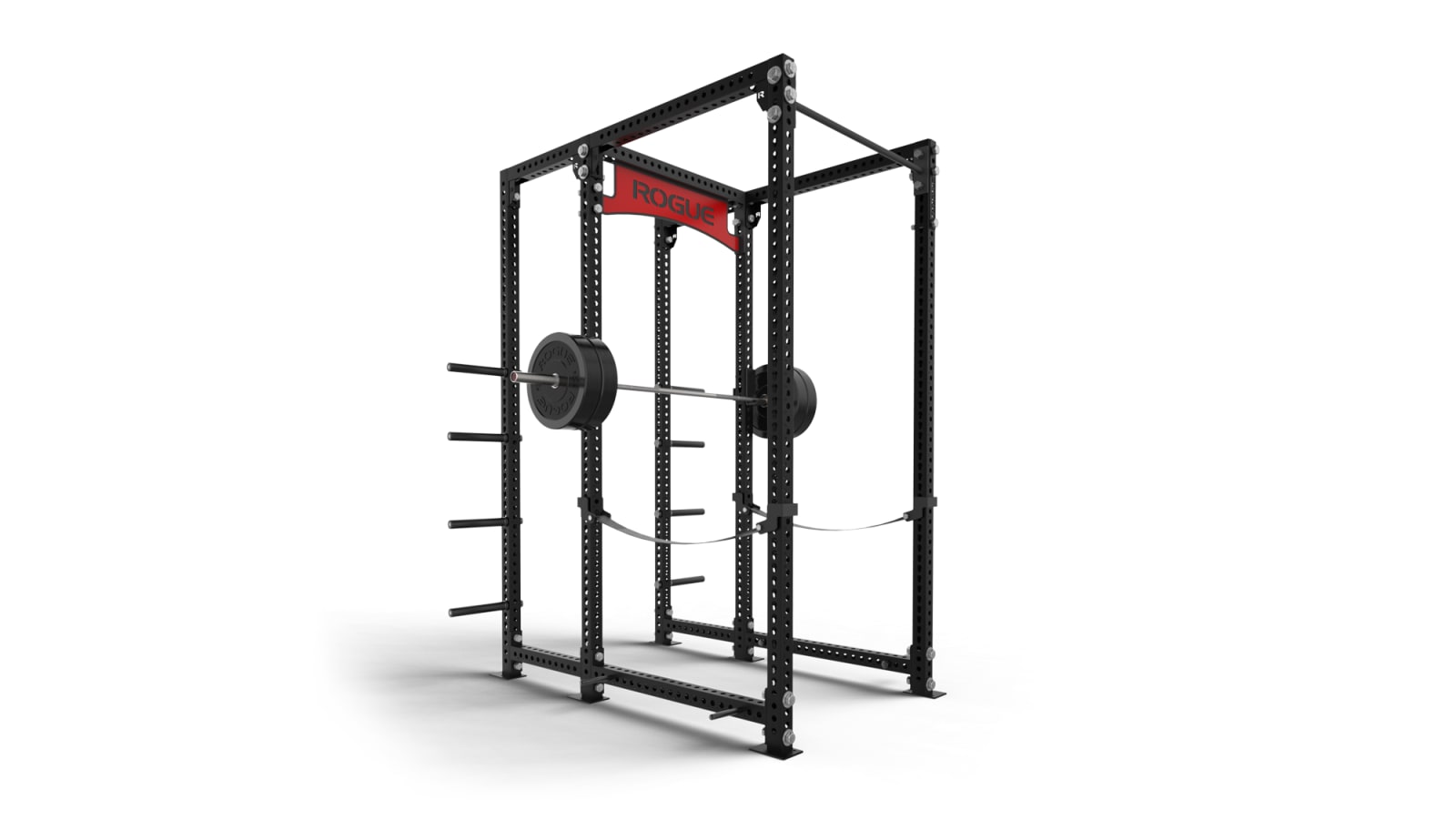 Rogue RM-6
Check price
Rogue RM-6
Check price
|
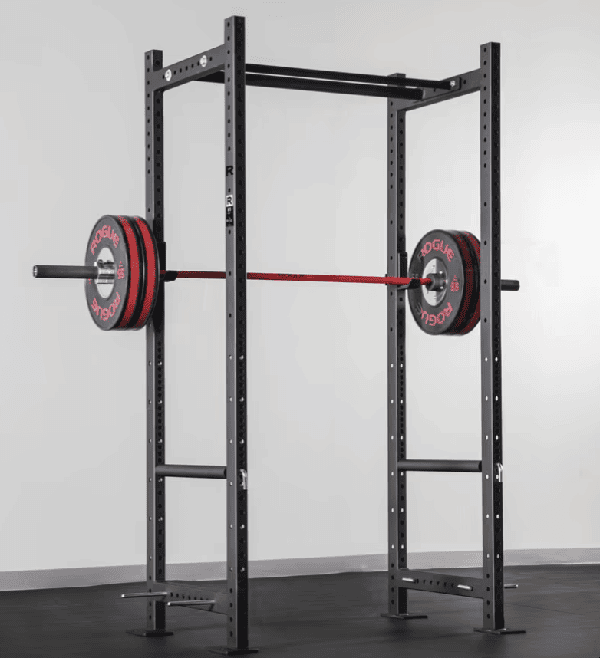 Rogue R-3
Check price
Rogue R-3
Check price
|
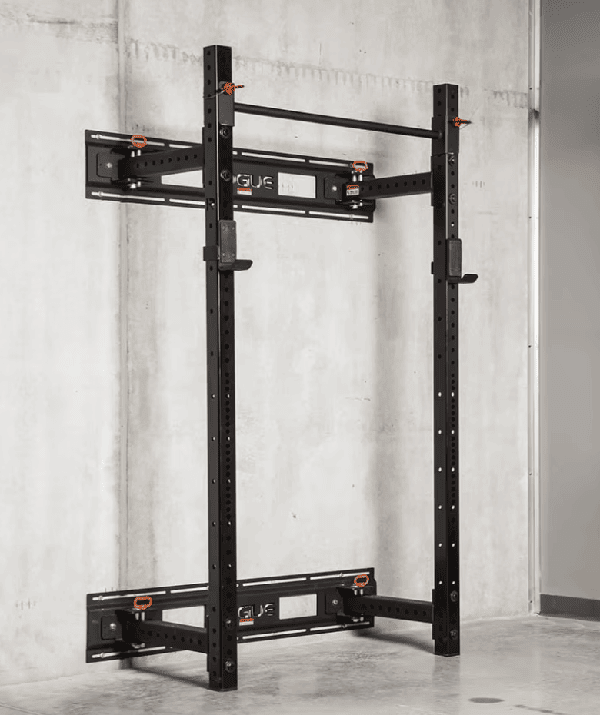 Rogue RML-3WC
Check price
Rogue RML-3WC
Check price
|
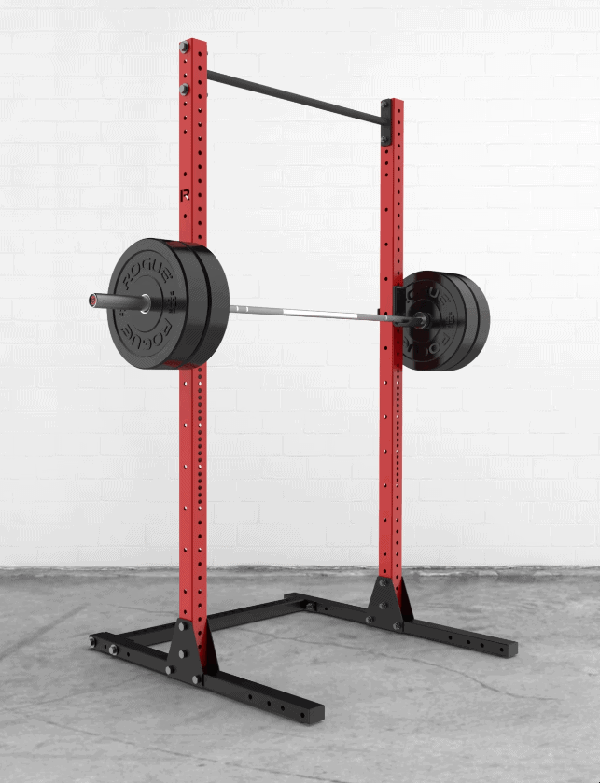 Rogue SML-2C
Check price
Rogue SML-2C
Check price
|
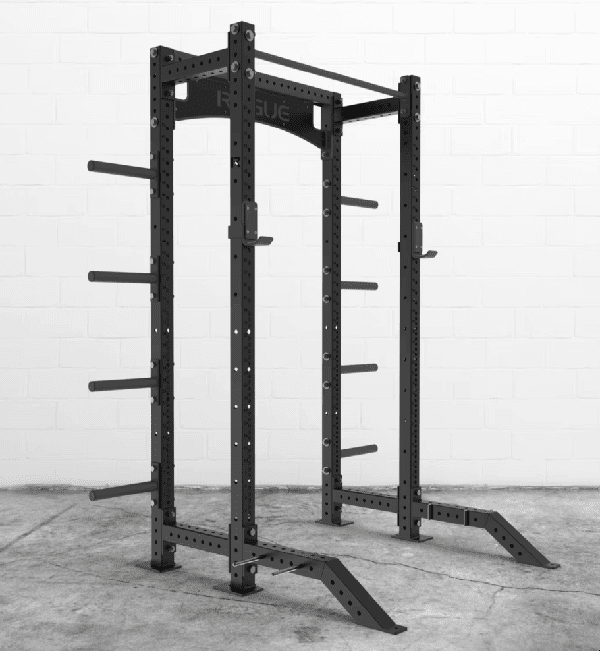 ML Half Rack
Check price
ML Half Rack
Check price
|
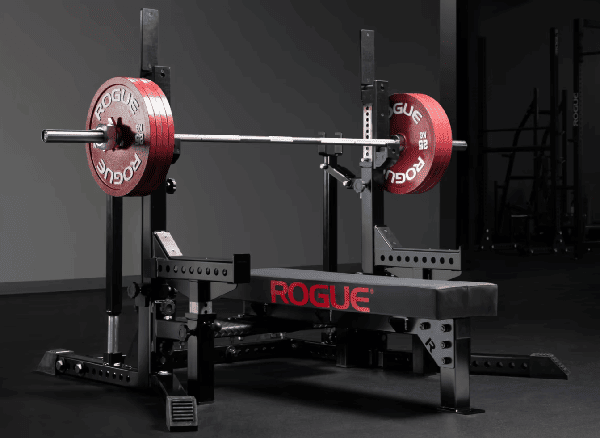 Rogue Combo Rack
Check price
Rogue Combo Rack
Check price
|
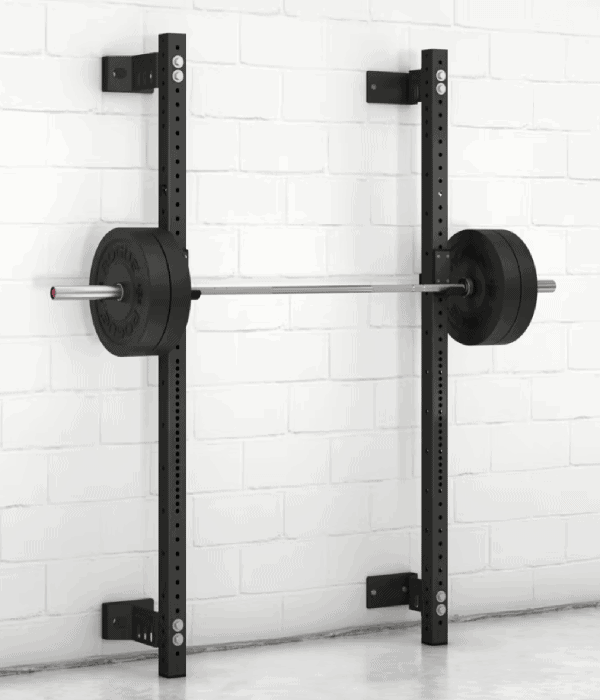 Rogue RML-90SLIM
Check price
Rogue RML-90SLIM
Check price
|
||
|---|---|---|---|---|---|---|---|---|
| Best for | Overall | Premium | Budget | Folding | Squat stand | Half rack | Powerlifting | Slim space |
| Rating (*) | ||||||||
| Build & capacity | 90% | 96% | 82% | 86% | 88% | 90% | 94% | 80% |
| Versatility | 90% | 94% | 80% | 74% | 78% | 84% | 70% | 72% |
| Footprint & space | 86% | 76% | 84% | 96% | 88% | 88% | 78% | 94% |
| Value | 92% | 80% | 94% | 84% | 84% | 84% | 78% | 86% |
| Price | $$ | $$$ | $$ | $$ | $$ | $$$ | $$$ | $ |
| Tier | Monster Lite | Monster | Infinity | Monster Lite | Monster Lite | Monster Lite | Comp | Monster Lite |
| Steel | 3x3" 11ga | 3x3" 11ga | 2x3" 11ga | 3x3" 11ga | 3x3" 11ga | 3x3" 11ga | 3x3" 7ga | 3x3" 11ga |
| Hardware | 5/8" | 1" | 5/8" | 5/8" | 5/8" | 5/8" | Lever-jack | 5/8" |
| Feet / mount | Flat-foot | Bolt-down | Bolt-together | Wall-mount | Flat-foot | Bolt-down | Free-standing | Flat-foot |
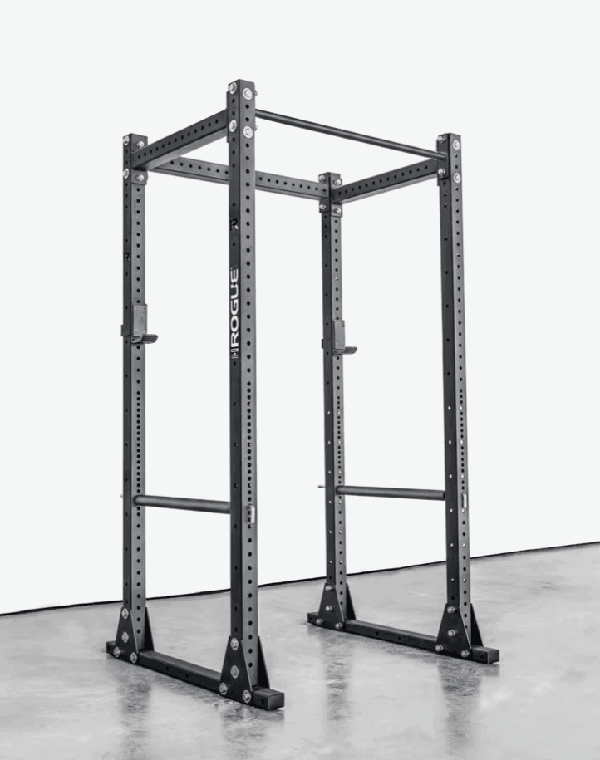 Rogue RML-390F
Our testing and selection process
How we assess Rogue Fitness racks
We run every rack roundup through the same 5 steps:
- We start as the buyer. Most of our team has owned a Rogue rack, and I’ve assembled and trained on a fair few of them. We know how the steel and welds feel under a heavy bar.
- We research wide. We pull specs, capacities, hole spacing, current versions, and owner feedback on the whole Rogue range into one spreadsheet.
- We score each rack with our weighted system. Data decides the ranking, not how loud the Rogue hype is.
- We split the field by job, because a Monster cage and a folding wall-mount are bought for completely different gyms.
- We get hands-on where we can and lean on the SHG community for the rest.
You can read more about the process in our review guidelines.
How we score Rogue Fitness racks
Here’s what feeds the score and how much each part counts. Build leads, because a rack is the one piece of kit that absolutely has to hold.
We grouped it into four weighted factors:
- Build & capacity (30%) - steel size and gauge, hardware size, welds, and honest weight rating.
- Versatility (25%) - the attachment ecosystem, hole spacing, pull-up bars, and room to grow.
- Footprint & space (20%) - height, depth, folding, and whether it suits a tight room.
- Value (25%) - what you actually get for the money, levelled across Rogue’s range.
Build & capacity (30%)
A rack lives or dies here, and it’s where Rogue is strongest. We weight steel size (Rogue’s 2x3” Infinity vs 3x3” Monster lines), gauge, the hardware (5/8” on Monster Lite, oversized 1” on Monster), and the welds.
Rogue’s racks are laser-cut and welded in Ohio, and the consistency shows. Even the budget R-3 feels planted. The Monster RM-6, with its 1” hardware and six posts, is the most rigid rack in the whole lineup.
Versatility (25%)
The squat is the headline, but the best racks do far more. We score the attachment catalogue (Rogue’s is the deepest in the industry), the Westside hole spacing, and the pull-up options.
This is a Rogue strength too. The Monster and Monster Lite ecosystems are vast, so almost anything you’d want to bolt on exists, from cable systems to dip bars to storage. The trade-off is that Monster and Monster Lite attachments don’t cross over, so pick your tier with the long game in mind.
Footprint & space (20%)
Most cages stand around 90 inches and need real floor space. Height, depth, and folding ability matter as much as the cage itself when the room is tight.
A folding RML-3WC hands the garage back when you’re done, the RML-90SLIM tucks into a shallow footprint, and the flat-foot racks free you from drilling into the floor.
Value (25%)
We build a quality-adjusted picture of price within Rogue’s own range. Rogue is a premium brand, so a rack only scores well here if it earns its place against its Rogue siblings. The flat-foot RML-390F and the R-3 are where the value sits; the Monster racks cost more for refinements most home lifters won’t use.
Find the perfect Rogue rack for you
Overall | Premium | Budget | Folding | Squat stand | Half rack | Powerlifting | Slim
Here’s how the eight racks stack up on our overall score:
Rogue RML-390F Flat Foot
Best OverallQuick specs
- Monster Lite 3x3” 11-gauge steel
- 5/8” Westside hole spacing
- Freestanding flat-foot base, no bolting
- ~1,000 lb capacity
Rogue’s Monster Lite steel in a freestanding frame you don’t bolt down. The right Rogue rack for almost every home gym and every renter.
Summary of experience, tests & opinions
What I like
- The flat-foot base is the whole reason this is my pick. You get a full Monster Lite rack that doesn’t need bolting to the floor, so renters and anyone with a nice garage slab can train heavy without drilling a single hole.
- It’s the Monster Lite sweet spot. 3x3” steel and Westside hole spacing put it in the same tier 90% of buyers should be in, without the price jump to full Monster.
- Plug it straight into Rogue’s enormous Monster Lite attachment catalogue and it grows for years.
What I don’t
- A flat-foot rack leans on its footprint and loaded plate horns for stability rather than bolts, so under the very heaviest drops it isn’t quite as planted as a bolted-down RML-390C.
- It’s Rogue, so it costs more than a comparable REP rack. You pay for the steel, the finish, and the name.
Pros & cons
Pros
- Freestanding flat-foot design means no drilling, ideal for renters.
- Full Monster Lite 3x3” steel and Westside hole spacing for precise bench safeties.
- Access to the deepest attachment ecosystem in the industry.
Cons
- Marginally less rock-solid than a bolted cage under maximal loads.
- Premium Rogue pricing versus value brands with similar steel.
Read more about the RML-390F
The RML-390F wins this guide because it removes the one friction point that stops a lot of people buying a Rogue cage: bolting it down. The flat-foot base means you can put a serious rack on a rented floor or a finished slab and never touch a drill.
Its closest sibling is the bolted RML-390C 3.0. The 390C is fractionally more planted because it anchors to the floor, and it’s the one to pick if you have a dedicated space and don’t mind drilling. For everyone else, the freestanding 390F gives up almost nothing and opens the rack up to far more homes. That flexibility, on top of Rogue’s build, is what takes it to the top.
The RML-390F leads our weighted overall score:
Bottom line
The RML-390F is our top Rogue rack for three reasons:
-
No bolting required. A full Monster Lite rack you can stand on any floor, renter-friendly and drill-free.
-
The right tier for most people. 3x3” steel and Westside spacing, without paying for full Monster you won’t use.
-
Rogue build and ecosystem. Made-in-USA steel and the deepest attachment catalogue going.
The RML-390F might be for you if… you want a serious Rogue rack without drilling into the floor.
It’s not for you if… you want the most rock-solid bolted cage (look at the RM-6) or the cheapest full cage (the R-3).
Rogue RM-6 Monster Rack 2.0
Best PremiumQuick specs
- Monster 3x3” 11-gauge steel, oversized 1” hardware
- Six-post footprint, the most stable Rogue makes
- 80-108” upright height options, made in Ohio
- 11 powder-coat finishes plus stainless
Rogue’s beefiest rack. Six posts, 1” hardware, and the most planted feel in the lineup. The money-no-object pick.
Summary of experience, tests & opinions
What I like
- The oversized 1” hardware is the headline. It’s the difference between Monster and Monster Lite, and you feel it: this rack does not flinch, even on a hard rep or a dropped lift onto the safeties.
- Six posts make it the most stable rack Rogue sells. It feels like the commercial gym equipment it’s based on, because it basically is.
- The Monster attachment ecosystem is enormous, so you can build it into anything from a cable station to a full rig.
What I don’t
- It’s a big, expensive, bolt-down cage. For a home lifter, most of what you pay for over a Monster Lite rack is rigidity you’ll rarely test.
- The six-post footprint eats serious floor space, so it suits a dedicated room rather than a shared garage corner.
Pros & cons
Pros
- Oversized 1” hardware and six posts, the most rigid rack in Rogue’s range.
- Vast Monster attachment ecosystem and up to 108” of upright height.
- Made in Ohio, with 11 finishes plus a stainless option.
Cons
- You pay a steep premium for rigidity most home gyms never need.
- Large footprint, best bolted to the floor in a dedicated space.
Read more about the RM-6 Monster Rack 2.0
The RM-6 is the rack you buy when you want Rogue’s best and the budget isn’t the deciding factor. It’s the Monster tier’s six-post hero, and it feels every bit the commercial unit.
The honest question is whether you need Monster over Monster Lite. Both use 3x3” 11-gauge steel; Monster adds the oversized 1” hardware and, in the RM-6, two extra posts. That buys rigidity and a deeper attachment line. For a powerlifter chasing big numbers, a coach kitting out a garage gym to last decades, or anyone who simply wants the best, it earns the jump. For most home lifters, the Monster Lite RML-390F does the same lifts for far less, which is the only thing keeping the RM-6 a hair behind it on value.
On pure build, nothing Rogue makes beats it:
Bottom line
The RM-6 is Rogue’s most rigid rack: six posts, 1” hardware, and a commercial feel. It’s the gym-for-life pick, as long as you’ll actually use what the Monster tier buys over Monster Lite.
The RM-6 might be for you if… you want Rogue’s best, you lift very heavy, or you’re building a forever gym in a dedicated room.
It’s not for you if… you want the best value. The RML-390F does the same lifts for far less.
Rogue R-3 Power Rack
Best BudgetQuick specs
- Infinity 2x3” 11-gauge steel
- 5/8” Westside hole spacing
- 53”D x 34”W x 90”H, 1,000+ lb
- Now sold as the Bolt-Together R-3
The cheapest way into a real Rogue cage. Lighter 2x3” steel, but the build, finish, and hole spacing are pure Rogue.
Summary of experience, tests & opinions
What I like
- It’s the cheapest door into Rogue’s world, and it doesn’t feel cheap. Even at 2x3”, the welds and finish are the same Ohio quality as the pricier racks, which is why it’s been a value benchmark for years.
- You keep the Westside hole spacing. A lot of budget cages give that up, so the R-3 lets you set bench safeties precisely, which the price doesn’t suggest.
What I don’t
- The 2x3” Infinity steel is a step down from the 3x3” Monster lines. It’s plenty for a home lifter, but it’s the lighter tier, and Rogue is steering buyers toward 3x3”.
- It now ships as the Bolt-Together R-3, so assembly takes longer than a welded cage, and the standard welded version is harder to find.
Pros & cons
Pros
- Rogue build and finish at the lowest Rogue price for a full cage.
- Westside hole spacing for precise safety placement.
- An honest 1,000+ lb rating, well past home needs.
Cons
- Lighter 2x3” Infinity steel, the budget tier.
- Bolt-together assembly, and the welded version is being phased back.
Read more about the R-3
The R-3 answers the question every Rogue shopper eventually asks: what’s the least I can spend and still get a real Rogue cage? For years the answer has been this rack, and it still holds up.
What you give up versus the Monster Lite picks is steel size. The R-3’s 2x3” Infinity uprights are lighter than the 3x3” used on the RML racks, and Rogue is gently steering buyers up to 3x3”. What you keep is everything that makes a Rogue feel like a Rogue: the welds, the finish, the Westside spacing, and the made-in-USA consistency. For a lifter who wants the brand and a full cage without the Monster Lite price, it’s the value play. If you can stretch, the RML-390F’s 3x3” steel and flat-foot base are worth the jump.
It sits at the very top of our value score:
Bottom line
The R-3 is the cheapest real Rogue cage, with the brand’s build and Westside spacing on lighter 2x3” steel. It now ships bolt-together, so plan for a longer build.
The R-3 might be for you if… you want a genuine Rogue cage on the tightest budget.
It’s not for you if… you want 3x3” steel or a no-bolt design. Step up to the RML-390F.
Rogue RML-3WC Fold Back
Best FoldingQuick specs
- Monster Lite 3x3” 11-gauge steel
- 5/8” Westside hole spacing
- Wall-mounted, folds flat against the wall
- Pull-up bar and J-cups included
A wall-mounted Monster Lite rack that folds flat. The pick for a gym that has to share space with a car.
Summary of experience, tests & opinions
What I like
- It folds flat to the wall, so the same floor is a gym in the morning and a parking spot by lunch. For a shared garage, that’s the whole game.
- It keeps Monster Lite 3x3” steel. A lot of folders feel flimsy; this one squats and benches like a proper Rogue rack because it is one.
What I don’t
- You have to mount it to a solid, stud-backed wall that can take the load. That rules out some rooms and most renters.
- Folding format means you give up the four-post cage and most attachment options, so it’s the least versatile rack here.
Pros & cons
Pros
- Folds flat to the wall, freeing the floor completely.
- Monster Lite 3x3” steel and Westside hole spacing.
- Pull-up bar and J-cups included.
Cons
- Needs a solid, stud-backed wall to mount to.
- Least versatile here: no full cage, limited attachments.
Read more about the RML-3WC
The RML-3WC solves the toughest home-gym problem: no room to dedicate. It bolts to the wall and folds away, so a shared garage works as a gym without giving up the car.
Where it beats cheaper folders is the steel. Rogue used full Monster Lite 3x3” uprights and Westside hole spacing, so the lifting experience is close to a standing rack rather than a wobbly compromise. The catch is in the format. You need a wall that can take the load, and you lose the cage and most attachments. If your space is shared and the wall is solid, nothing frees up the room like this. If you have the floor for a standing rack, you’ll get more from one.
For pure space-saving, it tops the field:
Bottom line
The RML-3WC is the rack for a shared space. It folds flat to the wall and keeps Monster Lite 3x3” steel, at the cost of cage safety, attachments, and the need for a solid wall.
The RML-3WC might be for you if… your gym shares a garage and you need the floor back between sessions.
It’s not for you if… you have room for a standing rack or can’t mount to a stud-backed wall. Look at the RML-390F or RML-90SLIM.
Rogue SML-2C Squat Stand
Best Squat StandQuick specs
- Monster Lite 3x3” 11-gauge steel
- 5/8” Westside hole spacing, 1,000 lb
- Braced triangle base, 49” x 48” footprint
- Fat and skinny pull-up bar, 11 colours
A braced, connected Monster Lite squat stand. The pick when you want Rogue steel and a pull-up bar in a smaller, open footprint than a cage.
Summary of experience, tests & opinions
What I like
- The braced, connected base is the key. Unlike a bare two-post stand, the SML-2C’s triangle feet and cross-bracing keep it planted, so it feels far more stable than its open frame suggests.
- It’s full Monster Lite, not a stripped-down stand. 3x3” steel, Westside spacing, and a fat-and-skinny pull-up bar, in a footprint that fits where a cage won’t.
What I don’t
- It’s still a stand, so you lose the all-sides safety of a cage. You spot off front safeties, which most lifters are fine with, but it matters for heavy solo work.
- For not much more, the flat-foot RML-390F gives you a full cage. The SML-2C only wins if you specifically want the smaller, open footprint.
Pros & cons
Pros
- Braced, connected base that stays planted, unlike a flimsy two-post stand.
- Full Monster Lite 3x3” steel, Westside spacing, and a dual pull-up bar.
- Smaller, open footprint than a cage, in 11 colours.
Cons
- No cage safety; a stand is less secure for heavy solo lifting.
- Priced close to the full RML-390F cage.
Read more about the SML-2C
The SML-2C is the squat stand for someone who wants Rogue steel and a pull-up bar but not a full cage taking over the room. The connected, braced base is what sets it apart from cheaper stands: it doesn’t wobble or walk under a hard rep.
The trade is the one every stand makes. You give up the catch-from-all-sides safety of a cage for a smaller, more open footprint. For most lifters with good form that’s fine, and the wide triangle feet keep it stable. If you train heavy alone and want to bail in any direction, the flat-foot RML-390F is a better home for not much more money. If floor space or an open feel is the priority, the SML-2C is the best Rogue stand.
It’s among the most room-friendly racks here:
Bottom line
The SML-2C is Rogue’s best squat stand: full Monster Lite steel and a dual pull-up bar on a braced base that stays planted. You trade cage safety for a smaller, open footprint.
The SML-2C might be for you if… you want Rogue steel and a pull-up bar in less space than a cage.
It’s not for you if… you want all-sides safety for heavy solo lifting. The flat-foot RML-390F is a full cage for not much more.
Rogue Monster Lite Half Rack
Best Half RackQuick specs
- Monster Lite 3x3” 11-gauge steel
- 5/8” Westside hole spacing
- Front uprights with rear plate-storage stability
- Full Monster Lite attachment compatibility
A premium Monster Lite half rack with the full attachment ecosystem. The pick when you want serious Rogue steel but an open, space-saving frame.
Summary of experience, tests & opinions
What I like
- It puts Monster Lite build and the full attachment catalogue into a half-rack footprint that’s far easier to fit than a cage, while staying open at the front.
- The rear plate storage doubles as ballast, so it stays planted, and you keep the precise Westside hole spacing for bench safeties.
What I don’t
- A half rack trades away full-cage safety. You spot off front safeties, which is fine for most lifters but a real difference for heavy solo singles.
- It’s premium-priced once you spec it up, so you’re paying Monster Lite money for a partial cage.
Pros & cons
Pros
- Full Monster Lite build and the complete attachment ecosystem.
- Open, space-saving footprint versus a four-post cage.
- Rear plate storage adds ballast and keeps it stable.
Cons
- Less all-around safety than a full cage for heavy solo work.
- Premium pricing for a half rack.
Read more about the Monster Lite Half Rack
The Monster Lite Half Rack is for the lifter who wants Rogue’s serious steel without giving half the room to a cage. It shares the Monster Lite line’s hole spacing and attachment catalogue, but in an open half-rack frame.
The trade is the one every half rack makes: you give up the all-sides safety of a full cage for a smaller footprint and easier access. For most home lifters working with good form that’s a fair deal, and the rear plate storage keeps it stable. If you train heavy alone and want to bail in every direction, the flat-foot RML-390F or the RM-6 cage is the safer home. If floor space is the constraint and you want premium Rogue steel, this is the half rack to get.
Its build sits among the very best here:
Bottom line
The Monster Lite Half Rack is Rogue’s best half rack: premium steel and the full attachment ecosystem in an open, space-saving frame. You trade full-cage safety for the smaller footprint.
The Monster Lite Half Rack might be for you if… you want premium Rogue build and attachments without a full cage dominating the room.
It’s not for you if… you train heavy alone and want all-sides safety. Go with the RML-390F or RM-6 cage.
Rogue Combo Rack
Best for PowerliftingQuick specs
- IPF-certified competition squat and bench combo
- 3x3” 7-gauge steel
- Lever-jack height adjustment
- Removable bench and spotter decks, made in USA
The competition-standard squat and bench combo. The pick for a serious powerlifter who trains on the same kind of rack they’ll compete on.
Summary of experience, tests & opinions
What I like
- It’s the real thing. IPF certification means you train on the exact rack standard you’ll meet on a competition platform, down to the lever-jack height changes and the removable spotter decks.
- The 7-gauge steel is the heaviest here. It’s built to take loaded benches and squats from the strongest lifters in the world, so it feels utterly immovable.
What I don’t
- It’s a specialist tool. For anyone who isn’t a competitive powerlifter, it does less than a normal cage for more money, with no pull-up bar or attachment ecosystem.
- The combo format and lever-jack mechanism take up space and aren’t what you want for general training.
Pros & cons
Pros
- IPF-certified competition squat and bench combo.
- The heaviest steel in this guide, made in the USA.
- Lever-jack height changes and removable spotter decks, exactly as on the platform.
Cons
- A specialist rack: no pull-up bar, no attachment ecosystem.
- Overkill and poor value for anyone who isn’t competing.
Read more about the Combo Rack
The Combo Rack is the one pick here that isn’t really a general-purpose rack. It’s the IPF-certified competition standard, the rack federations put on the platform, and it exists so serious powerlifters can train on exactly what they’ll compete on.
That focus is its strength and its limit. The 7-gauge build is the heaviest in this guide, and the lever-jack height system and removable spotter decks mirror a meet day perfectly. But it has no pull-up bar, no attachment ecosystem, and it costs more than a versatile cage. If you’re chasing a total on the platform, it’s the right tool and nothing else compares. If you’re a general home lifter, the RML-390F or RM-6 will serve you far better for the money, which is the only reason it sits where it does on our overall score.
On raw build, only the RM-6 outscores it:
Bottom line
The Combo Rack is the IPF-certified competition standard, with the heaviest steel here. It’s the right rack for a competitive powerlifter and overkill for everyone else.
The Combo Rack might be for you if… you compete in powerlifting and want to train on the platform standard.
It’s not for you if… you want a versatile general-training rack. The RML-390F or RM-6 do far more for the money.
Rogue RML-90SLIM
Best Slim SpaceQuick specs
- Monster Lite 3x3” 11-gauge steel
- 5/8” Westside hole spacing
- Shallow, slim footprint
- The most affordable full-height Monster Lite
A shallow Monster Lite squat rack that tucks into tight spots. The pick for a small room that still wants real Rogue steel.
Summary of experience, tests & opinions
What I like
- The shallow footprint is the whole point. It tucks against a wall and barely intrudes on the room, but you still get full Monster Lite 3x3” steel and Westside spacing.
- It’s one of the cheapest ways into the Monster Lite tier. For a small room on a budget, that combination is hard to beat.
What I don’t
- The slim depth means it’s a squat-and-press rack, not a full cage. You don’t get the all-sides safety or the room for big attachments.
- It’s the lightest-duty pick here in feel, so very heavy lifters will want a deeper, beefier rack.
Pros & cons
Pros
- Shallow, slim footprint for the tightest rooms.
- Full Monster Lite 3x3” steel and Westside spacing.
- Among the most affordable routes into the Monster Lite line.
Cons
- Not a full cage: limited safety and attachment options.
- Lightest-feeling pick, best for moderate loads.
Read more about the RML-90SLIM
The RML-90SLIM exists for the room where a full cage simply won’t fit. It’s a shallow, wall-friendly squat rack that keeps the things that make a Rogue worth buying: the 3x3” Monster Lite steel, the Westside hole spacing, and the made-in-USA build.
What you trade is depth and versatility. It’s a squat-and-press rack rather than a cage, so you lose the four-post safety and the room for big attachments. But for a small spare room or a tight garage corner where the alternative is no rack at all, it’s a brilliant fit, and it’s one of the cheapest doors into the Monster Lite tier. If you have the space, the RML-390F gives you a full cage for the step up in price.
For a tight room, only the folding rack saves more space:
Bottom line
The RML-90SLIM is the rack for a small room: a shallow, affordable Monster Lite squat rack with real Rogue steel. You trade the full cage and attachments for the slim footprint.
The RML-90SLIM might be for you if… your room is tight and you still want genuine Monster Lite steel.
It’s not for you if… you have space for a cage or lift very heavy. Step up to the RML-390F.
Other Rogue racks we considered
Rogue’s range is deep, so a few strong racks just missed the cut. They’re worth knowing about if your needs are specific:
- RML-390C / RML-690 Power Rack 3.0: the bolt-down Monster Lite cages. The 390C is the current flagship floor-mount, and the six-post RML-690 is the one to get if you have the space and want plate storage. We led with the flat-foot RML-390F because it needs no drilling, but if you can bolt down, these are excellent.
- RM-3 and RM-4 Monster Rack 2.0: the four-post Monster cages below the RM-6. If you want Monster’s 1” hardware but not six posts, the RM-3 is the smaller, cheaper way in.
- R-6 and RE-3 Echo: the R-6 is the six-post Infinity cage for budget squatting, and the cheaper Echo line is worth a look if the R-3 is still a stretch.
- HR-2 Half Rack and S-4 Squat Stand 2.0: a cheaper half rack and an independent (unbraced) Monster squat stand. We picked the Monster Lite half rack and the braced SML-2C as the stronger all-rounders, but these are the budget and free-standing alternatives.
The bottom line
If you want one Rogue rack and you don’t have a specific reason to go elsewhere, get the RML-390F Flat Foot. It puts Rogue’s Monster Lite steel and Westside hole spacing into a freestanding frame you never have to bolt down, which suits the widest range of homes and renters. It’s the Rogue rack most people will be happiest with.
From there it comes down to your space, your budget, and how you lift. Want Rogue’s most rigid rack and you’ll use it? The six-post RM-6. Tightest budget for a full cage? The R-3. Sharing a garage with the car? The folding RML-3WC. Want an open footprint? The SML-2C stand or the Monster Lite Half Rack. Competing in powerlifting? The Combo Rack. Tiny room? The shallow RML-90SLIM.
Whichever you pick, remember the tier matters more than the model: Monster Lite suits almost everyone, Monster is for when you specifically want the heaviest build, and attachments don’t cross between the two, so buy into the tier you’ll still want in five years.
Rogue rack FAQs
What is the best Rogue squat rack?
The best Rogue squat rack for most home lifters is the RML-390F Flat Foot Monster Lite. It gives you Rogue’s 3x3-inch Monster Lite steel and Westside hole spacing in a freestanding, flat-foot frame you don’t have to bolt down, which suits the vast majority of garages and renters. If you want Rogue’s beefiest build, the RM-6 Monster Rack 2.0 steps up to 1-inch hardware and a six-post footprint. On a budget, the R-3 covers a full cage for the least money.
What’s the difference between Rogue Monster, Monster Lite, and Infinity?
They’re Rogue’s three rack tiers. Monster Lite uses 3x3-inch 11-gauge steel with 5/8-inch hardware and is the right tier for almost every home gym. Monster steps up to the same 3x3-inch steel but with oversized 1-inch hardware for commercial-grade rigidity. Infinity (the R-series) uses lighter 2x3-inch steel with 5/8-inch hardware and is the budget tier. Most people are best served by Monster Lite; Monster is overkill unless you specifically want the heaviest build.
Is the Rogue RML-390 on version 3.0 now?
Yes. Rogue’s Monster Lite power racks (the RML-390, 390C, 490, and 690) are all on Power Rack 3.0, which added colour options, Slinger compatibility, and optional laser-cut holes. The Monster racks (RM-3, RM-4, RM-6) are on Monster Rack 2.0. If a guide still describes these as earlier versions, it’s out of date. The RML-390F Flat Foot is current and still sold.
Are Rogue racks worth the money?
For a lot of buyers, yes, but not always. Rogue racks are made in the USA with excellent steel, welds, finish, and the deepest attachment ecosystem in the industry, and they hold their value. The trade is price: you pay a clear premium over brands like REP for similar steel. If build quality, made-in-USA, and resale matter to you, Rogue earns it. If you only care about specs per dollar, you can get comparable steel for less elsewhere.
Where are Rogue racks made?
Rogue manufactures its racks in Columbus, Ohio, in the USA. Each rack is laser-cut, welded, and powder-coated in-house, which is a big part of why the fit, finish, and consistency are so good, and why the racks command a premium. Made-in-USA production is one of the main reasons buyers choose Rogue over cheaper imported racks.
What’s the difference between a power rack and a squat stand?
A power rack is a four-post cage you lift inside, with full-length safety bars on every side. A squat stand like Rogue’s SML-2C is a two-post frame you lift in front of. The cage is safer for training alone because the safeties catch a failed lift from all sides. A stand saves money and floor space, and Rogue’s braced, wide-footprint stands stay planted, but a cage is the safer choice for heavy solo work.
