
We scored 28 safety squat bars across 4 quality categories and picked the 7 most worthy of your money.
I bought my first SSB after a shoulder flare-up made low-bar squats a misery, and it kept me squatting through months I’d otherwise have lost. The team ran every bar here through our weighted scoring, so these picks come from data and owner reports, not one lifter’s hunch.
The aim was simple: find the bars that sit comfortably on your traps, hold real weight without rusting or rattling, and earn their keep beyond the squat.
Let’s see how they stacked up…
Editor's note · updated June 17, 2026
We rebuilt this guide for 2026 and reworked the rankings with it.
What changed:
- The REP Fitness SSB is the new #1 overall, taking the top slot from the Titan V2. REP’s knurled removable handles and a powder coat that doesn’t rust like cheap chrome give it the edge for most home lifters at a similar price.
- The Titan V2 drops to Best Budget. It’s still a lot of bar for the money, effectively a value version of the EliteFTS SS Yoke, as long as you keep its decorative chrome dry.
- We dropped the EliteFTS SS Yoke from the ranked picks. It’s the bar that started this whole category, but you pay a steep premium for the badge when the Titan gives you the same squat for far less. More on that at the end.
Related
We’ve tested barbells and rack gear for years. Loading a new bar means a solid home for it, so see our best squat racks guide for picks at every price. For your everyday straight bar, check the best Olympic barbells, and to kit out the rack itself, our best power rack attachments.
Compare the best safety squat bars
 PRx Performance SSB
Check price
PRx Performance SSB
Check price
|
 Bells of Steel SS3
Check price
Bells of Steel SS3
Check price
|
 Titan SSB V2
Check price
Titan SSB V2
Check price
|
 Marrs Bar
Check price
Marrs Bar
Check price
|
 Kabuki Transformer
Check price
Kabuki Transformer
Check price
|
 Rogue SB-1
Check price
Rogue SB-1
Check price
|
||
|---|---|---|---|---|---|---|---|
| Best for | Overall | Value | Versatility | Budget | Comfort / joints | Adjustable | Traditional |
| Rating (*) | |||||||
| Comfort & camber | 90% | 86% | 84% | 84% | 94% | 88% | 80% |
| Build & capacity | 88% | 86% | 84% | 82% | 84% | 90% | 90% |
| Versatility | 88% | 80% | 94% | 80% | 66% | 92% | 78% |
| Value | 92% | 92% | 86% | 94% | 84% | 72% | 78% |
| Price | $$ | $$ | $$ | $ | $$ | $$$ | $$$ |
| Bar weight (lbs) | 68 | 65 | 47.5 | 61 | 65 | 44 | 70 |
| Camber | 22° | Cambered | 22° | 22° | ~45° deep | 6 angles | 5.5" drop |
| Handles | Knurled, removable | Rubber grip | 3 options | Finger-grooved, removable | Fixed foam | Knurled, angled | Solid steel |
| Capacity (lbs) | ~1,500 | 1,200 | 1,500 | 1,500 | 1,200 | ~1,500 | High |
| Finish | Powder coat | Powder coat | Black / bright zinc | Decorative chrome | Powder coat | Zinc / black oxide | Bare / scuffs |
| Made in USA | No | Yes | No | No | Yes | Yes | Yes |
 REP Fitness SSB
Our testing and selection process
How we assess safety squat bars
We run every safety squat bar roundup through the same 5 steps:
- We start as the buyer. Most of our team has owned and squatted with an SSB. I bought my first to train around a bad shoulder, so I know what a good one is worth.
- We research wide. We pull specs, camber angles, capacity, finish notes and owner feedback on as many bars as we can find, 28 this time, into one spreadsheet.
- We score each bar with our weighted system. Data decides the ranking, not brand loyalty.
- We split the field by job, because a deep-camber yoke bar and a joint-friendly comfort bar are bought for very different reasons.
- We get hands-on where we can and lean on the SHG community for the rest.
You can read more about the process in our review guidelines.
How we score safety squat bars
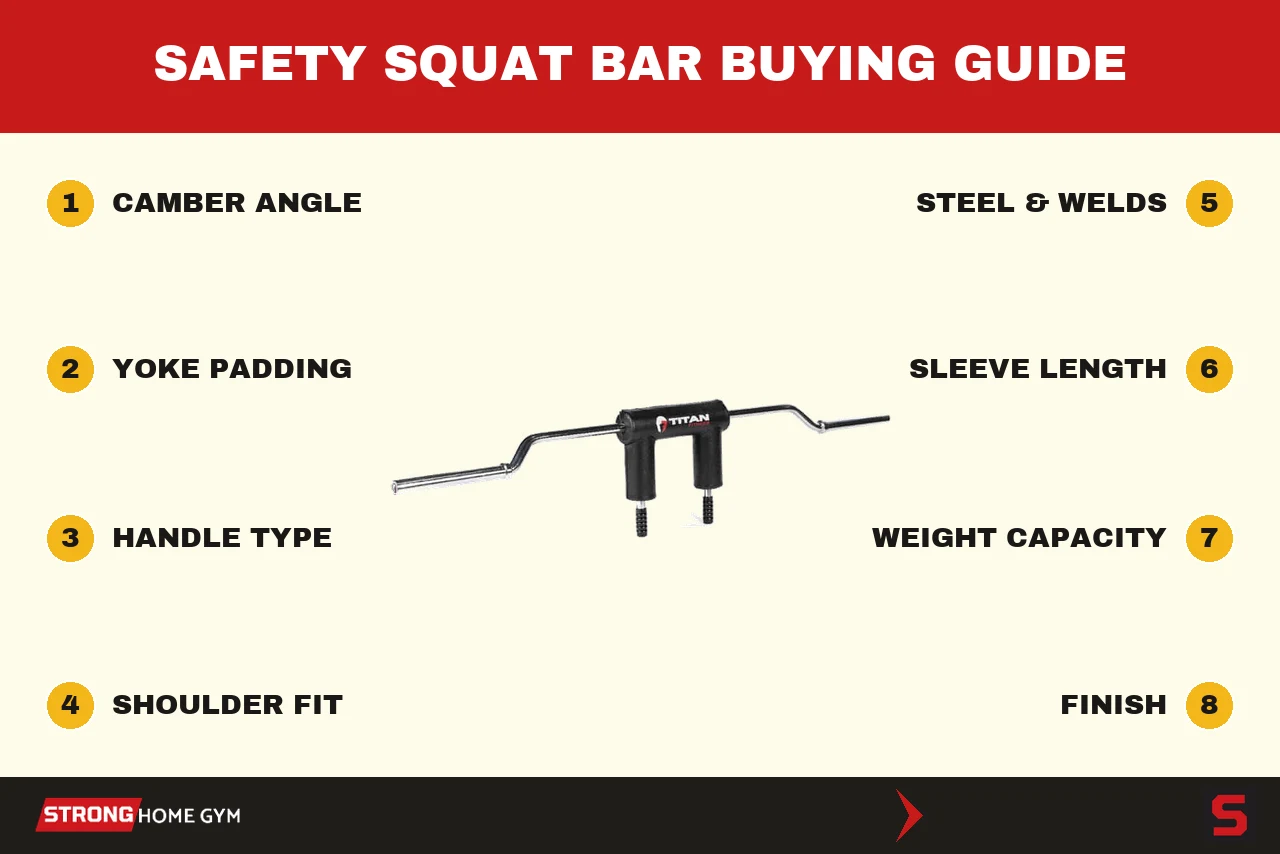
Here’s what feeds the score and how much each part counts. Comfort leads, because the whole reason to own an SSB is to squat without a fight.
We grouped it into four weighted factors:
- Comfort & camber (30%) - how the yoke sits, the padding, and how the camber shifts the load.
- Build & capacity (25%) - steel, welds, sleeves, honest weight rating, finish durability.
- Versatility (20%) - handle options, good mornings, walkouts, and attachments.
- Value (25%) - what you actually get for the money.
Comfort & camber (30%)
This carries the most weight for a reason. An SSB lives or dies on how it sits on your shoulders and how the camber feels under load.
We judge the yoke padding, the shoulder contact, the handle shape, and how aggressively the bar pulls you forward. A deep camber trains the back harder. A milder one feels closer to a regular squat. Neither is wrong, they just suit different goals, so we score how well each bar delivers on what it’s built for.
Build & capacity (25%)
A specialty bar takes abuse, dropped onto safeties and loaded heavy. We look at the steel and the welds where the camber meets the shaft, the sleeve quality, and whether the stated weight rating is honest.
Finish matters more than people expect here. Cheap decorative chrome rusts and flakes; a proper powder coat or zinc holds up for years. We dock bars whose finish we’ve watched fail.
Versatility (20%)
The squat is the headline, but the best bars do more. Removable handles open up rows and presses. Multiple handle positions change the camber feel. A bar that good-mornings well, walks out cleanly, and takes lunges earns points here.
Value (25%)
We build a quality-adjusted picture of price. A bar that nails comfort and build for a fair price beats a premium one that only justifies its cost on paper. Tiers and relative value, not chasing the cheapest sticker.
Find the perfect safety squat bar for you
Overall | Value | Versatile | Budget | Comfort | Adjustable | Traditional
Here’s how the eight bars stack up on our overall score:
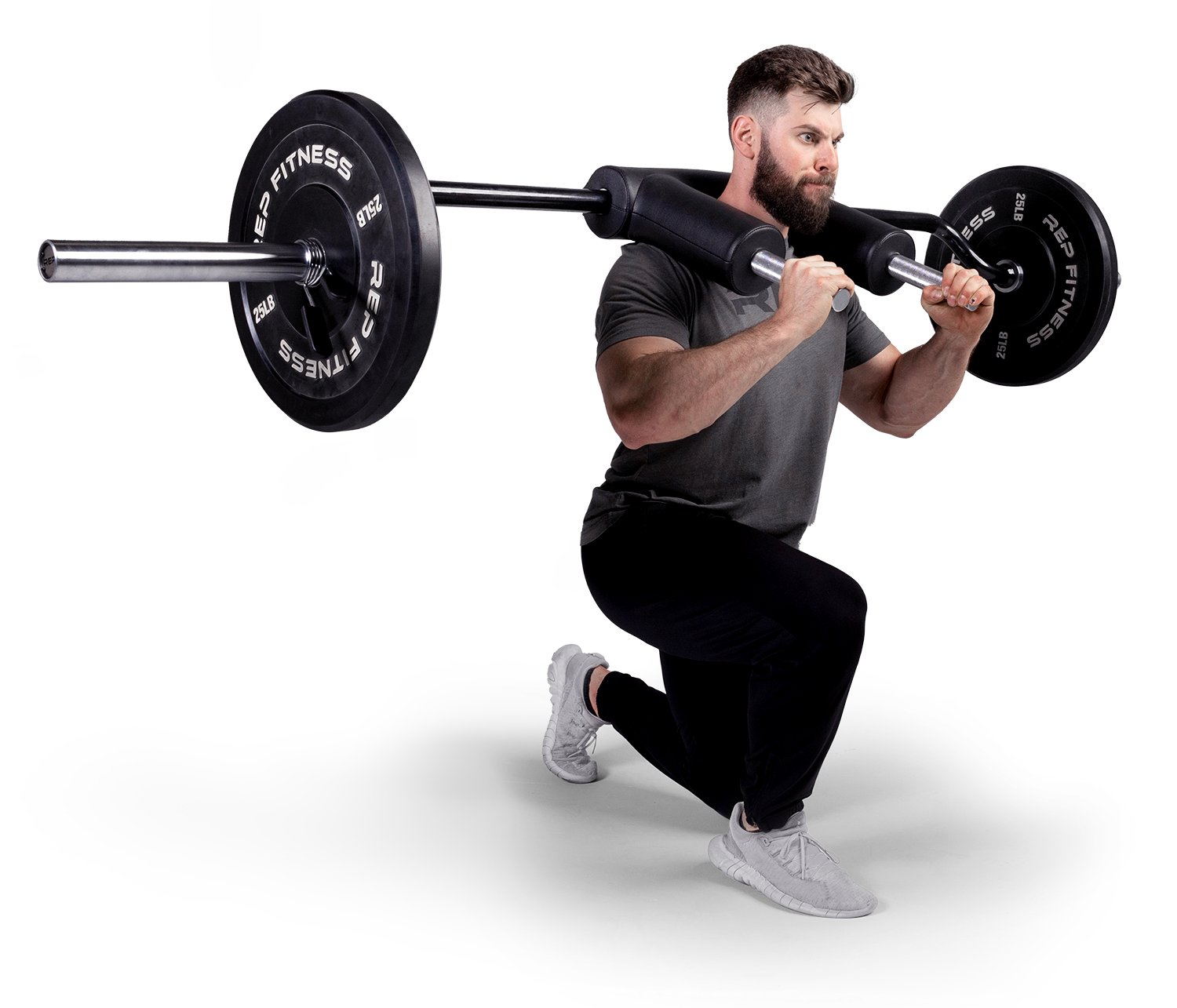
REP Fitness Safety Squat Bar
Best OverallQuick specs
- 68 lb bar weight, 22° camber, ~5.5” drop
- Knurled, removable steel handles
- Metallic black powder-coat shaft, hard-chrome sleeves
- ~1,500 lb static capacity, free shipping
The bar that gets the most things right for the most lifters: a comfortable yoke, knurled removable handles, and a finish that won’t rust on you.
Summary of experience, tests & opinions
What I like
- The handles are knurled, and that small detail changes everything. On a heavy walkout my hands stay put instead of sliding on bare steel, which is the moment an SSB feels safest.
- The handles also pull off. Strip them and the bar turns into a passable tool for rows and pressing, so it earns rack space on days you’re not squatting.
- The powder coat has shrugged off everything our team has thrown at it. No flaking, no surface rust after months of being dropped onto safeties.
What I don’t
- It’s not made in the USA, so if home-grown steel matters to you, the PRx or the Marrs will appeal more.
- The yoke padding is good rather than plush. Above 400 lb I still feel the bar dig in a little, which the deeper-padded Marrs handles better.
Pros & cons
Pros
- Knurled removable handles - grippy under heavy loads and they double the bar for upper-body work.
- A real powder coat instead of decorative chrome, so it holds up for years of garage abuse.
- Olympic sleeves and a standard length, so it drops into any rack without collars or adapters.
Cons
- Padding is merely solid, and very heavy squatters will want more.
- Imported, which costs it a point against the USA-made bars on durability bragging rights, not on actual performance.
Read more about the REP Fitness SSB
The REP wins because it removes the usual trade-off. Most bars make you choose: comfort, or good handles, or a finish that lasts, or a fair price. This one quietly delivers all four.
Its nearest rival on paper is the bar it replaced at the top, the Titan V2. Both share the same 22-degree camber and a similar feel under the bar. The REP pulls ahead on the two things you live with daily: knurled handles that don’t slip, and a powder coat that doesn’t rust. Those are the details that decide whether you still love the bar in year three.
Loading and racking are a non-event. Standard Olympic sleeves, standard length, no collars needed for normal plates. If you want one safety squat bar and you don’t have a specific reason to buy something else on this list, buy this one.
The REP takes the top slot on our weighted overall score:
Bottom line
The REP Fitness SSB is our top safety squat bar for three reasons:
-
Knurled, removable handles. They grip when it counts and turn the bar into an upper-body tool, which almost nothing else at this price does.
-
A finish that lasts. Powder coat over decorative chrome is the difference between a bar that looks new in three years and one that’s already rusting.
-
It just fits. Standard sleeves, standard length, fair price. No surprises, no adapters.
The REP might be for you if… you want one do-everything SSB and you don’t have a specific reason to buy a specialist bar.
It’s not for you if… USA manufacturing is a deal-breaker, or you squat heavy enough to want the plushest yoke here. Look at the Marrs.
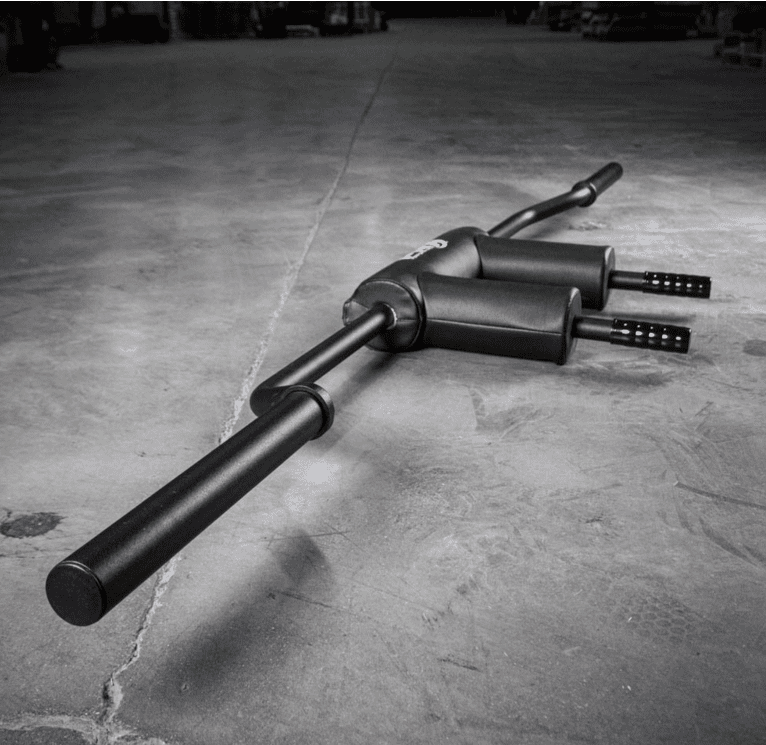
PRx Performance Safety Squat Bar
Best ValueQuick specs
- 65 lb bar weight, 91.25” long
- 16” loadable sleeve, 1.96” collars
- 1,200 lb capacity, black powder coat
- USA-made, optional wall-mount storage
USA-made build and a clean powder coat without the top-tier price. The bar for the lifter who wants quality steel and a fair deal.
Summary of experience, tests & opinions
What I like
- You get USA steel and a proper powder coat for a price that usually buys imported. That’s the whole pitch, and the bar delivers it.
- The shoulder pad is generous, and the bar walks out smoothly. Nothing flashy, just a solid squat every session.
- If you run a PRx rack, the matching wall-mount storage is genuinely tidy.
What I don’t
- The handles are rubber-gripped rather than knurled. They’re comfortable, but they don’t bite the way the REP’s knurl does when your hands sweat under a heavy single.
- The handles don’t come off, so this is a squat-and-good-morning bar, not an upper-body tool.
Pros & cons
Pros
- USA-made at an import price - the standout reason to buy it.
- Black powder coat that holds up, not decorative chrome that rusts.
- Comfortable yoke and a clean, predictable squat.
Cons
- Rubber handles can feel slick when you’re sweaty, and they’re fixed in place.
- A 16” loadable sleeve is a touch short if you stack thick bumpers.
Read more about the PRx Performance SSB
This is the value play that doesn’t cut the corner that matters. Plenty of cheaper bars save money on the finish, then rust in a year. PRx saves you money on the badge instead and keeps the powder coat and the home-grown steel.
The compromise lives in the handles. Rubber grips are comfortable and never cold, but under a maximal walkout I trust knurl more. If your hands stay dry and you mostly squat in the moderate range, you’ll never notice. If you chase heavy singles with chalky palms, the REP’s knurl is the safer pick.
For most people who want a bar they can be proud of without paying the premium, this is the sweet spot.
It sits right at the sharp end of our value score:
Bottom line
The PRx gives you USA steel and a lasting finish for import money. The fixed rubber handles are the only real compromise, and for most lifters they’re a non-issue.
The PRx might be for you if… you want home-grown build quality at a fair price, especially if you already run a PRx rack.
It’s not for you if… you need knurled or removable handles. The REP covers that.
Bells of Steel SS3 Safety Squat Bar
Most VersatileQuick specs
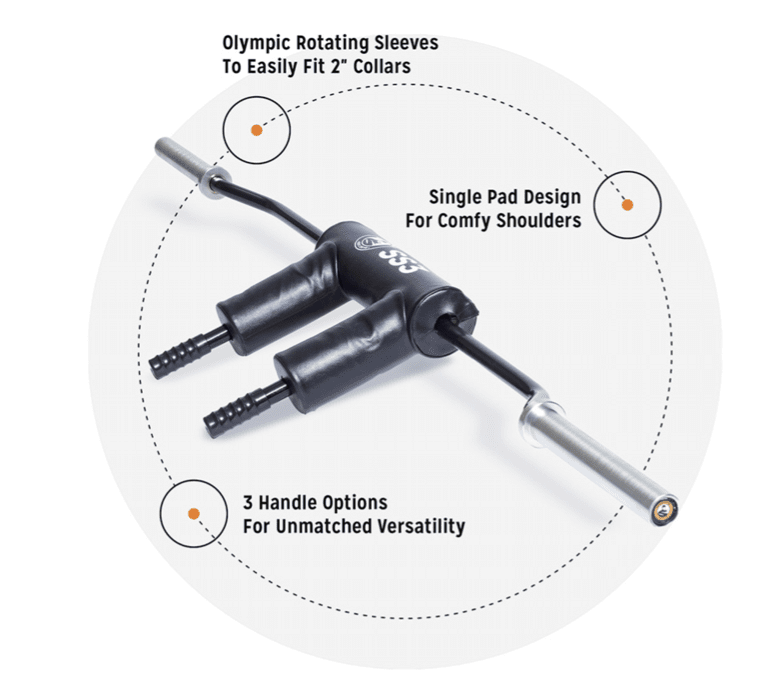
- 47.5 lb (20 kg), 86.6” long, 22° camber
- Three handle options: short, long, chain
- Rotating bushing sleeves, 1,500 lb capacity
- Fits racks up to 47” wide
Three handle setups in one bar. If you want an SSB that changes feel to match the movement, this is the most adaptable on the list.
Summary of experience, tests & opinions
What I like
- The swappable handles are the headline, and they actually earn it. Short handles for a tight squat, long handles to open up good mornings and presses, chain handles for a wilder, oscillating load.
- At 47.5 lb it’s lighter than most bars here, which is handy if you load and unload solo a lot.
- Rotating sleeves are a nice touch at this price and keep the plates spinning instead of binding.
What I don’t
- The finish is the weak spot. The zinc, and the black zinc shaft especially, will chip and mark over time. It’s cosmetic, but it shows.
- The sleeves aren’t as beefy as the premium bars, and the gap between the cambers could use another inch for the tallest lifters.
Pros & cons
Pros
- Three handle options - genuinely the most configurable bar here, and the chain handles are a unique party trick.
- Rotating bushing sleeves and a light bar weight.
- Honest 1,500 lb rating and a sensible width for most racks.
Cons
- Finish chips, particularly the black zinc shaft.
- Sleeves and overall fit-and-finish trail the top-tier bars.
Read more about the Bells of Steel SS3
Most safety squat bars give you one feel. The SS3 gives you three, and that’s the entire reason to pick it. Bolt on the short handles and it squats tight and upright. Switch to the long handles and good mornings and presses open right up. Hang the chain handles and the load swings, which hammers stabilisers in a way a fixed bar can’t.
What you trade for that flexibility is a finish that won’t stay pretty. The zinc marks up, and the sleeves don’t feel as solid as the steel on the REP or the Rogue. None of that stops it performing. It just means this is a bar bought for what it does, not how it looks doing it.
If variety in your training is the priority, nothing else here keeps up.
It tops our versatility score, and it isn’t close:
Bottom line
The SS3’s three handle options make it the most adaptable bar here, at the cost of a finish that chips and sleeves that trail the premium pack.
The Bells of Steel SS3 might be for you if… you want one bar that covers tight squats, open good mornings, and chain work.
It’s not for you if… a pristine finish matters, or you want the most solid sleeves on the list. Look at the REP or Rogue.
Titan Safety Squat Bar V2
Best BudgetQuick specs
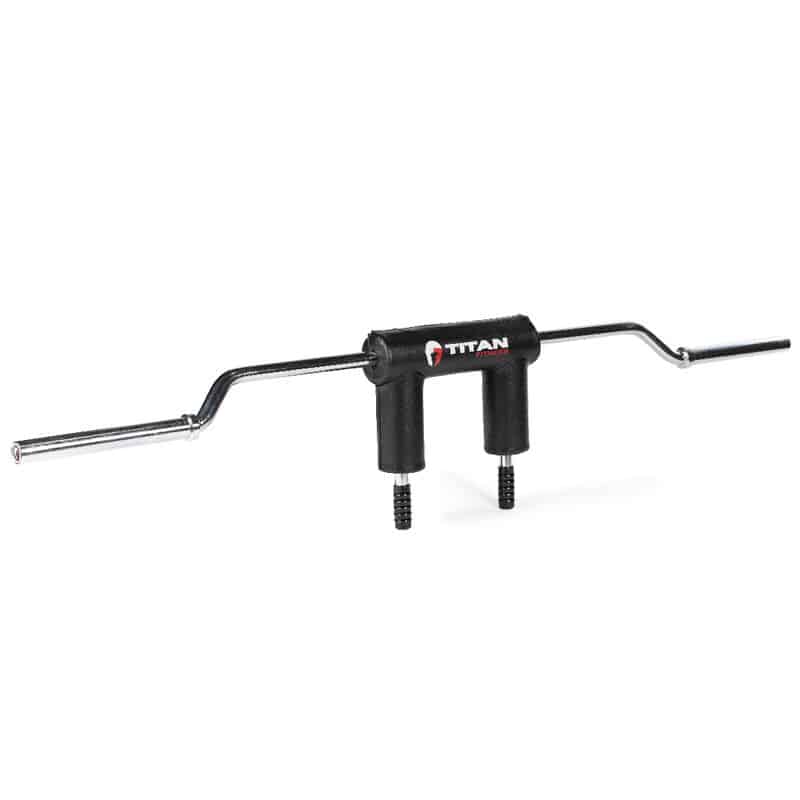
- 61 lb bar weight, 90” long, 22° camber, 5” drop
- 1.5” shaft, 16” Olympic sleeves
- Contoured, finger-grooved removable handles
- 1,500 lb capacity
Our old number one, now the budget champ. It gives you a premium camber and removable handles for the least money on the list.
Summary of experience, tests & opinions
What I like
- Here’s the open secret: the Titan V2 is a close copy of the EliteFTS SS Yoke, sold at import pricing. You get a near-identical 22-degree camber and removable handles for a fraction of the outlay. As a budget buy, that’s a genuinely good deal, and I’d rather tell you straight than pretend otherwise.
- The contoured, finger-grooved handles are comfortable and pop off for the odd row or press.
- The squat itself feels great. Blindfolded, most lifters wouldn’t separate it from bars costing far more.
What I don’t
- The chrome is decorative, and it rusts. This is the one to watch. Wipe it down, keep it dry, and it’s fine; neglect it in a damp garage and you’ll see spots.
- There’s no real warranty to speak of, so you’re buying on the strength of the price, not the back-up.
Pros & cons
Pros
- Premium camber and removable handles for budget money - the core reason it’s here.
- Standard Olympic sleeves and length, racks anywhere.
- Honest 1,500 lb capacity.
Cons
- Decorative chrome that can rust without care.
- Thin warranty, and the finish is where the cost-cutting shows.
Read more about the Titan SSB V2
For years this was our top pick, and it lost the crown to better details rather than a better squat. Knurled handles and a rust-proof finish nudged the REP ahead. What didn’t change is the core value here: a bar that copies one of the best cambers in the game and charges the least for it.
I won’t dress it up. The Titan is, in effect, a clone of the EliteFTS at a much lower price, and the finish is where that lower price lives. Treat the chrome with a little care and the bar performs like ones costing two or three times as much. Skip the upkeep and it’ll rust on you. For a first SSB, or for anyone who wants the safety squat without spending big, that’s a trade worth making.
It runs away with our value score:
Bottom line
The Titan V2 hands you a premium camber and removable handles for the least money here. The catch is a chrome finish that needs looking after.
The Titan SSB V2 might be for you if… you want a great-squatting SSB on a budget and you’ll keep it wiped down and dry.
It’s not for you if… you want a finish you can ignore or a warranty behind it. Spend up to the REP.
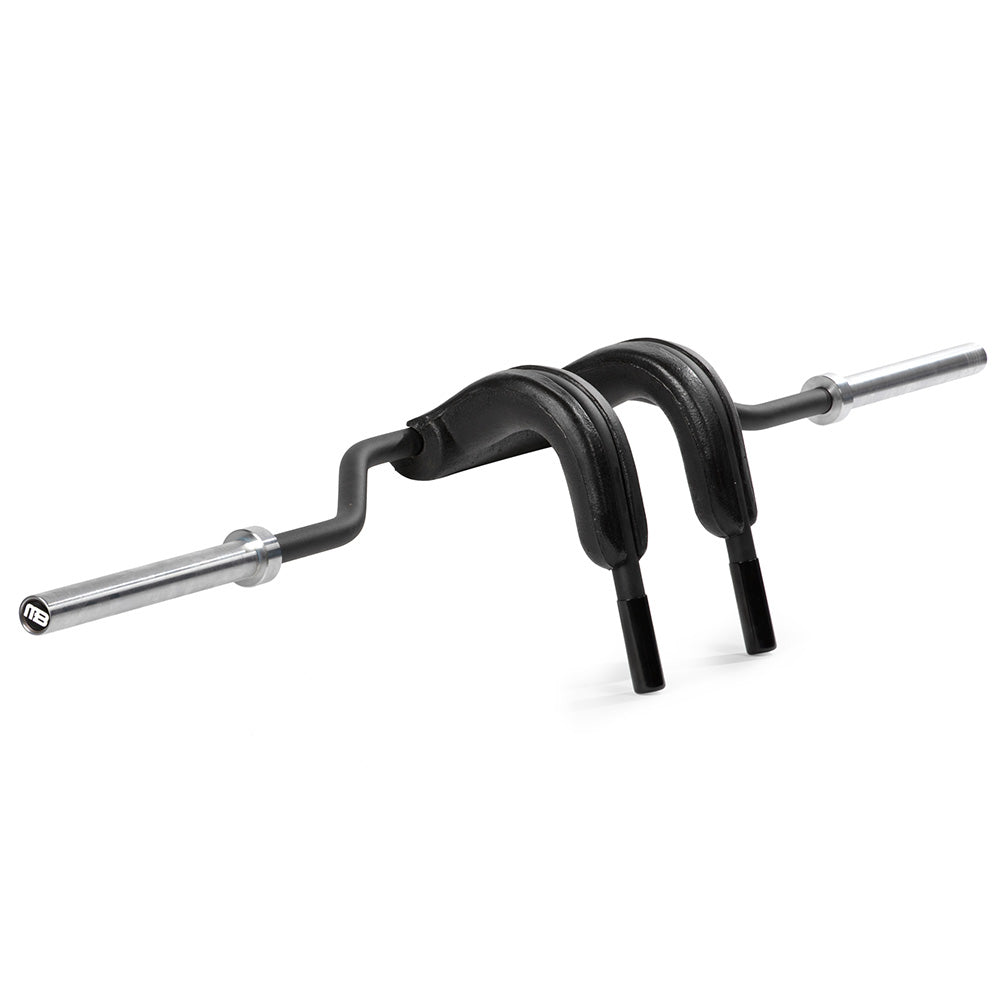
Marrs Bar
Best for Comfort / JointsQuick specs
- 65 lb (35 lb LITE version), 89” long, 24” rackable
- Deep camber that sits high on the back
- Molded foam, fixed 43mm handles
- 1,200 lb capacity, USA-made
The bar that squats most like a regular bar while sparing your joints. If a normal SSB still bugs your shoulders, this is the one.
Summary of experience, tests & opinions
What I like
- Nothing here is kinder to a beaten-up body. Zac Marrs built this around a deep camber that sits high on your back, so the squat feels remarkably close to a regular bar without putting your shoulders in a bad spot.
- For lifters coming back from a spine or shoulder injury, it’s often the difference between squatting and not squatting at all. That’s not a small thing.
- The molded foam yoke is the most comfortable on the list under a heavy load.
What I don’t
- The handles and padding don’t come off. That kills any upper-body use, so this is a dedicated squat-and-hinge bar and nothing more. It’s why its versatility score is the lowest here.
- The grip can feel high and a touch awkward until you get used to the geometry. It’s different by design, and not everyone clicks with it straight away.
Pros & cons
Pros
- The most joint-friendly bar here - the closest feel to a normal squat with none of the shoulder strain.
- Genuinely the comfort pick for rehab and cranky shoulders.
- USA-made and sold through Titan, so it’s easy to get hold of.
Cons
- Fixed handles and padding mean no rows, presses or upper-body work.
- The unusual geometry takes a session or two to settle into.
Read more about the Marrs Bar
The Marrs takes the safety squat idea somewhere different. Where most bars perch the load forward and let you grip out in front, this one sits high and deep so the bar tracks almost like a straight-bar squat, just without asking your shoulders to rotate into a position they hate.
That single-mindedness is the whole pitch. It does one job, squatting comfortably around an injury, better than anything else here. It also means it can’t do the side jobs the REP or Bells handle, because the handles and pads are bolted on for good. If you bought it expecting an all-rounder, you’d be disappointed. If you bought it because your shoulders are shot and you just want to squat again, you’ll love it.
On comfort, it’s the clear winner:
Bottom line
The Marrs Bar is the joint-saver. It squats closest to a regular bar while keeping your shoulders happy, and it does that one thing better than anything here. Just don’t expect it to do anything else.
The Marrs Bar might be for you if… a normal SSB still aggravates your shoulders, or you’re squatting back from injury.
It’s not for you if… you want one bar that also handles rows and presses. The REP or Bells are more flexible.
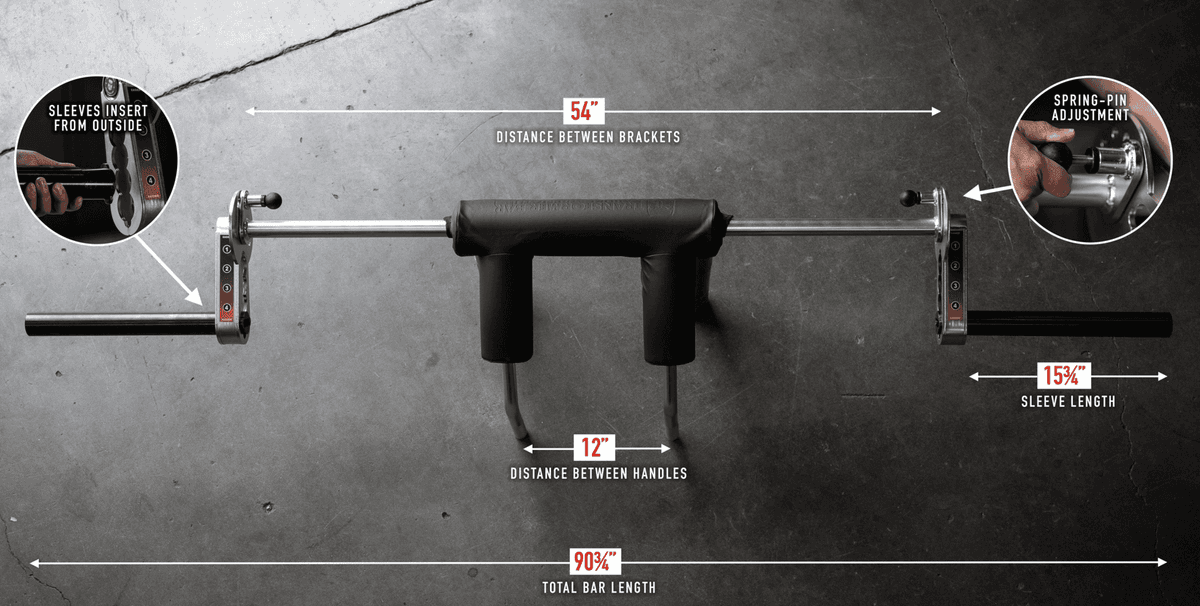
Kabuki Strength Transformer Bar
Best Adjustable (Advanced)Quick specs
- 44 lb (20 kg), 90.75” long
- 24 positions: 6 camber angles × 4 drops
- Knurled angled handles, high-density foam
- USA-made (now built by Rogue), ~1,500 lb capacity
The only bar here you can tune. Dial in 24 different camber-and-drop combinations to match the lifter and the movement.
Summary of experience, tests & opinions
What I like
- No other bar adapts like this. Six camber angles and four drop settings give you 24 ways to load a squat, from near-vertical to brutally forward. A coach with a roster of lifters gets serious mileage out of that.
- The build is excellent, knurled handles, machined sleeves, USA steel. It feels every bit the premium bar it’s priced as.
- Light at 44 lb, which is handy when you’re stripping it down to reset the angle.
What I don’t
- You pay dearly for the adjustability, and that’s the only thing holding its overall score back. Most home lifters find one camber they like and never touch the rest, which makes the headline feature a luxury.
- Resetting the angle between sets isn’t quick. It’s a setup-and-leave-it system, not something you flip mid-workout.
Pros & cons
Pros
- 24 camber-and-drop positions - genuinely unique, and a gift for coaches and tinkerers.
- Top-tier build, knurled handles and machined Olympic sleeves.
- Light bar weight and high capacity.
Cons
- The priciest bar here, which tanks its value score.
- Adjustability you may never use, and it’s fiddly to change.
Read more about the Kabuki Transformer Bar
This is the specialist’s specialist. If you want to feel exactly how camber angle and drop change a squat, or you coach lifters with very different needs, the Transformer is the only bar that lets you explore that on one piece of equipment.
For everyone else, it’s a lot of money for flexibility you’ll rarely tap. Find your favourite camber on a fixed bar and you’ve replicated 90 percent of what most people use the Transformer for, at a fraction of the cost. That’s the honest read, and it’s why a brilliantly built bar sits where it does on value rather than higher up.
Among bars you can actually reconfigure, its versatility is near the top:
Bottom line
The Kabuki Transformer is the bar for coaches and tinkerers who want to tune camber and drop on the fly. It’s superbly built, but you pay for adjustability most home lifters won’t use.
The Kabuki might be for you if… you coach varied lifters or you genuinely want to experiment with camber geometry.
It’s not for you if… you just want one good camber at a sane price. Almost everyone is better served by the REP.
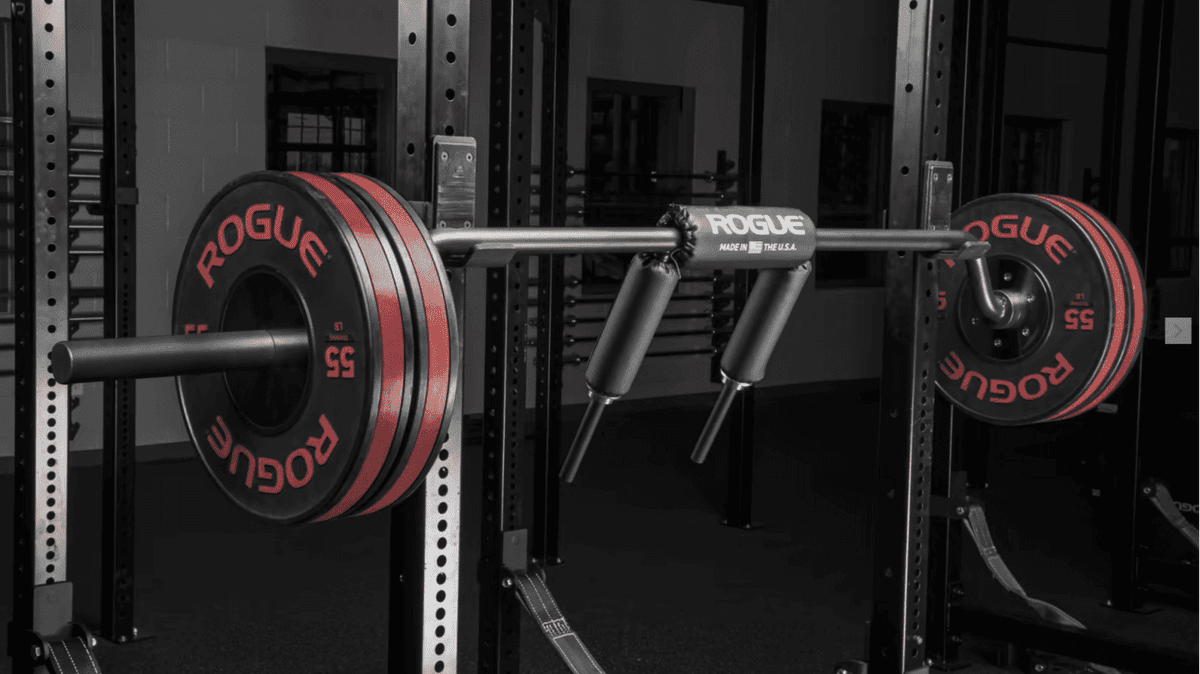
Rogue SB-1 Safety Squat Bar
Best TraditionalQuick specs
- 70 lb bar weight, 93” long, 5.5” camber
- 1.5” shaft, 1” solid-steel handles
- Fully welded, machined Olympic sleeves
- USA-made
A clean, fully welded SSB with Rogue’s build and a milder, more traditional feel. The pick if you want an SSB that squats close to a normal bar.
Summary of experience, tests & opinions
What I like
- Typical Rogue build. Fully welded, machined sleeves, solid steel handles, and a bar that feels like it’ll outlive the rack you hang it on.
- The milder camber makes for an easy transition from a straight bar. If a deep-camber SSB has felt like too much of a jump, this one bridges the gap.
What I don’t
- The foam is thin and the camber is gentle, so under really heavy loads the bar bites into your traps more than the plush Marrs or the deeper REP. That mild camber also means less of the brutal upper-back work some lifters buy an SSB for.
- The bare finish scuffs, which is cosmetic but worth noting at this price.
- You’re paying a premium for the build, and the value score reflects that.
Pros & cons
Pros
- Excellent welded build - sleeves and handles you can trust under anything.
- A gentle camber that’s friendly to SSB newcomers.
- USA-made with the reliability that implies.
Cons
- Thin foam and a mild camber, so less comfort up top and less of the forward-load challenge.
- Finish scuffs, and you pay up for the name.
Read more about the Rogue SB-1
The SB-1 is the traditionalist’s safety squat bar. Rogue didn’t chase the deepest camber or the plushest pad, they built a clean, tough bar with a feel that’s closer to a regular squat. For some lifters that’s exactly right, especially anyone easing into SSB work who doesn’t want the bar trying to fold them in half.
It’s a balanced pick rather than a standout. The build is among the best here, but the thin foam and gentle camber cost it on comfort and on the trunk-hammering quality that draws people to a safety squat bar in the first place. Buy it for the welds and the familiar feel, not for the most aggressive or most comfortable squat on this list.
The build, as you’d expect from Rogue, scores near the top:
Bottom line
The Rogue SB-1 is the traditional pick: a superbly welded bar with a mild camber that squats close to a regular bar. The thin foam and gentle angle are the trade for that familiarity.
The Rogue SB-1 might be for you if… you want Rogue build and an easy step up from the straight bar.
It’s not for you if… you want maximum comfort up top or an aggressively forward camber. The Marrs and REP deliver those.
What is a safety squat bar (and who needs one)?
A safety squat bar (you’ll see it called an SSB, a yoke bar, or a cambered squat bar) is a specialty barbell built around a padded yoke that sits on your shoulders and traps. Two handles curve down and forward from the yoke, so you hold the bar in front of your chest instead of reaching back to grab a straight bar behind your neck.
That handle position is the whole point. It lets people squat who simply can’t get into a comfortable low-bar or high-bar rack position because of the shoulder, elbow or wrist mobility a straight bar demands.
The other half of the design is the camber. The arms that hold the weight plates bend down and forward, so the load hangs lower and several inches ahead of your shoulders. On most bars here that’s a 22-degree bend with a drop of around five inches. The deeper the camber, the more aggressively the bar tries to fold you forward.
The trap-yoke load shift
Because the plates sit out in front of you, an SSB constantly pulls your torso toward the floor. Your upper back, your core and your quads all fight harder to keep you upright. That forward pull is why most lifters squat noticeably less with one (more on the numbers in the FAQ). It also turns the bar into a brutal upper-back and trunk builder, which is exactly why so many strong lifters keep one in the rack even when their shoulders are fine.
Who actually benefits
Steve, our certified PT, points people toward an SSB in a handful of clear cases:
- Cranky shoulders or elbows. If holding a straight bar lights up your joints, the yoke takes that pressure off entirely. This is the number one reason people buy one.
- A more upright squat. The camber keeps your torso tall, which a lot of lifters find easier on the lower back and kinder on a fussy hip.
- Solo walkouts. With the handles right there, unracking and walking out a heavy squat alone feels far more controlled than wrestling a bar off your back.
- Good mornings. Bracing the bar against your shoulders by the handles makes loaded good mornings genuinely comfortable, where a straight bar balanced on your neck never is.
If your shoulders are healthy and you only squat occasionally, you don’t need one. But for powerbuilders, anyone training around an injury, and lifters who want a tool that hammers the back and core, it earns its rack space fast.
Other bars we considered
EliteFTS SS Yoke Bar. This is the bar that more or less invented the modern safety squat bar, and it’s superbly built. We left it off the ranked list for one honest reason: the Titan V2 is essentially the same bar for a fraction of the price. We’re not precious about who drew it up first. Someone coming along, copying a good idea and making it cheaper is exactly how a free market is meant to work, and it usually leaves you better off. If you want the original and the premium doesn’t bother you, it’s a buy-it-for-life bar. For nearly everyone else, the Titan is the smarter spend. You can still check the EliteFTS here.
The bottom line
If you want one safety squat bar and you don’t have a special reason to buy a specific one, get the REP Fitness SSB. It nails comfort, has knurled removable handles, holds a finish that won’t rust, and drops into any rack at a fair price. It’s the bar most home lifters will be happiest with.
From there it comes down to what you value most. Squatting around shot shoulders? The Marrs Bar feels closest to a normal bar with none of the strain. On a tight budget? The Titan V2 copies a premium camber for the least money, as long as you keep the chrome dry. Want to tinker with handles or camber angle? The Bells SS3 and Kabuki Transformer are built for that.
Whichever you pick, start lighter than your back squat, learn the balance, and let the bar keep you squatting through the seasons a straight bar would cost you.
Safety squat bar FAQs
What is a safety squat bar?
A safety squat bar is a specialty barbell with a padded yoke that rests on your shoulders and two handles that curve down in front of your chest. The weight plates sit on cambered arms that hang lower and further forward than a straight bar, which shifts the load and lets you grip the handles instead of reaching back to a bar on your upper back. That spares cranky shoulders and elbows, keeps you more upright, and makes the squat a genuine option for lifters who can’t hold a normal bar comfortably.
Who needs a safety squat bar, and are they worth it?
A safety squat bar is worth it if a straight bar bothers your shoulders or elbows, if you train alone and want easier walkouts, or if you want a tool that punishes the upper back and core. Powerbuilders, lifters rehabbing around injury, and anyone who good-mornings or does solo unracks all get real use from one. If you have healthy shoulders and only back-squat now and then, it’s a luxury rather than a need.
How much less can you squat with a safety squat bar?
Most lifters squat roughly 10 to 20 percent less with a safety squat bar than with a straight bar. The forward camber pulls you toward the floor and loads the upper back, so the bar fights to tip you over and your quads and trunk work harder to stay upright. Don’t load it like your back squat on day one. Start light, learn the balance, and build from there.
Can you do good mornings with a safety squat bar?
Yes, and good mornings are one of the best reasons to own a safety squat bar. The handles let you brace the bar against your shoulders rather than balancing it on your neck, so you can hinge with control and actually feel the hamstrings and back working. It’s far more comfortable than a straight-bar good morning and lets you load the movement properly.
Do you need a special rack for a safety squat bar?
No. Almost every safety squat bar uses standard Olympic sleeves and racks in a normal squat rack or power cage on the same J-hooks you already use. A few bars run shorter or non-Olympic sleeves and need collars or an adapter, so check the loadable sleeve length against your plates. Otherwise it drops straight into your existing setup.
What’s the difference between a safety squat bar and a regular barbell?
A regular barbell is a straight shaft you hold behind your neck. A safety squat bar adds a padded yoke and front handles, and the loading arms are cambered so the weight sits lower and forward. That changes the feel completely: you stay more upright, your shoulders and elbows stay relaxed, and the bar challenges your back and core in a way a straight bar doesn’t.
