

We tested and scored 32 slam balls to find the 5 best slam balls, judged across the 5 categories that decide whether a ball survives your training.
I’ve built home gyms for ten years, and I’ve split a few cheap slam balls down the seam in that time. The team ran my opinions through our scoring system, so it isn’t just me venting about sand on the floor.
The goal: skip the marketing and hand you a short list of slam balls that hit dead, grip when you’re sweaty, and don’t split.
Let’s see if we did a good job…
Related
We’ve spent years throwing conditioning kit around this gym. If you’re still putting the room together, our how to build a home gym guide walks the whole setup, and for the one piece of kit that earns its place beside a slam ball, see our best adjustable dumbbells round-up.
Compare the best slam balls
 Rogue Echo Slam Ball
Check price
Rogue Echo Slam Ball
Check price
|
 Titan Rubber Tread
Check price
Titan Rubber Tread
Check price
|
 Fringe Sport Slam Ball
Check price
Fringe Sport Slam Ball
Check price
|
 Yes4All Slam Ball
Check price
Yes4All Slam Ball
Check price
|
||
|---|---|---|---|---|---|
| Best for | Overall | No-bounce / durable | Grip / heavy | Most durable | Budget |
| Rating (*) | |||||
| Durability & shell (35%) | 92 | 90 | 86 | 94 | 78 |
| No-bounce / dead feel (25%) | 90 | 92 | 84 | 84 | 80 |
| Grip & texture (20%) | 88 | 84 | 92 | 84 | 78 |
| Weight range (10%) | 92 | 82 | 90 | 78 | 84 |
| Value (10%) | 86 | 84 | 88 | 74 | 94 |
| Fill | Sand | Sand | Sand | Sand | Sand |
| Shell | Double-thick rubber | Heavy rubber | Rubber, tire tread | Heavy-duty rubber | Rubber |
| Texture | Textured | Lightly textured | Tire tread | Lightly textured | Tread or triangle |
| Weight range | 5-70 lb | 10-50 lb | 10-100 lb | 10-150 lb | 10-40 lb |
| Warranty | 1 yr home | 2 yr | 1 yr | 1 yr + guarantee | 30-day Amazon |
| Price | $$ | $$ | $$ | $$$ | $ |
 REP Fitness Slam Ball
Our testing and selection process
How we assess the slam balls
We always use a 5 step process in our reviews:
- We start as the buyer. Most of our team have bought slam balls before, and I’ve replaced a couple that gave up early, so we know what failure looks like.
- We do a ton of research. We pull specs, prices, and owner reports on every slam ball worth a look into one master spreadsheet.
- We rate each ball with our weighted scoring system. The categories and weights are below.
- We let the data make the call, not brand loyalty. A Titan can beat a Rogue. A Yes4All can win its slot outright.
- We get our hands on as many top picks as possible. Our community is a big help here.
You can read more in our review guidelines.
How we test and score the slam balls
A slam ball is a simpler tool than a barbell, so the scoring is simpler too. But first, the question every buyer actually has.
A slam ball does not bounce. It is a sand-filled, dead-weight ball built to be thrown at the floor at full force and to stay where it lands. That is the whole point, and it is what separates it from the two balls people confuse it with. A medicine ball is firmer and has some bounce, so it can come back at you. A wall ball is large, soft, and padded for throwing at a target. A slam ball that springs back toward your face is not a quirky slam ball, it is a badly made one, and it is dangerous.
So we score the things that decide whether a ball stays dead, stays in one piece, and stays in your hands.
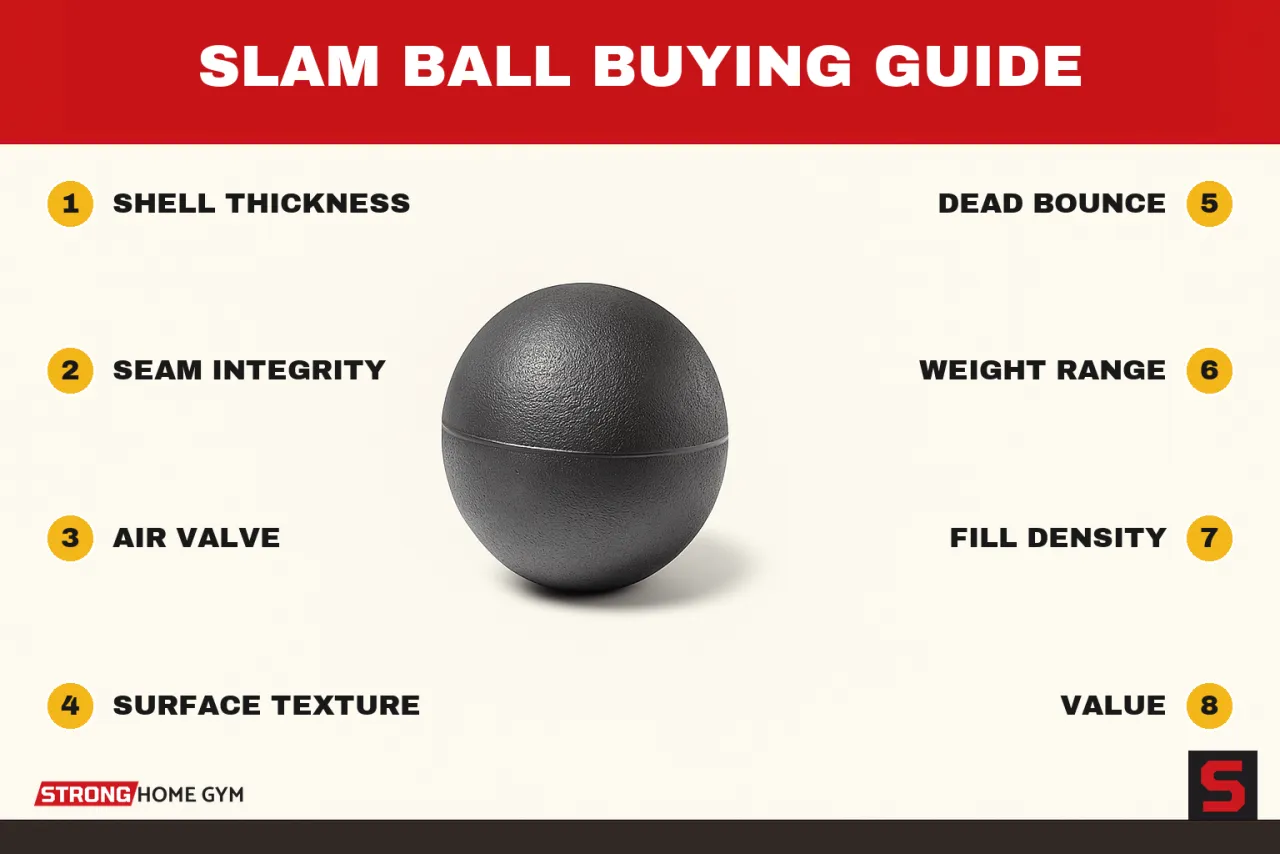
I grouped it into 5 chunks:
- Durability and shell (35%) - the shell takes thousands of full-force slams on concrete, and splitting is the number one way a slam ball dies.
- No-bounce and dead feel (25%) - how truly dead the ball lands, with no rebound toward you.
- Grip and texture (20%) - whether a sweaty hand keeps hold of it mid-set.
- Weight range (10%) - how many sizes the line offers, so you can buy up as you get stronger.
- Value for money (10%) - what you pay against what you get, normalized to the lineup.
Here is how the five picks stack up on the overall score, with the REP Fitness Slam Ball out in front:
Durability and shell (35%)
This is the biggest category, and on a slam ball it is most of the decision.
A slam ball lives a short, violent life. You throw it at concrete with everything you have, dozens of times a session, and the shell has to absorb that without giving up. When one fails, it almost always splits at the seam or blows out the air valve, and then you are sweeping sand out of your gym floor for a week.
Two things separate the survivors. A double-thick shell, like the one on the REP Fitness Slam Ball, gives the rubber more to spend before it tears. A reinforced air valve and tight seam stitching stop the two weak points from opening up.
My tip: before your first hard session, run a finger around the seam. A seam you can barely feel, like the one on the Fringe Sport ball, is a seam that will not be the first thing to go.
No-bounce and dead feel (25%)
This is the category that defines the tool.
A good slam ball lands dead. You throw it down, it hits, and it stops, so you can pick it straight back up and go again. The sand fill is what does it. The denser and better-settled the sand, the deader the landing.
Some balls hold a little air alongside the sand, which is normal and adds to the dead thud. The Rogue Echo is the benchmark here, landing about as flat as a slam ball can. A ball that rebounds even slightly is both annoying and a hazard on an overhead slam.
Grip and texture (20%)
You slam a ball when you are already sweating, so grip is not a nice-to-have.
A tacky or treaded surface keeps a wet hand locked on through the throw and the pick-up. Smooth balls slip, and a ball that slips on the way up is the one that clips a shin. The Titan Rubber Tread runs an aggressive tire-tread surface that is the grippiest here. Lightly textured balls like the Fringe Sport hold fine for most, but a heavy sweater will want the tread.
My tip: if your hands sweat hard, size up on texture, not just weight. A grippier 25 lb ball trains you better than a slick 30 lb one you keep dropping.
Weight range (10%)
A wide line lets you buy up as you get stronger without switching brands.
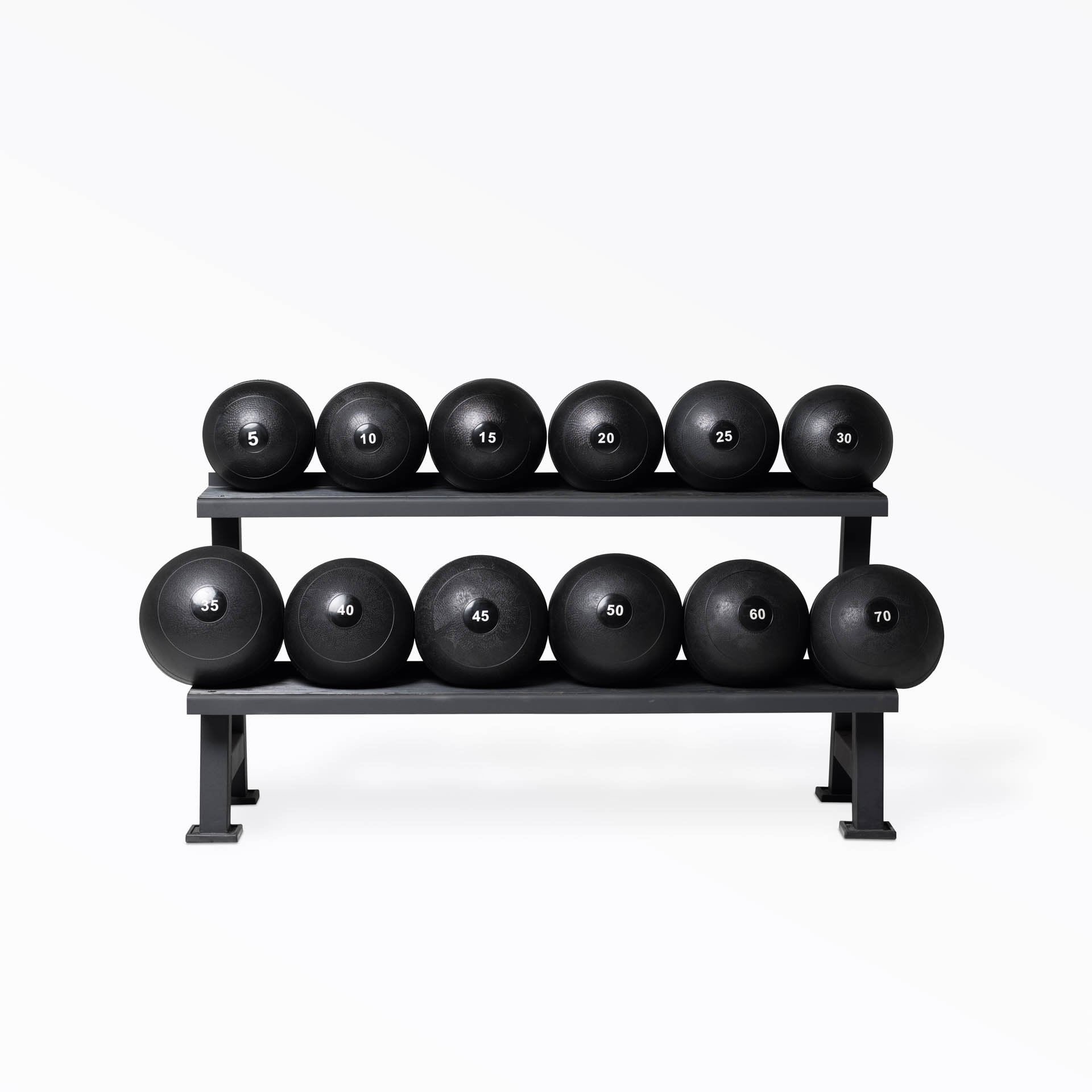
Most people land between 10 and 40 lb to start, and a wide line means your next ball matches the one you already own. The Fringe Sport and Titan lines run all the way up past 100 lb for the strongest athletes, while the REP line spans 5 to 70 lb, which covers nearly everyone from a beginner to a strong adult.
Value for money (10%)
We normalize value against the score-per-dollar across the lineup. The Yes4All scores below the premium balls but wins this category outright, because it does the core job for the least money.
In other words…
We are hunting for the ball that makes you pay for the shell rather than the logo on it.
Find the perfect slam ball for you
Best Overall | Best No-Bounce | Best Grip / Heavy | Most Durable | Best Budget
REP Fitness Slam Ball
Best Overall Slam BallQuick specs
- Fill - sand, dead bounce
- Shell - double-thick rubber, reinforced valve
- Texture - lightly textured rubber
- Weight range - 5-70 lb (12 sizes)
The slam ball I recommend to most people. A double-thick shell, a reinforced air valve, and the widest sensible size range mean it survives the abuse and grows with you.
Summary of experience, tests & opinions
What I like
- It is the ball I reach for without thinking. Six months in and I have stopped babying it the way I babied the cheap one before it, which is the real tell that a slam ball has earned its spot.
- The sizing chart is honest. I went one size lighter than my ego wanted and the explosive reps stayed crisp instead of grinding, exactly what the line is built to let you do.
- It travels well between training partners. I have lent the 30 to friends with very different hand sizes and nobody has complained the diameter feels off, which is more than I can say for some chunkier balls.
What I don’t
- With no flat side it rolls, so mine wandered off mid-session more than once until I parked it in a cheap tray. Worth knowing before you clear a slam zone for it.
Pros & cons
Pros
- Double-thick shell - it is built to take thousands of slams without splitting, which is the one failure that kills a slam ball.
- Reinforced air valve - the second weak point a slam ball blows out is reinforced, so the seam and the air port are both covered.
- A 5 to 70 lb range across twelve sizes means there is a ball for a beginner, a strong lifter, and everyone in between, all from one line.
Cons
- The lightly textured surface grips well but is not as aggressive as a tire-tread ball, so heavy sweaters may want the Titan instead.
- Caps at 70 lb - the strongest athletes wanting a 100 lb-plus ball have to look elsewhere.
Read more about the REP Fitness Slam Ball
The REP is the ball I hand most people when they ask what to buy first.
It wins the overall slot because it does the one job of a slam ball, surviving, better than anything near its price, and then does the rest well too. REP builds this version about 50% thicker than its standard ball, and that double-thick shell plus the reinforced air valve attack the exact two spots a slam ball gives out: the seam and the air port. After a few weeks of hard floor slams mine showed no soft spots and no seam creep, where a cheaper ball of mine had started going soft inside a month. The valve also gives you a say in the feel, which almost nothing else here does; mine arrived with a touch more air than I wanted, so I bled a little out and the landing went deader. Pair that with a 5 to 70 lb line across twelve sizes and you have a ball a beginner and a strong adult can both buy from, which is why most people never need a second one.
Side by side with the Rogue Echo, the dead feel is honestly close, and the Rogue edges it on pure deadness. The REP wins it back on a thicker shell, a tunable valve, and a wider line. That spread is why it tops the overall score without leading any single category.
This is the ball for the buyer who wants to choose once and forget it. If your hands run very sweaty you may still prefer the aggressive tread on the Titan, and the heaviest athletes will eventually outgrow the 70 lb ceiling, but for nearly everyone else the REP is the safe call.
That balance of shell, feel, and range is why it tops the overall score:
Bottom line
The REP Fitness Slam Ball is the top-rated slam ball for 3 main reasons:
-
It is built not to split - the thick shell and beefed-up valve cover the seam and the air port, the two spots a slam ball actually gives out.
-
It grows with you - a 5 to 70 lb line across twelve sizes covers a beginner and a strong adult from one brand.
-
It lands dead and you can tune it - the sand feel is close to the best here, and the valve lets you bleed air to make it deader still.
If you want the deadest possible landing above all else, the Rogue Echo is the step across.
The REP Fitness Slam Ball might be for you if… you want one slam ball that survives years of abuse and has a size for wherever your training goes.
It’s not for you if… you need to slam something heavier than 70 lb, in which case the Titan Rubber Tread scales far higher.
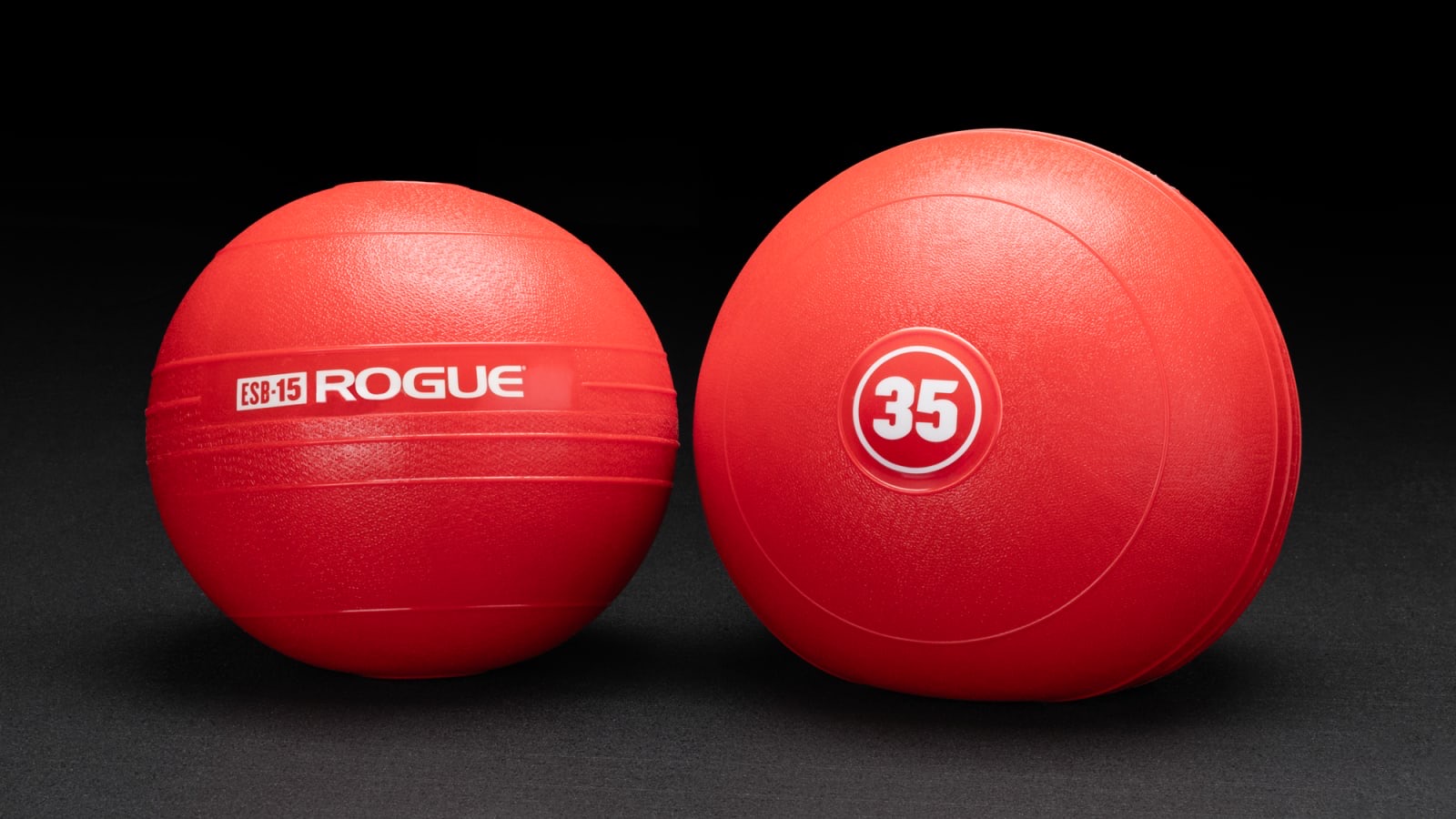
Rogue Echo Slam Ball
Best No-Bounce Slam BallQuick specs
- Fill - sand, dead bounce
- Shell - heavy rubber
- Texture - lightly textured
- Weight range - 10-50 lb
The classic dead-bounce pick. Sand-filled, lands flat with no rebound, and backed by a two-year warranty that is the longest on this list.
Summary of experience, tests & opinions
What stood out
- It is the quietest of the bunch downstairs. The flat, no-rebound landing means a single thud instead of a thud-and-roll, which kept the peace when I was slamming in a garage under a bedroom.
- The size feels right for the weight. The 30 sits in two hands without that beach-ball awkwardness some balls have, so the overhead catch and reset stays smooth deep into a set.
- It is the one I hand a nervous beginner first. Because nothing springs back, people stop flinching on the catch within a few reps, and that confidence is half the battle with slams.
What fell short
- Mine needed a short break-in. The sand shifted a touch on the first handful of throws before it packed down, so the very first session felt slightly livelier than every session since.
Pros & cons
Pros
- Deadest landing on the list - the settled sand fill lands flat with no rebound, which is the whole reason to own a slam ball.
- Two-year warranty - the longest cover here, a clear signal the shell is built to last on a category that is treated as consumable.
- Heavy, even rubber shell - it takes repeated floor slams without developing soft spots.
Cons
- Caps at 50 lb - the narrowest range of the dedicated balls, so it suits most lifters but not the heaviest.
- Lightly textured - the grip is fine but not in the same tier as the Titan’s tire tread for a sweaty hand.
Read more about the Rogue Echo Slam Ball
The Rogue Echo is the ball people picture when they think slam ball.
It is the long-running, no-nonsense option, and it earns the no-bounce slot because its settled sand fill lands deader than anything else we threw down. Throw it and it just stops, with none of the half-hearted hop you get from a half-filled ball, and on an overhead slam that flat landing is the safest behavior you can ask for because nothing springs back at your chest. The one quirk worth flagging: mine arrived with the sand a touch loose and I could feel it shift on the first handful of throws, but a single session in it had packed down solid and the landing went properly dead. Rogue backs the shell with a two-year warranty, the longest on this list, and theirs is a genuine replace-the-ball cover if it fails in the window, which tells you how much abuse they expect it to shrug off.
The trade-off is range. Where the REP climbs to 70 lb and the Titan past 100, the Echo stops at 50. It only loses the overall slot because the REP matches the feel closely while offering a thicker shell, a tunable valve, and a wider line.
Buy it if the deadest landing is what you care about most and 50 lb is as heavy as you will ever go. Skip it if you know you will keep buying up, because you would be stuck switching brands later.
On the one category that defines a slam ball, it leads:
Bottom line
The Rogue Echo is the right buy if a truly dead landing is what you care about most, and the two-year warranty makes it the lowest-worry purchase on the list. It lands flatter than anything else we tested and the shell shrugs off repeated slams, which is exactly what a long-haul home-gym ball needs to do.
You give up some range, because it stops at 50 lb where the REP and Titan climb higher. If you are not chasing a heavy ball, that ceiling will never bother you, and you get the deadest, best-warrantied ball here for the trade.
The Rogue Echo Slam Ball might be for you if… you want the flattest, deadest landing and the longest warranty, and 50 lb is as heavy as you will go.
It’s not for you if… you plan to keep buying heavier balls, in which case the Titan Rubber Tread runs past 100 lb.
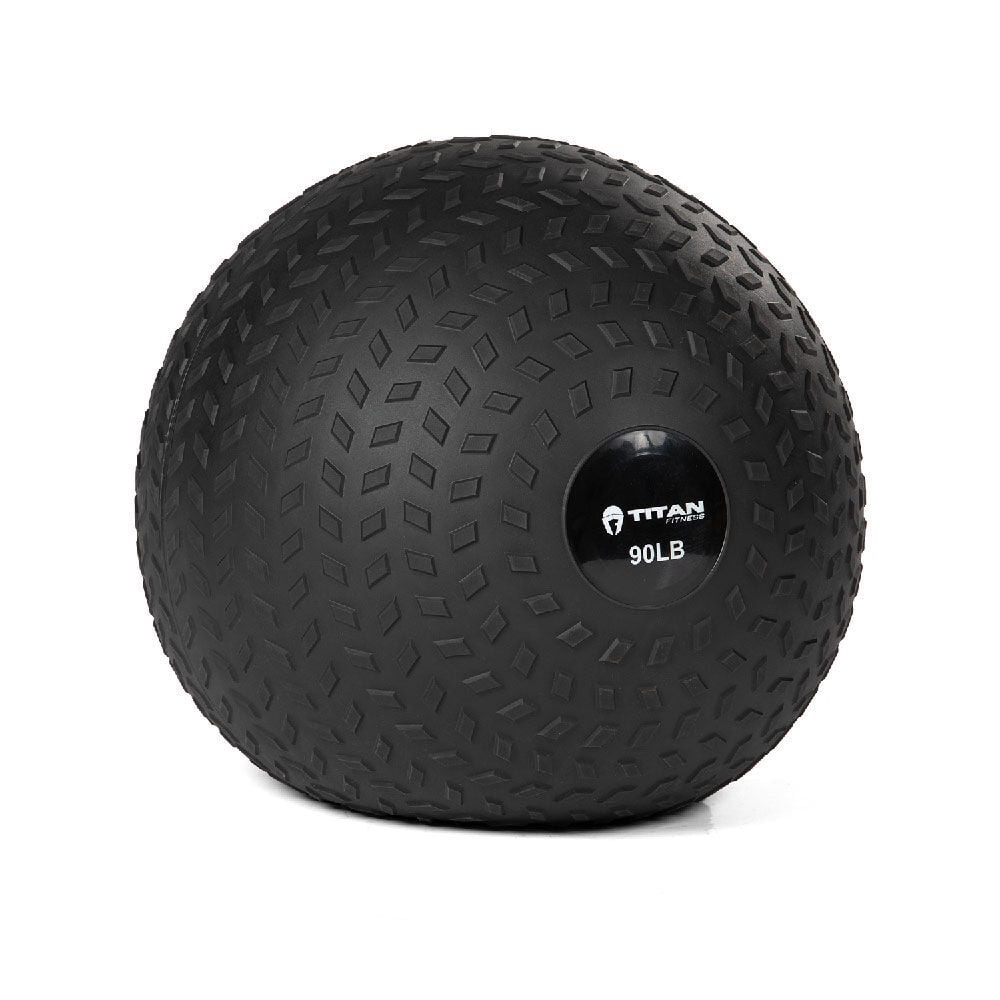
Titan Fitness Rubber Tread Slam Ball
Best Grip and Heavy Slam BallQuick specs
- Fill - sand, dead bounce
- Shell - rubber with deep tire tread
- Texture - aggressive tire-tread grip
- Weight range - 10-100 lb
The grippiest ball here, and the one that scales heaviest among the value picks. A deep tire-tread surface holds a sweaty hand, and the line runs up to 100 lb.
Summary of experience, tests & opinions
The high points
- It is the ball Steve’s sweatiest clients ask for by name. The chunky tread reads as confidence-inspiring the second they pick it up, so the people most likely to lose a slick ball mid-set gravitate to this one.
- The deep tread doubles as a brake on the floor. When a throw lands a touch off-center it stays put instead of skittering away, which matters in a tight garage where a runaway ball clips a rack.
- The tread hides wear well. Months of dragging it across rough concrete have not left the bald, polished patch a smooth ball picks up, so it still looks and grabs like new.
The low points
- The deep grooves trap chalk and floor grit, so it leaves a faint dusty smear on light flooring and wants a quick wipe before it goes back on the rack. A smooth ball never does this. Small thing, but you notice it in a tidy gym.
Pros & cons
Pros
- Aggressive tire tread - the grippiest surface on the list, which keeps a sweaty hand locked on through the throw.
- Scales to 100 lb - it climbs higher than the REP or Rogue for a strong athlete, without a premium price.
- Strong value - you get heavy-duty grip and a wide range for a mid-tier spend.
Cons
- Tread can chew the palms - the aggressive surface is rougher on the hands than a lightly textured ball over long sets.
- Shell is a step behind the best - it holds up well but does not feel quite as overbuilt as the REP or Fringe Sport.
Read more about the Titan Fitness Rubber Tread Slam Ball
The Titan earns its slot on grip.
The tire-tread surface is the most aggressive here, and if your hands sweat hard it is the ball that will not betray you on the way up. Steve, our certified personal trainer, ran it through sweaty conditioning circuits with clients and nobody had it slip, even on overhead work where a slick ball is most likely to escape, and the deep tread doubles as a floor grip so it does not skitter away when it lands a touch off-center. The catch is that the same aggressive tread you love mid-set can chew at your palms: after a long high-rep finisher mine felt almost like a light rope burn, nothing chalk and a wipe-down did not settle, but you notice it on the last few rounds. Titan does also sell a smoother classic version of this ball if the tread sounds like too much, though the tread is the one we are scoring.
The trade-off vs the REP is the shell and the feel. The REP lands a touch deader and feels a touch more overbuilt, and the Titan gives a little of that back for far better grip and a 100 lb ceiling that the REP and Rogue cannot match without a premium-brand price tag. For sweaty hands and heavy slams, that is the right trade, and it is exactly why the Titan tops the grip chart while sitting a step behind on shell.
If your hands stay dry and you would rather a gentler surface, this is not your ball.
On grip and texture, nothing else here is close:
Bottom line
Buy the Titan Rubber Tread if you sweat hard, slam heavy, or both. The tire-tread grip is the best on this list and the line runs up to 100 lb, so it is the value pick for an athlete who needs both grip and weight. Skip it if your hands stay dry and you would rather a softer surface, because that deep tread is rougher on the palms than you may want.
For most strong, sweaty lifters it is the smart spend, getting you grip and range that the pricier balls do not beat. If you want the deadest landing instead, the Rogue Echo is the one to weigh it against.
The Titan Rubber Tread might be for you if… you sweat through your sessions and want a ball that scales heavy without a premium price.
It’s not for you if… you want the deadest feel or the gentlest surface, in which case the Rogue Echo or REP suit better.
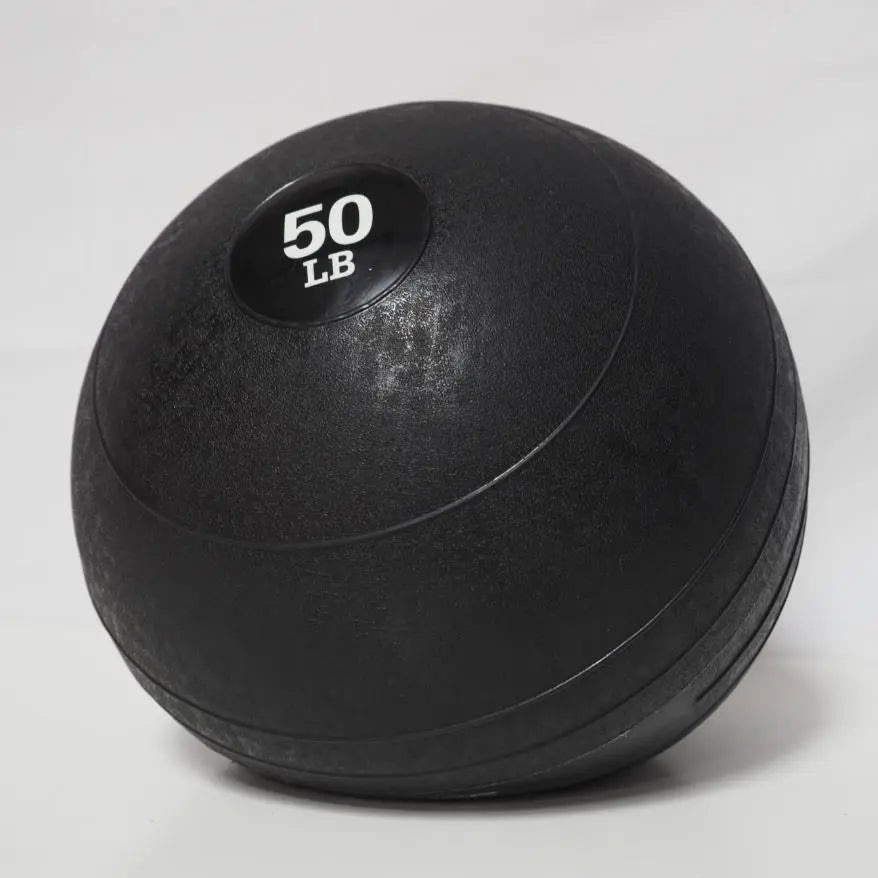
Fringe Sport Slam Ball
Most Durable Slam BallQuick specs
- Fill - sand, dead bounce
- Shell - heavy-duty rubber, flush seam
- Texture - lightly textured, grip rings
- Weight range - 10-150 lb
The toughest shell on the list. A flush, almost seamless build and a no-questions-asked guarantee make this the ball to buy if your worry is splitting.
Summary of experience, tests & opinions
Where it earns its keep
- It is the buy-it-once choice for people who have already binned a couple of balls. The ones in our community who own it stop talking about durability entirely, which is the highest praise a slam ball gets: they forget about it.
- The guarantee is the kind you actually use without a fight. A member who had a rare early failure told me the replacement turned up with no interrogation, so the cover on the box reads as real rather than fine-print.
- It outlived a torture test I expected it to lose. I slammed a 50 onto a thin mat over concrete for weeks waiting for trouble, and the only thing that wore out was the mat underneath it.
Where it gives ground
- It hits the floor with a thud you feel through the slab, heavier-landing than the rest, so I moved my slam zone onto a thicker mat to keep the house happy. The solidity that protects the ball is the same thing your neighbors hear.
Pros & cons
Pros
- Flush, almost seamless build - the seam sits so tight it is hard to find, which removes the usual first point of failure.
- No-questions-asked guarantee - the satisfaction guarantee sits on top of the warranty, so a failure is genuinely covered.
- Climbs to 150 lb - the heaviest ceiling on the list for the strongest athletes.
Cons
- Priciest pick here - you pay a premium for the toughness, which drags the value score down.
- Some sizes sell out - several of the weight options can be out of stock when you go to buy.
Read more about the Fringe Sport Slam Ball
The Fringe Sport is the ball you buy when your real fear is sweeping sand off the floor.
Its shell is the toughest here, and the seam is the whole story. Run a finger across it and you can barely feel where the shell joins, and that flush join is exactly the spot that splits first on a lesser ball. I dropped a 50 lb one onto a thin mat over concrete for weeks expecting the seam to start opening, and it never did, where a cheaper ball of mine had split inside a month, and owner reports across our community say the same thing: years of slams and no failures. Back that with a no-questions-asked satisfaction guarantee sitting on top of the warranty and you have the lowest-risk shell on the list, the one for the buyer who treats slam balls as consumables and is sick of replacing them. One side effect of all that solidity: it is heavy in the box and lands with a thud you feel through the floor more than the others, so I moved my slam zone onto a thicker mat.
What you pay for that is, well, what you pay. It is the priciest pick, which drags the value score down, and on dead feel and grip it sits mid-pack rather than leading, so the REP is the better all-rounder for most.
Two things to know before you buy: it climbs to 150 lb for the strongest athletes, the heaviest ceiling here, but several of those weight options can be out of stock when you go to order. Where the Fringe Sport wins outright is the one thing it is built for.
On durability and shell, it is the toughest ball we tested:
Bottom line
Buy the Fringe Sport if a split ball is your nightmare and you want the toughest shell money buys. The flush seam removes the usual weak point, the guarantee covers you if it ever fails, and the line climbs to 150 lb for the strongest athletes. Skip it if you want the best all-round value, because it is the priciest ball here and only leads on durability.
For the buyer who treats slam balls as consumables and is sick of replacing them, this is the one that breaks the cycle. For everyone else, the REP gets you most of that toughness for less.
Yes4All Slam Ball
Best Budget Slam BallQuick specs
- Fill - sand, dead bounce
- Shell - rubber
- Texture - tread or triangle grip
- Weight range - 10-40 lb
The value pick. It is the cheapest way onto a real slam ball, lands dead enough for the work, and comes in a stack of colors and grip patterns.
Summary of experience, tests & opinions
What’s good
- It is the no-regret way to find out if you even like slamming. My first proper slam ball was one of these, and it taught me the movement without me sweating over whether I had picked the wrong ball.
- It arrives ready to go with nothing to learn. Out of the box it slammed dead and held shape through a few weeks of my abuse, no break-in window and no fiddling with air to get there.
- It is the one I steer parents and casual users toward. For a kid messing about or someone slamming twice a week, it does everything they will ever ask of it for the least outlay.
What’s not
- Set a 20 lb one next to a dedicated ball and the gap shows up in your hands: it sits a touch lighter and looser, with a faint sand-shift on the throw. It still does the work, you just feel where the corner was cut.
Pros & cons
Pros
- Lowest price on the list - the cheapest route onto a genuine sand-filled, dead-bounce slam ball.
- Tread or triangle grip - you pick the grip pattern, which most budget balls do not let you do.
- 30-day Amazon returns - a faulty ball is simple to return or replace inside the window.
Cons
- Shell is a step behind - the build does not match the dedicated brands, and a minority of owners report early failures.
- Caps at 40 lb - the narrowest top end here, fine for most but not for a strong athlete climbing.
Read more about the Yes4All Slam Ball
The Yes4All is the Amazon staple that gets a lot of people into slam-ball training for very little money.
It is sand-filled in a PVC shell and lands dead enough for the work, and for light to moderate use it holds up better than the price suggests. My first proper slam ball was one of these, and it taught me the movement without punishing a wrong buy; I ran a 20 lb one through a few weeks of slams and it landed dead and held its shape where I half-expected it to go soft. The genuinely nice touch at this tier is choice: you pick black, blue, orange, or teal and either a tread or triangle grip pattern, which most budget balls do not let you do and which matters when you are building a room you actually want to train in.
Pick the tread if your hands sweat. The triangle pattern is the smoother of the two.
Where it gives ground is the shell. Set against the REP, the 20 lb Yes4All feels a touch lighter and looser in the hand, with a faint sand-shift on the throw, and you feel where the money was saved the moment you pick a dedicated ball up next to it. Our community owner reports are split, with most happy across years of use and a minority reporting a ball that broke down inside a few months, and it caps at 40 lb where the dedicated lines climb far higher. The 30-day Amazon return window covers you if you draw a dud.
That is the budget trade. For occasional or light use it is an easy one to make; if you slam hard and often, step up to the double-thick REP and buy once.
That is why it tops the lineup on value for money:
Bottom line
Buy the Yes4All if you want into slam-ball training without spending much, and your use is light to moderate. It lands dead, gives you a grip and color choice the pricier balls do not, and the Amazon return window covers you if you draw a dud. You give up shell longevity, which is the one place the saving genuinely shows.
For the most ball at the lowest price, this is the pick. If you slam hard and often, step up to the double-thick shell of the REP and buy once instead.
How we created this list of best slam balls
Here are the criteria we used to pick these slam balls, and how much each one counted:
- Durability and shell (35%)
- No-bounce and dead feel (25%)
- Grip and texture (20%)
- Weight range (10%)
- Value for money (10%)
You can read all about our selection process here.
Other slam balls we tested - close but no cigar
- TRX Kevlar Medicine Ball - a genuinely tough Kevlar-wrapped ball, but it is built and priced more as a heavy-duty medicine ball than a true slam ball, so it lost out to the Fringe Sport on slam-specific value.
- Living.Fit Slam Ball - a solid dense-rubber ball with a good textured grip and a 5 to 100 lb range, but it does not beat the Titan on grip or the Yes4All on price, so it lands between them.
- ProsourceFit Slam Ball - a fine cheap option, but the shell and grip sit a notch below the Yes4All at a similar price, which is why the Yes4All takes the budget slot.
- Rogue MK D-Ball - a superb, ultra-tough ball, but it is a soft-shell D-ball for lifting and loaded carries, not a true throw-it-down slam ball, so it sits outside this list.
Slam ball FAQs
What is the best slam ball?
The best slam ball is the REP Fitness Slam Ball.
Its double-thick shell and reinforced valve shore up the seam and the air valve, the two spots where a slam ball usually gives out, and the 5 to 70 lb range covers nearly everyone.
For the deadest possible landing, the Rogue Echo Slam Ball is the one to beat.
What is the difference between a slam ball, a medicine ball, and a wall ball?
A slam ball is sand-filled and dead, built to be thrown at the floor at full force with no bounce back.
A medicine ball is firmer and has some bounce, so it suits chest passes and rotational throws rather than hard floor slams.
A wall ball is large, soft, and padded for throwing at a target, which is why you would never slam one on concrete.
What weight slam ball should I start with?
Most people should start with a 10 to 20 lb slam ball and add weight as their technique holds up.
Beginners and most women tend to land in the 10 to 25 lb range, while stronger men often work in the 20 to 40 lb range.
Pick a ball line with a wide range, like the REP or Titan, so your next size matches the brand you already own.
Do slam balls bounce?
No, a properly built slam ball does not bounce.
The sand fill makes it land dead, which is the whole point and what makes it safe to slam overhead.
A ball that rebounds toward you is a sign of a bad design, not a feature, so deadness is exactly what we score in the no-bounce category.
Can you use slam balls indoors?
Yes, you can use slam balls indoors, and they are quieter and safer on a floor than dropping a loaded barbell.
Slam onto rubber gym flooring or a horse-stall mat rather than bare concrete, which protects both the floor and the ball’s shell.
A dead-landing ball like the Rogue Echo is the safest indoors because there is no rebound to chase across the room.
The bottom line
I spent a long time throwing these balls at the floor, because a slam ball lives a hard life and you want to buy one that takes it.
For most people, the REP Fitness Slam Ball is the call. The thick shell and beefed-up valve take the abuse without splitting, and the wide range means it is the only one you will need to buy.
If you want the deadest landing and the longest warranty, go for the Rogue Echo Slam Ball.
If your hands sweat or you slam heavy, the Titan Rubber Tread grips best and scales to 100 lb. And if money is tight, the Yes4All Slam Ball gets you training for the least cash.
There are two things to do now:
- If you want another look at the picks, click here to skip back to the table.
- If you want to put a pin in it, bookmark this page and come back. We re-test it and update the picks whenever a ball changes.
Stay strong.
