

We scored 67 wall- and ceiling-mounted pull-up bars across four categories and picked the five most worth your money.
I have fitted and trained on these bars for years; a well-mounted one is the sturdiest pull-up station at home short of a full rack. The team ran every bar here through our weighted scoring, so these picks come from data and owner reports, not one lifter’s hunch.
The aim was simple: find the bars that bolt in solid, clear the wall for a full rep, and take weighted and kipping pull-ups without flexing.
Let’s see how they stacked up…
Editor's note · updated June 22, 2026
We rebuilt this guide for 2026 and re-rated the field with it.
What changed:
- The REP Multi-Grip is the new overall pick, taking the top slot from the Titan. Its 700 lb rating and multiple grips now match the wider industry consensus, and it’s the bar most people should buy first.
- The Titan drops to best value/budget. It’s still the most bar per pound, with a thicker 11-gauge frame than the REP, just fewer grips.
- We dropped two sold-out picks. The PRx Profile Topper bar and the Bells of Steel adjustable bar are both out of stock, so the premium and ceiling slot now goes to the in-stock Rogue P-5V.
Related
A pull-up bar is one piece of the bodyweight puzzle. If a wall bar isn’t right for your space, see our best free-standing pull-up bars and the best power towers. For a full setup, our best squat racks almost all include a pull-up bar up top.
Compare the best wall-mounted pull-up bars
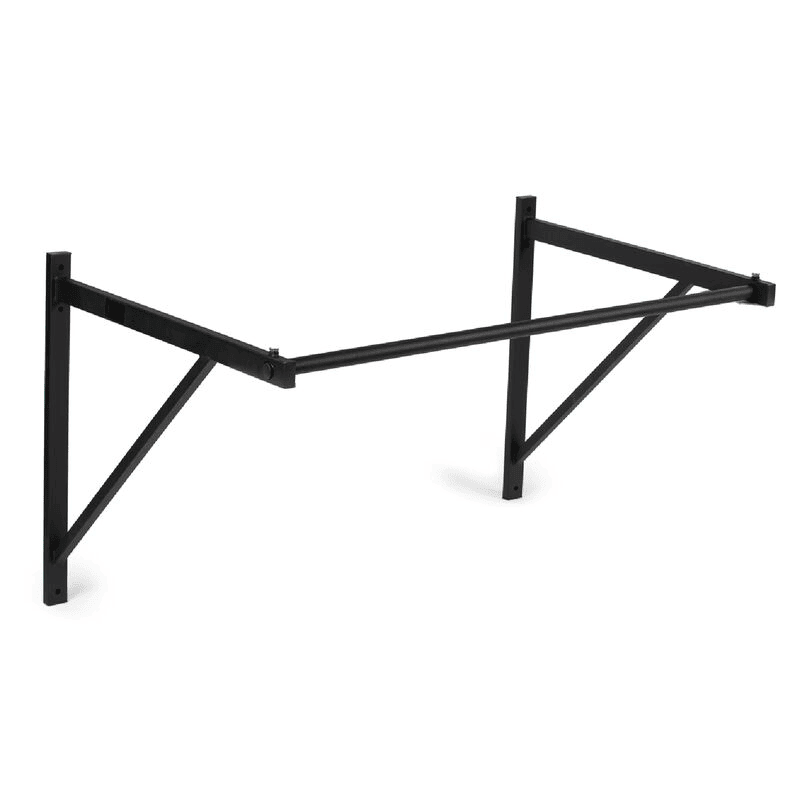 Titan Wall-Mounted
Check price
Titan Wall-Mounted
Check price
|
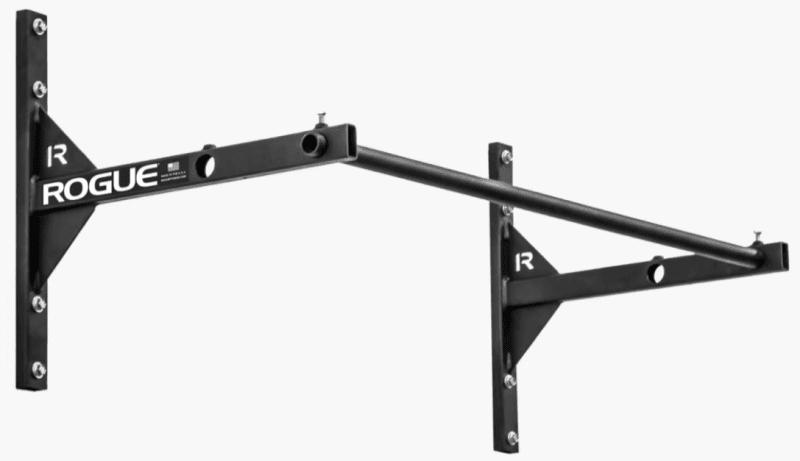 Rogue P-5V
Check price
Rogue P-5V
Check price
|
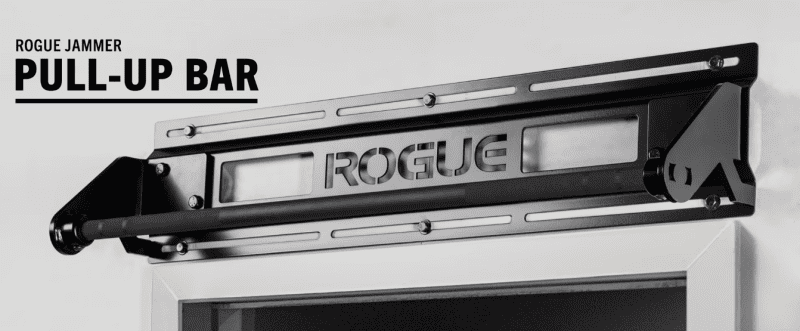 Rogue Jammer
Check price
Rogue Jammer
Check price
|
 Yes4All Multi
Check price
Yes4All Multi
Check price
|
||
|---|---|---|---|---|---|
| Best for | Overall | Value | Premium / ceiling | No-drill doorway | Cheap (Amazon) |
| Rating (*) | |||||
| Build & capacity | 88% | 90% | 92% | 88% | 74% |
| Grip options | 94% | 78% | 76% | 70% | 84% |
| Mounting & clearance | 84% | 86% | 88% | 90% | 72% |
| Value | 88% | 92% | 78% | 80% | 92% |
| Price | $$ | $ | $$ | $$ | $ |
| Capacity | 700 lb | 500 lb | High | High | 500-515 lb |
| Steel | 14-ga | 11-ga | 11-ga brackets | 0.375" plate | ~12-13 ga |
| Mount | Wall | Wall | Wall / ceiling | Doorway | Wall |
| Made in USA | No | No | Yes | Yes | No |
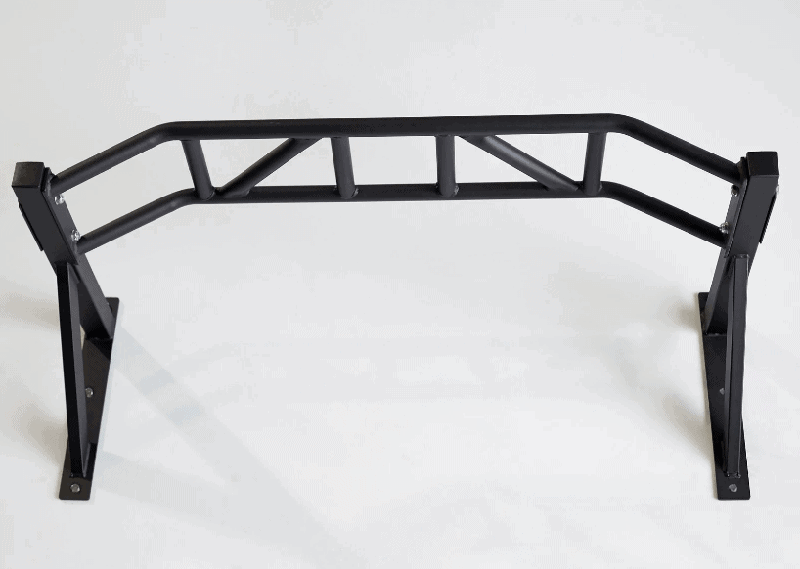 REP Multi-Grip
Our testing and selection process
How we assess wall-mounted pull-up bars
We run every pull-up bar roundup through the same five steps:
- We start as the buyer. Most of our team has drilled at least one of these into a garage wall, so we know which specs matter and which marketing numbers don’t.
- We research wide. We pull steel gauge, capacity, grip layout, wall clearance and mounting hardware, plus owner feedback, on as many bars as we can find, 67 this time, into one spreadsheet.
- We score each bar with our weighted system. Data decides the ranking, not brand loyalty.
- We split the field by job, because a flush wall bar, a ceiling system and a no-drill doorway bar are bought for very different rooms.
- We get hands-on where we can and lean on the SHG community for the rest.
You can read more about the process in our review guidelines.
How we score wall-mounted pull-up bars
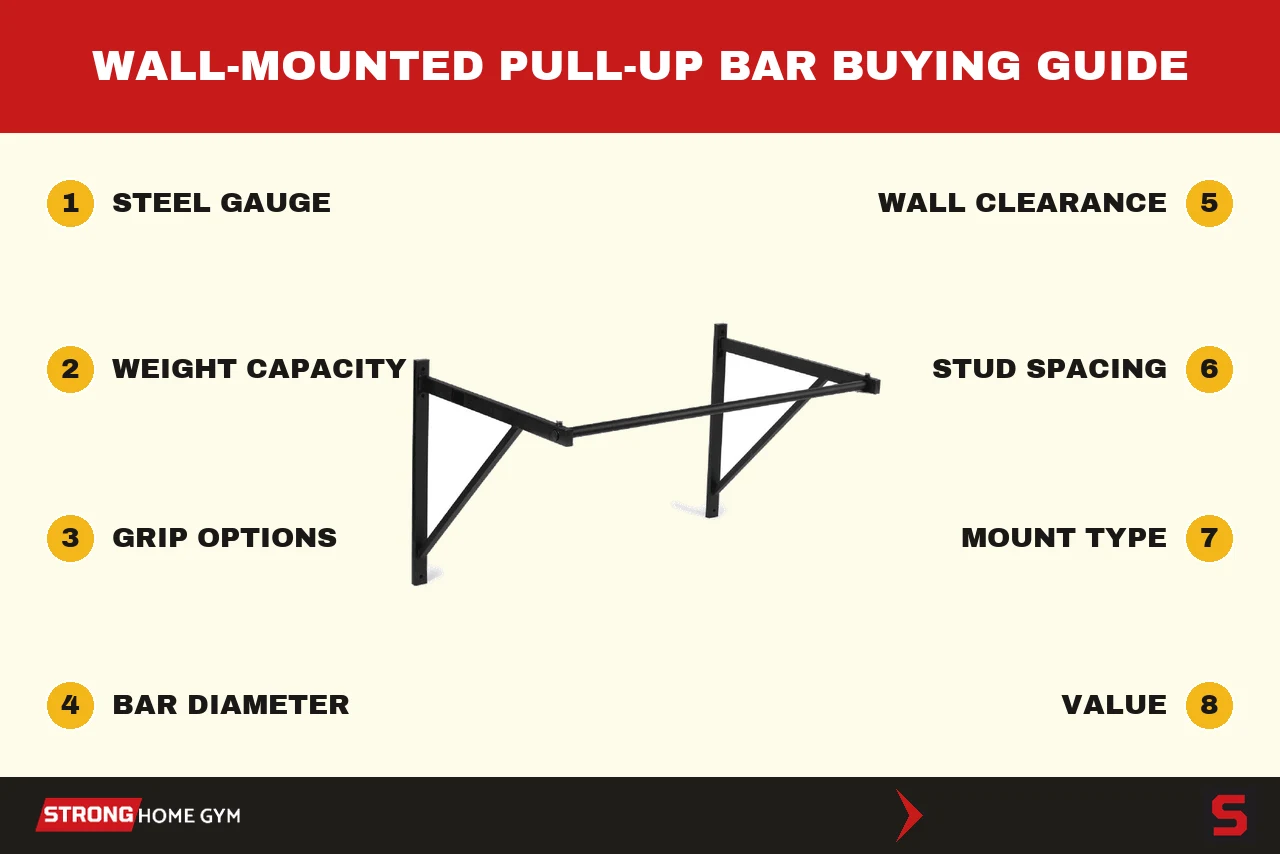
Here is what feeds the score and how much each part counts. Build leads, because a bar bolted over your head has to be beyond doubt.
We grouped it into four weighted factors:
- Build & capacity (30%) - steel gauge, welds, weight rating, and the mounting hardware.
- Grip options (25%) - the number and spread of grips, plus bar diameter and comfort.
- Mounting & clearance (20%) - how it fixes to your wall or ceiling and how far it holds you off it.
- Value (25%) - what you actually get for the money.
Build & capacity (30%)
This carries the most weight, for the obvious reason: the bar is over your head and you are swinging your full weight off it. We look hard at the steel and the brackets, because that is what carries the load into your wall.
Thicker steel matters more than a big capacity number on the box. An 11-gauge frame has a thicker tube wall than a 14-gauge one, so it flexes less under a heavy or kipping rep. The honest catch is the rating only holds if your fixings do, so the bar is only ever as strong as the studs behind it.
Grip options (25%)
A single straight bar covers the basic pull-up and chin-up. The bars that score highest here add neutral and angled grips so you can hit the back from more directions and spare your shoulders on the days a straight bar bites.
Bar diameter plays in too. Most home bars run around 1.25 inches, which suits most hands; a fatter bar is a grip-strength tool in its own right but harder to hold for high reps.
Mounting & clearance (20%)
Two practical things decide whether a bar suits your room: how it fixes up, and how far it holds you off the wall. We score both.
Most wall bars bolt to studs at 16-inch centres and hold you roughly 9 to 14 inches out, enough to clear your knees. Doorway-style mounts sit closer because you hang into the doorway, and ceiling systems drop you into open space away from any wall. Too little clearance and you bark your knees on every rep, which is the spec people most often overlook.
Value (25%)
We build a quality-adjusted picture of price. A pull-up bar is a cheap piece of kit next to a rack, so the question is how much solid steel and how many useful grips you get for a fair outlay. A budget bar that mounts solid and does the job can score as well here as a premium one.
Find the perfect wall-mounted pull-up bar for you
Overall | Value | Premium | Doorway | Cheap
Here is how the five bars stack up on our overall score:
REP Fitness Wall-Mounted Multi-Grip Pull-Up Bar
Best OverallQuick specs
- 14-gauge steel (2 mm wall), 700 lb capacity
- 1.25” front bar, 2” back bar
- Grips from 6” neutral to 28.4” wide
- Non-slip powder coat
The bar that does the most for the most people: the highest weight rating here and a full spread of grips, for fair money.
Summary of experience, tests & opinions
What I like
- The grip spread is the thing you feel most. Neutral close, neutral wide, plus the straight bar, so I rotate holds within one session instead of hammering my shoulders on the same line.
- The 700 lb rating means weighted pull-ups never give me a second thought, even with a heavy belt on.
- The non-slip coat has a bit of bite to it, so my hands stay put on the last grim rep of a set.
What I don’t
- It’s 14-gauge, a touch thinner than the Titan’s 11. You won’t notice it on a strict rep, but a hard kip shows a fraction more give.
- With the front and back bars it stands a little further off the wall than a plain bar, so check you have the depth before fitting.
Pros & cons
Pros
- Multiple grips, 6” to 28.4” - the widest spread of holds on the list.
- 700 lb capacity, the highest here, so weighted work is a non-issue.
- Non-slip powder coat for grip when your hands sweat.
Cons
- 14-gauge frame, thinner than the Titan’s 11-gauge.
- The twin bars need a bit more wall depth than a single-bar mount.
Read more about the REP Multi-Grip
This is the bar I’d point most people to now.
It wins on the two things you actually use every session. You get a genuine range of grips, and a rating high enough that weighted pull-ups never enter your head. The wider home-gym world has landed in the same place, which is why it took the top slot off the Titan this year. Once you’ve lived with it, that flexibility quietly matters more than a slightly thicker tube.
Who’s it for? Anyone kitting out a shared home gym, where one bar has to keep several people happy.
A close neutral hold, a wide neutral hold and the straight bar across the front mean a tall lifter, a shorter partner and a teenager can all find a line that suits them off the same fixing. Grumbly shoulders on a wide pronated grip? The neutral handles are the easy fix.
Who should skip it? If you only ever do straight pull-ups and chin-ups, you’re paying for handles you won’t touch. The Titan is the thicker, cheaper bar, and on a strict straight-bar rep there’s nothing in it on feel. The REP only pulls ahead the moment you want a neutral or angled hold, which most people do once they’ve had a taste.
The lived detail our team kept coming back to is depth. The twin front and back bars hold you that bit further out, brilliant for knee clearance but greedy on floor space if your bar wall faces a rack or doorway. The frame itself is fairly compact though, the side mounts only 17.5 inches tall, the bar about 21 inches off the wall, so it tucks in better than the spread of grips suggests.
Here is that grip spread to scale, from the close neutral hold out to the widest line:
It tops our grip-options score by a clear margin:
Bottom line
The REP Multi-Grip is the do-everything wall bar: the most grips, the highest capacity, fair money. The only trade is a slightly thinner frame than the budget Titan.
The REP might be for you if… you want one bar that covers every grip and takes weighted work without a thought.
It’s not for you if… you only do straight pull-ups and want the thickest, cheapest steel. The Titan is your bar.
Titan Wall-Mounted Pull-Up Bar
Best ValueQuick specs
- 11-gauge steel, 32 mm powder-coated bar
- 53.5” long, 500 lb capacity
- 25 lb product weight
- Wide and neutral grip options
The most bar per pound here: a thick 11-gauge frame and a solid mount for the lowest price of any quality pick on the list.
Summary of experience, tests & opinions
What I like
- It feels like more bar than it costs. The 11-gauge frame is dead solid under a normal pull-up, with none of the flex you half-expect at this price.
- The 32 mm bar is a comfortable diameter for high-rep sets, easy to hold without chewing your palms.
- Mounting is straightforward into studs, and once it’s up it just disappears into the wall and gets on with it.
What I don’t
- It’s a simpler grip layout than the REP, so if you want lots of neutral and angled holds you’ll feel the gap.
- The powder coat and finish are functional rather than fine. It does the job; it won’t win any beauty contests.
Pros & cons
Pros
- 11-gauge frame for budget money - thicker steel than pricier bars.
- Comfortable 32 mm bar and a clean stud mount.
- 500 lb capacity, plenty for bodyweight and moderate weighted work.
Cons
- Fewer grip positions than the multi-grip bars.
- Plain finish, no frills.
Read more about the Titan Wall-Mounted
For years this was our overall pick.
It lost the top spot to grip flexibility rather than any weakness in the build. As a piece of steel it’s still the toughest budget bar here, the 11-gauge frame actually thicker than the REP’s 14. You feel that solidity the moment you load a heavy rep onto it. The score gap is grips alone.
Who’s it for? The straight-bar lifter on a budget.
If your pull-up work is the classic three positions, narrow, shoulder-width and wide, and you’d rather sink the saved money into plates, this is the honest smart buy. The 32 mm bar is the detail the team kept praising. A touch fatter than the usual 1.25 inch tube, it spreads the load across the hand and stops the bar biting into your palms by rep fifteen.
Who should skip it? Anyone who wants to rotate grips within a session, because the REP has the neutral and angled holds this bar doesn’t, and once you’ve trained with those most people don’t go back, which is the single reason it edges ahead despite costing more.
Now a word from fitting ours, because it’s the thing the spec sheet won’t tell you. The supplied hardware is fine but basic, and the bare powder coat is functional rather than handsome. None of that matters once it’s up. What does matter is the mounting: treat the included bolts as the bare minimum, hit the studs squarely with proper lag bolts, and never trust a fixing into plasterboard alone.
Get that right and it’ll outlast the gym around it.
On value, only the cheap Amazon pick keeps pace:
Bottom line
The Titan is the value champion: the thickest steel on the list for the least money. You give up the multi-grip spread, and that’s the only real catch.
The Titan might be for you if… you mostly do straight pull-ups and want the most solid bar for the smallest spend.
It’s not for you if… you want a range of neutral and angled grips. Step up to the REP.
Rogue P-5V Garage Pull-Up System
Best Premium / CeilingQuick specs
- 1×2” 11-gauge brackets, USA-made
- 52” × 1.25” bar
- 14” or 22” depth off the mount
- Wall or ceiling, 16” to 48” stud span
The premium pick that hangs you out in open space: a Rogue-built system you can wall- or ceiling-mount, with the clearance to swing freely.
Summary of experience, tests & opinions
What I like
- Ceiling-mounting is the reason to buy it. Hung from the joists, you swing in clear air, which makes kipping and big sets feel completely unrestricted.
- It’s Rogue, so the brackets and welds are exactly what you’d expect: overbuilt and faultless.
- The 14-inch or 22-inch depth options let you set how far out you hang, and it spans an adjustable stud range so it fits awkward framing.
What I don’t
- It’s a single straight bar, so there are no neutral or angled grips. You’re paying for build and clearance instead of variety.
- The clearance that makes it great needs the room to match. In a low or shallow space it’s overkill, and the value score reflects the premium.
Pros & cons
Pros
- Wall or ceiling mount - the only pick here that hangs you in open space.
- Rogue 11-gauge brackets and USA build, overbuilt as standard.
- Adjustable depth and stud span to fit tricky framing.
Cons
- Single straight bar, no multi-grip options.
- Premium price, and it needs the space to justify the clearance.
Read more about the Rogue P-5V
This is the pick for someone who wants room to move.
Bolt it to the ceiling and you get something none of the wall bars here can match: a bar hanging in open air, with 14 or 22 inches of nothing behind you. For kipping, or for anyone who hates the thought of clipping a wall on the way down, that freedom is the whole point. Rogue build sits behind it, so the brackets and welds are exactly what you’d hope.
Who’s it for? The lifter with the headroom to use it.
A garage or basement with reachable joists and the ceiling height to swing freely is the ideal home. CrossFit-style athletes get the most out of it, since the open-air hang lets you cycle toes-to-bar and muscle-ups without ever thinking about the wall. The adjustable depth and the wide stud span were the practical wins our team rated highly, because they let it fit awkward framing that a fixed-bracket bar would fight.
Who should skip it? Two groups.
Anyone after grip variety, because it’s a single straight bar and the REP beats it outright on holds. And anyone in a low or shallow room, where the clearance that makes it special becomes clearance you can’t use. The premium here buys build and freedom over features, so if your space can’t cash that in, a flush wall bar does the same daily job for far less.
One thing owners flag: ceiling-mounting is a genuinely solid job. You want the bar centred on good joists, and many people add noggins or a backing board to spread the load and kill any flex. The wall-mount route is far quicker: one person can fit it with a helper in under half an hour, four 3/8-inch lag screws four inches long each side, and it takes full bodyweight without a flicker. Want the same system but wider? The P-6V is the longer-bar sibling, built identically, and either one needs solid timber behind it.
Here is the difference the two mounts make to how you hang:
Bottom line
The Rogue P-5V is the premium, open-air pick: wall- or ceiling-mounted Rogue build with clearance to swing freely. The trade is a single bar and a premium price.
The P-5V might be for you if… you want a ceiling-mounted bar with room to kip and Rogue build behind it.
It’s not for you if… you want multiple grips or you’re on a budget. The REP or Titan make more sense.
Rogue Jammer Pull-Up Bar
Best No-Drill / DoorwayQuick specs
- 43” × 8.875” laser-cut stringer
- 0.375” steel brackets, 1.125” bar
- 7” wall extension on centre
- Mounts above a doorway into studs
The space-saver with proper build: a Rogue bar that mounts above a doorway and sits just 7 inches out, ideal where a full wall bar won’t fit.
Summary of experience, tests & opinions
What I like
- It solves the problem of a room with no spare wall. Mounted over a doorway it’s there when you want it and invisible when you don’t.
- Because it bolts into studs with thick 0.375” brackets, it feels rock-solid, miles away from a wedged tension bar that creeps down the frame.
- You hang into the doorway, so the 7-inch extension is all the clearance you actually need.
What I don’t
- The 1.125” bar is the thinnest here, and on a single straight bar there are no other grips to switch to.
- It only works above a suitable doorway with studs in the right place, so it’s the least flexible to position.
Pros & cons
Pros
- Just 7” of wall extension - the most space-efficient mount here.
- Thick 0.375” laser-cut brackets bolted into studs, genuinely solid.
- Rogue build at a sensible price for a doorway bar.
Cons
- Thin 1.125” single bar with no grip variety.
- Needs a suitable doorway with studs, so placement is fixed.
Read more about the Rogue Jammer
This is the bar for the room with no good wall but a doorway going spare.
Instead of holding you out in front of a wall, it sits above the door frame and lets you hang into the opening, which is why it needs only 7 inches of extension. For tight garages and spare rooms, that’s a clever use of dead space. What sets it apart from the cheap tension bars people usually reach for is that it actually bolts in. The 0.375” brackets go into studs, so it carries real weighted work without the slow downward creep that makes pressure-fit bars feel sketchy.
Rogue build in a doorway form factor.
Who’s it for? The renter or the space-starved lifter who still wants something they can trust overhead. Ever wedged a tension bar in a frame and felt it shift a millimetre at the top of a rep? This is the cure. A bar that’s genuinely bolted in invites you to throw a weight belt on without a second thought, where a pressure-fit one quietly talks you out of it.
That changes how you train in a small home.
Who should skip it? Anyone chasing grip variety or free placement. The 1.125 inch bar is the thinnest here and it’s a single straight hold, so there’s nothing to switch to mid-session, and the REP is the far more flexible pick if you’ve a wall for it. It also only goes where you have a doorway with studs in the right spots, so placement is fixed rather than chosen.
The walkthrough below is the quickest way to see how it sits above the frame and where the brackets land:
It leads on mounting and clearance for tight spaces:
Bottom line
The Rogue Jammer is the space-saver done properly: a stud-bolted doorway bar that sits just 7 inches out. The trade is a single thin bar and a fixed spot.
The Jammer might be for you if… you have no spare wall but a solid doorway, and you want a bar that’s actually bolted in.
It’s not for you if… you want grip variety or freedom to place the bar anywhere. The REP is the more flexible pick.
Yes4All Multifunctional Bar
Best Cheap (Amazon)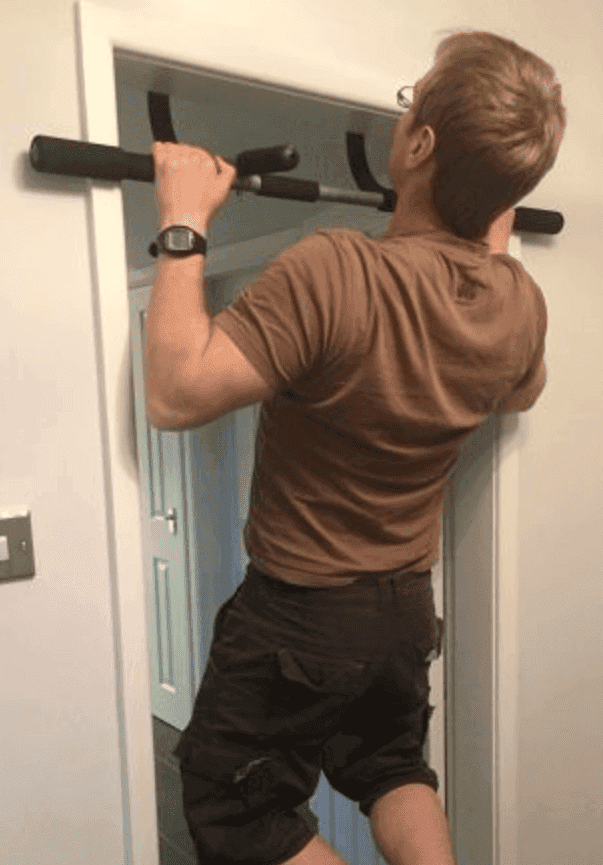
Quick specs
- Multi-grip + dip 2-in-1
- 50” × 1.25” bar
- 30” off the wall
- 500-515 lb capacity, powder-coated
The cheapest way in: a multi-grip bar that doubles as a dip station, for less than any of the brand-name bars here.
Summary of experience, tests & opinions
What I like
- For the money, getting a dip and leg-raise station built into the pull-up mount is genuinely good value. It’s the cheapest way to add two movements at once.
- The multi-grip layout covers the main holds, so a beginner gets plenty of variety without spending up.
- It mounts solidly enough into studs for bodyweight work, which is all most buyers at this price are after.
What I don’t
- The steel feels thinner than the Titan’s, my guess is around 12 or 13 gauge, so it’s not the bar for heavy weighted kipping.
- It stands a full 30 inches off the wall to make room for the dip cage, so it eats more space than a flush bar.
Pros & cons
Pros
- Pull-up and dip 2-in-1 - two stations for one cheap price.
- Multi-grip layout covering the main holds.
- Cheapest pick here with a usable 500-515 lb rating.
Cons
- Thinner steel than the brand-name bars, not for heavy kipping.
- Sticks 30” off the wall, so it needs more clearance.
Read more about the Yes4All Multifunctional
This is the budget entry point, and its trick is doing two jobs at once.
Most cheap bars give you a place to do pull-ups and nothing else. This one builds a dip and leg-raise cage into the same wall mount, so for very little money a beginner gets three movements rather than one. As a first piece of bodyweight kit, that’s a lot of utility for the spend, and the multi-grip layout still covers the main holds on top.
The compromises are exactly what you’d expect at the price.
The steel feels thinner than the Titan’s 11-gauge, so I wouldn’t load it up for heavy weighted kipping, and the dip cage stands it a full 30 inches off the wall. That’s a lot of room next to a flush bar. Within those limits, it does what it promises. It’s the one Amazon pick here, so the link goes straight to Amazon rather than through our usual redirect.
Step up to a brand-name bar when your training outgrows it.
On value it sits right at the top, level with the Titan:
Bottom line
The Yes4All is the cheap all-rounder: pull-ups and dips in one budget mount. Thinner steel and a big wall footprint are the trade for the low price.
The Yes4All might be for you if… you want the cheapest way to add pull-ups and dips and you train mostly bodyweight.
It’s not for you if… you do heavy weighted work or want a flush, space-saving mount. The Titan or REP are sturdier.
What to know before you drill
A wall- or ceiling-mounted pull-up bar lives or dies on the mount, so two things matter more than any spec on the box.
Always fix into studs or joists
The bracket holes are spaced for standard 16-inch stud centres, and the lag bolts have to bite into solid timber. Drywall anchors will not hold your bodyweight plus the jerk of a rep, no matter what the packaging claims. Find the studs, mark them, and bolt straight in. If there are no studs where you want the bar, that’s the sign to look at a free-standing pull-up bar instead.
Measure your clearance first
Hold a broom handle where the bar will sit and do a slow mock pull-up. Your head, chest and knees all need to clear the wall. Standard wall bars hold you 9 to 14 inches out, a doorway bar like the Jammer less, and a ceiling system the most. It’s the single detail people most often get wrong, and there’s no fixing it once the holes are drilled.
Other wall-mounted pull-up bars we considered
Rogue P-6V. The wider sibling of our premium pick, built identically with a longer bar. If you want more room for a wide grip or a kip and you have the span to mount it, it’s the same quality call. Check the Rogue P-6V here.
PRx Profile Topper bar. Previously our money-no-object ceiling pick, and a lovely bit of kit, but it’s currently sold out at a steep price. We’ve moved the premium slot to the in-stock Rogue P-5V and will revisit if it returns. Check the PRx bar here.
XMark wall-mounted multi-grip bar. Effectively as good as the REP multi-grip, but it costs more for the same job, so the REP wins the slot. A fine alternative if you find it on offer.
The bottom line
If you want one wall-mounted pull-up bar and nothing specific is pulling you elsewhere, the REP Multi-Grip is the call. The most grips, the highest capacity, and a fair price make it the bar most home gyms will be happiest with.
From there it’s about your room and your budget. Want the toughest steel for the least money and you mostly do straight pull-ups? The Titan is the value pick. Got the ceiling height and want to swing in open air? The Rogue P-5V is the premium, open-air choice. No spare wall but a solid doorway? The Rogue Jammer tucks in at 7 inches. Just want the cheapest start with dips thrown in? The Yes4All covers it.
Whichever you pick, bolt it into studs, check your clearance with a mock rep first, and you’ll have the sturdiest pull-up station in the house for years.
Wall-mounted pull-up bar FAQs
Are wall-mounted pull-up bars any good?
Yes, a wall- or ceiling-mounted pull-up bar is the sturdiest home option short of a full rack. Bolted into studs or joists it holds far more weight than a doorway bar, takes kipping and weighted pull-ups without flexing, and frees up your doorways. The catch is you have to drill into solid timber and get the bar far enough off the wall that your knees and chest clear it. Get the mounting right and it will outlast almost anything else in the gym.
How much weight can a wall-mounted pull-up bar hold?
A quality wall-mounted pull-up bar holds anywhere from 500 lb to well over 700 lb when bolted into solid studs. The REP Multi-Grip on this list is rated to 700 lb, and the Titan to 500 lb. The real limit is usually your fixings and the timber behind them rather than the bar itself, so use the supplied lag bolts into studs or joists, never drywall anchors, and the rating will hold.
How far from the wall does a pull-up bar need to be?
A wall-mounted pull-up bar needs enough reach-out that your head, chest and knees clear the wall through a full rep, usually around 9 to 14 inches for a standard wall bar. Doorway-style mounts like the Rogue Jammer sit closer at about 7 inches because you hang into the doorway, while multi-station bars with a dip cage stand much further out. Always check the bar’s wall-clearance spec against your own height before you drill.
Do you need to drill into studs for a wall-mounted pull-up bar?
Yes, always bolt a wall-mounted pull-up bar into the wall studs or ceiling joists, never into plasterboard alone. The bracket holes are spaced to hit standard 16-inch stud centres, and the lag bolts bite into solid timber to carry your bodyweight plus the swing of a rep. Drywall anchors will pull straight out under load. If you can’t find studs where you want the bar, a free-standing pull-up rack is the safer route.
Wall-mounted or ceiling-mounted pull-up bar, which is better?
Wall-mounted bars are simpler to fit and sit close to the wall, which suits most garages and spare rooms. Ceiling-mounted systems like the Rogue P-5V hang you out in open space away from any wall, which is better for kipping and for rooms where the wall is awkward, but they need solid joists and more headroom. If you have the ceiling height and want clearance to swing freely, go ceiling-mounted; otherwise a wall bar is the easier win.
