

We scored more than 30 weight sleds across 4 quality categories and picked the 7 most worthy of your money.
I’ve spent 2 decades coaching and running my own commercial gym, and I’ve pushed, pulled, and dragged just about every kind of sled there is. The team ran my picks through our weighted scoring, so this is data and owner reports, not one person’s gut call.
The goal was simple: split sleds by the job you actually want done, not by brand, so you land on the right type first and the right product second.
Let’s see if we did a good job…
Editor's note · updated June 15, 2026
We rebuilt this guide for 2026 and rebuilt the rankings with it.
What changed:
- The REP Push-Pull Sled is the new #1 overall. It loads more weight than most home lifters will ever shift, costs less than the brand-name prowlers, and ships in stock. The Rogue Dog 1.2 drops to the most-versatile slot.
- We added the Freak Athlete Wheelbarrow Sled. It turns a sled into a loaded wheelbarrow walk, and it’s the all-rounder a lot of garage gyms are buying right now.
- The Torque Tank M3 is our new premium magnetic pick. Its rear wheels swivel, so the sled follows you on forward and reverse drags instead of veering off. Most buyers should still take the cheaper Tank M1, which we kept.
- Noise is now a scored criterion. Grinding steel on concrete is a fast way to fall out with the neighbours, so the quiet magnetic sleds score higher on surface and noise.
Related
We’ve trained on sleds next to every kind of kit over the years. For the floor under them, see our guide to the best home gym flooring. For the rest of the conditioning corner, see our guide to building a home gym for any budget.
Compare the best weight sleds
This table shows all 7 picks side by side. Scores come from our weighted rating, which we explain in the testing section below.
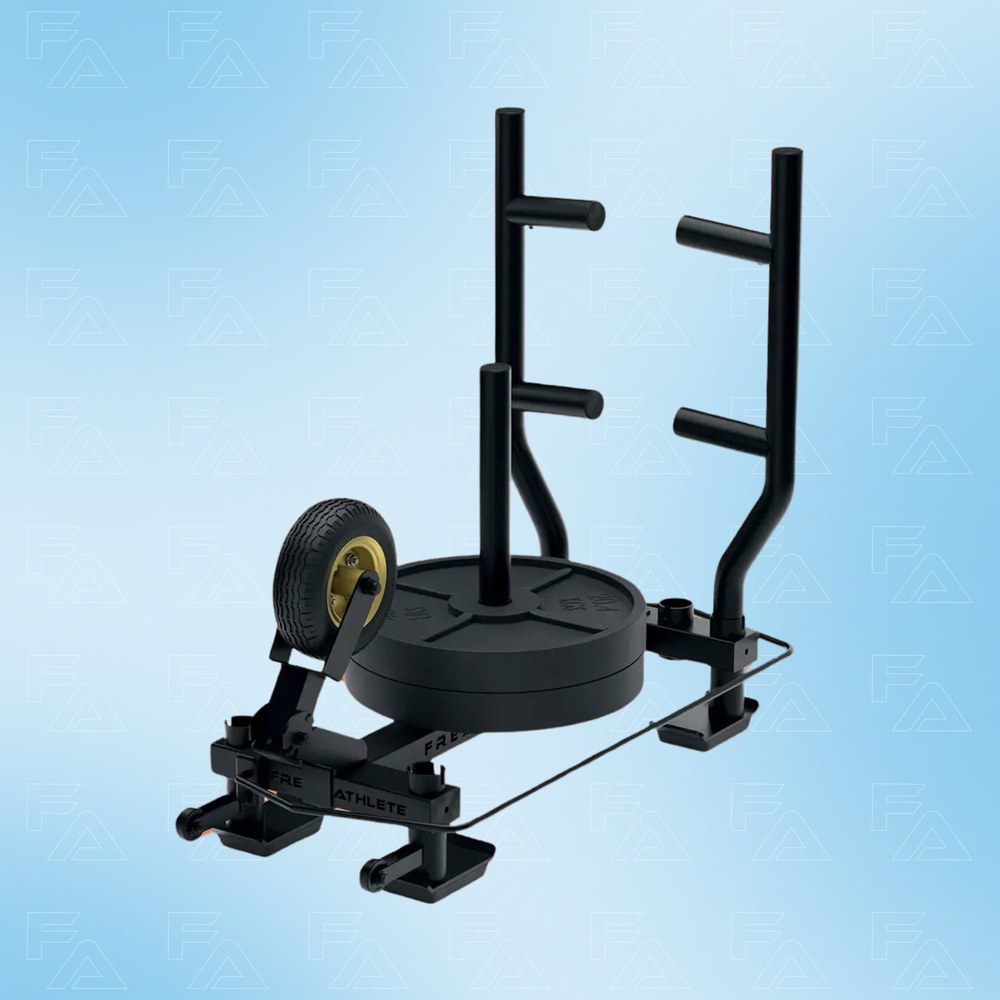 Freak Athlete
Check price
Freak Athlete
Check price
|
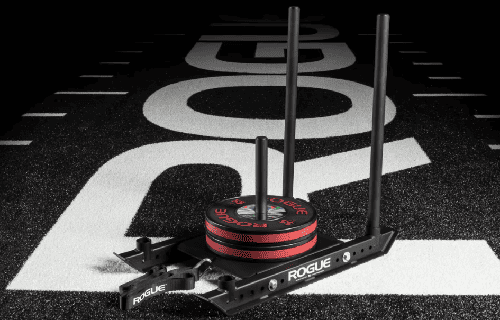 Rogue Dog 1.2
Check price
Rogue Dog 1.2
Check price
|
 Fringe Model A
Check price
Fringe Model A
Check price
|
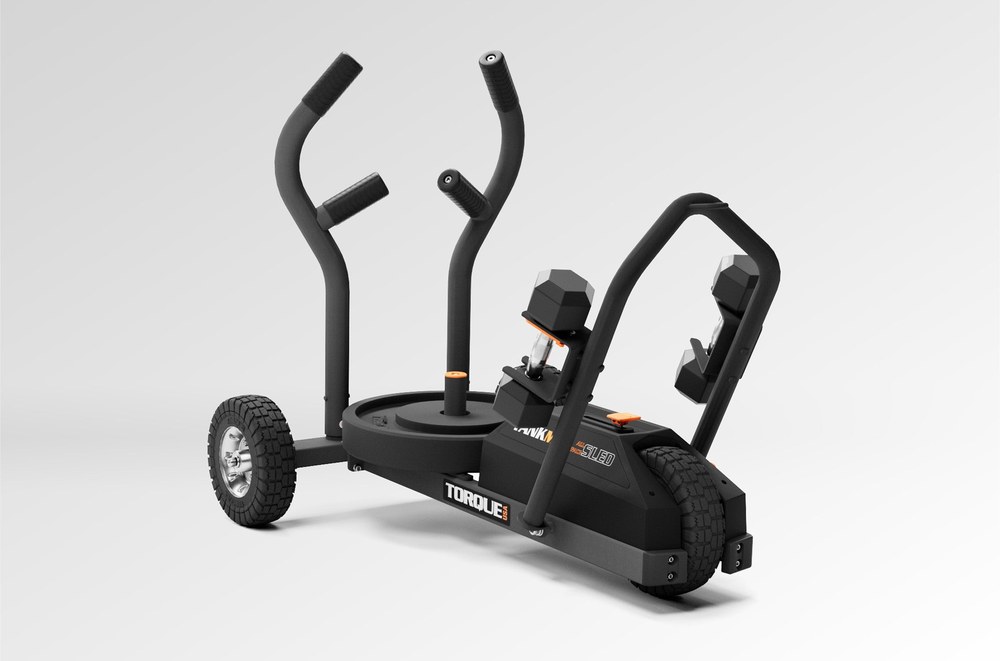 Torque Tank M1
Check price
Torque Tank M1
Check price
|
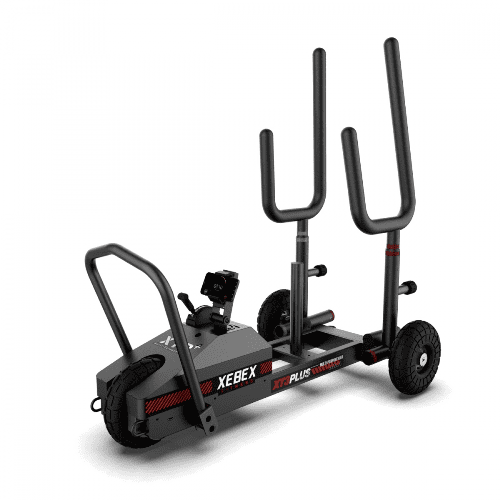 Xebex XT3
Check price
Xebex XT3
Check price
|
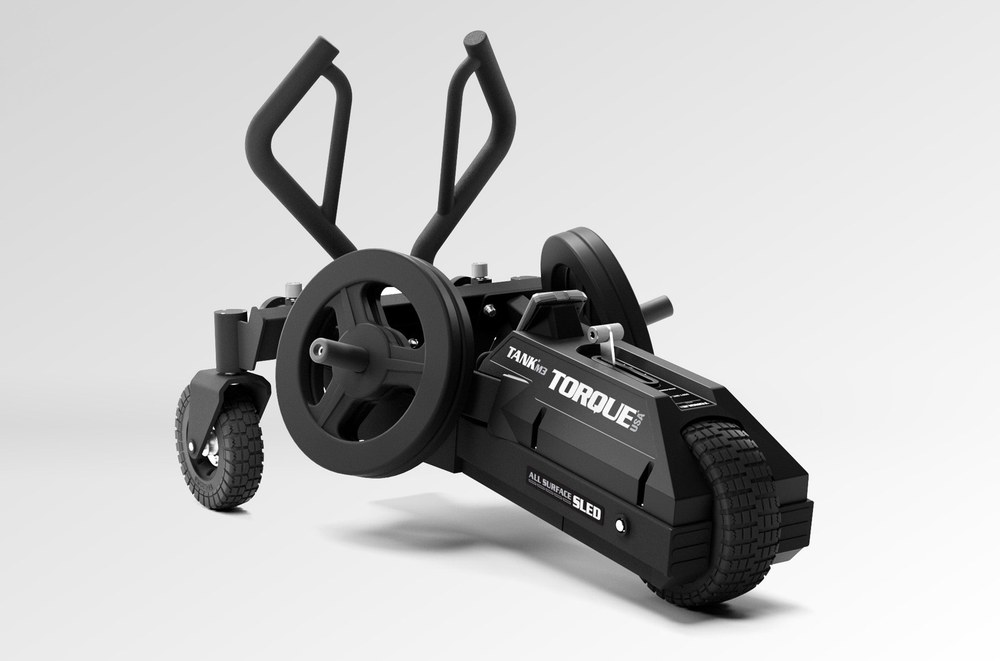 Torque Tank M3
Check price
Torque Tank M3
Check price
|
||
|---|---|---|---|---|---|---|---|
| Best for | Overall | Wheelbarrow | Most versatile | Drag & speed | Concrete & value magnetic | Wheeled magnetic | Premium magnetic |
| Rating | |||||||
| Build & durability | 90% | 86% | 95% | 87% | 91% | 87% | 96% |
| Resistance & versatility | 88% | 92% | 91% | 79% | 87% | 91% | 95% |
| Surface & noise | 84% | 90% | 91% | 89% | 96% | 93% | 97% |
| Resistance type | Plate-loaded | Plate-loaded | Plate-loaded | Plate-loaded | Magnetic | Magnetic | Magnetic |
| Value | 96% | 90% | 76% | 90% | 80% | 76% | 62% |
| Price tier | $$ | $$ | $$$ | $$ | $$$ | $$$ | $$$$ |
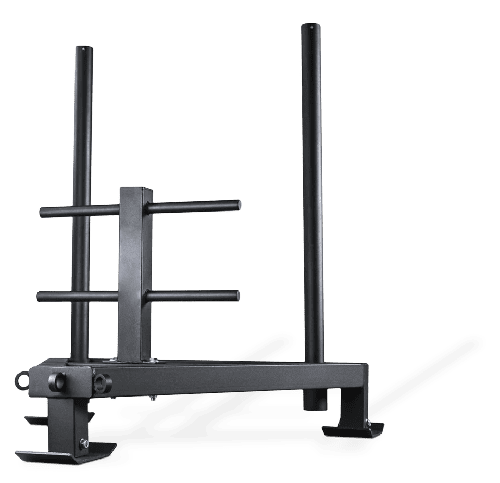 REP Push-Pull
Our testing and selection process
How we assess weight sleds
We run every sled roundup through the same 5 steps:
- We start as the buyer. Most of my team has bought, pushed, and broken a sled at some point. My own gym has cycled through prowlers, drag sleds, and magnetic units over 2 decades.
- We research wide. We pull specs, capacity, surface notes, and owner feedback on as many sleds as we can find, more than 30 this time, into one spreadsheet.
- We score each sled with our weighted system. Data decides the ranking, not brand loyalty.
- We split the field by job, because a speed sled and a magnetic prowler are bought for different reasons.
- We get hands-on where we can and lean on the SHG community for the rest.
You can read more in our review guidelines.
How we score weight sleds
Here’s what feeds the score and how much each part counts.
We grouped it into 4 chunks:
- Build & durability (30%) - the steel gauge, the welds, the finish, and the contact points that wear.
- Resistance & versatility (25%) - how much load it takes and how many jobs it does.
- Surface & noise (20%) - whether it runs on your ground without wrecking it or the peace.
- Value (25%) - what you get for what you pay, levelled across types.
Build & durability (30%)
Here is where the weight goes, and which parts take the punishment.
- Steel gauge (12%) - lower gauge means thicker steel. The best plate sleds here run 7 and 11 gauge. A sled gets dragged over concrete for years. Thin steel and a soft finish show it first.
- Welds and finish (10%) - clean welds and a hard powder coat. Cheap sleds chip and rust at the scuff points.
- Wear surfaces (8%) - skis, wheels, or tubes. The bit that meets the ground decides how long the sled lasts.
Resistance & versatility (25%)
One frame, three jobs. The arrows show where you connect for each.
This is where a plate sled and a magnetic one split.
A sled you can only push gets used half as often as one you can push, pull, and drag.
Resistance and versatility come down to:
- Plate capacity, or resistance levels on a magnetic unit
- High and low push handles for different stances
- Pull and drag points for harness and rope work
- Attachments like wheelbarrow handles or wrap rails
Surface & noise (20%)
Which sled type runs happily on which ground:
| Sled type | Turf | Concrete | Grass | Gym floor |
|---|---|---|---|---|
| Plate sled | ✓ | ✓ | ✗ | ✗ |
| Magnetic sled Quiet | ✓ | ✓ | ✓ | ✓ |
| Drag / pull sled | ✓ | ✗ | ✓ | ✗ |
We score the ground it runs on and the racket it makes.
- Surface fit - turf, concrete, grass, and gym floors each behave differently under a sled.
- Floor protection - plastic skis save a coated floor from steel.
- Noise - magnetic sleds run near silent, which is the difference between training and a noise complaint.
Value (25%)
Roughly where each pick sits on price, lowest tier first:
We weigh what you pay against what the sled does.
In plain terms…
A plate sled that drags, pushes, and barrows for a mid price beats a single-job sled at the same money. That’s where the value winners sit.
Plate-loaded or magnetic sled?
Buy a plate-loaded sled if you train on turf, grass, or a quiet plot, and you don’t mind loading weight. It’s cheaper, simpler, and there’s nothing to break. Buy a magnetic sled if you train on concrete near neighbours, or you want to set the resistance with a knob instead of a stack of plates.
That’s the short answer. The longer one is that your ground and your neighbours decide for you.
A plate sled grinds against the floor for its resistance, which is loud on concrete and rough on a coated floor. A magnetic sled rolls on wheels and brakes with a magnet, so it’s near silent and kind to hard surfaces. You pay a lot more for that quiet.
My tip: if you have turf or grass to drag on, a plate sled gives you more sled for the money. If you’re stuck on a driveway in an HOA, the magnetic premium buys you the right to train at all.
Use the finder below to land on the right type, then jump to our pick in that slot.
Find your sled type in 3 questions
Tell us about your ground, your goal, and your budget. We'll match you to the sled type and our top pick in that type.
-
1 What will you train on?
-
2 What's the main goal?
-
3 What's the budget?
Find the perfect weight sled for you
Best overall | Best wheelbarrow | Most versatile | Best drag/speed | Best value magnetic | Best wheeled magnetic | Best premium magnetic
Here’s how the seven sleds rank on our overall score:
REP Push-Pull Sled
Best Overall Weight SledQuick specs
- Type - Plate-loaded push-pull prowler
- Steel - 7 and 11-gauge
- Centre post - holds a tall stack of plates
- Surface - steel skis for turf, rubber, grass, paved
- Weight - around 80 lb
Summary of experience, tests & opinions
What I like
- The plate post takes a daft amount of weight. I stacked it past where my legs gave out and the frame never flinched.
- Push and pull from the same unit. High poles for power drives, low for chest-height work, and a strap point for drags.
What could be better
- It’s big and heavy, so it wants its own corner rather than a shelf.
- Steel skis grind on bare concrete, so a hard surface needs turf or a mat under it.
Pros & cons
Pros
- Takes more plates than most lifters will ever shift, so you won’t outgrow it.
- 7 and 11-gauge steel with clean welds, the build of a sled twice the brand price.
- Pushes and pulls from high and low poles plus a strap point.
Cons
- Big footprint that needs dedicated floor space.
- Loud on concrete like any plate sled, so it wants turf or a mat.
Read more about the REP Push-Pull Sled
A plate prowler is the most sled you can buy for the money, and REP makes the best-value one. There’s no magnet, no electronics, nothing to break. You load plates, you push or pull, and the thing lasts decades.
The build is the surprise. The steel and welds match prowlers that cost a good deal more, so you’re paying for the metal, not the badge. After 2 decades buying sleds for my gym, that’s the kind of value I tell people to chase.
The honest knock is the one every plate prowler shares. It’s heavy, it eats floor space, and the steel skis are noisy on concrete. On turf or a rubber mat none of that matters. On a bare garage slab near neighbours, look at the Torque Tank M1 instead.
It runs away with the value chart, which is exactly where a best-overall pick earns its slot:
Bottom line
The REP Push-Pull Sled wins because it does the core sled jobs better than anything near its price. It loads heavy, pushes and pulls, and the build outlasts the badge-name prowlers it undercuts. You give up the quiet of a magnetic sled and you give up a corner of the gym, but if you have the ground for it, nothing here is a smarter buy.
The REP Push-Pull Sled might be for you if… you train on turf or a yard and want the most sled for your money.
It’s not for you if… you’re stuck on concrete near neighbours. Look at the Torque Tank M1 or the Xebex XT3 instead.
Freak Athlete Wheelbarrow Sled
Best Wheelbarrow SledQuick specs
- Type - Plate-loaded sled with wheelbarrow mode
- Modes - Push, pull, drag, and wheelbarrow walk
- Surface - works on turf, grass, concrete, and gym floors
- Storage - compact, stands out of the way
- Made for - garage gyms wanting one do-it-all sled
Summary of experience, tests & opinions
What I like
- The wheelbarrow mode is the fun part. Load it up, lift the handles, and walk. It hammers the grip and the trunk in a way a push sled doesn’t.
- One frame covers push, pull, drag, and barrow, so it earns its corner where a single-job sled wouldn’t.
What could be better
- It’s a younger brand than Rogue or REP, so the long-term track record is still being written.
- The wheelbarrow walk needs a clear run of floor, so a cramped garage limits the best feature.
Pros & cons
Pros
- Four jobs from one frame - push, pull, drag, and wheelbarrow.
- Compact storage so it tucks away between sessions.
- Mid price for the range of work it covers.
Cons
- Newer brand with a shorter track record than the legacy names.
- Wheelbarrow mode wants space, so a tight room caps its best trick.
Read more about the Freak Athlete Wheelbarrow Sled
This is the sled to buy when you want one piece of kit to do everything. A normal prowler pushes and pulls. This one adds a true wheelbarrow walk, which lights up the grip, forearms, and trunk that a push sled leaves alone.
The community has been loud about this one, and after a few sessions I get why. Switching between modes is quick, and the barrow walk is genuinely brutal in the best way. For a garage gym short on room for three separate tools, that flexibility is the whole pitch.
The fair caution is brand age. It hasn’t been out as long as the Rogue Dog 1.2, so there’s less decade-long owner data behind it. The build looks the part, and nothing in our testing flagged a weak point, but that’s the one honest unknown.
On versatility it sits right at the top, which is the case for buying it:
Bottom line
The Freak Athlete Wheelbarrow Sled is the do-it-all pick for a garage gym with one corner to spare. Push, pull, drag, and a loaded wheelbarrow walk from a single frame, at a price that won’t make you wince. The brand is younger than the legacy names, so the long-haul data isn’t in yet, but on the floor it does more than anything else here.
The Freak Athlete Wheelbarrow Sled might be for you if… you want one sled that pushes, pulls, drags, and barrows.
It’s not for you if… you want a 20-year track record or a single-job speed tool. The Rogue Dog 1.2 or Fringe Model A suit those.
Rogue Dog Sled 1.2
Most Versatile Weight SledQuick specs
- Frame - 2x3”, 11-gauge with 0.25” plate steel
- Push bars - 3 ft tall, high and low stance
- Rails - drilled for a catalogue of attachments
- Wheelbarrow kit - 500+ lb capacity (optional)
- Made in - USA
Summary of experience, tests & opinions
What I like
- The drilled side rails are the clever bit. Bolt on handles, a wheelbarrow kit, or wrap rails and the same base sled does a different job each week.
- The finish is Rogue’s best. Laser-cut holes, a hard powder coat, and welds you could photograph.
What could be better
- Every attachment is sold separately, even the plastic skis, so the all-in cost climbs fast.
- The geometry suits pushing and dragging more than flat-out sprint work.
Pros & cons
Pros
- Seven configurations with the optional attachments, the widest reach here.
- Heavy-duty 11-gauge, 2x3” frame that will outlast the gym around it.
- Runs on grass, concrete, turf, and hard floors with the right ski.
Cons
- Attachments cost extra, so a fully kitted sled adds up.
- Not ideal for sprints given the push-first geometry.
Read more about the Rogue Dog Sled 1.2
This was our long-running #1, and it’s still the most adaptable sled on the list. The reason is the row of holes down each rail. Most sleds are fixed in what they do. This one bolts on attachments, so it changes job as your training does.
I’ve seen a lot of gear in 2 decades, and the breadth of the Rogue attachment range still impressed me. Handles, a wheelbarrow kit, wrap rails for direction changes. You can build the sled into whatever the next training block needs, then strip it back down.
The catch is the bill. The base unit is keener than I expect from Rogue, but each attachment is a separate line on the order. Buy the lot and you’re well past the REP for a sled that does similar core work. You’re paying for reach and finish.
It tops our build chart on steel and weld quality alone:
Bottom line
The Rogue Dog Sled 1.2 is the pick when you want one sled that grows with you. The drilled rails take a whole catalogue of attachments, the build is the best here, and it’ll outlast everything around it. You pay a Rogue premium and then pay again for the add-ons, but for a lifter who likes to tinker, nothing else flexes this far.
The Rogue Dog Sled 1.2 might be for you if… you want a build-it-out sled that covers every job over time.
It’s not for you if… you want the cheapest way in, or a pure speed sled. The REP Push-Pull or Fringe Model A fit better.
Fringe Model A Pull Sled
Best Drag & Speed SledQuick specs
- Type - low-profile drag/pull sled
- Capacity - 270 lb bumpers / 500 lb iron
- Weight pin - 17” removable
- Stackable - yes, stores flat
- Includes - 16 ft pull straps
Summary of experience, tests & opinions
What I like
- The width is judged just right. It doesn’t tip like a narrow sled or plough like a wide one, so sprint pulls stay smooth.
- You can add plastic skis for outdoor work, which keeps it honest on turf and grass.
What could be better
- It’s a pull sled and nothing more, so there’s no pushing on this one.
- The powder coat is excellent, but the one-year warranty is short for a lump of steel.
Pros & cons
Pros
- Great value for the build and finish.
- High capacity that takes bumpers or iron.
- Indoors or out with optional skis.
Cons
- Pull only, with no push option.
- Short warranty next to the lifetime cover on the big brands.
Read more about the Fringe Model A Pull Sled
Picking the best drag sled is oddly hard. Strip one back and it’s a bent piece of steel you pull until your lungs quit. The good ones and the best ones differ only in small ways, and those small ways are where the Model A edges ahead.
The sizing is the win. It’s not as narrow as the skinny rivals, which tip, and not as wide as the big ones, which drag heavy and snag. That middle ground is what makes a sprint pull feel clean. The finish backs it up, with a powder coat as good as anything here.
What it won’t do is push. This is a pure drag and speed tool, built for sprints, rehab, and pull power. If you want one sled that pushes too, the REP or Freak Athlete cover both. For speed work alone, this is the value buy.
It scores near the top on value, just behind the all-rounders, which is the heart of its case:
Bottom line
The Fringe Model A Pull Sled is the one to get if speed and pulls are the goal. The size is judged better than its rivals, the finish is premium, and it costs the same or less than the sleds it beats. It’s pull-only and the warranty is short, but neither bites if sprints and rehab are why you’re buying.
The Fringe Model A might be for you if… you train sprints, rehab, or pull power and want a clean-tracking drag sled.
It’s not for you if… you want to push as well. The REP Push-Pull or Freak Athlete do both.
Torque Tank M1
Best Value Magnetic SledQuick specs
- Type - magnetic-resistance push sled
- Resistance - neutral plus levels 1 to 3
- Surface - quiet on concrete, turf, and gym floors
- Storage - wall-mountable
- Weight - around 67 lb
Summary of experience, tests & opinions
What I like
- It runs near silent. No grinding, no plates clanging, so you can train on a driveway without a knock at the door.
- The top resistance level is genuinely hard. Level 3 pushes back as much as plenty of loaded sleds.
What could be better
- The handles are removable but not pin-locked, so they shake a touch in use.
- There are only four modes, so the steps between resistance levels are coarse.
Pros & cons
Pros
- Magnetic resistance that’s quiet and kind to concrete.
- Wall-mountable so it stores off the floor.
- High real top-end despite only four levels.
Cons
- Coarse steps between the four resistance modes.
- Loose handles that aren’t pinned in place.
Read more about the Torque Tank M1
Magnetic resistance solves the one thing a plate sled can’t fix: noise. There’s no steel grinding on concrete, so the M1 lets you train on a hard surface near neighbours without becoming the local villain. That’s why it sits as our best magnetic value.
The clever part is how it makes resistance. A magnet brakes against a chain drive in the front wheel, and you only add a little weight to keep that wheel pressed down. Crank it to level 3 and it pushes back harder than a lot of loaded sleds, all in near silence.
It’s light enough to hang on the wall, which matters in a small gym, and the powder coat is built for outdoor life. The trade is granularity. Four modes means the jumps between levels are big, so you can’t fine-tune the load the way plates let you. For most home training that’s a non-issue.
On surface and noise it sits right at the top of the field:
Bottom line
The Torque Tank M1 is the magnetic sled to buy if you don’t need to spend big. It’s quiet on concrete, hangs on the wall, and its top resistance level holds up against loaded prowlers. The four-mode steps are coarse and the handles shake a little, but for the price of admission to magnetic resistance, it’s the sensible pick for most homes.
The Torque Tank M1 might be for you if… you train on concrete near neighbours and want quiet magnetic resistance.
It’s not for you if… you want a wheelbarrow mode or the smoothest drag money buys. The Xebex XT3 or Torque Tank M3 go further.
Xebex XT3
Best Wheeled Magnetic SledQuick specs
- Type - wheeled magnetic sled
- Resistance - 8 levels
- Modes - push, drag, wheelbarrow, and X-drive
- Storage - folds and stands upright
- Surface - quiet on grass, concrete, turf, and hardwood
Summary of experience, tests & opinions
What I like
- The wheelbarrow and X-drive modes set it apart. A long loading post lets you barrow it or drive it like a lineman, which no other magnetic sled here does.
- It folds and stands upright, so a heavy unit still stores in a corner without a wall hanger.
What could be better
- The lower resistance levels barely register. The real range starts around level 5.
- The drag hangers sit low, so the front wheel can lift unless you add rear weight.
Pros & cons
Pros
- Eight resistance levels with a wide usable top end.
- Wheelbarrow and X-drive modes from a long loading post.
- Stores upright, no wall mount needed.
Cons
- Low levels do little, so the bottom of the range is wasted.
- Front wheel can lift on drags without rear weight.
Read more about the Xebex XT3
If you want magnetic quiet and the most ways to use it, the XT3 is the wheeled sled to get. It does the silent, concrete-friendly thing every magnetic sled does, then adds tricks the Torque Tank M1 doesn’t.
The headline is the long loading post. It opens up a wheelbarrow walk and an X-drive push, the lineman-style drive you can’t do on a simple push sled. For a buyer who wants variety from a quiet sled, that range is the reason to choose it over the M1.
It earns its keep on storage too. The whole thing folds and stands upright, so even at its weight it parks in a corner. The honest knocks are the soft low levels, which you’ll skip, and a front wheel that wants rear ballast on heavy drags.
On resistance and versatility it sits with the best of the field:
Bottom line
The Xebex XT3 is the magnetic sled for the buyer who wants range. Eight levels, a wheelbarrow and X-drive mode no rival magnetic sled offers, and upright storage to boot. The low levels are soft and the front wheel wants ballast on drags, but if variety from a quiet sled is the goal, this does the most.
The Xebex XT3 might be for you if… you want quiet magnetic resistance with wheelbarrow and X-drive variety.
It’s not for you if… you want the simplest magnetic sled or the smoothest drag. The Torque Tank M1 and Torque Tank M3 suit those.
Torque Tank M3
Best Premium Magnetic SledQuick specs
- Type - premium magnetic sled
- Wheels - swivel rear tripod, airless solid rubber
- Resistance - neutral plus 3 levels, forward and reverse
- Extras - wheelbarrow mode, rear storage, optional monitor
- Coat - textured outdoor powder coat
Summary of experience, tests & opinions
What I like
- The swivel rear wheels are the feature that sells it. The sled follows your line on forward drags and reverse drags, so it never veers into the kerb.
- Airless solid-rubber tyres never need air and won’t puncture, so it’s a fit-and-forget outdoor sled.
What could be better
- It’s the priciest sled here by a wide margin, so the value score takes the hit.
- It’s heavy and doesn’t wall-mount like the M1, so it needs floor space.
Pros & cons
Pros
- Swivel rear wheels that track on forward and reverse drags.
- Airless tyres and a 2x3 frame built for years of outdoor use.
- Wheelbarrow mode and rear storage for ropes and ballast.
Cons
- Top price on the list, so value lands low.
- Heavy and floor-only, with no wall storage.
Read more about the Torque Tank M3
This is the best magnetic sled we’ve tried, full stop, and the only reason it isn’t higher overall is the price. If cost truly isn’t the deciding factor, the M3 is the one to own.
The swivel rear wheels are why. A normal wheeled sled veers off line on a drag, so you spend the set fighting the steering. The M3’s tripod rear wheels rotate, so the sled follows you on both forward and reverse drags. It’s the detail that turns a frustrating tool into a smooth one.
The rest is built to match. Airless tyres that never puncture, a heavy 2x3 frame, a textured outdoor coat, a wheelbarrow mode, and a rear bin for ropes and ballast. There’s even an optional monitor for power and distance, left off the base price so you only pay if you want it.
It tops our build chart, which is no shock for a sled at this end of the market:
Bottom line
The Torque Tank M3 is the best magnetic sled on this list and the one to buy when budget isn’t the limit. The swivel rear wheels fix the one annoyance of every wheeled sled, and the build is faultless. It costs a lot and it won’t hang on a wall, so most people are better served by the Torque Tank M1. If you can stretch, this is the ceiling.
The Torque Tank M3 might be for you if… you want the best magnetic sled there is and cost isn’t the deciding factor.
It’s not for you if… you want value or wall storage. The Torque Tank M1 gets you most of the way for far less.
How to choose a weight sled
The finder above sorts you by type. This section explains the why behind it, so you can sanity-check the call.
Sled type comes first
Pick the type before the brand. The four that matter for a home gym are push-pull prowler, drag sled, modular plate sled, and magnetic.
- Push-pull prowler takes the most weight for the least money. It needs turf or a forgiving floor.
- Drag sled is low, light, and built for sprints and pulls. It stores in a corner.
- Modular plate sled bolts on attachments, so one frame covers many jobs over time.
- Magnetic runs near silent on concrete and sets resistance with a knob. It costs the most.
My tip: if you have turf or grass, a plate sled gives you more for your money. If you’re on concrete near people, the magnetic premium is the price of being allowed to train.
Build and durability
Lower gauge means thicker steel. The best plate sleds here run 7 and 11 gauge.
A sled lives a hard life, dragged over rough ground for years. Thin steel, weak welds, and a soft coat show it first, at the scuff points where the sled meets the floor. A hard powder coat and clean welds are the tells of a sled that lasts. The wear surface matters too, whether that’s a steel ski, a wheel, or a tube.
Resistance and capacity
A plate sled’s resistance is just the weight you load, so capacity is the ceiling. Most home lifters never reach it. A magnetic sled sets resistance with a magnet, so there’s no loading, but the steps between levels can be coarse.
Don’t overpay for capacity you’ll never use. The headline weight rating is the most over-sold number on a sled spec sheet.
Surface and noise
Match the sled to your ground. A plate sled grinds for its resistance, so it’s loud on concrete and rough on a coated floor. Plastic skis protect the floor and soften the noise, but they don’t silence it.
A magnetic sled rolls on wheels and brakes with a magnet, so it’s near silent and gentle on hard surfaces. If you train on a driveway near neighbours, that quiet is the whole reason to spend more.
Versatility and attachments
A sled you can only push gets used less than one that pushes, pulls, drags, and barrows. Look for high and low push handles, a strap point for drags, and rails or a long post for attachments.
Sled training is a good kind of addictive. You’ll want more weight and more ways to move it, so a sled that takes attachments saves you buying a second one later.
Footprint and storage
A loaded prowler eats floor space and stays put. A drag sled tucks into a corner. A magnetic sled either hangs on the wall, like the Torque Tank M1, or folds upright, like the Xebex XT3. Match the type to your floor plan before you fall for a spec sheet.
Best weight sled FAQs
What is the best weight sled for a home gym?
The best weight sled for most home gyms is the REP Push-Pull Sled. It loads more weight than most lifters will ever shift, pushes and pulls, and costs less than the brand-name prowlers. If you train on concrete near neighbours, the quiet Torque Tank M1 is the better fit.
Are magnetic sleds better than weight sleds?
Magnetic sleds aren’t better, they’re quieter. A magnetic sled rolls on wheels and brakes with a magnet, so it’s near silent and kind to concrete, which a plate sled isn’t. A plate sled gives you more sled for the money and never breaks. Pick on your surface and your neighbours, not on which is newer.
Can you use a weight sled on concrete?
You can use a weight sled on concrete, but a plate sled is loud and wears its skis fast on it. Plastic skis help, but the grinding noise remains. For concrete near neighbours, a magnetic sled like the Torque Tank M1 is the quiet, surface-friendly choice.
How much weight should I put on a sled?
Match the load to the goal. For power, push heavier loads around 0.7 to 1.2 times your body weight. For conditioning, use medium loads of 0.2 to 0.5 times your weight. For speed and sprint pulls, keep it light at 0.1 to 0.3 times your weight so you can move fast.
Do you need turf to use a weight sled?
You don’t need turf, but a plate sled runs best on turf or grass, which grip the skis and cut the noise. On concrete a plate sled is loud and harder on the floor. A magnetic sled needs no turf at all, since it rolls on wheels on any hard surface.
The bottom line
Two decades of pushing, pulling, and dragging sleds in my own gym, and this guide is the short version of what stuck.
For most home gyms with turf or a yard, the REP Push-Pull Sled is the best weight sled you can buy. It loads heavy, does push and pull, and costs less than the brand-name prowlers. Want one sled to do everything? The Freak Athlete Wheelbarrow Sled adds a loaded barrow walk, and the Rogue Dog 1.2 bolts on attachments for years.
Stuck on concrete near neighbours? The quiet Torque Tank M1 is the value magnetic pick, the Xebex XT3 adds wheelbarrow and X-drive modes, and the Torque Tank M3 is the ceiling if cost is no object. For pure speed work, the Fringe Model A drags clean and cheap.
- Skip back to the comparison table to see all 7 side by side.
- Bookmark this page. We keep it updated as stock and picks change.
Stay strong and smart.
