

We tested and scored 34 weight vests to find the 6 best weight vests, judged across the 5 categories that decide whether a vest is worth strapping on.
I’ve built home gyms for ten years, and I’ve worn vests for Murph, rucks, and long walks. The team ran my opinions through our scoring system, so it isn’t just me talking.
It’s scoring based on data, owner reports, and hands-on use.
The goal was simple: skip the fluff and hand you a short list of vests that sit tight, take real load, and last.
Let’s see if we did a good job…
Related
We’ve spent years loading up and training under weight in this gym. To turn that vest into a full bodyweight setup, see our best dip bars guide, and if you’re starting from an empty room, our walkthrough on how to build a home gym maps out where a vest fits in your kit list.
Compare the best weight vests
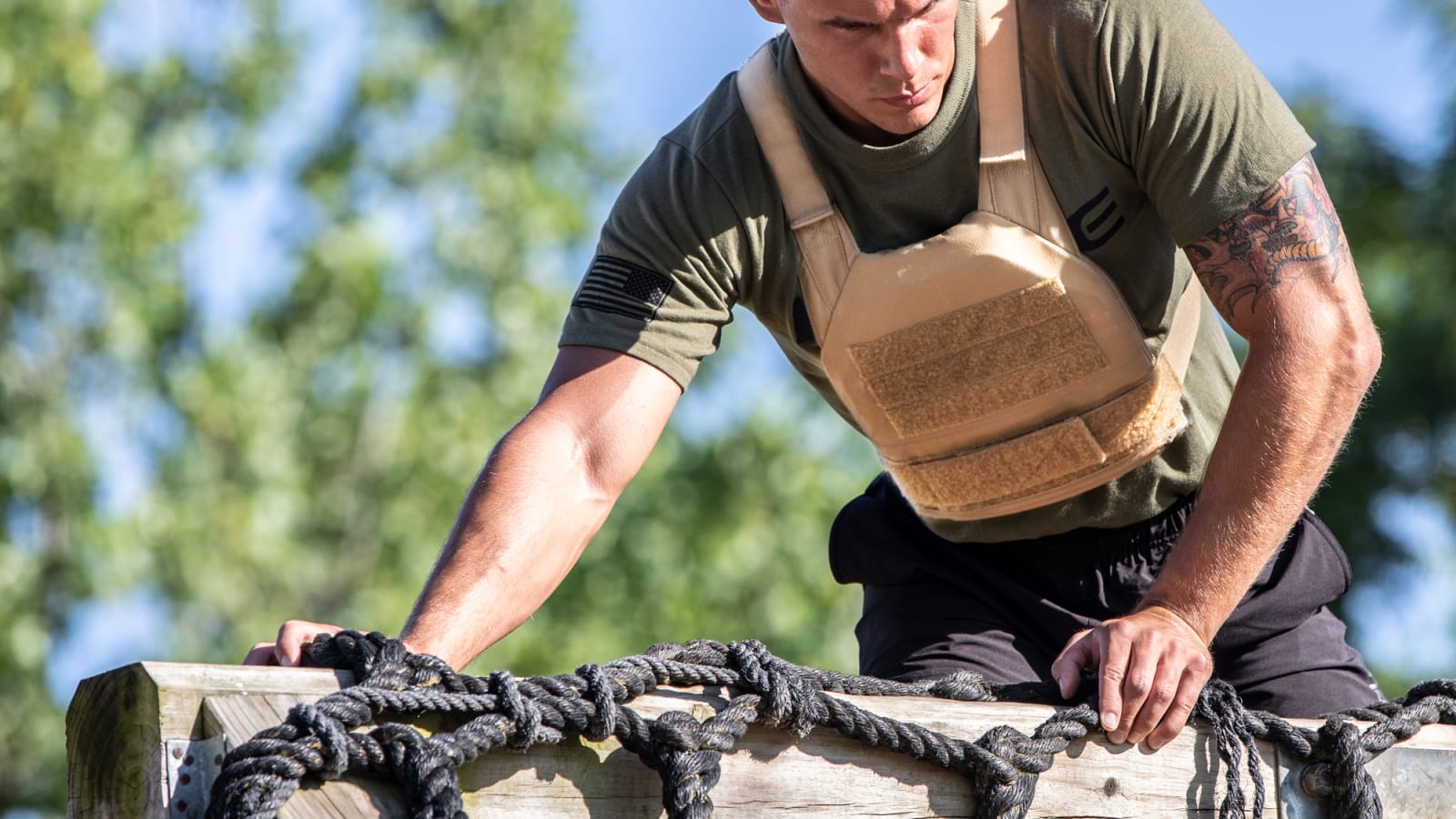 Rogue Plate Carrier
Check price
Rogue Plate Carrier
Check price
|
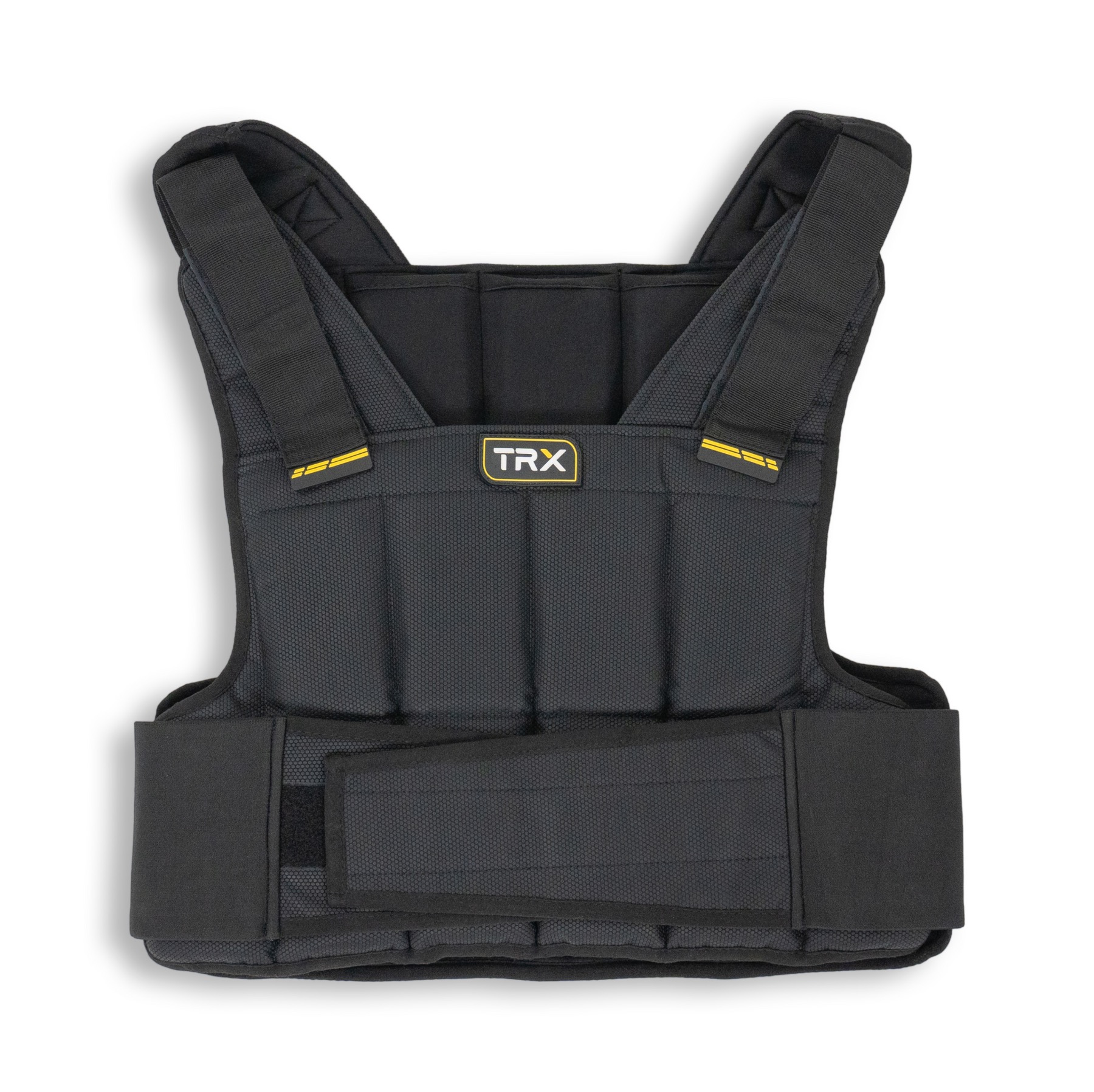 TRX HexGrip
Check price
TRX HexGrip
Check price
|
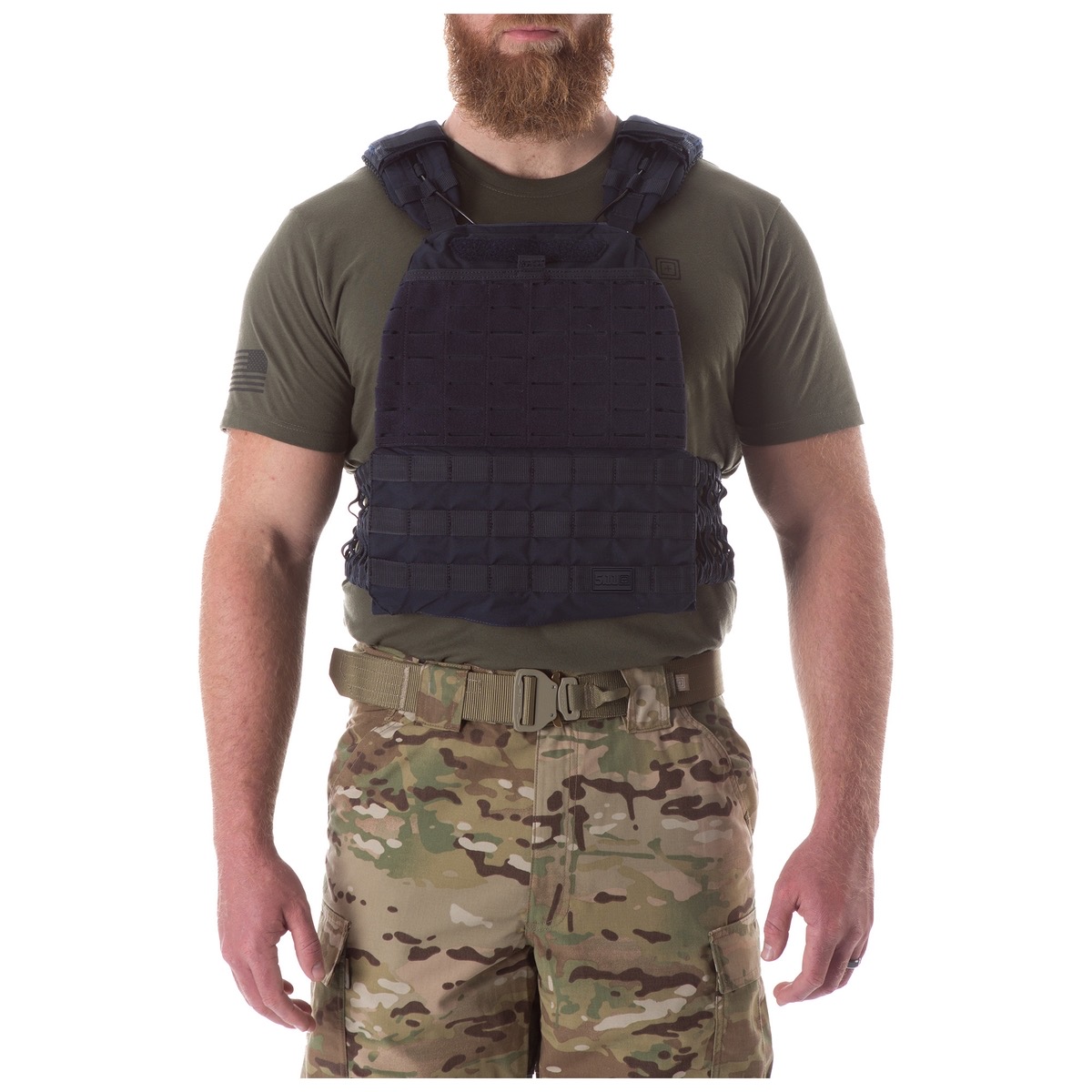 5.11 TacTec
Check price
5.11 TacTec
Check price
|
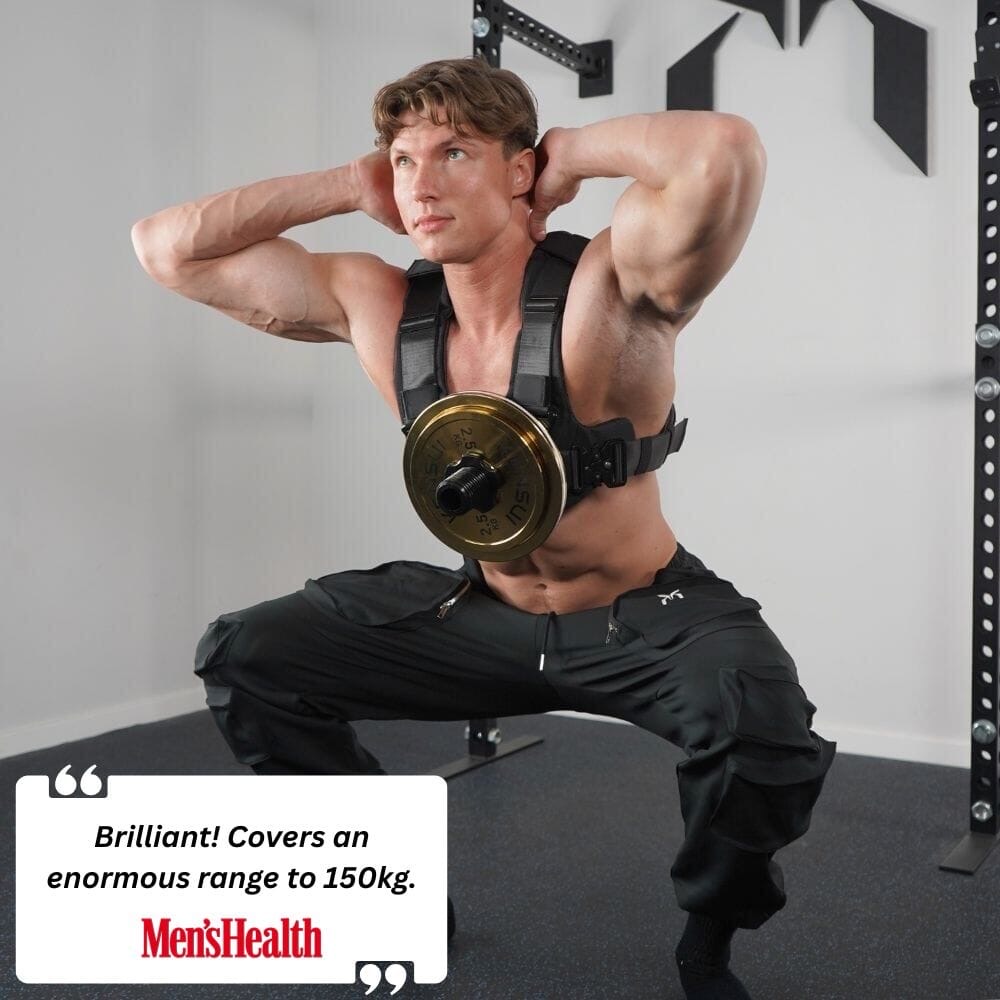 Kensui EZ-Vest
Check price
Kensui EZ-Vest
Check price
|
 Henkelion Weighted Vest
Check price
Henkelion Weighted Vest
Check price
|
||
|---|---|---|---|---|---|---|
| Best for | Overall | All-rounder / running & WODs | Adjustable / running | CrossFit / Murph | Loadable / max capacity | Budget |
| Rating (*) | ||||||
| Comfort & fit (30%) | 90% | 90% | 88% | 84% | 78% | 74% |
| Build quality (25%) | 98% | 91% | 80% | 90% | 83% | 68% |
| Loading system (20%) | 86% | 80% | 92% | 76% | 95% | 72% |
| Versatility (15%) | 85% | 88% | 84% | 88% | 80% | 78% |
| Value (10%) | 81% | 74% | 80% | 76% | 82% | 90% |
| Style | Plate carrier | Plate carrier | Plate carrier | Loadable | ||
| Weight system | Cutout ruck plates | Cast plates | Sewn-in bricks | Cast / laser-cut plates | Olympic plates | Fixed steel shot |
| Max added weight | Up to 45 lb | Up to 40 lb | Up to 40 lb | Up to 60 lb | Up to 300 lb | Up to 30 lb |
| Plate type | Ruck-cut plates | Standard vest plates | None (fixed) | 20 / 14 lb flat plates | Any Olympic plate | None (fixed) |
| Warranty | Scars lifetime | Limited lifetime | Limited 1 year | Limited lifetime | Limited 1 year | Limited |
| Price | $$ | $$$ | $$ | $$$ | $$ | $ |
 GORUCK Ruck Plate Carrier 3.0
Our testing and selection process
How we assess the weight vests
We always use a 5 step process in our reviews:
- We start as the buyer. Most of our team have bought vests before, and between us we’ve worn them for Murph, weighted pull-ups, rucks, and plain weighted walks.
- We do a ton of research. We pull specs, prices, and owner reports on every vest worth a look into one master spreadsheet.
- We rate each vest with our weighted scoring system. The categories and weights are below.
- We let the data make the call, not brand loyalty. A budget vest can out-score a premium one where it counts.
- We get our hands on as many top picks as possible. Our community is a big help here.
You can read more in our review guidelines.
How we test and score the weight vests
A weight vest looks simple until you wear one for an hour. Then comfort, balance, and how the load sits decide whether you keep reaching for it or leave it on the hook.
So we put most of the weight where you actually feel it. Comfort leads, build and loading carry the middle, and value rounds it out.
I grouped them into 5 chunks for simplicity:
- Comfort and fit (30%) - breathability, bounce, padding, and range of motion under load. The category that decides whether a vest gets used.
- Build quality (25%) - fabric denier, stitching, hardware, and how it holds up to abuse.
- Loading system (20%) - how the weight goes in, how high it scales, and how easy it is to change.
- Versatility (15%) - how many jobs the vest does well, from runs to WODs to rucks.
- Value for money (10%) - what you pay against what you get, normalized to the lineup.
Here is how the six picks stack up on the overall score, with the GORUCK Ruck Plate Carrier 3.0 out in front:
Comfort and fit (30%)
This is the biggest category, and on a vest it’s most of the decision.
There are two vest styles, and they solve comfort differently. A plate carrier holds one or two thick plates flat against your chest and back. It lives or dies on two things: open sides for arm swing, and a cummerbund that pulls the load tight so it doesn’t wobble. A pocket vest spreads small bricks across a snug shell that hugs the torso, which is why the running crowd reaches for them.
The thing that ruins a vest is bounce. Weight that slaps your chest on every stride or pull-up will end the workout early, so we walk, run, and do push-ups in each one before we score it.
My tip: load the vest, then jog ten steps in your living room before you commit. If it slaps, no amount of strap tightening will fully fix it once you sweat.
Build quality (25%)
Build is fabric, stitching, and hardware, and it’s where the price tiers separate.
The toughest vests use 1000D Cordura nylon, the same cloth in military kit, with bar-tacked stitching at every stress point. GORUCK builds the RPC 3.0 from it, and that’s why owner reports across our community keep coming back with the same line: nothing on the vest ever fails. Cheaper neoprene vests feel pleasant on day one but fray and hold odor over a year of sweat.
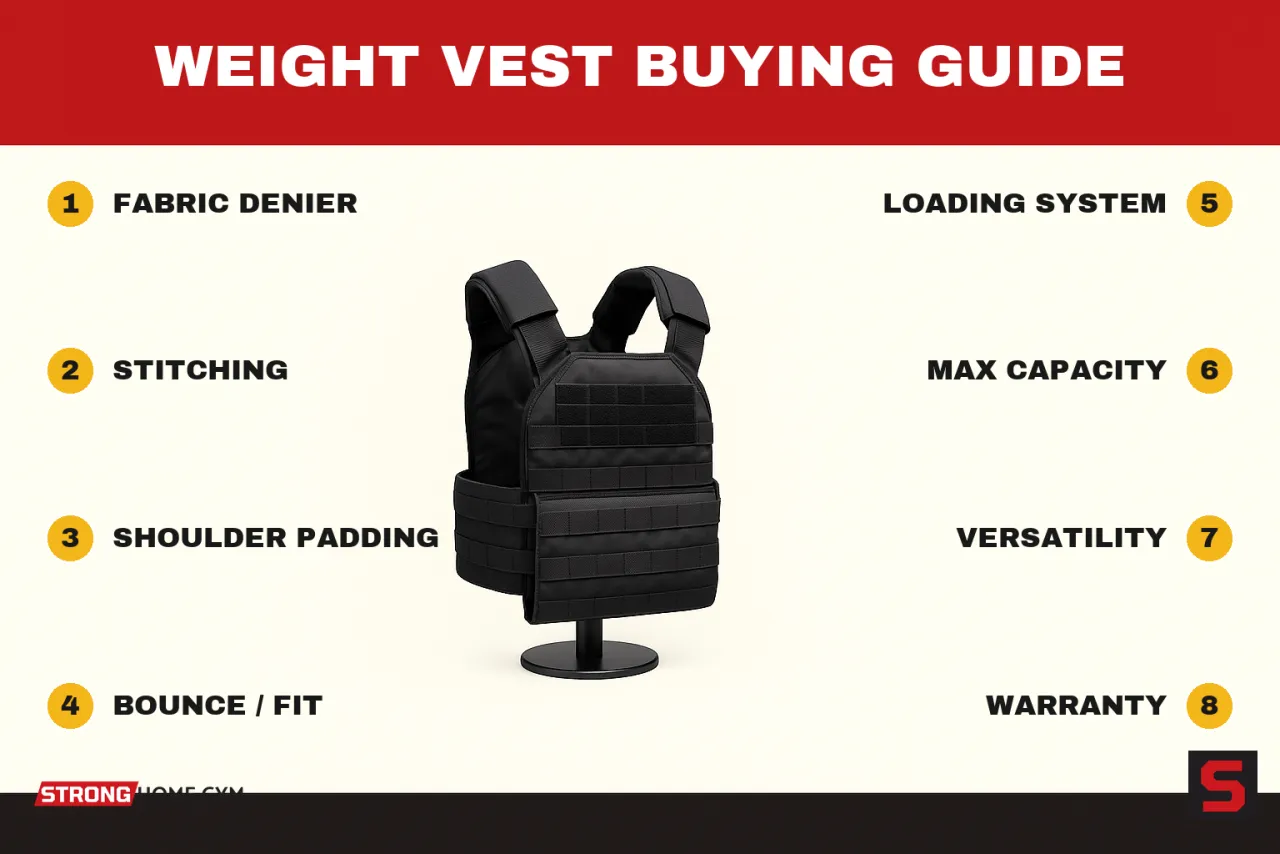
The hardware is the quiet tell. Cheap buckles crack, cheap velcro stops gripping, and a loaded vest with a failed buckle is a dropped plate on your foot.
Loading system (20%)
How weight goes in decides how far the vest scales and how fast you can change it.
Plate carriers take one thick plate front and back, so capacity is decent but capped, and changing weight means swapping plates. Pocket vests like the TRX HexGrip hold small bricks you slot in and out, so micro-adjusting by a pound or two is easy, but the ceiling is low. The Kensui EZ-Vest is the outlier here. It loads standard Olympic plates, so the same plates already on your bar push it to a very high capacity for almost no extra cost.
My tip: match the loading system to the goal. Runners want small, snug, and fixed. Lifters chasing heavy weighted pull-ups want a system that scales past what a sewn pocket ever could.
Versatility (15%)
A vest that only runs, or only rucks, is a one-trick buy.
The most versatile vests cross over. A slim plate carrier walks, rucks, does a WOD, and grinds out weighted dips without complaint, which is exactly why the Rogue and the 5.11 score well here. A dedicated running vest is brilliant on the road and awkward under a pull-up bar.
Value for money (10%)
We normalize value against the score-per-dollar across the lineup. The Henkelion scores below every purpose-built vest but wins this category outright, because you pay vest-and-almost-nothing-else.
In other words…
We are hunting for the vest that makes you pay for the brand patch instead of better fabric and a better fit.
Find the perfect weight vest for you
Best Overall | Best All-Rounder | Best Adjustable | Best for CrossFit | Best Loadable | Best Budget
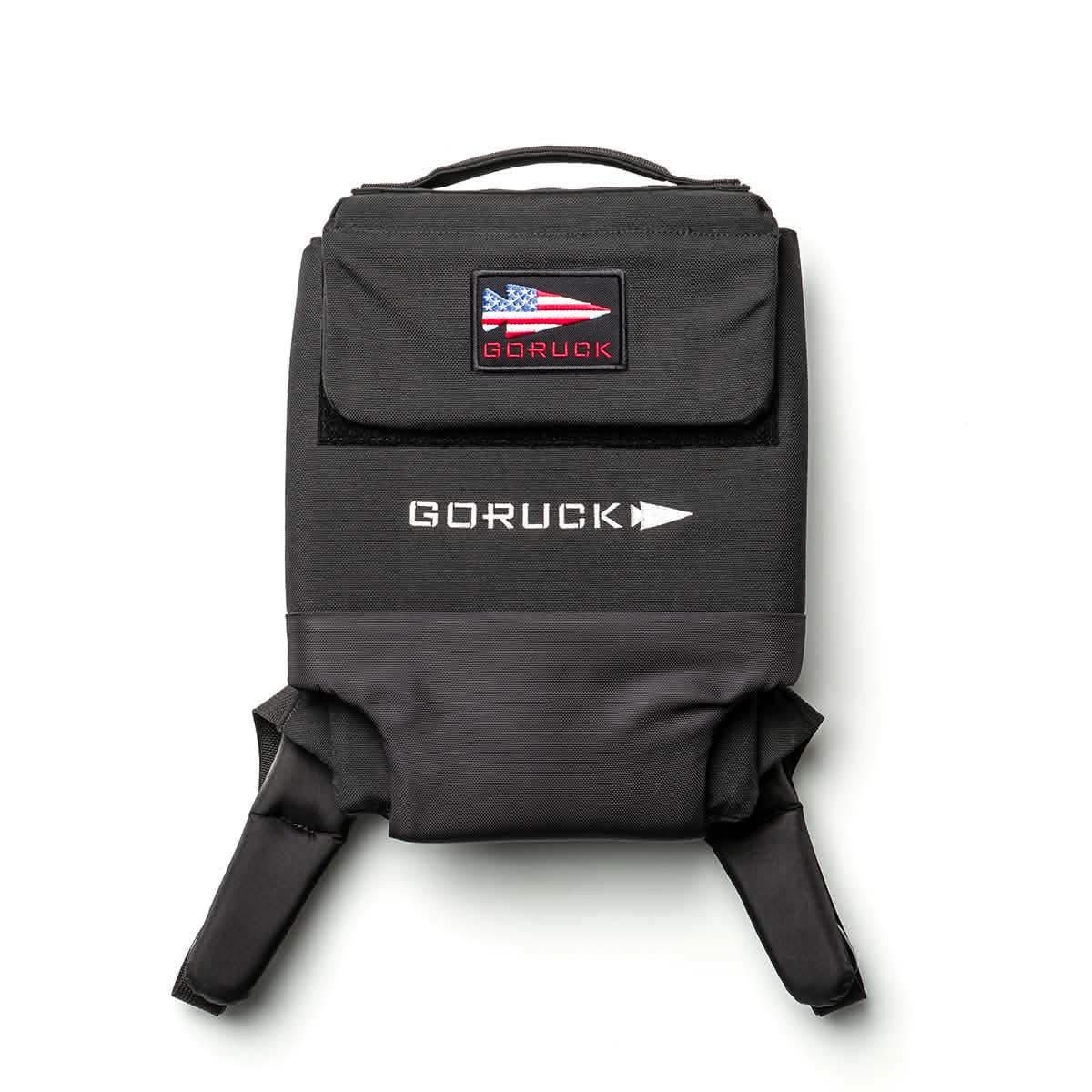
GORUCK Ruck Plate Carrier 3.0
Best Overall Weight VestQuick specs
- Style - heavy-duty plate carrier
- Weight system - cutout ruck plates
- Build - 1000D Cordura, bar-tacked
- Fit - cummerbund, padded shoulders
- Warranty - Scars lifetime guarantee
The vest we hand to most people. The toughest build here, a lifetime guarantee, and a cutout plate that rides high and stays comfortable under load mile after mile, now at a price that undercuts the Rogue.
Summary of experience, tests & opinions
What worked
- It took me a couple of rucks to dial in the cummerbund and shoulder height. Once it was set, the plate stopped shifting and the vest basically disappeared under load, which is exactly what you want an hour into a carry.
- The padding bites in the first mile then breaks in around your shoulders, so the load you start feeling on your traps quietly migrates onto your back as the carry goes on.
- It’s the one vest our outdoor crowd stops thinking about. The owners who train in rain and grit keep saying the same thing, that they’ve simply never had to baby it.
What I don’t
- The back-loaded bulk clips your range a touch on push-ups and pull-ups, so a slimmer carrier wins if calisthenics is most of your week.
- Stiff out of the box, it doesn’t pack down. It stands up on its own in the gear bag and eats more space than a soft vest you can roll, which matters if storage is tight.
Pros & cons
Pros
- 1000D Cordura shell – the same fabric as serious military kit, so it shrugs off years of abuse without fraying.
- Lifetime Scars guarantee – GORUCK repairs or replaces it for life, so it’s a genuine buy-once vest.
- Best value of the plate carriers – it now undercuts the Rogue, so you get the toughest build for less than the all-rounder.
Cons
- The back-loaded design and bulk clip your range of motion slightly on push-ups and pull-ups versus a slim carrier.
- Stiff and heavy empty – it’s a workout to wear before you’ve even added a plate, so easy days feel the heft too.
Read more about the GORUCK Ruck Plate Carrier 3.0
The RPC 3.0 is the vest we reach for first, and the one that earns the top score.
It is a back-loaded, backpack-style carrier, which is the key to why it carries so well: the plate rides high and flat against your spine rather than slabbed across your chest, so the load presses on your shoulders and back instead of your breathing. Our community keeps reporting the same feeling under a heavy plate, that the weight almost floats and disperses across the whole vest rather than dragging on one point, and an hour into a carry it genuinely fades into the background. The 1000D Cordura shell and bar-tacked seams are the best on the list, the Scars lifetime guarantee means GORUCK repairs or replaces it for good, and because it now undercuts the Rogue it is also the best value of the plate carriers. Be warned that it takes a ruck or two to dial in the cummerbund and shoulder height, and the plate shifts until you do.
The one honest caveat is range of motion. The back-loaded bulk clips your push-ups and pull-ups a touch compared with a slim carrier like the Rogue, which is why it sits a step behind on versatility. If most of your week is calisthenics rather than loaded carries, that is worth weighing. For everyone else, the toughest build, the lifetime backing, and the comfort under real load are why it tops the overall score:
Bottom line
The GORUCK Ruck Plate Carrier 3.0 is the top-rated weight vest for 3 main reasons:
-
The toughest build here - 1000D Cordura and bar-tacked seams that shrug off years of abuse, backed by a lifetime guarantee.
-
Comfortable under real load - the high-riding cutout plate keeps long carries off your breathing, so the weight fades into the background.
-
Best value of the plate carriers - it now undercuts the Rogue, so the toughest vest is also the smartest spend.
If you mostly run or do WODs and want the slimmest do-everything carrier, the Rogue Plate Carrier is the all-rounder alternative.
The GORUCK RPC 3.0 might be for you if… you want the toughest, longest-lasting vest that stays comfortable under heavy carries.
It’s not for you if… most of your week is push-ups and pull-ups, where a slim carrier like the Rogue frees up your range of motion.
Rogue Plate Carrier
Best All-Rounder Weight VestQuick specs
- Style - slim plate carrier, open sides
- Weight system - standard cast vest plates
- Fit - cummerbund + shoulder adjust
- Build - USA-made nylon, bar-tacked
- Warranty - limited lifetime
The slimmest do-everything carrier. It’s light, breathes well, takes standard plates, and crosses from a run to a WOD to weighted dips without fuss, which makes it the all-rounder for anyone who moves more than they ruck.
Summary of experience, tests & opinions
What I like
- Overhead presses and push-ups feel like I’m wearing nothing across the lats, the spot where a chunkier carrier usually bites and quietly shortens the set.
- I jogged the length of the gym loaded and the plate barely moved, which is the moment most carriers tip from gym kit into something you’ll actually take outdoors.
- After a handful of sessions the cinch became muscle memory. I get the fit dialed on the first pull now, where a bulkier vest takes a couple of tugs to settle every time.
What I don’t
- On a barrel chest it pulls tight across the shoulders, so very broad lifters should size up. Our broader testers had to go one bigger to get the swing back.
- It costs more than the GORUCK now, so you pay a little extra for the slimmer cut and the arm freedom.
Pros & cons
Pros
- Slim, breathable profile – it sits close and vents heat, so an hour under load doesn’t turn into a sweat box.
- USA-made nylon with bar-tacked seams – the build is excellent, landing second only to GORUCK on toughness.
- Takes standard plates you can buy anywhere, so topping up weight is cheap and easy.
Cons
- It costs more than the GORUCK and isn’t quite as tough, so it lands behind it on value and build.
- Capped capacity – one plate front and back tops out lower than a loadable vest, so the heaviest pull-up crowd may want more.
Read more about the Rogue Plate Carrier
This is the carrier for the person who runs and WODs more than they ruck.
Rogue stripped out the tactical clutter, the MOLLE rows and the drag handles you never use, and kept only what makes a vest work: open sides, an efficient cummerbund, and a slim shell in 500D and 1000D Cordura that takes standard plates up to around 40 pounds. That is the whole story of why it’s the most versatile pick here. It runs, rucks, grinds out a WOD, and loads weighted dips, and the open-side cut means the sides never dig into your lats on push-ups or overhead work. One detail our team kept coming back to is that there is no chafing, even after an hour under load, which is the first thing that ends a session in a cheaper vest. It comes in three sizes, so most frames get a proper fit rather than a one-size compromise.
Side by side with the GORUCK RPC 3.0, the Rogue gives up a little raw toughness and now costs a touch more, but it gains real comfort and arm freedom. The GORUCK is the tank and the better value, the Rogue is the slim all-rounder you reach for when most of your week is movement rather than loaded carries. The trade-off vs the 5.11 TacTec is similar: the 5.11 is the Murph specialist, the Rogue is the vest you reach for the other six days.
Skip it if you are very broad through the chest, since the slim shell pulls tight across the shoulders on a barrel frame and the roomier 5.11 TacTec sits better there. For the runner-and-WOD crowd, that balance across every category is what makes it the all-rounder alternative to the GORUCK. Its build still lands second only to the GORUCK:
Bottom line
The Rogue Plate Carrier is the best all-rounder for 3 main reasons:
-
One vest covers the lot - run, ruck, WOD, or weighted dips, it never taps out the way a single-purpose vest does.
-
It’s built to last without the bulk - USA-made bar-tacked nylon that holds up to abuse while staying slim enough to swing your arms.
-
It takes standard plates - no proprietary weight to overpay for, which keeps the long-term spend sensible.
If you want the toughest build and the best value, the GORUCK RPC 3.0 is the overall pick.
The Rogue Plate Carrier might be for you if… you run and WOD more than you ruck and want the slimmest single vest for the gym, the road, and the trail.
It’s not for you if… you’re very broad through the chest, in which case a roomier carrier like the 5.11 TacTec sits better.
TRX HexGrip Weight Vest
Best Adjustable Weight VestQuick specs
- Style - snug pocket vest
- Weight system - small sewn-in bricks
- Fit - velcro shoulder + waist straps
- Build - padded fabric shell
- Warranty - limited 1 year
The micro-adjust pick. Small one and two pound bricks distribute front and back, held close to the body, with velcro straps that dial in a snug, low-bounce fit for running.
Summary of experience, tests & opinions
Where it shines
- Steve has had clients log months of road miles in it, and what struck me was how little they had to say about it afterward: no mid-run readjusting, no rubbed-raw shoulders by mile three, just a vest they forgot they had on.
- It’s the vest beginners reach for again. The low-key fit and the option to start at a pound or two means people who bounce off heavier vests actually keep this one in rotation.
- Pulled snug, it sits close enough to wear under a jacket on a cold walk without looking like tactical gear, which the runners in our group quietly appreciate.
Where it falls short
- The shell is well made but soft, so it lives happily in a gym bag and won’t reward the grit, drops, and weather a nylon carrier ignores.
- I hit the load ceiling sooner than expected. It stays a light vest fully bricked, so my heavier weighted pull-ups had to move back onto a dip belt.
Pros & cons
Pros
- Even weight distribution – small bricks front and back keep the load balanced and close, which is exactly what you want at a run.
- Velcro shoulder and waist straps make dialing a snug fit fast, with no buckle fiddling.
- Easy micro-adjustment – add or drop a pound at a time to build up gradually.
Cons
- Low max capacity – it tops out well below the plate carriers, so it’s not built for heavy loading.
- The fabric build is good but not Cordura-tough, so it suits running and bodyweight work more than abuse.
Read more about the TRX HexGrip Weight Vest
The HexGrip is the vest for movement.
Where most vests treat comfort as an afterthought, this one is engineered around it. The weight spreads across small one and two pound bricks front and back rather than one slab, so it compresses against the torso and tracks with your body instead of slapping your chest on every stride. The velcro shoulder and waist straps cinch a snug fit with no buckle fiddling, and the micro-adjust loading lets you ease up or down a pound at a time, which a plate carrier simply cannot do. Steve has had personal-training clients run in it for months without the chafing or bounce complaints that retire most running vests, and it comes from TRX, a brand most home gyms already trust for suspension kit, so the fit and finish are a cut above the generic Amazon field. The one trade you accept is that the padded fabric shell, while well made, is not Cordura-tough, so it suits running and bodyweight work more than years of abuse.
Where it gives ground is loading. Put it next to the Kensui EZ-Vest and the HexGrip is far easier to fine-tune but caps out a long way short. Pick the HexGrip for comfort and small adjustments, the Kensui for raw capacity. Anyone chasing heavy weighted pull-ups should walk straight past it, because they will hit the ceiling fast and end up back on a dip belt.
It sits just behind the plate carriers on comfort, but its snug, low-bounce fit is what wins once you start moving:
Bottom line
Buy the TRX HexGrip if you run, hike, or do high-rep bodyweight work and want a vest that disappears once it’s on. The micro-adjust bricks and snug velcro fit make it the most comfortable vest on the move, and the easy weight changes let you build up a pound at a time. Skip it if you want to load heavy, because the capacity ceiling is low and the plate carriers leave it behind there.
5.11 TacTec Plate Carrier
Best Weight Vest for CrossFitQuick specs
- Style - structured plate carrier
- Weight system - 20 lb (men) / 14 lb plate
- Fit - laser-cut MOLLE, velcro cummerbund
- Build - durable nylon, structured shell
- Warranty - limited lifetime
The Murph and WOD standard. A structured carrier sized for the classic 20-pound (or 14-pound) plate, with laser-cut MOLLE webbing and a durable shell built for box-jump abuse.
Summary of experience, tests & opinions
The wins
- Drop to the floor for burpees and it doesn’t fold or shift the way a soft vest does, so your reps stay honest instead of fighting a plate that’s wandered out of place.
- It walks into a CrossFit class and nobody blinks. It’s the shell most boxes already run, so the fit and the plate match what the person next to you is wearing, which matters more than it should when you’re new.
- The cummerbund grabs fast between stations, so swapping out mid-WOD costs you seconds rather than a fumble while the clock runs.
The downsides
- The structured panel keeps its shape in storage and never sags, but it won’t roll flat, so it claims a fixed chunk of shelf whether it’s loaded or not.
- On long road miles the firm front never quite melts into you the way the Rogue or HexGrip do, so distance running is the one job it does grudgingly.
Pros & cons
Pros
- Built for abuse – the structured nylon shell takes years of CrossFit thrashing without loosening or fraying.
- Murph-ready sizing – it holds the standard competition plate, so it matches the programming most CrossFitters follow.
- Laser-cut MOLLE lets you attach pouches and accessories if you want to kit it out.
Cons
- Firmer against the chest – the structured front is less comfortable than a slim carrier on long runs.
- It’s one of the pricier vests here, which pulls its value score down.
Read more about the 5.11 TacTec Plate Carrier
The TacTec earns its slot as the CrossFit and Murph specialist.
The vest itself weighs only about 2.5 pounds empty, then takes the standard 20-pound (men) or 14-pound flat plate front and back that Murph and most CrossFit programming call for, so you train to spec straight out of the box. The structured nylon shell and laser-cut MOLLE are built to shrug off the thrashing of thrusters, burpees, and box jumps that loosen a softer vest, and the velcro cummerbund cinches fast when you are switching loads between stations. It accepts most similarly shaped vest plates too, so you are not locked to one brand of weight. What our team keeps flagging is the tacti-cool overkill, the MOLLE rows and grab handle you may never touch, plus a firm front that sits harder against the chest than a slim carrier on long road miles.
5.11 is the obvious alternative when the Rogue feels too slim for your frame, since the TacTec runs roomier and more structured. It’s built first for the WOD floor, and it trades a little running comfort for a shell that survives years of box jumps and thrusters. Buy it if your week is mostly WODs and Murph prep; skip it if your main event is distance running, where the Rogue or HexGrip breathe and move freer.
It ties the Rogue at the top of the versatility chart:
Bottom line
Buy the 5.11 TacTec if CrossFit and Murph are your training. It’s sized for the standard plate, built to take the worst a WOD throws at it, and it’s the competition-floor default for a reason. Skip it if your main goal is distance running, where its structured front makes a slimmer vest like the Rogue the comfier call.
Kensui EZ-Vest
Best Loadable Weight VestQuick specs
- Style - loadable Olympic-plate vest
- Weight system - any standard Olympic plate
- Capacity - very high, scales with your plates
- Build - heavy-duty nylon
- Warranty - limited 1 year
The capacity king. It loads the standard Olympic plates already on your bar, so it scales to a very high weight for almost no extra outlay.
Summary of experience, tests & opinions
What’s good
- Once the straps are cinched the plates pin flat with no rattle, so the weight feels like one solid block on your back rather than loose discs shifting around mid-rep.
- It turns the plate stack you already own into the only weight vest you’ll outgrow on purpose. The lifters in our group who own plates treat the vest itself as the whole cost, and nothing else here gives them that.
- It carries a genuinely heavy load without wandering, which is what sold me on it for grinding sets where a lighter vest would have me re-cinching between reps.
What’s not
- Swapping plates mid-session is fiddlier than pulling a vest over your head, so I set the weight once and grind rather than circuit between loads.
- It stores like a small barbell project, not a vest you hang on a hook. The plates come off to put it away, so the quick-grab convenience of a fixed vest isn’t part of the deal.
Pros & cons
Pros
- Enormous capacity for the money – the plates do the scaling, so you pay vest-money and get barbell-level loading.
- Uses kit you already own – no proprietary weights to buy, which is rare value if you already have a plate stack.
- Heavy-duty nylon build holds the load without complaint.
Cons
- Olympic plates sit clunkier and further off the body than a molded plate, so it bounces more if you try to run in it.
- Narrower comfort window – it shines under static heavy work, less so for movement-heavy training.
Read more about the Kensui EZ-Vest
The EZ-Vest exists for one reason: capacity.
By loading the standard Olympic plates already sitting on your bar instead of proprietary vest weights, it scales into territory no sewn-pocket vest can touch, depending on the model well into the hundreds of pounds, and it does it for the price of the vest alone. That is a genuinely different proposition for heavy weighted calisthenics. In our testing the plates slot against the back panel and pin flat once you cinch the straps, so there is no rattle, and it held loads well past what a pocket vest could ever carry without complaint. Kensui is a brand we already rate in the loadable space, and the EZ-Vest is its sharpest idea. There is a quirk you live with, though: it rewards staying put. Swapping plates mid-session is fiddlier than pulling a vest over your head, so the move is to set the weight once and grind, not to circuit between loads.
The trade-off is comfort on the move. Olympic plates sit clunkier and further off the body than a molded plate, so this is the heavy static tool, not the runner. If your one complaint about every other vest is that it caps out too light, this is the fix. If your complaint is bounce on a run, the TRX HexGrip stays snug where the Kensui’s hung plates swing.
On the loading system, it leads the entire lineup:
Bottom line
The Kensui EZ-Vest is the right buy if you want maximum load for minimum spend and you already own Olympic plates. It scales higher than anything else here, costs vest-money rather than vest-plus-plates money, and it’s built to hold that weight. The compromise is comfort on the move, since hung plates are clunkier than a molded carrier. For heavy weighted pull-ups and dips, that compromise is well worth it.
The Kensui EZ-Vest might be for you if… your goal is heavy weighted calisthenics and you want to load the plates you already have.
It’s not for you if… you mostly run or want a vest that sits tight and slim, in which case the TRX HexGrip is the better fit.
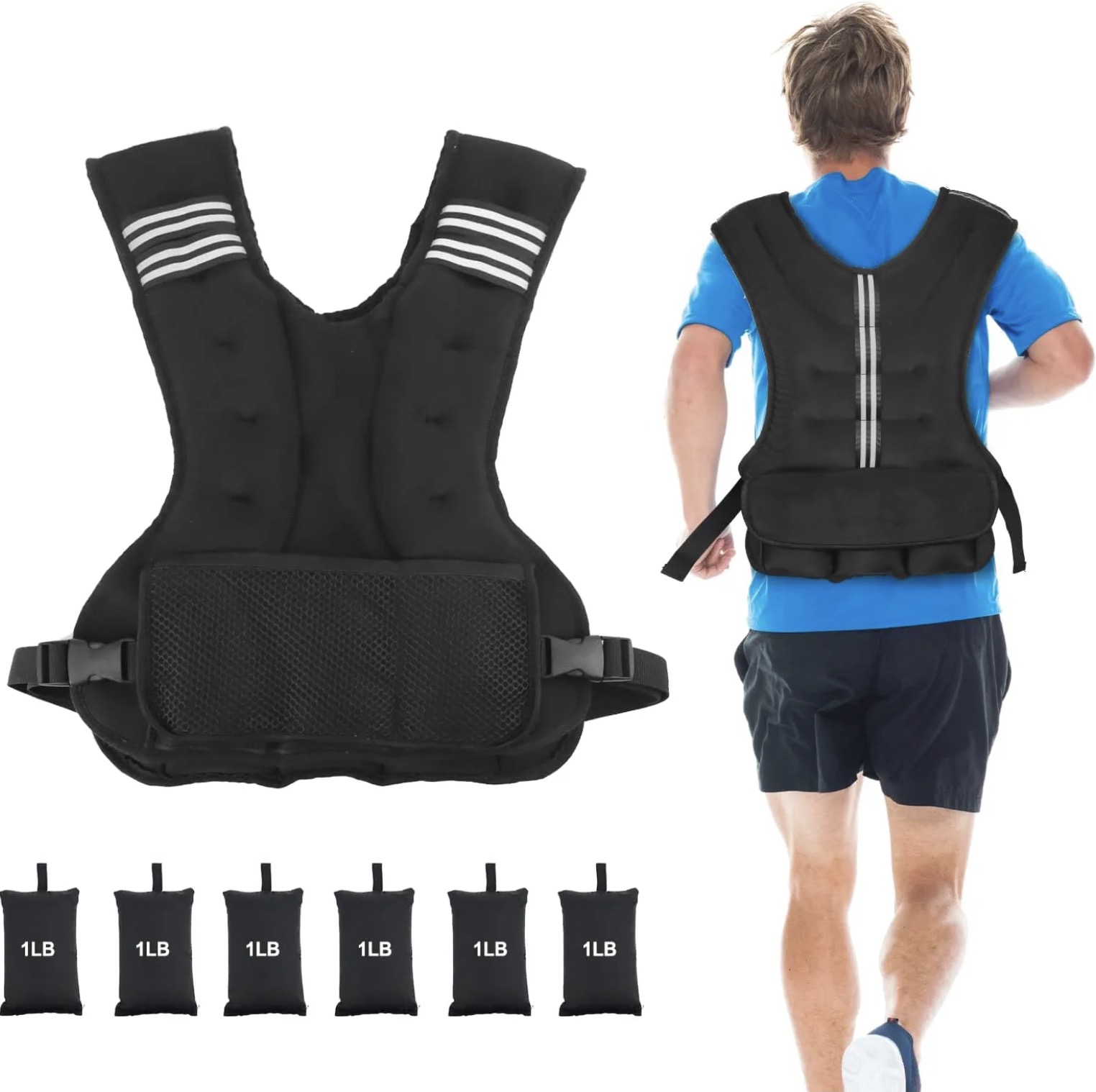
Henkelion Weighted Vest
Best Budget Weight VestQuick specs
- Style - fixed-weight neoprene vest
- Weight system - sewn-in steel shot
- Fit - one size, elastic side panels
- Build - neoprene, basic stitching
- Warranty - limited
The value pick. A cheap fixed-weight neoprene vest that’s surprisingly comfortable for the money and a fine entry point for walks and light bodyweight work.
Summary of experience, tests & opinions
Where it earns its place
- It’s the vest that actually got worn. Hand a beginner something this cheap and unintimidating and they slip it on for a walk, where a serious-looking carrier sits on the hook gathering dust.
- The elastic side panels mean it forgives a guess on size, so the people I’ve passed it to didn’t have to fuss over a fit chart before their first session.
- On a daily walk you forget you have it on, which for the money is the whole job done.
Where it limits you
- I outgrew the load fast. There’s nothing to add, so the day a light vest stops challenging you is the day it becomes a donation rather than an upgrade.
- It softened and began to sag where the steel shot sits after a few months, and the neoprene started holding a faint gym smell once I’d sweated into it a few times.
Pros & cons
Pros
- Lowest price on the list – by a wide margin, which is the whole reason it wins on value.
- Surprisingly comfortable – the neoprene sits soft against the body and the elastic panel fits most frames.
- Light fixed load makes it an easy, low-intimidation entry into training with a vest.
Cons
- Fixed weight – no way to add load, so you outgrow it rather than upgrade it.
- Neoprene is less durable than nylon and can pick up odor, so it suits light use over hard training.
Read more about the Henkelion Weighted Vest
The Henkelion is the vest you buy to find out whether vest training is even for you.
For the money, the neoprene shell is genuinely comfortable, hugging the torso without digging in, and it uses an elastic side panel instead of fixed sizing so it stretches to fit a wide range of bodies straight out of the box. The outer casing holds a tightly packed steel shot held in with double stitching, which keeps it quiet and stable for what it is. That is exactly the right ambition for a budget pick: comfortable enough for daily walks and light bodyweight circuits, and cheap enough that the decision barely registers. Over time, though, it feels its price. Mine softened and started to sag a little where the steel shot sits after a few months, and neoprene is the textile that tends to hold moisture and odor once you sweat into it regularly.
What you give up is room to grow. The weight is fixed, so there are no plates to add, and the neoprene won’t take the abuse a plate carrier shrugs off. The buyer this genuinely fits is the walker or the curious beginner; the buyer to send elsewhere is anyone who plans to load up, since you outgrow this rather than upgrade it. If that is you, the Kensui EZ-Vest is the better long-game spend.
That cheap-and-cheerful balance is why it tops the lineup on value:
Bottom line
Buy the Henkelion if you want to try vest training without spending real money, or if walks and light bodyweight work are the whole plan. It’s comfortable, it fits most bodies, and it costs a fraction of everything else here. Skip it if you train hard or plan to add weight over time, because the fixed load and neoprene build mean you’ll outgrow it rather than upgrade it.
How we created this list of best weight vests
Here are the criteria we used to pick these vests, and how much each one counted:
- Comfort and fit (30%)
- Build quality (25%)
- Loading system (20%)
- Versatility (15%)
- Value for money (10%)
You can read all about our selection process here.
Other weight vests we tested - close but no cigar
- OMORPHO G-Vest+ - a clever weight-everywhere design that feels great, but the premium price and modest capacity left it short of the Rogue on value and versatility.
- Hyperwear Hyper Vest Elite - a superb form-fitting running vest, but the many thin weight strips are fiddly to load and unload, so the TRX HexGrip edged it for everyday adjustability.
- Fringe Sport WODmaster - a comfortable neoprene Murph vest, but neoprene isn’t as durable as nylon and the 5.11 TacTec is the tougher WOD tool.
- Condor Sentry Plate Carrier - a strong budget plate carrier, but the one-size buckle fit runs loose on slimmer lifters where the Rogue sits cleaner.
- Zelus Weighted Vest - a cheap Amazon vest that does the basics, but the Henkelion is comfier for the same money.
Weight vest FAQs
What is the best weight vest?
The best weight vest is the GORUCK Ruck Plate Carrier 3.0.
It’s the toughest build here, carries a lifetime guarantee, and now wins on value since it undercuts the Rogue, with carry comfort that matches it under load.
If you mostly run or do WODs and want the slimmest all-rounder, the Rogue Plate Carrier is the one to get.
Is a plate carrier better than a weighted vest?
A plate carrier is better if you want to load heavy and train hard, since one thick plate front and back scales further and survives abuse.
A pocket-style vest like the TRX HexGrip is better for running, because the spread-out weight bounces less and sits tighter.
Match the style to the job rather than chasing one “best” type.
How much weight should a weight vest add?
Most people should start with a vest load of around 5 to 10 percent of bodyweight and build up from there.
For walking and easy bodyweight work, a fixed light vest like the Henkelion is plenty.
For heavy weighted pull-ups, you’ll want a loadable option like the Kensui EZ-Vest that scales as you get stronger.
What weight vest is best for Murph?
The best weight vest for Murph is the 5.11 TacTec Plate Carrier.
It’s sized for the standard 20-pound (or 14-pound) plate the workout calls for and is built to survive the burpees and box jumps.
The Rogue Plate Carrier is a slimmer alternative if you want one vest for Murph and everything else.
Can you run in a weight vest?
Yes, but the vest style matters more than anything.
A snug pocket vest like the TRX HexGrip spreads the load and barely bounces, which is what you want on a run.
A bulky loadable vest like the Kensui is built for heavy static work and will bounce too much for comfortable distance running.
The bottom line
I’ve worn these vests for runs, rucks, and weighted pull-ups, because a vest is the one bit of kit that either gets used daily or hangs on a hook.
For most people, the GORUCK RPC 3.0 is the call. It’s the toughest build here, it stays comfortable under a long carry, and it now undercuts the Rogue, so the best vest is also the best value.
If you run and WOD more than you ruck and want the slimmest do-everything carrier, the Rogue Plate Carrier is the all-rounder alternative.
If you mostly run, the TRX HexGrip sits tightest. If you want to load heavy, the Kensui EZ-Vest scales furthest. And if money is tight, the Henkelion is the cheapest way in.
There are two things to do now:
- If you want another look at the picks, click here to skip back to the table.
- If you want to put a pin in it, bookmark this page and come back. We re-test it and update the picks whenever the field changes.
Stay strong.
